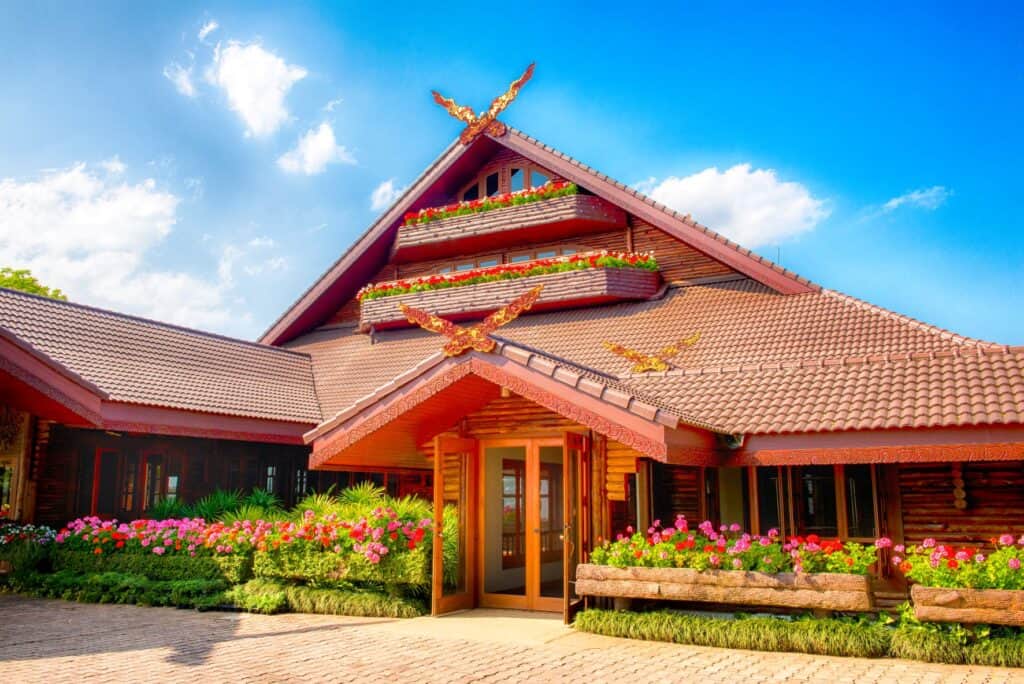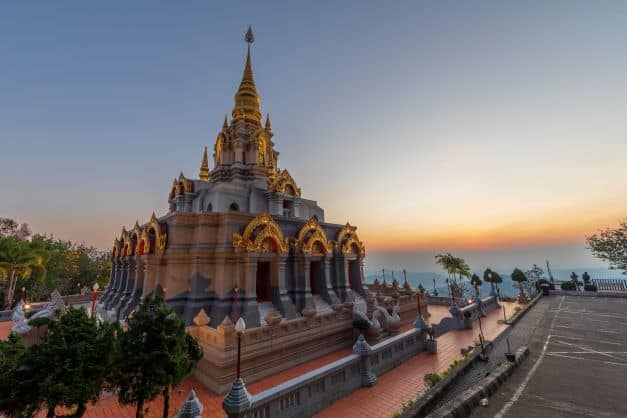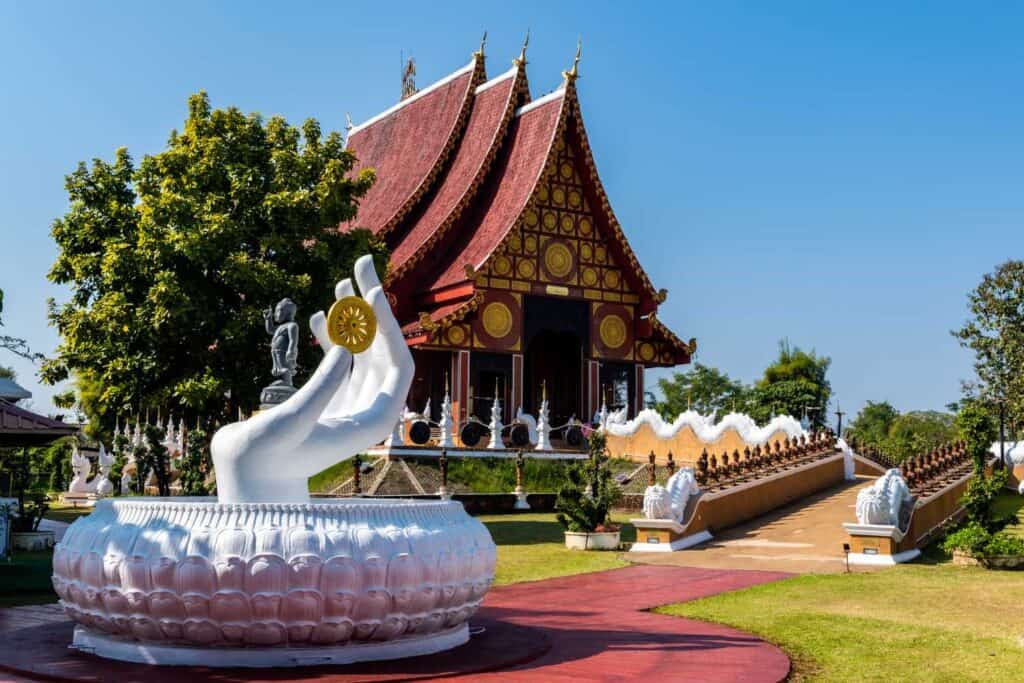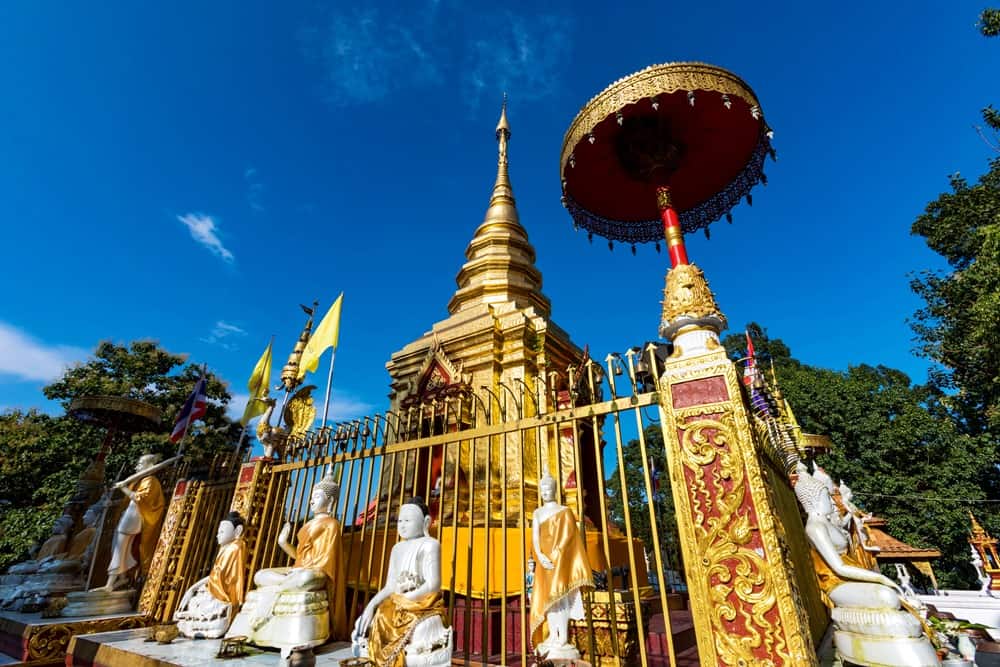
Ancient wooden structures and intricate Lanna carvings distinguish Wat Mung Muang as one of Chiang Rai’s most architecturally significant temples. This centuries-old Buddhist monastery showcases traditional northern Thai craftsmanship through its elaborate teak pavilions and golden-spired chedi. Unlike the flashier modern temples that draw tour buses, Wat Mung Muang maintains its authentic character as a working monastery where local devotees come for daily prayers and merit-making ceremonies.
The temple’s main ordination hall features soaring wooden pillars supporting a multi-tiered roof adorned with carved nagas and celestial beings. Inside, gilded Buddha statues sit beneath murals depicting scenes from Buddhist scriptures, their colors still vibrant despite decades of incense smoke. Visitors can explore the peaceful grounds dotted with smaller shrines and stupas, each containing relics or commemorating revered monks. The gentle chiming of temple bells mingles with chanted prayers, especially during morning and evening services when resident monks gather for meditation. Traditional merit-making activities like lighting incense and offering lotus flowers provide opportunities for spiritual participation.
Deep tranquility permeates every corner of this sacred space, enhanced by the soft rustling of bodhi tree leaves and distant temple chants. Saffron-robed monks move quietly between buildings, creating an atmosphere of contemplative devotion that invites reflection. The absence of commercial distractions allows for genuine spiritual connection, whether you’re seeking meditation space or simply appreciating the artistic heritage preserved within these wooden walls.
Early morning visits between 8-9 AM offer the chance to witness monk prayers and avoid midday heat. The temple sits on Uttarakit Road, easily accessible by tuk-tuk or songthaew from central Chiang Rai. Dress modestly with covered shoulders and knees, and remove shoes before entering any building. Bring a small donation for the temple fund and consider purchasing lotus flowers from nearby vendors for traditional offerings. This authentic temple experience provides deep cultural insight beyond typical tourist circuits.