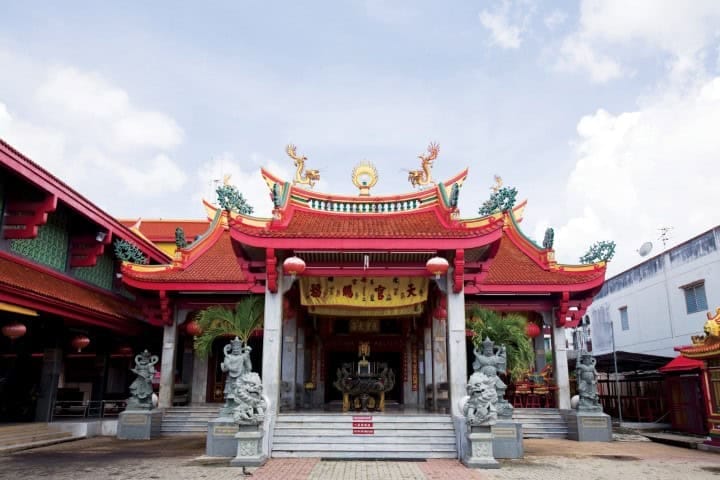
Chinese dragon sculptures coil around red pillars while the sweet aroma of incense mingles with flickering candlelight at Jui Tui Shrine, one of Phuket’s most vibrant Taoist temples. This active place of worship draws both devotees and curious visitors with its colorful architecture and spiritual energy, standing as a cultural bridge between Thailand’s Chinese heritage and local Buddhist traditions. The shrine’s ornate details and constant stream of worshippers create an authentic glimpse into the religious practices that shape daily life for many Phuket residents.
Red and gold decorations dominate every surface, from intricate ceiling paintings depicting Chinese mythology to elaborate altar displays filled with offerings of fruit, flowers, and burning joss sticks. The main hall houses several deity statues draped in silk robes, while smaller shrines line the walls dedicated to different aspects of Chinese folk religion. Visitors often witness locals shaking bamboo fortune sticks or lighting prayer candles, their quiet murmurs mixing with the gentle sound of wind chimes. The temple courtyard features traditional stone lions and ornamental plants, providing peaceful spots for reflection between the more active worship areas.
Spiritual reverence permeates the atmosphere as devotees perform traditional rituals passed down through generations. The constant presence of worshippers creates a living, breathing environment where ancient customs continue to thrive in modern Thailand. Photographers appreciate the rich visual contrasts between the bright decorative elements and shadowy alcoves, while those seeking cultural understanding find themselves welcomed into observing meaningful religious practices. The shrine maintains an authentic community feel rather than catering specifically to tourists.
Early morning visits offer the most authentic experience when local devotees arrive for daily prayers before work. The shrine is easily accessible from Phuket Town’s main roads, with nearby parking available for those driving. Dress modestly with covered shoulders and knees out of respect, and remove shoes before entering the main worship hall. While photography is generally permitted, be mindful of people praying and avoid using flash near the altars.