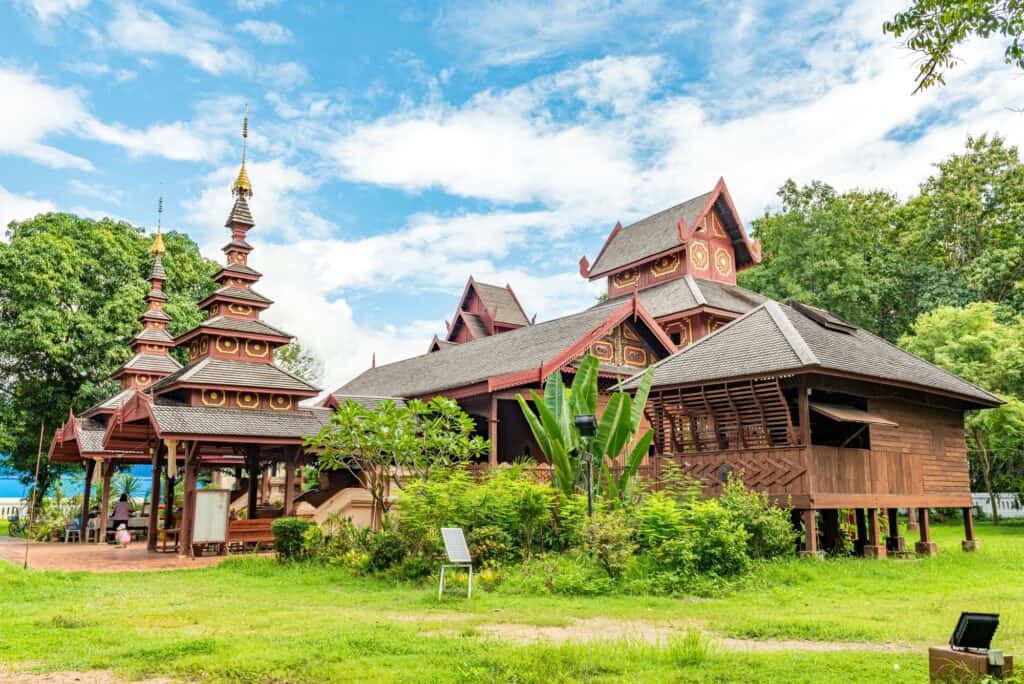
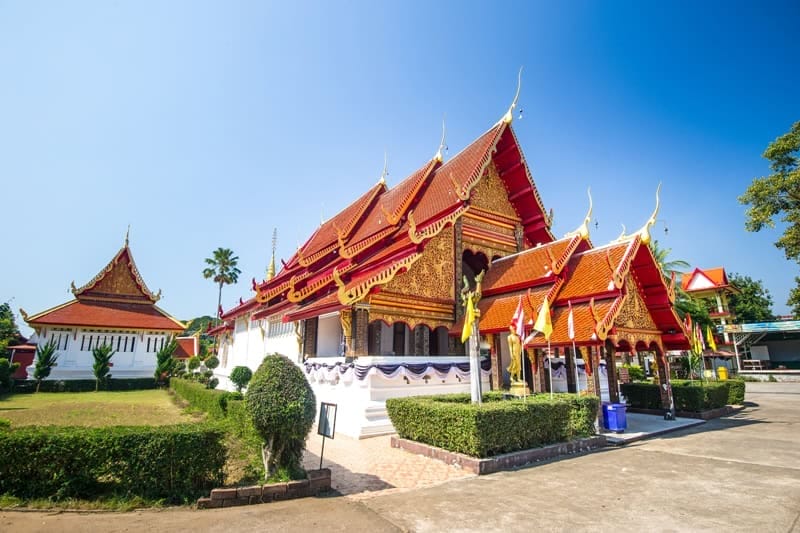
Wat Phrabat Ming Mueang Worawiharn stands as Lampang’s most significant temple, famous for housing the sacred Buddha footprint that gives the temple its name. This royal temple holds special reverence among locals and Buddhist pilgrims, who believe the footprint was blessed by the Buddha himself during his travels through northern Thailand. The temple’s elevated position on Charoen Mueang Road offers visitors a glimpse into centuries of devotion and architectural evolution that defines Lampang’s spiritual landscape.
Your visit begins with the impressive main ordination hall, where intricate wood carvings and golden Buddha statues create a serene worship space filled with the gentle scent of burning incense. The sacred footprint shrine draws devotees who light candles and offer prayers throughout the day, their whispered mantras creating a constant, soothing hum. Traditional Lanna-style architecture dominates the complex, with ornate rooflines and detailed murals depicting Buddhist teachings. You’ll discover smaller shrines scattered around the grounds, each telling part of the temple’s rich history through weathered stone inscriptions and carefully maintained Buddha images.
Tranquility permeates every corner of this sacred space, where time seems to slow beneath ancient trees that shade the temple grounds. Morning and evening prayer sessions bring the complex to life with melodic chanting that echoes off traditional teak structures. The reverent atmosphere encourages quiet contemplation, whether you’re observing local worshippers performing their daily rituals or simply sitting in peaceful meditation. Even during busier periods, the temple maintains its spiritual calm, offering respite from Lampang’s bustling streets just outside its gates.
Early morning visits between 8-10 AM provide the most authentic experience, when local devotees perform their daily prayers and the air is cool and fresh. The temple sits conveniently in central Lampang, easily reached by tuk-tuk or songthaew from anywhere in the city. Dress modestly with covered shoulders and long pants, and remove shoes before entering any buildings. While entry is free, small donations for temple maintenance are appreciated. This temple offers genuine insight into northern Thai Buddhist culture without the crowds found at more commercial religious sites.