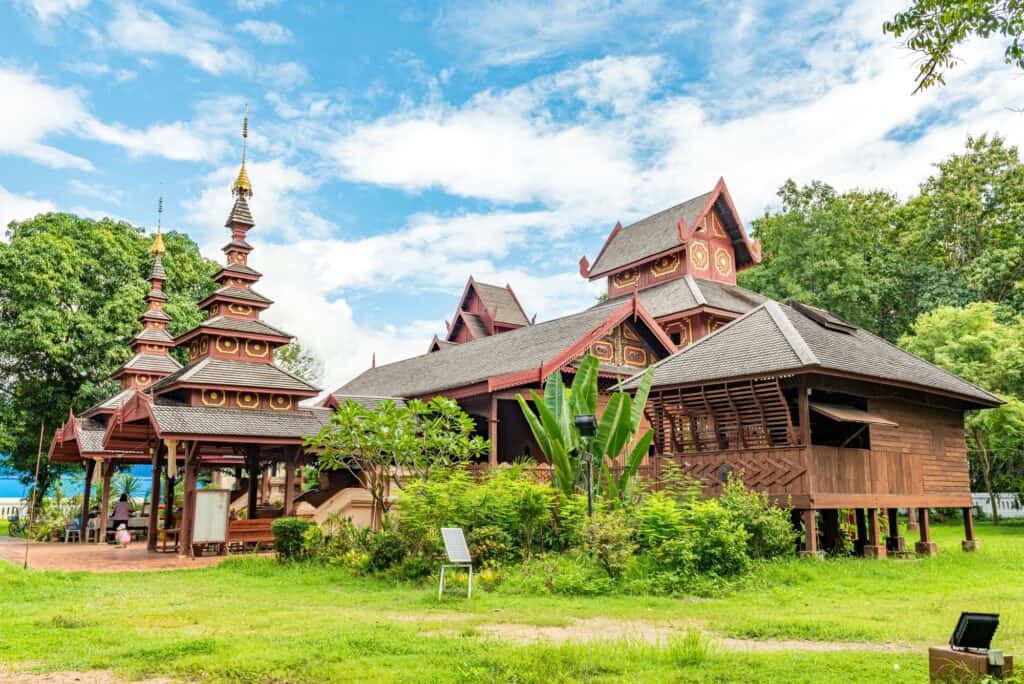
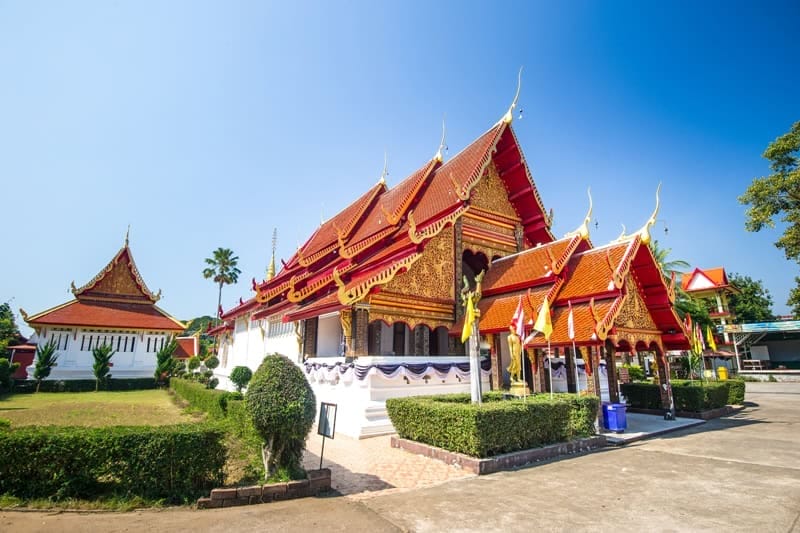
Ancient wooden architecture meets Lanna craftsmanship at Wat Si Chum, one of Lampang’s most striking Buddhist temples. This remarkable temple showcases the distinctive Northern Thai architectural style with its multi-tiered wooden roofs, intricate carvings, and traditional teak construction that has weathered centuries. The temple’s unique design elements and historical significance make it a prime example of Lanna religious architecture, offering visitors an authentic glimpse into Northern Thailand’s rich Buddhist heritage.
Step through the temple gates to discover ornate wooden buildings adorned with golden details and elaborate serpentine naga sculptures guarding the entrances. The main prayer hall houses beautiful Buddha images in various poses, each crafted with meticulous attention to detail and surrounded by colorful murals depicting Buddhist teachings. You’ll notice the sweet fragrance of incense mingling with the natural scent of aged teak wood, while the gentle chiming of temple bells creates a meditative soundtrack. Saffron-robed monks often move quietly through the grounds, going about their daily prayers and temple maintenance, adding to the authentic spiritual atmosphere.
Tranquility permeates every corner of this sacred space, where the only sounds are whispered prayers, rustling leaves, and distant temple chimes. The weathered wooden surfaces and time-worn stone pathways speak to generations of faithful visitors who have come here seeking peace and spiritual guidance. Morning light filtering through the intricate roof structures creates dancing shadows that shift throughout the day, while the temple’s elevated position offers gentle breezes that provide natural cooling in Lampang’s warm climate.
Early morning visits between 8-10 AM offer the most peaceful experience, often coinciding with monks’ morning chanting sessions. The temple is easily accessible by tuk-tuk or songthaew from central Lampang. Remember to dress modestly with covered shoulders and knees, remove shoes before entering prayer halls, and maintain respectful silence. Photography is generally permitted in outdoor areas but ask before taking pictures of monks or inside sacred buildings. This spiritual sanctuary provides a meaningful cultural experience that deepens understanding of Northern Thai Buddhist traditions.