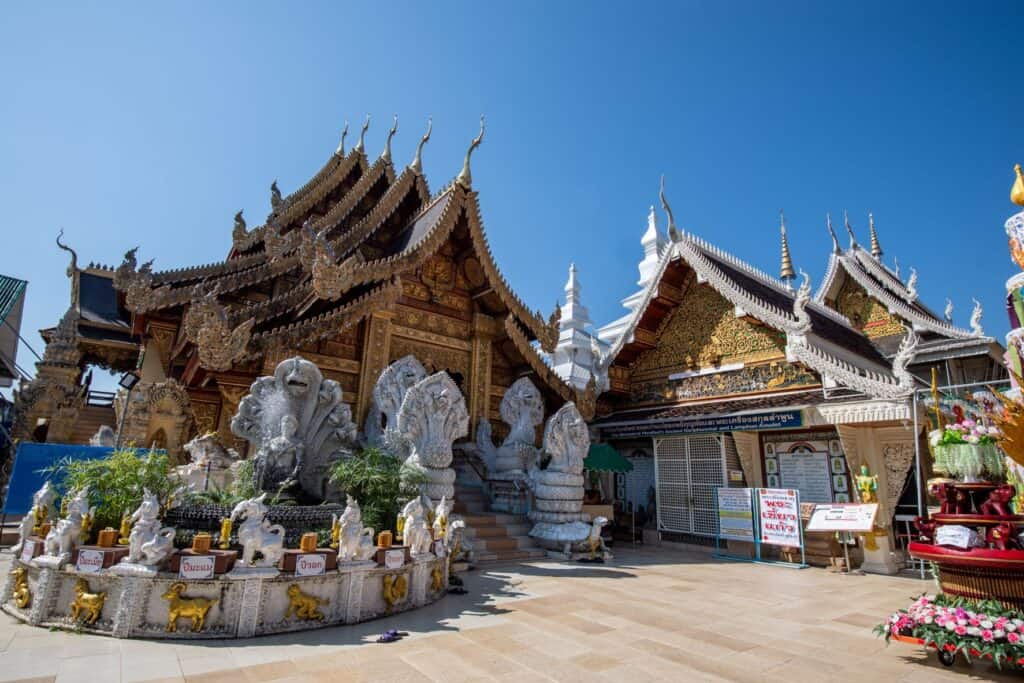
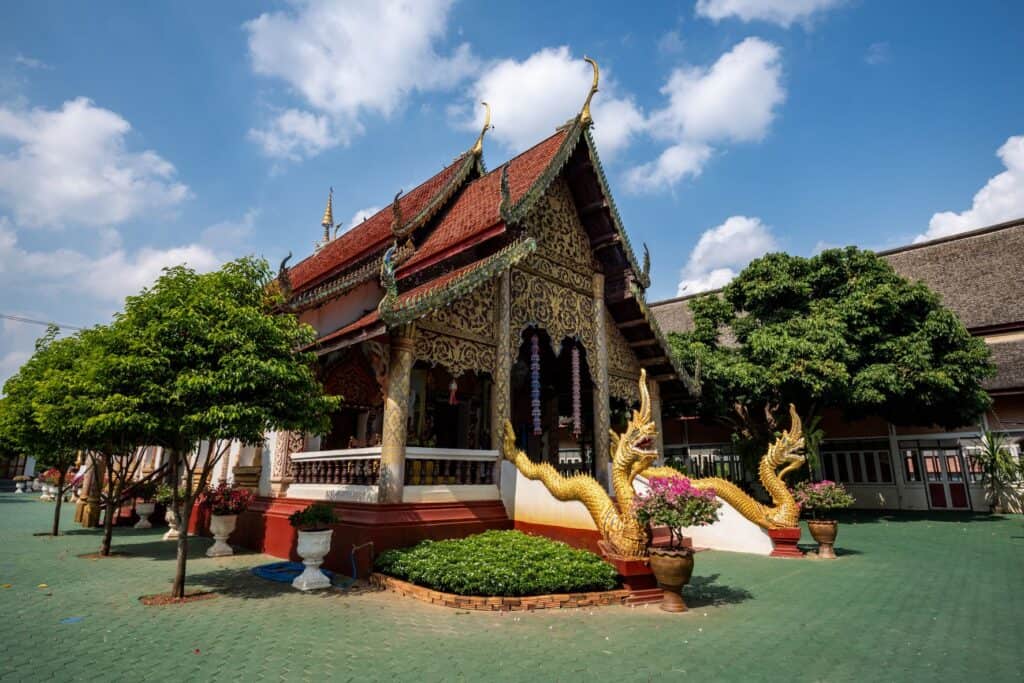
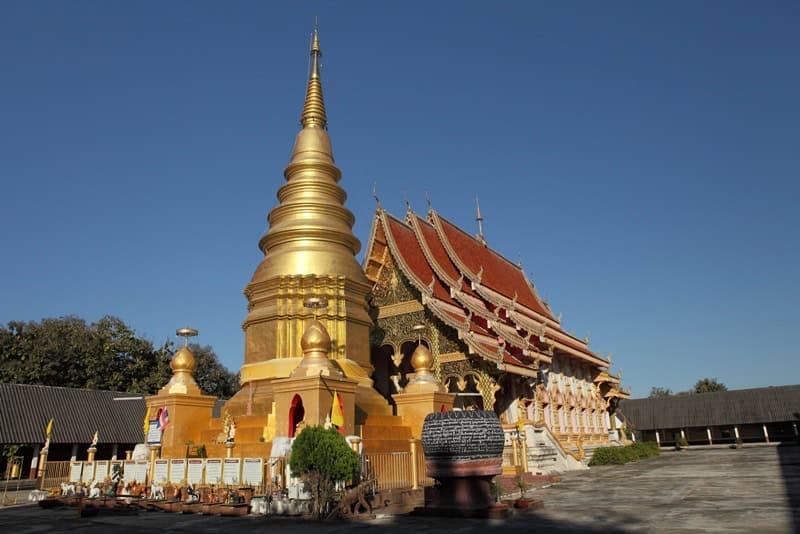
Ancient brick walls and weathered stupas tell the story of Wat Mahawan, one of Lamphun’s most historically significant temples. This sacred site predates many of Thailand’s famous temples, serving as a spiritual anchor in the former capital of the Hariphunchai Kingdom. The temple’s distinctive Lanna architectural elements blend seamlessly with traditional Thai Buddhist design, creating a visual narrative that spans centuries of devotional craftsmanship.
Walking through the temple grounds reveals multiple prayer halls adorned with intricate woodwork and traditional murals depicting Buddhist teachings. The main ordination hall houses revered Buddha images that draw local devotees for daily prayers, their soft chanting creating a meditative soundtrack throughout the day. Fragrant incense drifts from numerous shrines while orange-robed monks move quietly between buildings, maintaining their daily routines of study and meditation. Several ancient stupas dot the complex, their weathered surfaces bearing witness to generations of faithful visitors who have come seeking blessings and spiritual guidance.
Peaceful contemplation defines the experience at Wat Mahawan, where time seems to slow beneath the shade of old trees. The temple maintains an authentic local atmosphere, largely free from tourist crowds, allowing visitors to observe genuine Buddhist practices in action. Morning and evening prayers create particularly moving moments when the community gathers, their collective devotion filling the halls with palpable spiritual energy that transcends language barriers.
Early morning visits between 7-9 AM offer the most authentic experience, coinciding with monks’ daily routines and local worship times. Dress modestly with covered shoulders and knees, and remove shoes before entering any building. The temple sits within Lamphun’s old town area, easily accessible by bicycle or songthaew from the city center. Bring small bills for merit-making donations if you wish to participate in local customs, and allow at least an hour to fully appreciate this remarkable example of northern Thailand’s Buddhist heritage.