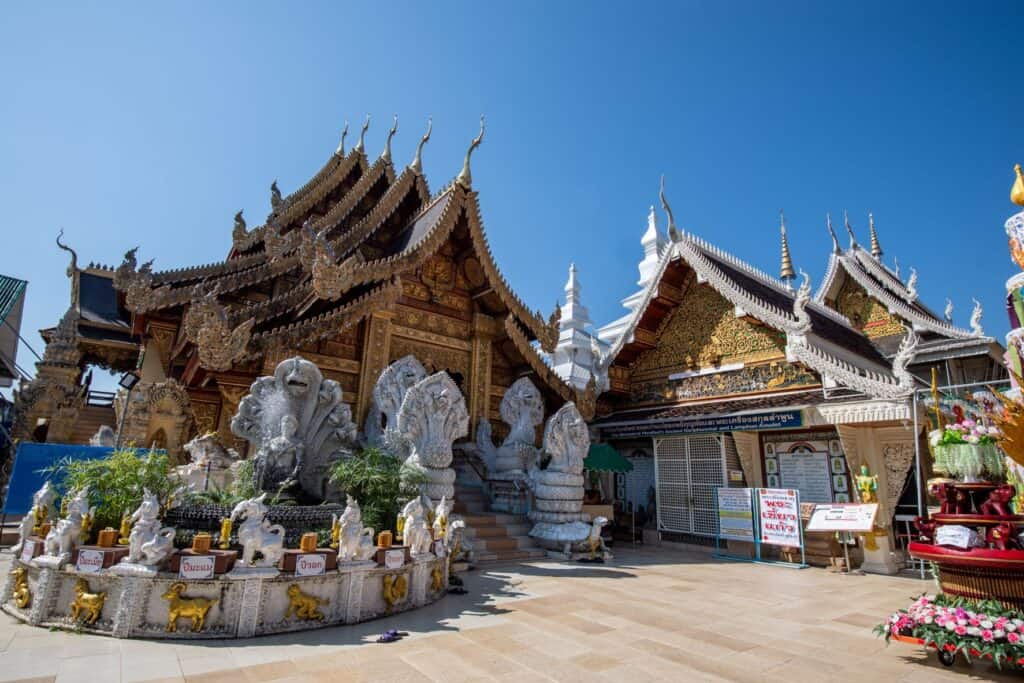
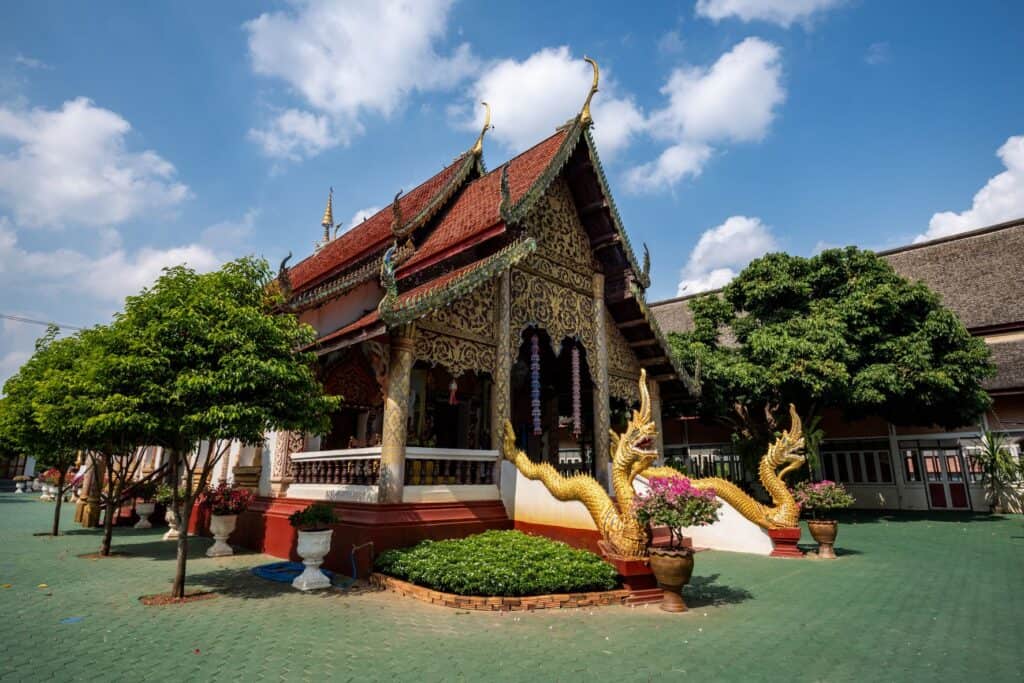
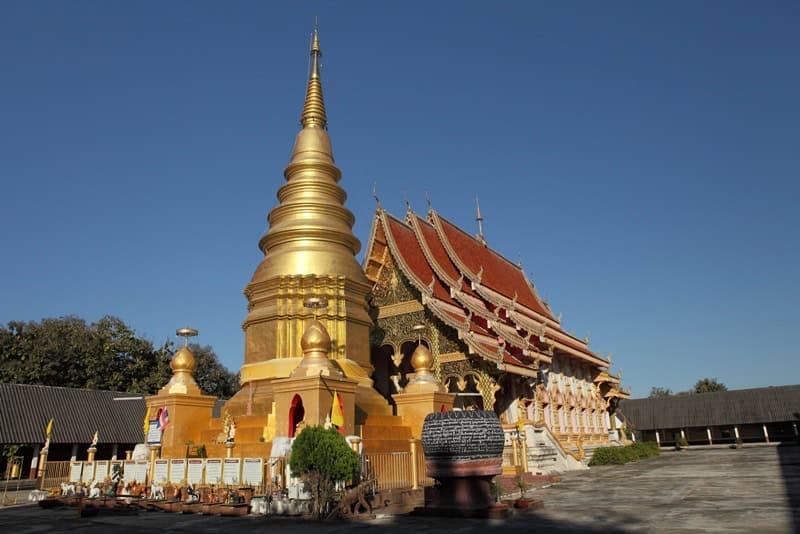
Ancient wooden structures and traditional Lanna architecture define Wat Moo Perng, a working Buddhist temple that showcases the distinctive artistic heritage of northern Thailand. The temple’s weathered teak buildings and intricate woodcarvings reflect centuries of local craftsmanship, while its peaceful grounds offer visitors an authentic glimpse into Lamphun’s rich spiritual traditions. Unlike many tourist-focused temples, this community wat maintains its primary role as a place of worship for local residents.
Ornate wooden pavilions house several significant Buddha images, including beautifully carved statues that demonstrate the refined artistry of Lanna Buddhist sculpture. The temple’s main prayer hall features traditional northern Thai decorative elements, with detailed wood panels and graceful rooflines characteristic of the region’s architectural style. Visitors can observe daily religious activities as monks perform their morning and evening chants, filling the air with melodic prayers. The scent of burning incense drifts from small shrines where devotees make offerings of lotus flowers and candles, creating a sensory experience that connects you to Thailand’s living Buddhist culture.
Tranquility permeates every corner of Wat Moo Perng, where the pace slows naturally as you walk among the wooden structures and shaded courtyards. Local families often visit to make merit and seek blessings, creating an authentic spiritual atmosphere free from commercial tourism pressures. The presence of resident monks adds to the temple’s genuine religious character, and their quiet dedication to daily practices creates a meditative environment that encourages reflection and respect.
Early morning visits around 7-8 AM offer the best experience, when you can witness the monks’ morning rituals and enjoy cooler temperatures. Dress modestly with covered shoulders and knees, and remove shoes before entering any buildings. Public transportation or taxis from Lamphun town center provide easy access to the temple. Bring a small donation for the temple upkeep, and remember to maintain quiet, respectful behavior throughout your visit to honor this active place of worship.