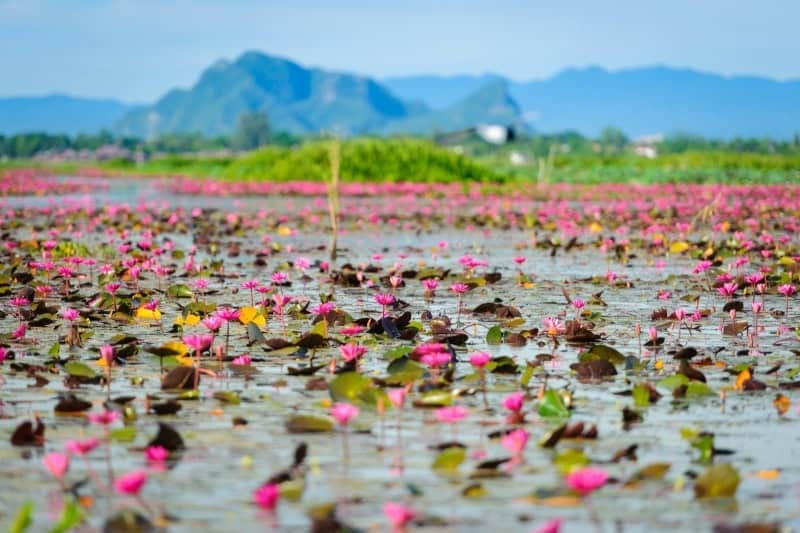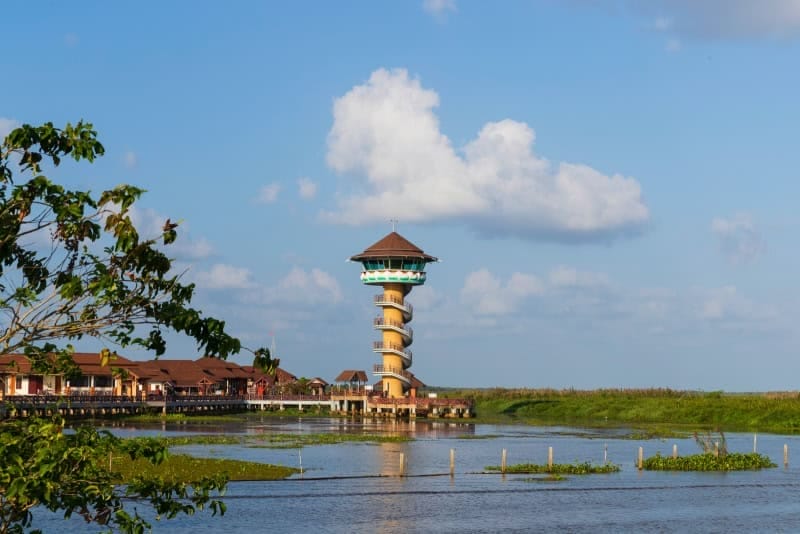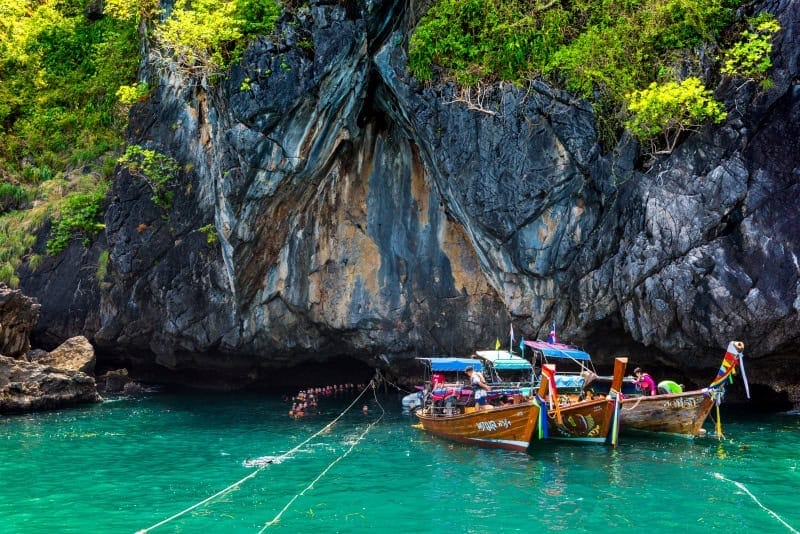
Free admission to a pristine wetland sanctuary makes Khlong Lam Chan Non-Hunting Area one of Trang’s most accessible natural treasures. This protected wetland ecosystem spans mangrove forests, freshwater channels, and coastal plains where wildlife thrives undisturbed. Unlike Thailand’s busier national parks, this conservation area offers intimate encounters with native species in their natural habitat, making it particularly rewarding for patient observers and photography enthusiasts seeking authentic wildlife experiences.
Wooden boardwalks and nature trails wind through dense mangrove forests where proboscis monkeys swing overhead and colorful kingfishers dart between branches. The morning air carries the earthy scent of wetland vegetation mixed with salt from nearby coastal areas. Monitor lizards bask on muddy banks while white egrets wade through shallow channels hunting for fish. Bird watchers can spot over 150 recorded species including rare migratory visitors during seasonal transitions. The main trail system connects several observation points where telescopes help visitors identify distant wildlife without disturbing their natural behaviors.
Silence dominates this peaceful sanctuary, broken only by bird calls echoing across water channels and rustling leaves in the gentle breeze. Early morning visits reward you with the most active wildlife period when animals emerge to feed and socialize. The untouched landscape creates an almost meditative atmosphere where time slows down and urban stress melts away. Conservation efforts are clearly visible throughout the area, reinforcing the importance of protecting these delicate ecosystems for future generations.
Visit between December and March for optimal wildlife viewing and comfortable temperatures. Public transportation reaches Na Yong district, then local songthaews complete the journey to the park entrance. Pack insect repellent, comfortable walking shoes, and plenty of water since facilities are limited within the conservation area. Binoculars enhance the experience significantly, and early morning arrival around opening time provides the best opportunities for animal sightings before afternoon heat reduces activity levels.