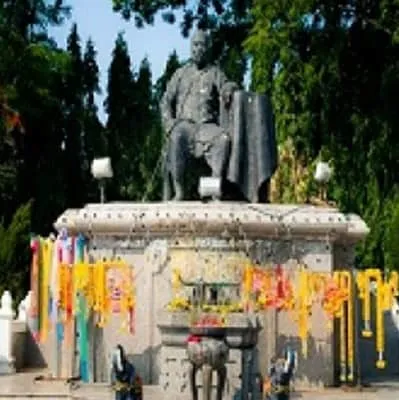


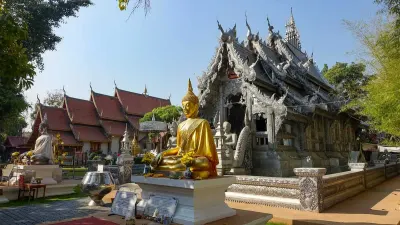













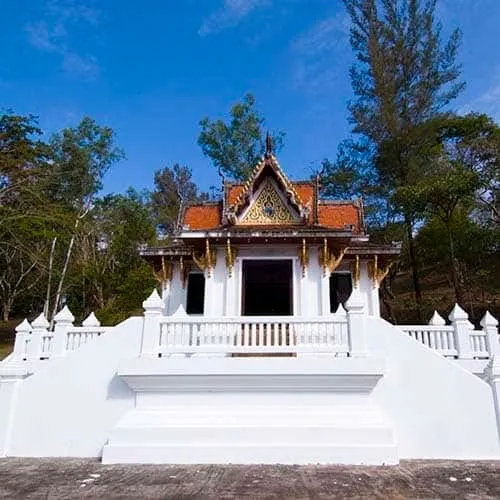
Ancient Chinese architecture meets Thai cultural heritage at Hor Phra Kao Ke Ji, a distinctive shrine that stands as one of Ranong’s most significant landmarks. This traditional Chinese temple reflects the deep historical connections between Thailand’s southern provinces and Chinese immigrant communities who settled here generations ago. The shrine’s ornate design and cultural importance make it a fascinating window into the multicultural fabric that defines modern Ranong.
Elaborate dragon motifs spiral around red pillars while intricate gold leaf details catch the light across the temple’s facade. Visitors can explore the main prayer hall where locals burn incense sticks, filling the air with fragrant smoke that drifts through carved wooden screens. Traditional Chinese lanterns hang from the eaves, creating colorful patterns against the whitewashed walls. The shrine houses several Buddhist and Taoist deities, each adorned with silk robes and surrounded by offerings of fresh fruit, flowers, and ceremonial items. Stone lion guardians flank the entrance, their fierce expressions softened by the gentle chanting that often emanates from within.
Tranquility pervades the temple grounds despite its location in busy Ranong town. Morning visits reveal the shrine at its most serene, when elderly devotees perform their daily prayers and the soft shuffle of sandals across polished floors creates a meditative rhythm. The respectful whispers of visitors blend with the occasional ring of temple bells, fostering an atmosphere of quiet contemplation that transcends religious boundaries.
Early morning hours between 6-9 AM offer the most authentic experience when local worshippers gather for their daily rituals. The shrine is easily accessible by foot from Ranong’s main market area, with several songthaews and tuk-tuks providing convenient transport. Modest dress is appreciated – cover shoulders and knees as a sign of respect. Bringing a small donation or incense offering shows cultural sensitivity, though neither is required. This glimpse into Ranong’s Chinese heritage provides valuable cultural context for understanding southern Thailand’s diverse communities.