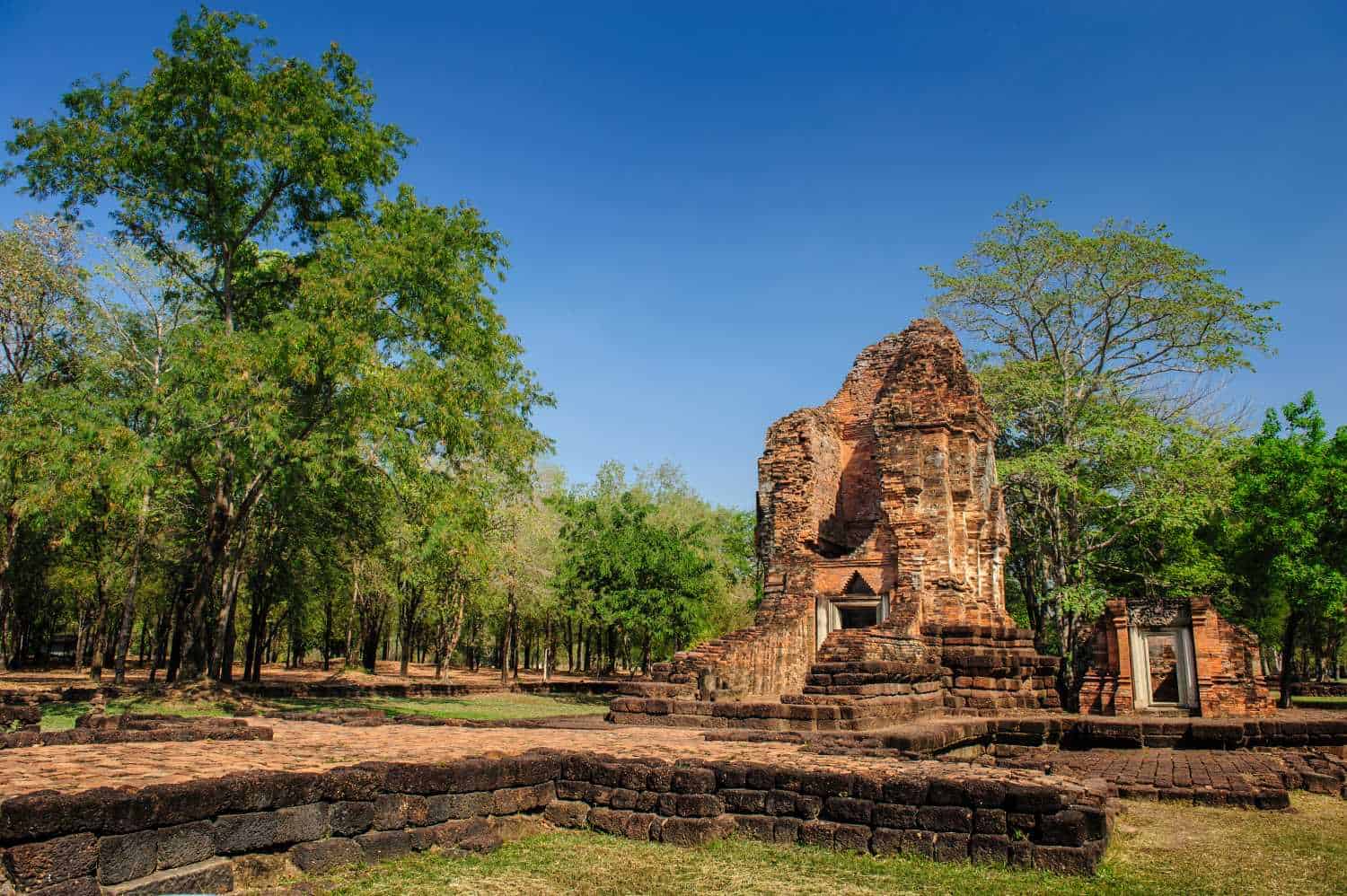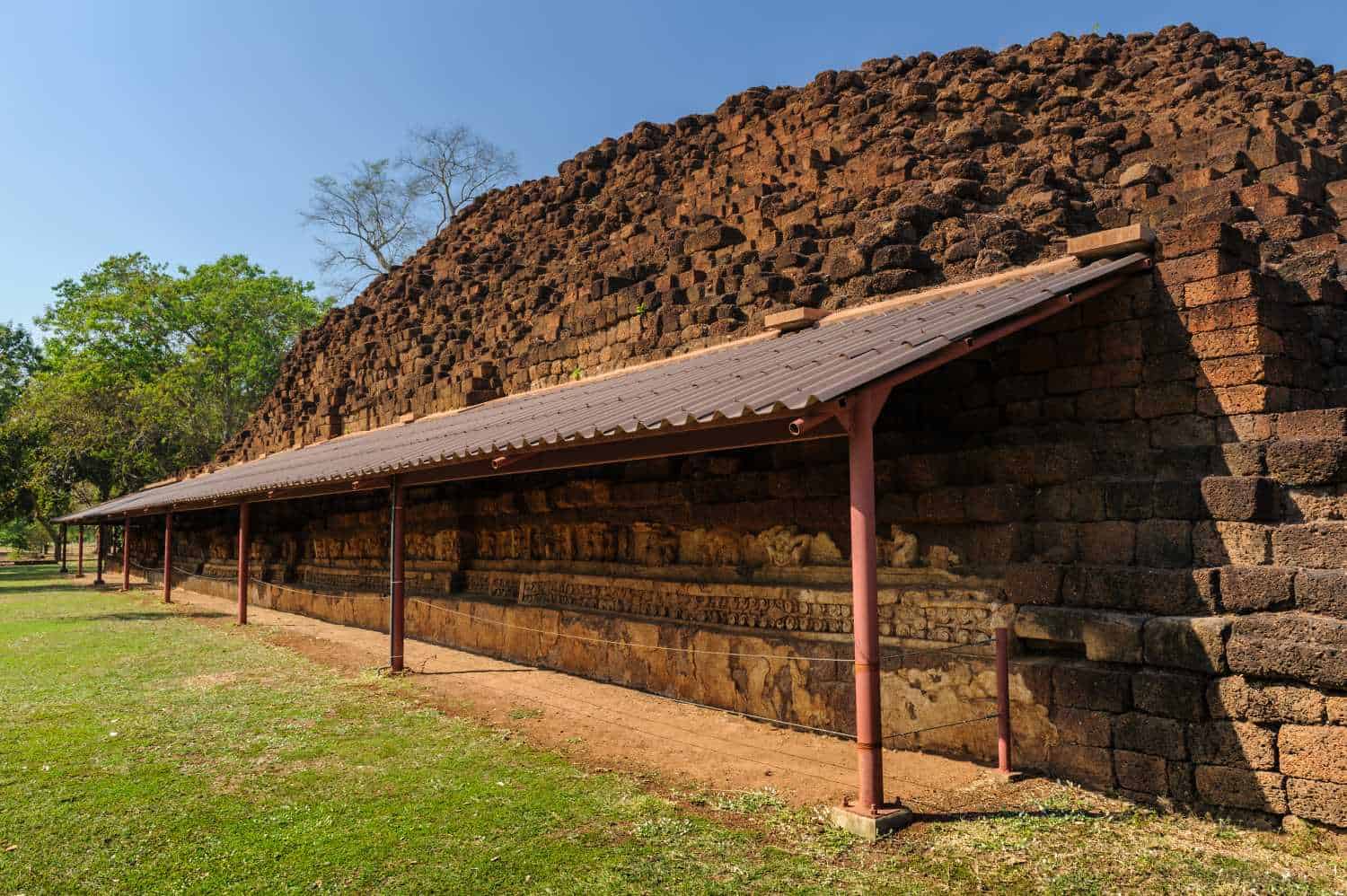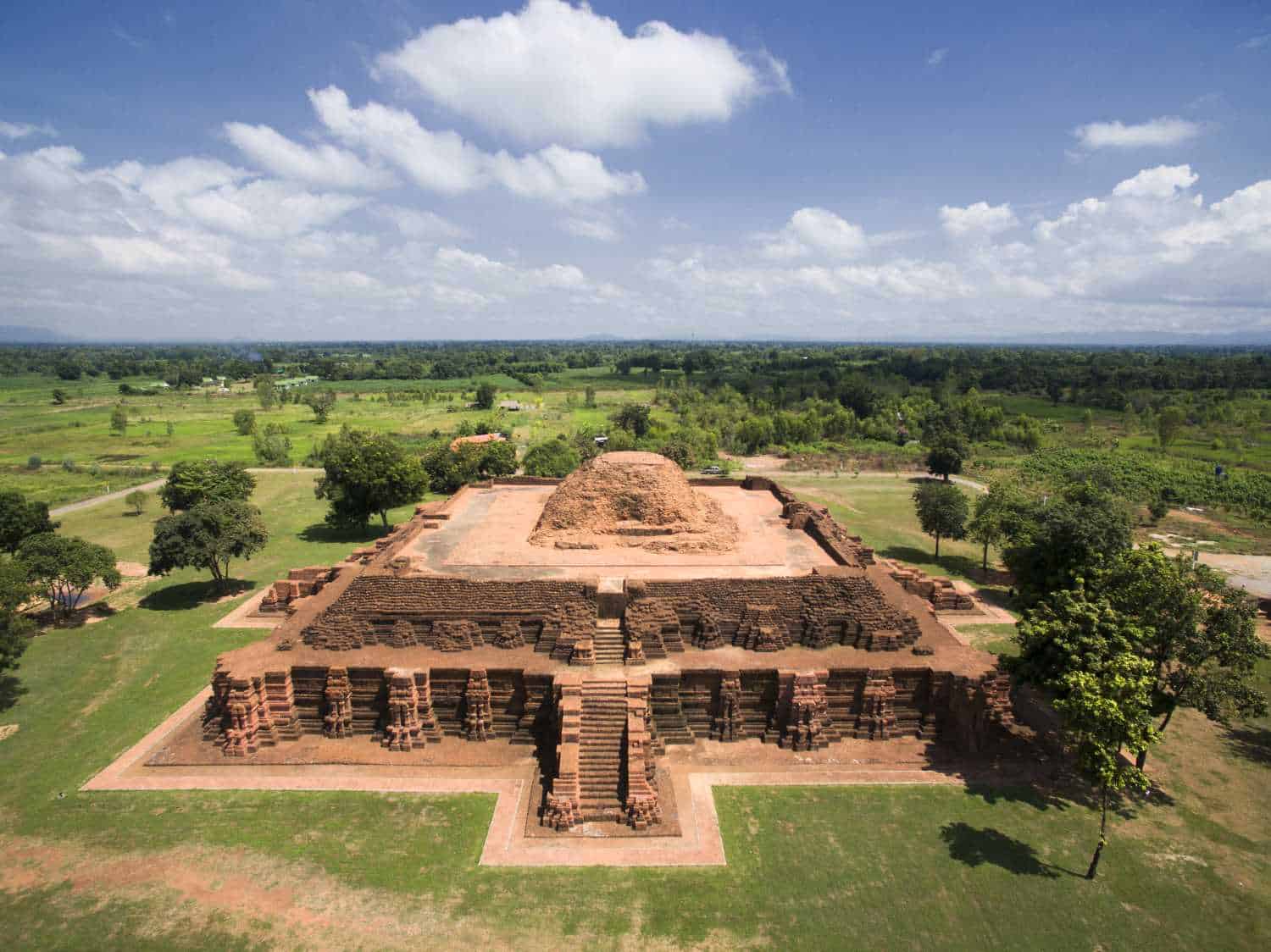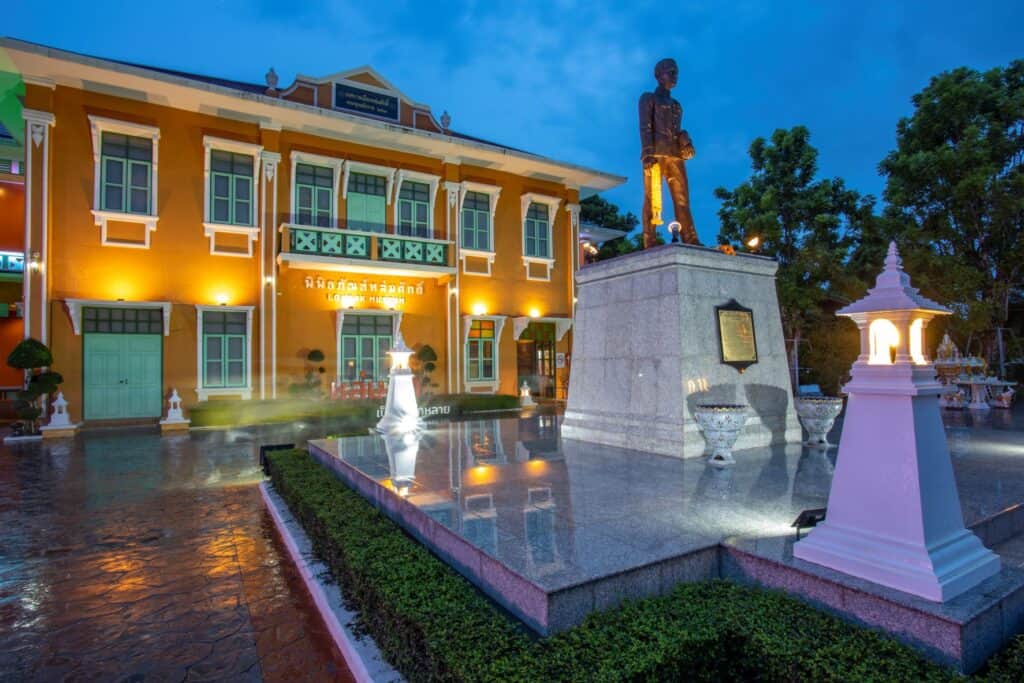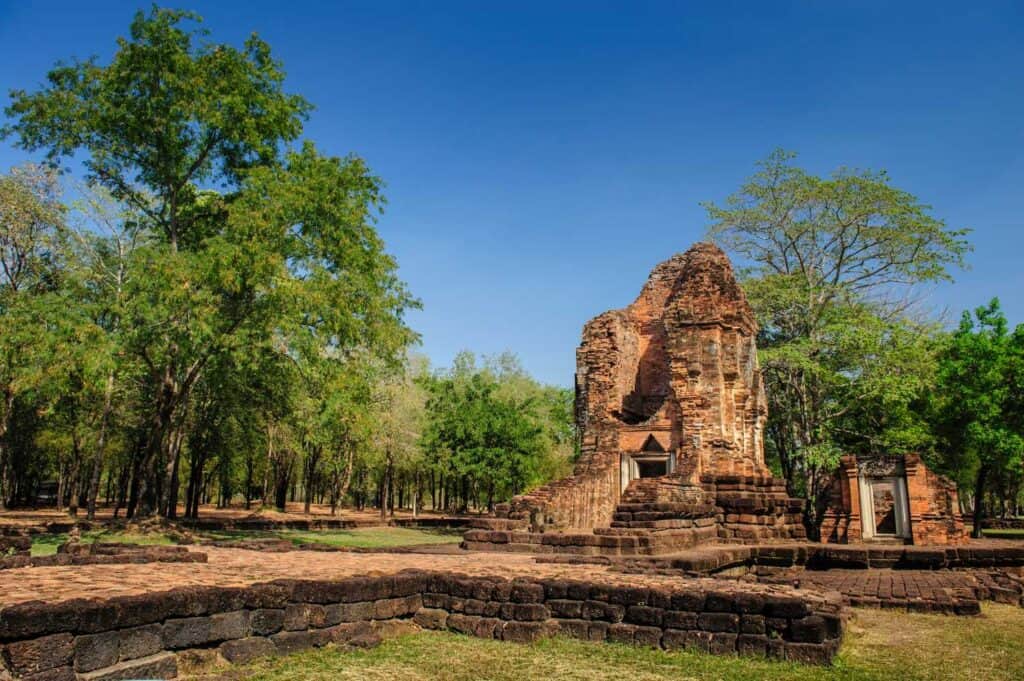
Si Thep Historical Park is located in Si Thep Sub-district, this is one of the most significant historical sites in Phetchabun for study and exploration. It was awarded the Thailand Tourism Industry Award in 2000 (B.E. 2543) for Outstanding Cultural and Historical Attraction. Si Thep Historical Park contains the ruins of ancient Phetchabun, encompassing Si Thep Ancient Town, originally called Mueang Aphai Sali. It is believed to have been built during the boom years of the ancient Khmer empire, no less than 1,000 years old. The historic town is surrounded by a moat and a mound; inside, ponds and swamps dot the compound. Attractions include the Information Centers (there are two: old and new), which have displays of ancient remains and rotating exhibits on the history and archaeology of the Si Thep Historical Park. -The Archaeological Excavation Pit Building is an exhibition site displaying human skeletons and elephant remains discovered during an archaeological excavation in 1988 (B.E. 2531). -Prang Song Phi Nong spire, one of several Khmer-style spires on site, is also noteworthy, built during the 16th–17th Buddhist centuries (11th–12th centuries CE) in the Baphuon style of Khmer art during the Angkor Wat period. -Prang Si Thep is an example of Khmer-style architecture facing west. It was constructed using brick and laterite, with the lower base made of laterite in a lotus-bud design, similar to typical Khmer architecture. The main structure (cellar) was built with bricks. Excavations in this area have uncovered fragments of lintels with intricate carvings, dating back to around the 16th–17th Buddhist centuries (11th–12th centuries CE). -KhaoKlang Nai Ancient Monument, lying in the center of town, was constructed even earlier, between the 6th or 7th century. Stucco sculptures of humans and animals decorate its base, made in the Dvaravati style. A worshipping ceremony is held annually at a highly revered shrine in the west, Chaopho Si T