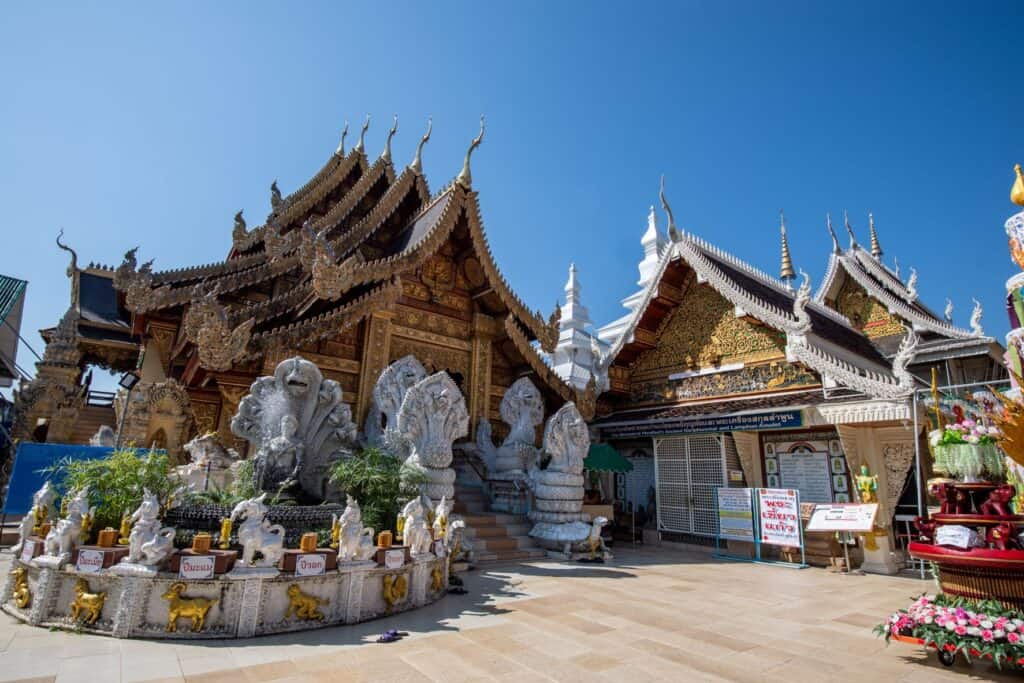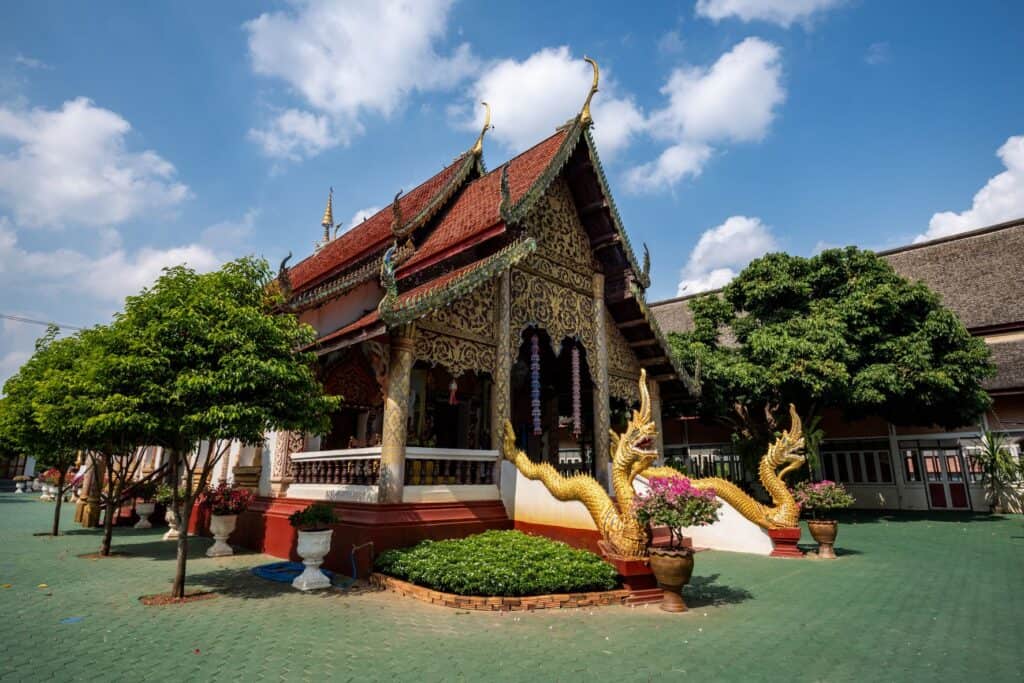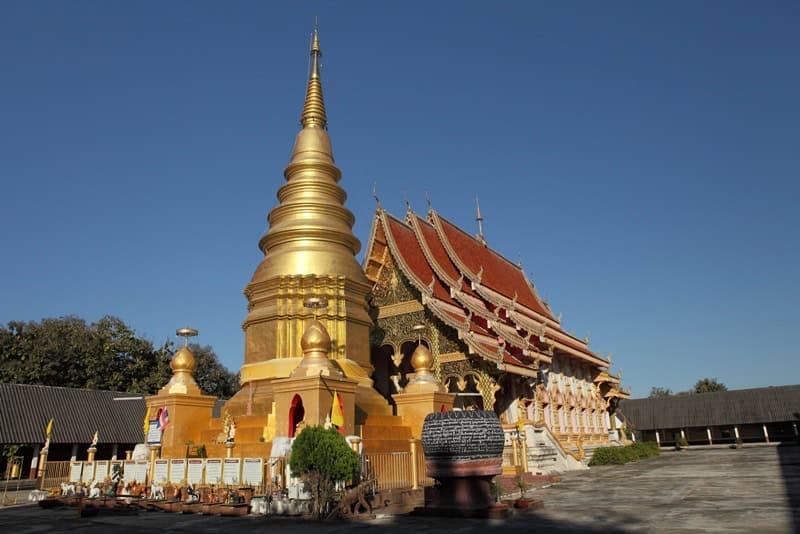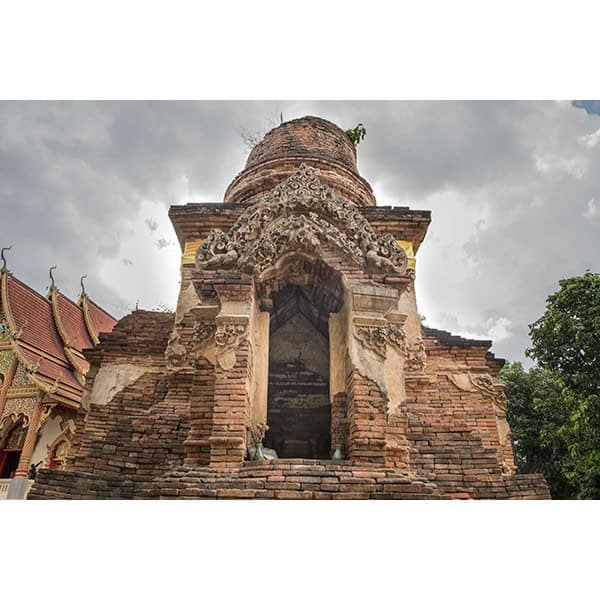
Ancient brick foundations emerge from the earth at Kho Klang temple, revealing layers of Thailand’s Buddhist heritage that span centuries. This archaeological site in Lamphun offers visitors a rare glimpse into the architectural evolution of Lanna temple construction, where excavated remains tell stories of devotion and craftsmanship from generations past. Unlike fully restored temples, Kho Klang presents history in its raw form, allowing you to witness archaeological discovery in progress.
Walking among the exposed foundations, you’ll observe intricate brickwork patterns that once supported wooden structures and sacred buildings. The site reveals different construction phases, with newer foundations built directly over older ones, creating a fascinating timeline carved in clay and mortar. Informational plaques help interpret the various architectural elements, while the surrounding grounds contain scattered artifacts and pottery fragments. The scent of earth and vegetation mingles with the sight of carefully maintained excavation areas, where ongoing archaeological work continues to uncover new sections of this ancient complex.
Quietude defines the Kho Klang experience, broken only by birdsong and the rustling of leaves in surrounding trees. This peaceful atmosphere invites contemplation as you imagine the bustling temple life that once filled these spaces with chanting monks and devoted worshippers. The site feels like stepping into an open-air museum where history speaks through weathered bricks and carefully preserved foundations, creating an intimate connection with Thailand’s spiritual past.
Early morning visits provide the most comfortable exploring conditions, especially during Thailand’s cooler months from November to February. The site lies within Pa Sang district, accessible by local transportation from Lamphun town center. Bring sun protection and comfortable walking shoes for navigating the uneven terrain around excavation areas. While modest dress isn’t strictly enforced, respectful attire honors the site’s religious significance. Free admission makes this archaeological treasure accessible to curious travelers seeking authentic historical experiences beyond typical tourist circuits.