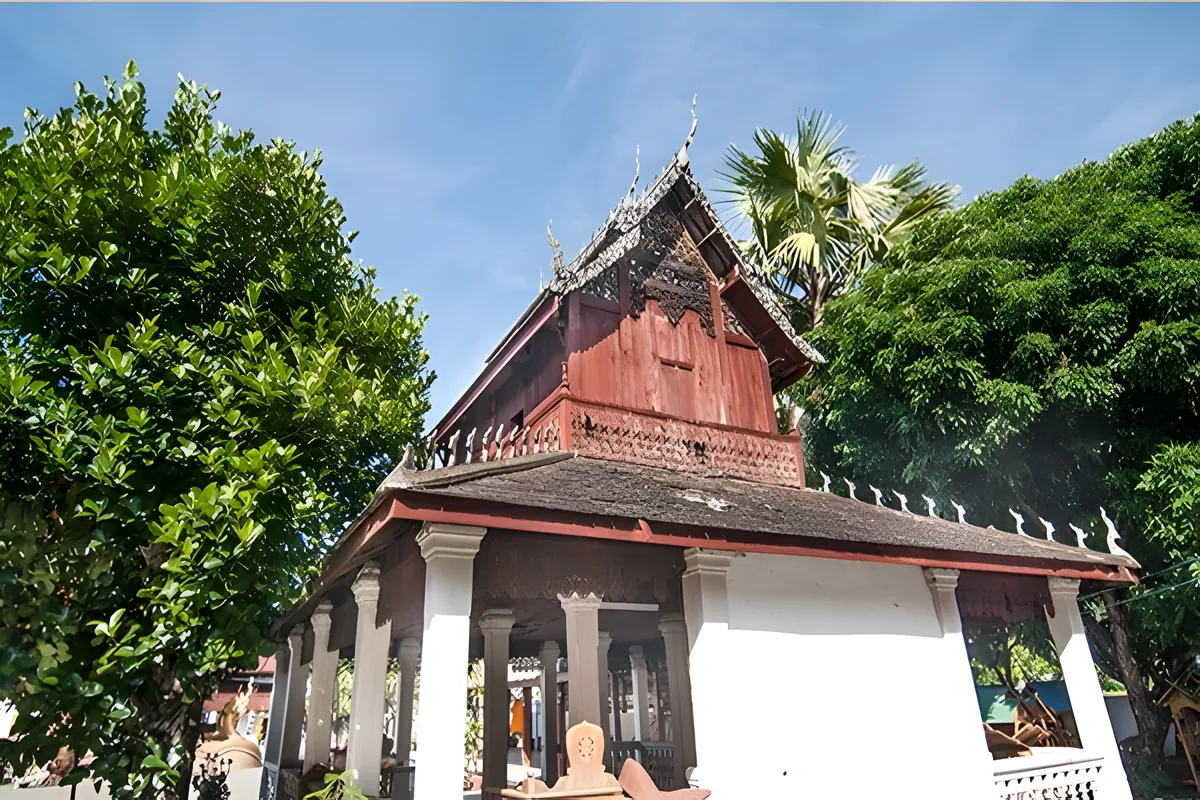






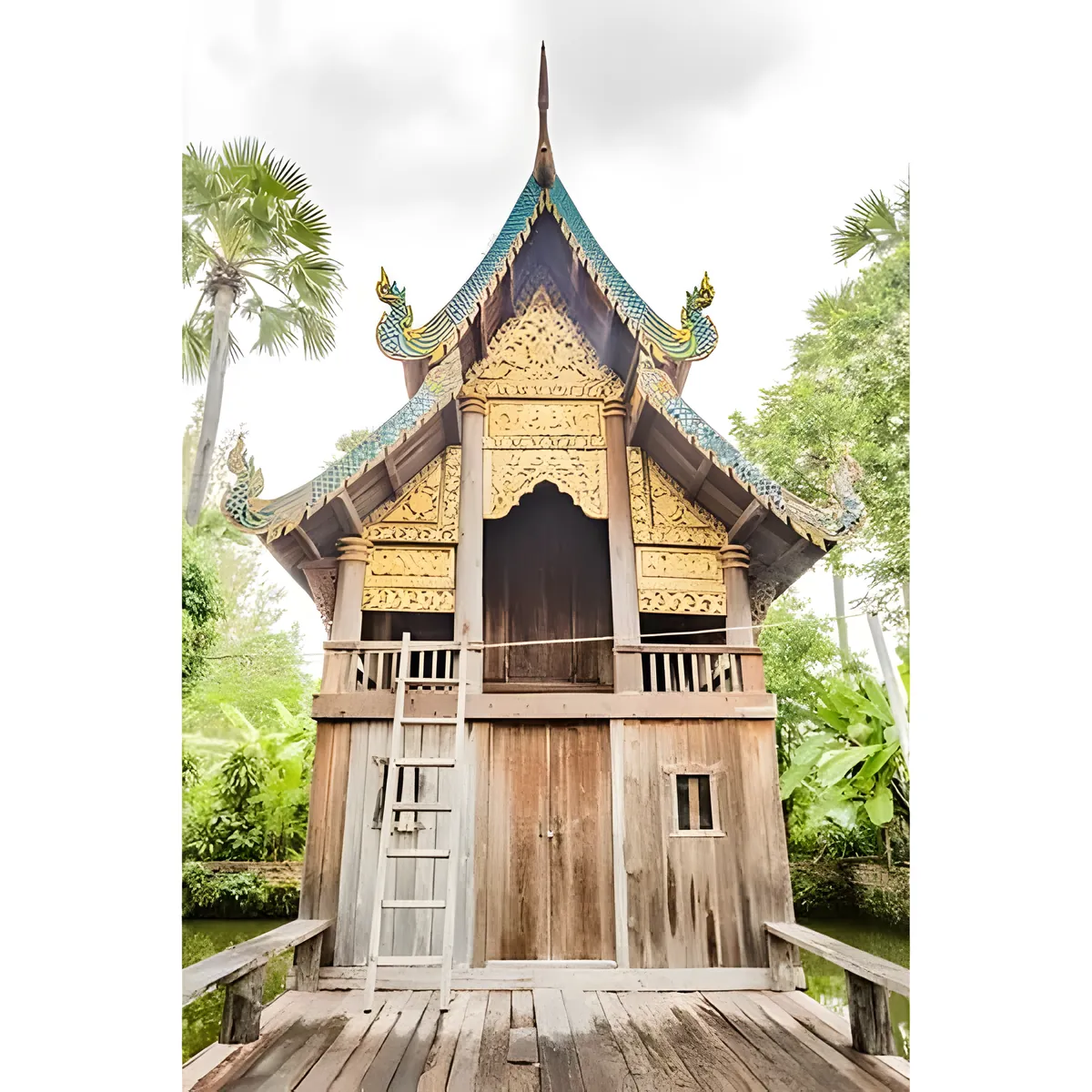
Wat Nong Ngueak is a working village temple in Pa Sang district known for one thing above all: a Lanna-style viharn with hand-carved teak pillars, each cut from a single trunk and standing about 12 sok (roughly 6 metres) tall. Entry is free, daily 08:00-17:00.
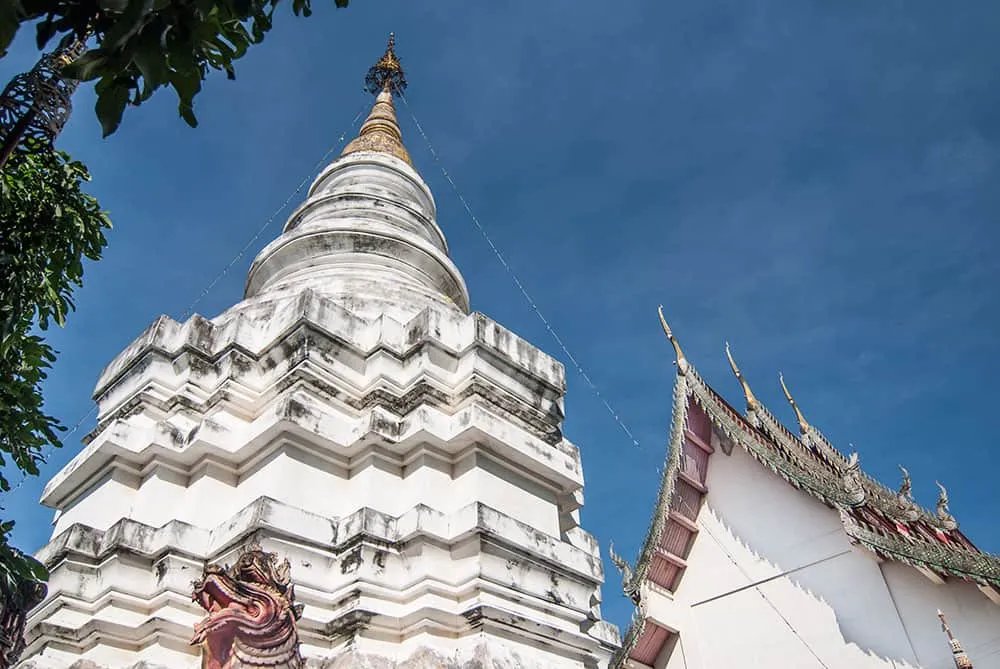
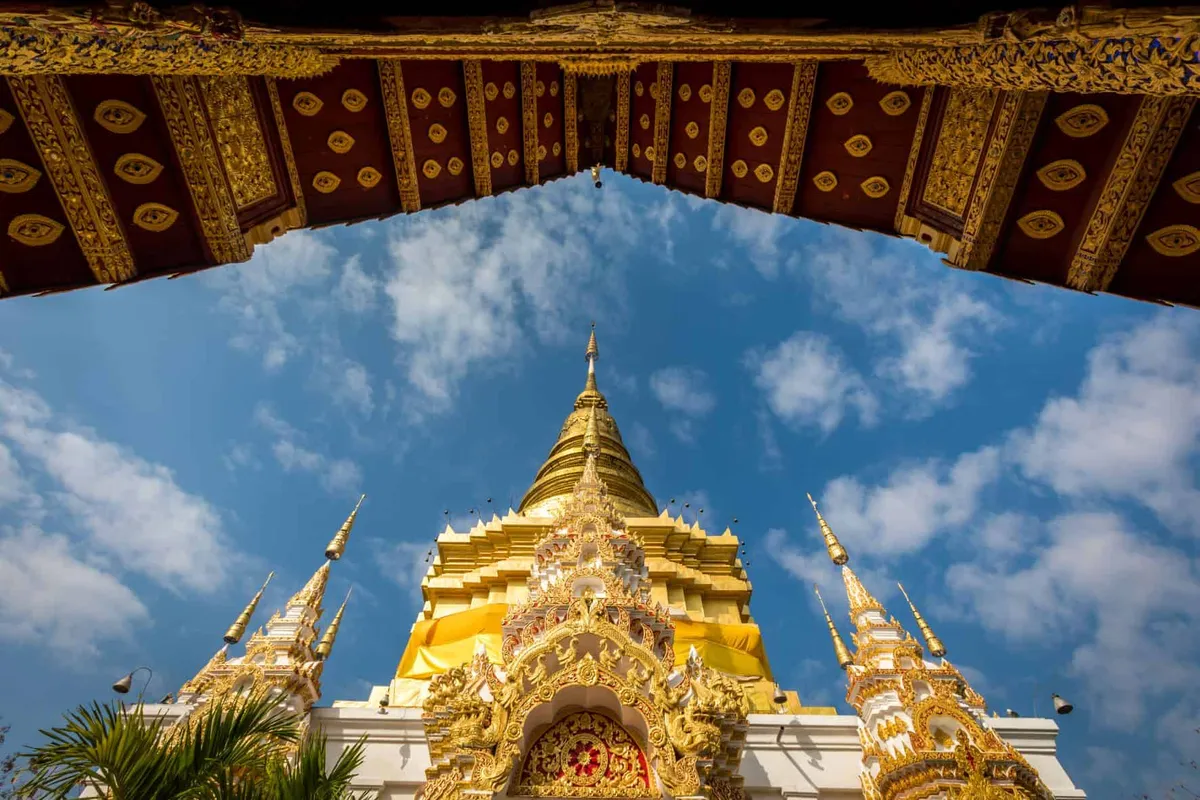
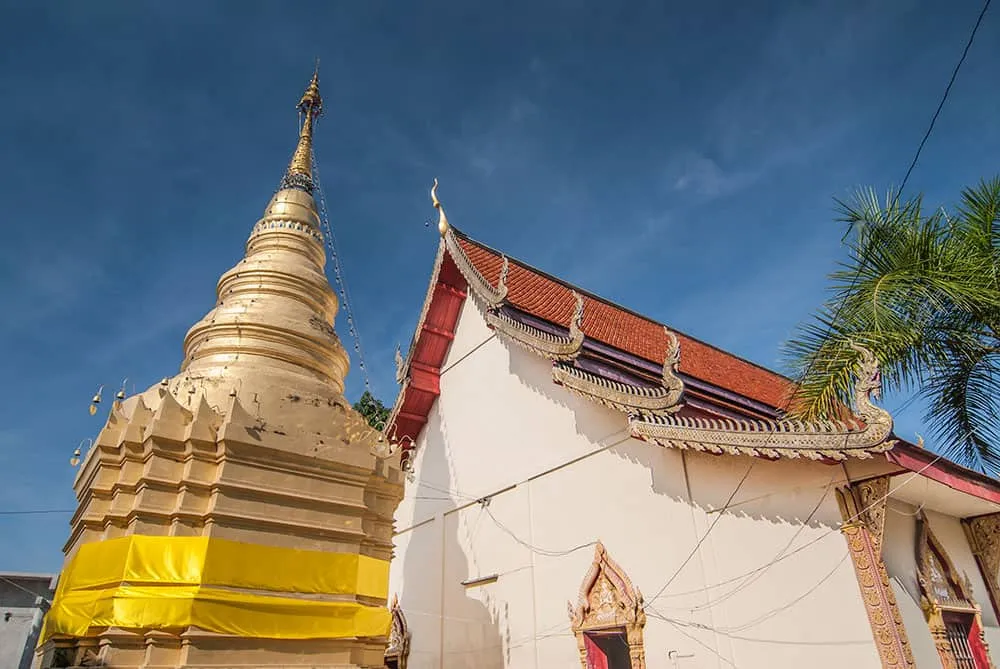
Villagers invited the monk Kruba Parami to found the temple in 1928, and the current viharn dates from that period. The carving is concentrated on the entrance doors and the structural pillars rather than spread thin across the whole building — a deliberate contrast to temples that carve every surface. Lamphun province registered the site as a provincial heritage building on 19 February 2013, recognition that reflects how intact the original woodwork remains a century on. A gold-painted chedi stands beside the viharn as the temple’s other visual anchor, though the wooden hall is the reason art and architecture researchers make the trip out from Lamphun town.
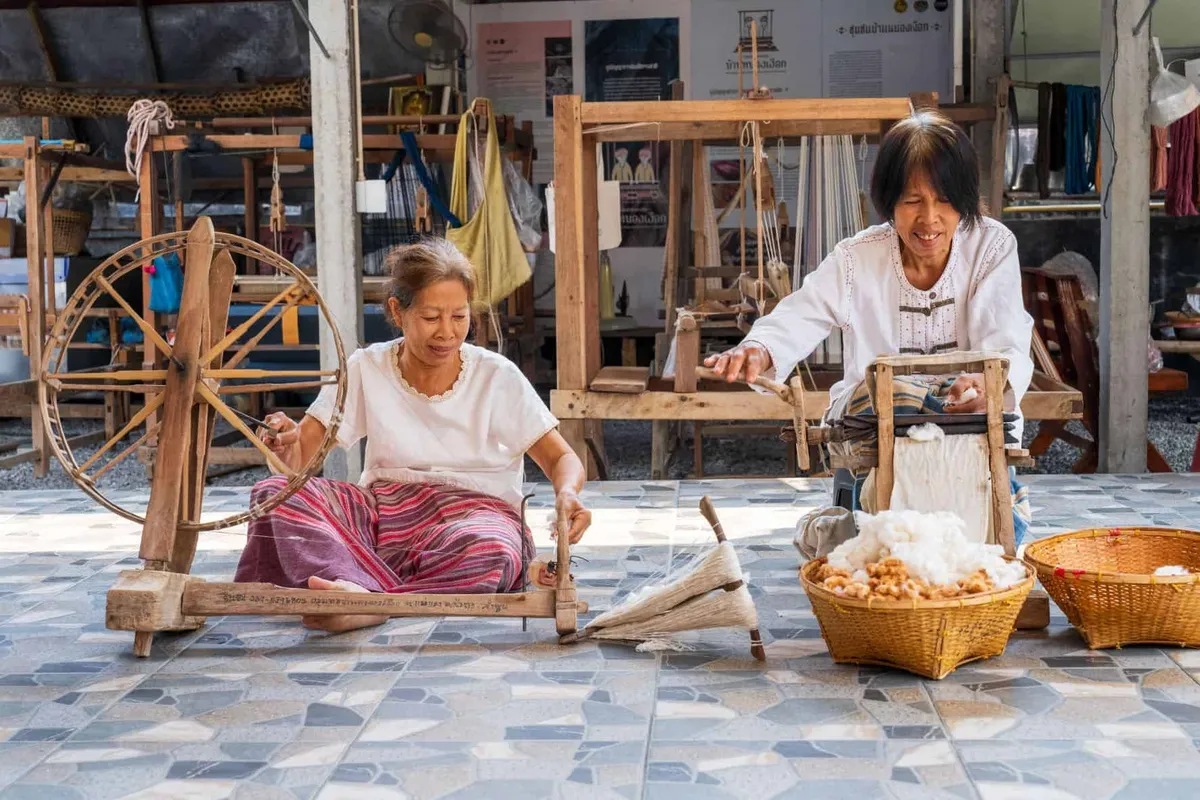
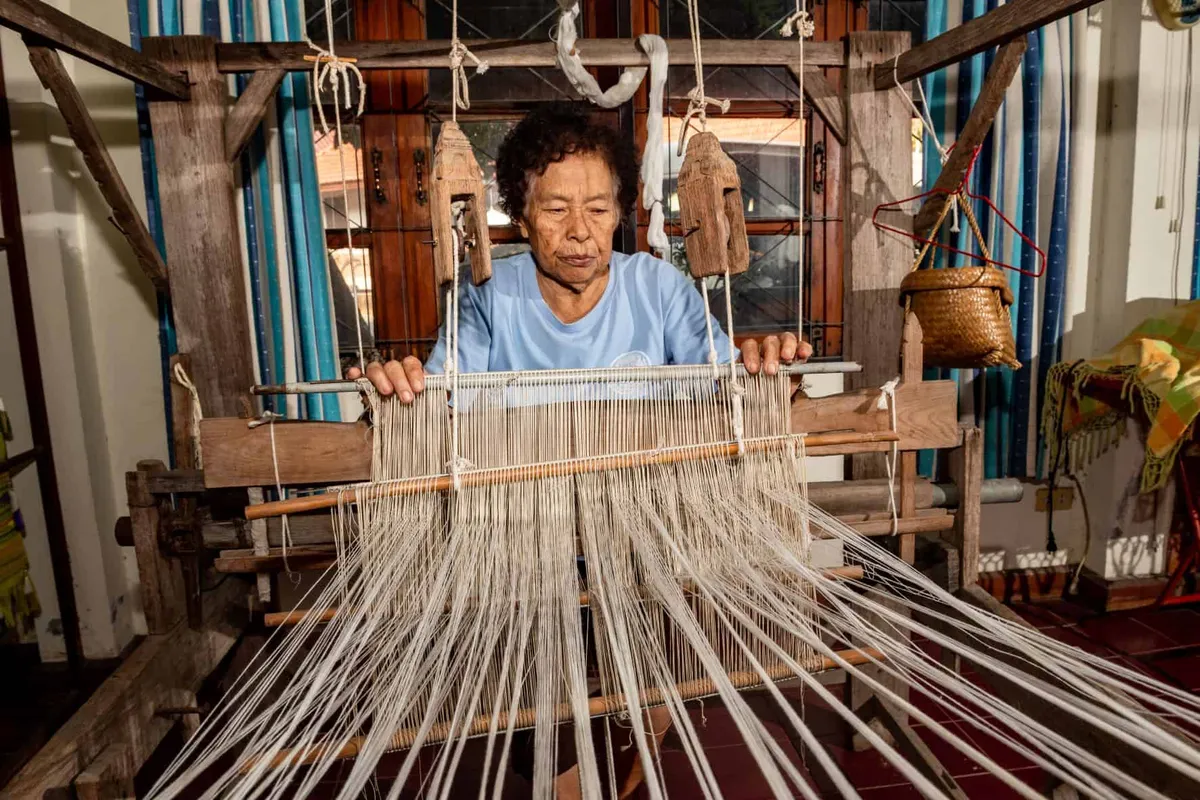
The village itself, Ban Nong Ngueak, has its own reputation: it’s a recognised centre for traditional Lamphun cotton weaving, and it’s common to see looms set up on covered porches along the lanes near the temple. Pairing the two — the carved viharn and a look at the weaving — makes for a more complete stop than the temple alone. A gilded chedi stands beside the viharn as the compound’s other visual anchor, its surface catching the light differently through the day, though most visitors come specifically for the woodwork rather than the stupa.
Inside the viharn, the scale of the single-trunk pillars is easier to appreciate up close than in a photo — each one rises the full height of the hall without a join, something that would be unaffordable to replicate with modern timber. Look closely at the door carving for the mix of Buddhist narrative panels and local floral motifs typical of Lanna temple work from this period, rather than the more standardised patterns found at reconstructed or heavily restored temples elsewhere in the north.
Insider Tip: Go before 9:00 if you want the viharn to yourself. It’s an active monastery on a rural road, not a tour-bus stop, so there’s rarely anyone else around outside of merit-making days.
Morning is also the most comfortable time to be outdoors — Lamphun’s lowland heat builds fast once the sun clears the surrounding rice fields. Dress modestly (shoulders and knees covered) and remove shoes before stepping into the viharn. There’s no formal parking area; visitors typically pull in along the temple’s front lane. The temple sits about 20-25 minutes by car or motorbike from Lamphun town, in Mae Raeng subdistrict.
- Entry fee: Free
- Hours: Daily 08:00-17:00
- Built: 1928, founded by Kruba Parami
- Heritage status: Registered Lamphun provincial heritage site (2013)
- Standout feature: Lanna viharn with single-trunk teak pillars, ~6m tall
Location & Directions
Pa Sang, Lamphun
Lamphun, Thailand
Show your taxi or Grab driver
วัดหนองเงือก
Within Walking Distance



Frequently Asked Questions
Is Wat Nong Ngueak free to visit?
What's special about the viharn's woodwork?
When was Wat Nong Ngueak built?
Is there anything else to see nearby?
How do I get to Wat Nong Ngueak from Lamphun town?
Spotted something out of date or incorrect? Let us know
Stay Near Wat Nong Ngueak
Compare places to stay in Lamphun, or open the map for options closest to the attraction.