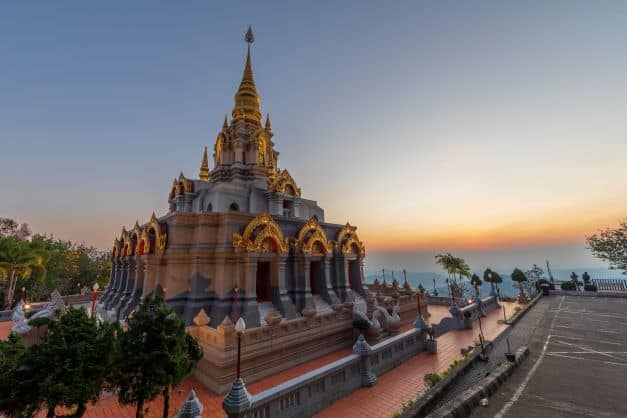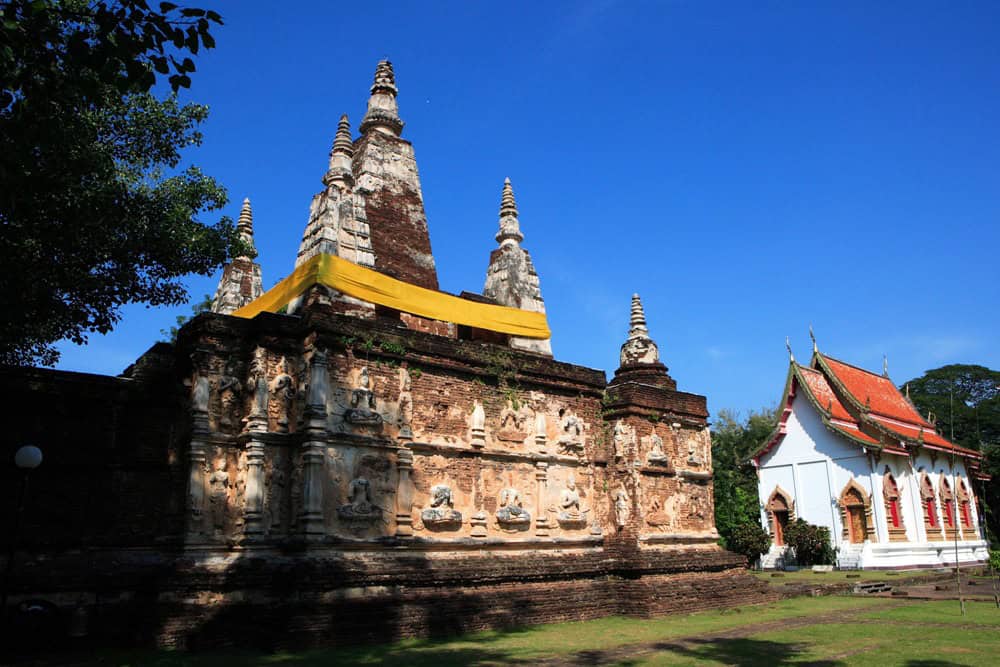
Seven towering spires pierce the sky at Wat Chet Yot, creating one of northern Thailand’s most distinctive temple silhouettes. This 15th-century Buddhist temple draws its architectural inspiration from India’s Mahabodhi Temple, representing the seven places where Buddha meditated during the seven weeks following his enlightenment. Unlike the typical Thai temple design, Wat Chet Yot’s unique structure tells a story that bridges cultures and centuries, making it a fascinating stop for anyone exploring Chiang Rai’s rich religious heritage.
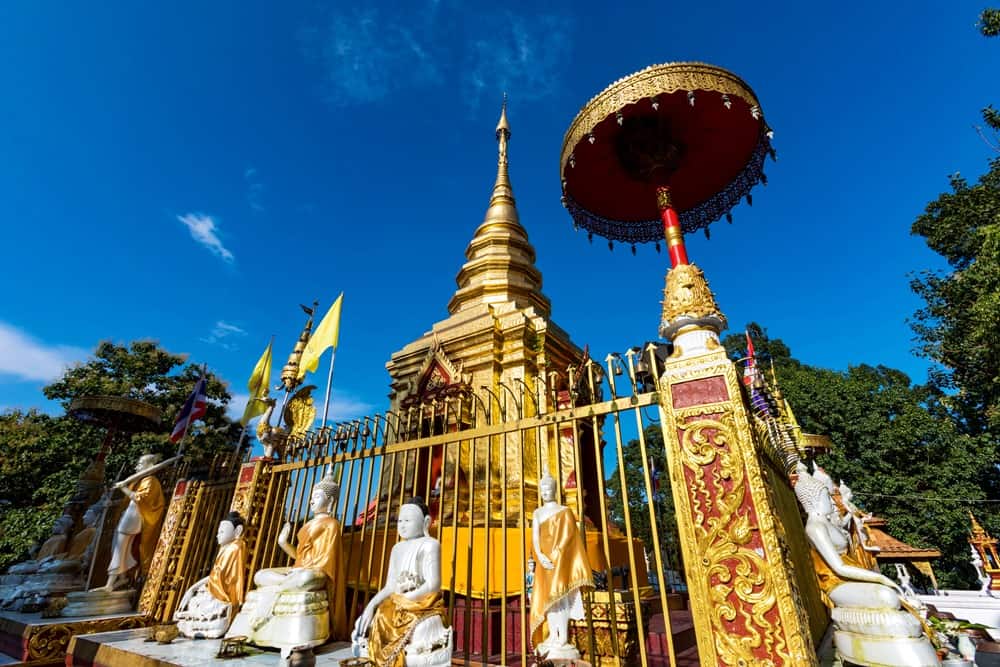
Walking around the central chedi, you’ll discover intricate stucco reliefs depicting celestial beings and Buddhist motifs that have weathered centuries of monsoons. The seven prangs (spires) each represent a different meditation spot, and you can climb the stairs for closer views of the detailed carvings. Ancient Bodhi trees provide natural shade around the complex, their roots intertwining with weathered stone foundations. Inside the main hall, golden Buddha images catch the filtered light streaming through traditional wooden windows. The temple grounds also feature traditional monk quarters and a smaller modern shrine where locals come to make merit and leave colorful flower offerings.
Serenity pervades this temple compound, enhanced by the gentle sound of wind chimes and the occasional chanting from nearby meditation halls. Morning visits offer the most peaceful experience, when soft light illuminates the ancient stonework and creates dramatic shadows between the spires. The atmosphere feels contemplative rather than touristy, with local worshippers quietly going about their prayers while orange-robed monks tend to daily temple duties.
Early morning hours between 6-9 AM provide the best lighting and cooler temperatures for photography and exploration. The temple sits about 2 kilometers from Chiang Rai’s city center, easily accessible by tuk-tuk, songthaew, or bicycle. Dress modestly with covered shoulders and knees, and bring a hat for sun protection since shade is limited around the main chedi. Entry is free, though donations are appreciated. Combine your visit with nearby Wat Phra Kaew for a complete temple tour.