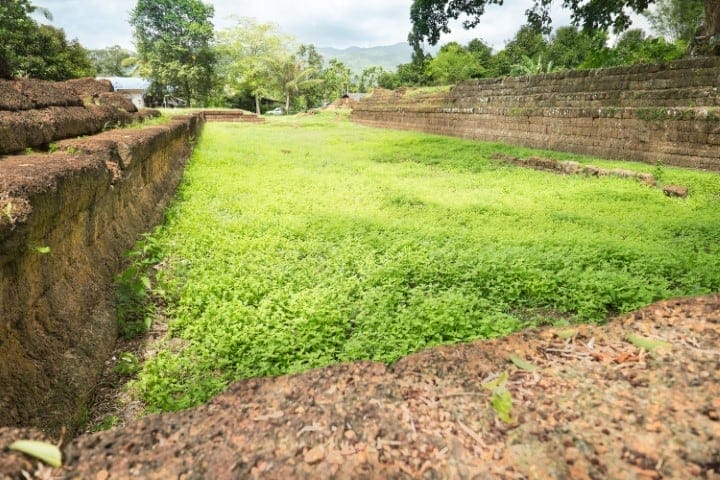
Ancient brick foundations and weathered stone structures tell the story of a forgotten settlement at Meung Paniead Historic Park, where archaeological discoveries have revealed traces of an early community that once thrived in this corner of eastern Thailand. The site offers visitors a rare glimpse into the region’s pre-modern history, with excavated remains that suggest this was once a significant trading post along historic routes connecting the Thai coast with inland territories.
Walking through the park, you’ll encounter partially restored brick walls, foundation stones, and scattered pottery fragments that archaeologists have carefully preserved and displayed. Information boards throughout the site help interpret the various structures, including what appear to be residential areas and storage facilities. The scent of frangipani trees mingles with the earthy smell of old brick as you explore the pathways between excavated areas. Local guides sometimes share stories passed down through generations about the people who lived here, bringing the silent ruins to life with tales of daily commerce and community gatherings.
Quiet contemplation defines the experience at Meung Paniead, where few crowds disturb the peaceful atmosphere among the ancient remains. Birds call from nearby trees while you wander the gravel paths, creating a meditative environment perfect for reflecting on the passage of time. The park’s compact size makes it feel intimate rather than overwhelming, allowing visitors to examine the archaeological features at their own pace without feeling rushed through Thailand’s complex historical layers.
Early morning visits offer the most comfortable temperatures for exploring the outdoor site, especially during the cooler months from November through February. The park sits along main roads connecting Chanthaburi and Trat provinces, making it accessible by local transportation or private vehicle. Bring water, sun protection, and comfortable walking shoes for the uneven terrain. While not as grand as Thailand’s major temple complexes, this archaeological site rewards curious travelers with insights into the everyday lives of historical communities that shaped the region.
Location
Find a Place to Stay
More Trat Attractions