




Skip to content
Cultural HeritageHistorical Sites

Residence Kampot

โบราณสถานจวนเรสิดังกัมปอร์ต

Trat Reviewed Jul 2026
Mon-Fri 09:00-16:30
Entry Free

Residence Kampot in Trat takes its French-derived name from “Résidence” — this was the seat of the French Resident who administered Trat province from 1904 to 1907, not a building connected to Kampot in Cambodia. It’s free to view, Monday to Friday, 09:00-16:30.

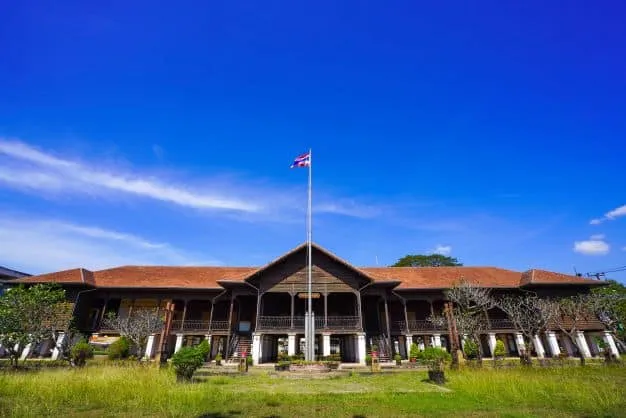
The house predates the French occupation. It was built during the reign of King Rama V by Phra Pranee Chin Pracha, a local Chinese-Siamese official, as a wedding house for his daughter Sud and her husband, Luang Worabaht Pakdee, then Trat’s district officer. When France occupied Trat town in 1904 — part of a wider territorial standoff with Siam — French officials initially left the house alone once they learned it was private property. Once the original owners had moved on, France took over the building, added a balcony, and installed its Resident, an official named de Foreign Simon, to govern the province from it. France returned Trat to Siamese control in 1907 under a treaty exchanging the territory for the Battambang, Siem Reap, and Sisophon areas, which went to French Indochina. From 1907 to 1928, the same building then served as the residence of Trat’s Thai provincial governor.

Architecturally, it’s a three-storey structure combining brick and timber — a masonry ground floor beneath two wooden upper storeys, topped with a tiered hip roof under clay tiles, with a walled forecourt in front and a balustraded upper terrace, the section the French added during their occupation. The building has functioned as a Department of Corrections probation office for decades, and the original form has been kept largely intact rather than modernised, which is unusual for a working government office — locally, it’s treated as a reminder that Trat was once foreign-administered territory rather than just another old house.

Insider Tip: This is a look-from-outside stop rather than a museum — it’s an active probation office, so treat a visit as a short architectural detour on a walk through central Trat rather than a lengthy sightseeing stop.

Key Facts:
  • Built: Reign of Rama V, as a private wedding house
  • French occupation: 1904-1907
  • Later use: Thai provincial governor’s residence, 1907-1928
  • Today: Department of Corrections probation office
  • Entry: Free, Mon-Fri 09:00-16:30

From Trat’s municipal market, head toward Lak Mueang intersection, turn left, and continue about 500 metres — the building is on the left. It sits close to the Trat City Museum, which covers the same trading-era history in more depth, within easy reach of central Trat.

Location & Directions

Lak Mueang Road

Trat, Thailand

Get directions

Show your taxi or Grab driver

โบราณสถานจวนเรสิดังกัมปอร์ต

Within Walking Distance

Frequently Asked Questions

Why is a Cambodian-sounding name attached to a building in Trat, Thailand?
"Residence Kampot" (จวนเรสิดังกัมปอร์ต) is a Thai transliteration of the French title "Résidence" — this building housed the French colonial Resident who administered Trat province between 1904 and 1907, not anything connected to Kampot, Cambodia.
Why did the French occupy Trat?
France held Trat from 1904 to 1907 as leverage in territorial negotiations with Siam, part of the wider Franco-Siamese disputes of the era. Trat was returned to Siamese control under the 1907 treaty, in exchange for the Battambang, Siem Reap, and Sisophon areas going to French Indochina.
Can you go inside?
The building functions as an active Department of Corrections probation office, so visits are generally to the exterior and grounds during office hours (Monday-Friday, 09:00-16:30) rather than a full walk-through museum experience.
Was this always a government building?
No — it was originally built as a private residence during King Rama V's reign, a wedding house for the daughter of a local Chinese-Siamese official. The French took it over only after its original occupants had moved on, adding a balcony during their tenure.
What does the building look like?
A three-storey structure that's part brick, part timber, topped with a tiered hip roof under clay tiles — the masonry ground floor and wooden upper floors are typical of early-1900s colonial-period construction in this part of Thailand.

Popular tours in Trat

Hotels Near Residence Kampot

Live prices around the attraction — tap a pin to compare.

More Places to Visit in Trat

Explore More by Category