







Retiring in Thailand starts with three practical decisions: which immigration route fits, how you will pay for healthcare, and where you want to live outside the holiday season. Test your preferred base before signing a long lease, and confirm visa evidence with the embassy or immigration office handling your application.
Quick answer
Start with the visa route, healthcare budget, and a trial stay. Hua Hin works well for beach access and Bangkok connections, Chiang Mai for lower costs outside smoke season, Phuket for private healthcare and island life at a higher price, and Bangkok for the widest services. Do not move 800,000 THB or sign a long lease until the immigration office handling your case confirms its evidence rules.
| Priority | Likely base or route | Main advantage | Main tradeoff |
|---|---|---|---|
| Lower monthly costs | Chiang Mai | Housing choice and established expat services | Seasonal smoke and distance from the coast |
| Beach near Bangkok | Hua Hin | Rail and road access to the capital | Quieter social scene |
| Healthcare and flights | Bangkok | Widest hospital and transport choice | Traffic and higher central rents |
| Island lifestyle | Phuket | Private hospitals and international airport | Higher housing and daily costs |
| Immigration route | Non-Immigrant O, O-A, or O-X | Established retirement pathways | Evidence, nationality, and insurance rules vary by route |
How we picked these retirement options
Compare visa fit, healthcare access, long-term rent, transport, air quality, and how easily you can handle immigration reporting. A one- to three-month trial stay exposes daily tradeoffs that are easy to miss on a holiday.
How to choose
Choose the visa route before the city, then price insurance and housing around it. Keep enough money outside Thailand for emergencies, and use independent legal advice for property, tax, or estate planning.
Finances and Cost of Living
Living costs vary sharply between central Bangkok, resort islands, provincial cities, and rural areas. Build a budget from current local rents, insurance quotes, and the transport you will actually use.
Housing
Compare long-term rents in the neighbourhoods you would genuinely consider. Check whether the quoted price includes furniture, internet, building fees, parking, and a minimum lease term.
Food
Food costs depend on location and routine. Local markets and simple Thai restaurants usually cost less than imported groceries, international restaurants, and dining in resort areas, so track a normal month during a trial stay.
Transportation
Transport costs depend on the city and operator. Bangkok has the broadest public network, while smaller cities and islands may require regular taxi use or a private vehicle. Check the current fare and ticket class for each route; if you drive, carry the licence and insurance required in Thailand and wear a helmet on a motorbike.
Keep a separate allowance for immigration fees, annual insurance increases, deposits, flights home, and emergency care. A low monthly rent does not settle the full retirement budget.
Visas & Immigration
Retirement Visa
Separate the visa routes
“Retirement visa” is used informally for several different processes. A Non-Immigrant O retirement visa issued by the Royal Thai Embassy in London is a single-entry visa for a stay of up to 90 days. A Non-Immigrant O-A is a one-year multiple-entry visa with additional medical, police-clearance, and insurance evidence. A Non-Immigrant O-X is a separate long-stay option with its own nationality, deposit, and Thai-insurance rules (see below). An annual retirement extension applied for inside Thailand is a separate immigration process.
Applicants for the O, O-A, O-X, or retirement extension must generally be at least 50, but document rules depend on the route and the authority accepting the application. Follow the checklist for the embassy, e-Visa office, or Thai immigration office handling your case.
Non-Immigrant O-X eligibility (sourced)
According to thailand.go.th, O-X applicants must be over 50 and hold a passport of one of these countries: Japan, Australia, Denmark, Finland, France, Germany, Italy, Netherlands, Norway, Sweden, Switzerland, United Kingdom, Canada, or United States of America (most embassy checklists list these 14; some missions also list Austria, Belgium, New Zealand and South Korea, so check yours). Financial evidence is a Thai commercial-bank fixed deposit of at least 3,000,000 THB, or a fixed deposit of at least 1,800,000 THB plus annual income of at least 1,200,000 THB (with the deposit reaching at least 3,000,000 THB within one year). After maturity, withdrawals are limited to listed domestic expenses and the balance must not fall below 1,500,000 THB. Applicants also need a criminal-record certificate from their nationality (and from any other country of permanent residence). After entry, holders must complete an annual qualification check at immigration and the usual 90-day reporting. Confirm the current embassy or Immigration Bureau checklist before moving funds. Do not treat a blog summary as the filing list.
For an in-country retirement extension, the current Immigration Bureau criteria include one of these financial routes:
- Monthly income of at least 65,000 THB.
- At least 800,000 THB in a Thai commercial-bank account for no less than two months before applying and three months after approval. After that three-month period, the balance must not fall below 400,000 THB.
- An accepted combination of annual income and Thai bank savings totalling at least 800,000 THB, with the deposit subject to the same retention rules.
The Immigration Bureau order lists income evidence and a Thai bank letter and account record among the supporting documents. It does not make a generic year of overseas bank statements sufficient for every case. Ask the receiving office what it needs before moving funds.
Health Insurance Requirements for the Thai Retirement Visa
Embassy checklists differ: all ask for cover of at least USD 100,000 or 3,000,000 THB a year including COVID-19, and some (Los Angeles for O-X, for example) also still require 40,000 THB outpatient and 400,000 THB inpatient cover on a policy from a Thai insurer, while Singapore accepts a foreign policy with an insurer certificate for O-A. Confirm with the embassy or office handling your application before you buy a policy. Our travel insurance for Thailand guide summarises the same split.
Separately from immigration requirements, compare annual limits, exclusions, waiting periods, pre-existing-condition rules, age limits, direct billing, and evacuation cover. Obtain a written quote for your age and medical history rather than relying on a generic policy example.
Thailand Privilege (Formerly Thailand Elite)
Thailand Privilege is a paid long-stay alternative rather than a retirement route. The Bronze membership currently starts at 650,000 THB for five years, while higher tiers extend to 20 years. Bronze was due to close to new applicants on 30 September 2026; and agents report it was extended to 31 December 2026, but thailandprivilege.co.th shows no deadline, so confirm it is still on offer before you apply.
Check the official route again immediately before applying because embassy and immigration checklists can change. Long-Term Resident (LTR) and Thailand Privilege terms are set by their own programmes. Verify financial and insurance criteria on the issuing authority’s site rather than treating any blog summary as complete. For short visits while you trial a base, see Thailand entry requirements (exemption length changes on 15 September 2026).
Healthcare
Thailand has public and private healthcare, but cost, language support, specialist access, and insurance billing vary by hospital. Check the facilities near your intended home and how your insurer handles planned and emergency treatment there.
Public Healthcare
Public hospitals provide a broad range of care, but waiting times, English support, and specialist availability vary. Foreign residents should confirm charges and payment arrangements rather than assume Thai public subsidies apply.
Private Healthcare
Private hospitals often provide easier access to English-speaking international-patient teams, but charges vary by hospital and treatment. Ask your insurer about direct billing and pre-authorisation before a planned appointment.
Insurance Plans
Compare international and Thai medical policies against your actual needs. Travel medical cover such as SafetyWing’s Nomad Insurance is not automatically a substitute for long-term health insurance or visa-specific evidence. Our Thailand travel insurance guide explains the main policy checks.
Some retirement communities arrange transport, nursing, physiotherapy, or access to nearby clinics, but services and charges differ. Ask for the contract, staffing model, emergency procedure, and full fee schedule before paying a deposit.
Choose a base where you can reach suitable care without depending on a long transfer.
Housing
Housing ranges from city condominiums to detached houses and managed retirement communities. Compare the contract and neighbourhood as carefully as the monthly rent.
Apartments
Apartment rents depend on the neighbourhood, building, lease length, and season. Check whether furniture, internet, building fees, parking, and utilities are included, and view the unit before signing.
Houses
A house provides more space but can add maintenance, security, and transport costs. Confirm what the rent includes and check the landlord’s authority before transferring a deposit.
Retirement Communities
Retirement communities may combine accommodation, meals, transport, recreation, and care in different ways. Request an itemised quote based on the support you need and ask how fees change if your care needs increase.
A trial rental gives you time to test noise, transport, flooding, building management, and access to shops and healthcare before making a longer commitment.
Culture & Language Issues
Thailand is a culturally rich country with its own unique language, customs and traditions. The official language of Thailand is Thai, which has its own alphabet and writing system. It can be difficult to learn for non-native speakers, but there are many resources available to help you get started.
The culture in Thailand is heavily influenced by Buddhism, which forms the basis of much of the country’s social norms and values. Respect for elders and family ties are highly valued in Thai society, as well as politeness and humility when interacting with others. Greetings often involve bowing or waiing (a gesture where both hands are placed together at chest level).
It’s important to remember that Thais place great importance on saving face – so it’s best not to lose your temper or show disrespect towards anyone while visiting the country. Public displays of affection should also be avoided as they may cause offense among locals who tend to be more conservative than westerners for such matters.
Use “Khun” before a person’s given name as a polite title regardless of gender. In speech, a male speaker commonly ends polite sentences with khrap, while a female speaker commonly uses kha. Learning basic greetings and thanks makes everyday errands easier.
Carry clothing that covers shoulders and knees for temples and formal settings. Dress rules vary by site, so check signs or staff instructions at the entrance.
Understanding the culture and language of Thailand is essential for a successful retirement, but it’s also important to consider legal considerations. We’ll explore more below.
Leisure Activities for Retirees in Thailand
There are many leisure activities that retirees in Thailand can enjoy, including:
Beach activities
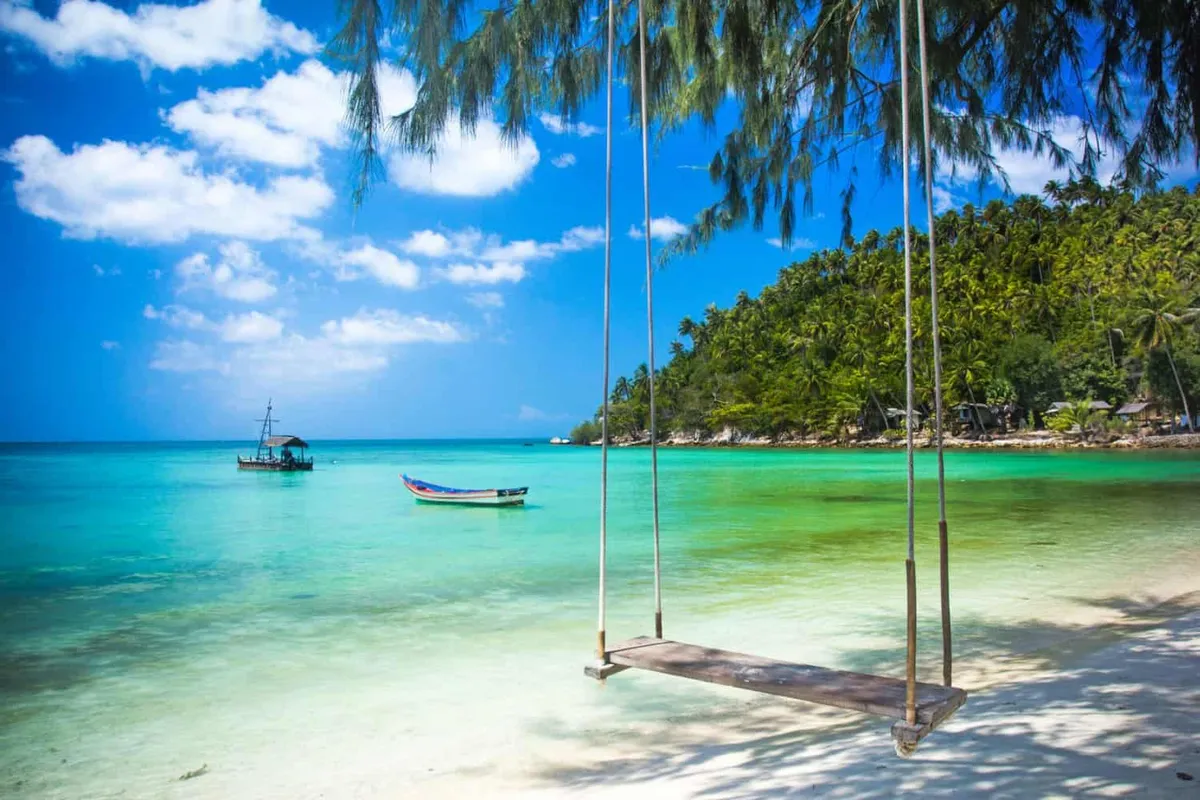
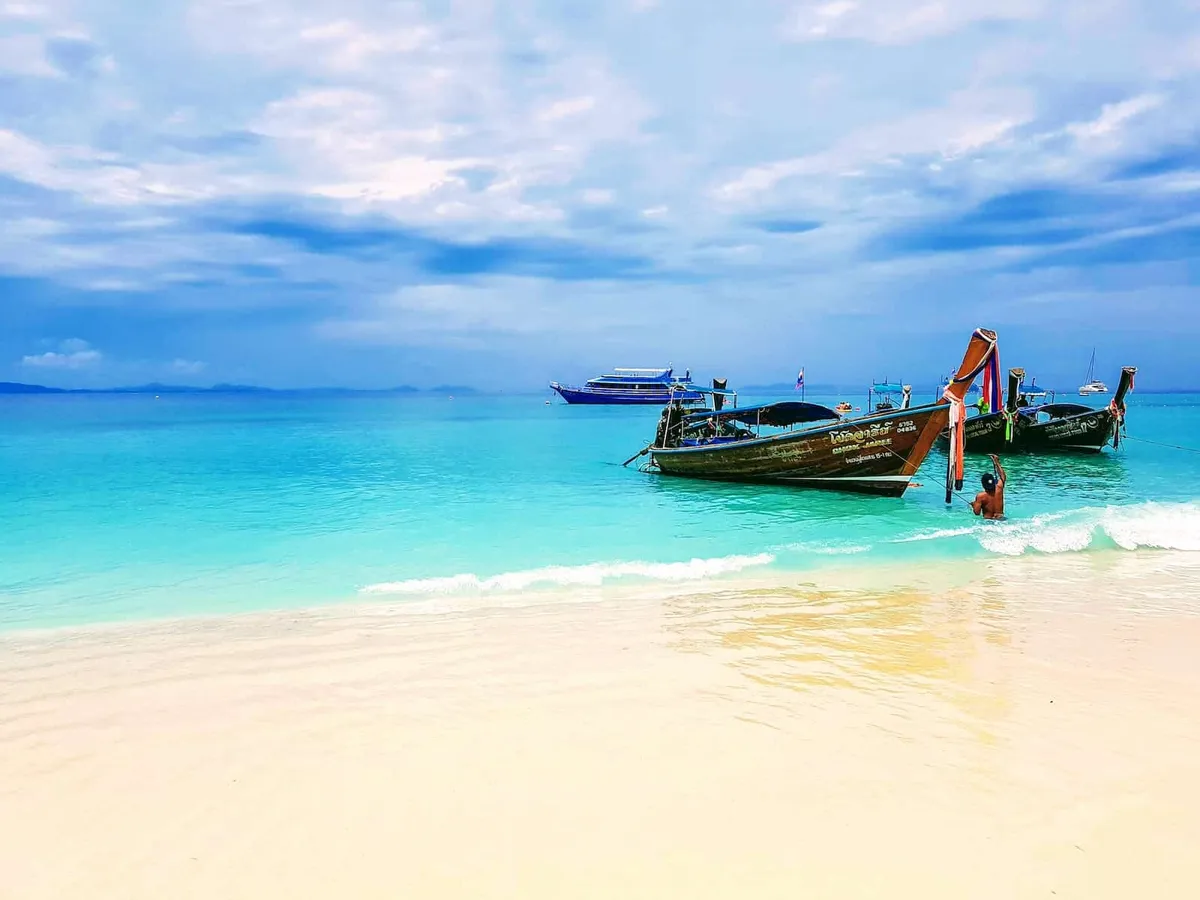
Thailand is home to many beautiful beaches, such as those found on the islands of Phuket and Koh Samui. Retirees can enjoy water sports, such as snorkeling and scuba diving, or simply relax on the beach and take in the scenery.
Cultural attractions
Thailand is a country with a rich cultural heritage, and there are many temples and historical sites to visit, such as Wat Phra Kaew and the Grand Palace. Retirees can also experience traditional cultural performances, such as Thai dancing and Muay Thai boxing, or explore the markets and shopping districts, such as Chatuchak Weekend Market and the Floating Markets.
Outdoor activities
Thailand has many national parks and nature reserves, such as Khao Yai National Park and Chiang Mai’s Doi Inthanon National Park, which offer opportunities for trekking and hiking. Retirees can also enjoy golfing or other sporting activities at facilities throughout the country.
Dining and entertainment
Thailand is known for its delicious cuisine, and there are many restaurants and cafes offering a range of local and international dishes. Retirees can also enjoy live music and other entertainment options, such as cinema and theater.
Spa and wellness
Thailand is also renowned for its spa and wellness offerings, and there are many spas and resorts offering massages, yoga classes, and other relaxation and wellness treatments.
Overall, Thailand offers a diverse range of leisure activities for retirees, from cultural and outdoor pursuits to dining and entertainment options.
Legal considerations
When considering retiring in Thailand, it is important to understand the legal requirements and procedures. It is best to consult with a lawyer or an accountant who specializes in Thai law before making any decisions about property ownership or taxes.
Property Ownership
Foreigners generally cannot own land directly. A qualifying foreign buyer may own a condominium unit if the transfer does not push foreign ownership above 49% of the aggregate unit area in that condominium. Confirm the building’s foreign quota and fund-transfer evidence with the condominium juristic office and an independent Thai property lawyer.
Do not establish a Thai company simply to hold a home. Nominee shareholding arrangements used to evade foreign-ownership rules can be unlawful. Leases, buildings on leased land, and genuine business structures have different risks and need independent legal advice.
Taxes
Spending 180 days or more in Thailand during a calendar year generally makes you a Thai tax resident. Thai-source income can be taxable whether paid inside or outside Thailand. For tax residents, qualifying foreign-source income earned from 1 January 2024 onward can be taxable when remitted to Thailand, including in a later year. A tax treaty and foreign tax credits may change the result, so obtain advice based on your income sources and remittances.
Thailand does not apply a simple five-year capital-gains rule to property sales. A sale within five years can fall within specific business tax rules, while withholding income tax, transfer fees, exemptions, and other charges depend on the property and seller. Ask a Thai tax adviser or the Land Office for a transaction-specific calculation.
Thai Bank Accounts
Bank-account eligibility and required documents vary by bank and branch. Compare transfer fees and exchange rates before deciding how to move regular income into Thailand.
It is always advisable to research thoroughly before making any decisions regarding retirement abroad. Consulting professionals specializing in international law will help ensure that everything goes smoothly throughout your transition process.
It is important to understand the legal considerations for retiring in Thailand before making any final decisions. With that knowledge, you can move on to gathering tips and resources for a successful retirement in this beautiful country.
Before you commit
Confirm the immigration route, obtain an insurance quote, calculate the tax position, and rent in your preferred area before buying property or signing a long contract. Rules and evidence can differ by route and office, so use the current checklist issued by the authority handling your case.