







Sak Yant is a sacred tattoo tradition from mainland Southeast Asia, using diagrams, scripts and blessings shaped by several religious and protective traditions. Traditional hand-poked designs and modern machine-applied versions may use similar imagery, but the ritual context, practitioner, hygiene and aftercare matter.
Quick answer
Sak Yant is a sacred tattoo tradition linked to prayers, geometric designs and protective beliefs. Choose a practitioner only after you understand the design, meaning, placement, hygiene process, aftercare and any conduct rules. A spiritual or temple setting is not evidence of infection control.
| Best for | Sak Yant option | Why it works | Main tradeoff |
|---|---|---|---|
| Traditional blessing | Monk or ajarn | Ritual, prayer, and cultural context | Process and hygiene may be harder to assess |
| Clear communication | Reputable studio with translator | Better explanation and hygiene visibility | May feel less traditional |
| First tattoo in Thailand | Small design with clear meaning | Easier aftercare and lower commitment | Less dramatic visual impact |
| Spiritual commitment | Design discussed with the practitioner | Meaning comes before aesthetics | Do not proceed without full agreement |
How we picked this Sak Yant guidance
You should understand the meaning, placement, practitioner, hygiene process, aftercare and any conduct rules before agreeing. Translation matters when you and the practitioner do not share a language.
How to choose
Choose the practitioner before the design. Understand and freely agree to the design, meaning, placement, practitioner and procedure before starting. You can decline or stop. If you cannot understand the rules, hygiene setup or aftercare instructions, wait until you can.
What is Sak Yant Tattoo?
Sak Yant, or yantra tattooing, combines sacred diagrams, script and blessings. Practitioners and wearers may associate a design with protection, luck, authority or other spiritual qualities. These are religious and cultural beliefs, not physical or medical effects.
Sak Yant has connections to several religious, script and protective traditions across mainland Southeast Asia. Its history cannot be reduced to a single route from ancient Indian warriors to Thailand.
The tattoo may be accompanied by a blessing or recitation, but the ceremony varies by lineage and practitioner. Do not assume that every session includes incense, the same prayers or the same conduct rules.
Designs vary by blessing, lineage, and practitioner. Tigers are often associated with strength, while other geometric or animal forms carry different meanings. Ask what a design means before accepting it, especially if the tattoo is part of a traditional blessing.
Choosing a Sak Yant practitioner
Sak Yant tattoos are traditionally hand-poked by a monk, ajarn or trained practitioner, although modern studio versions also exist. Choose a person whose process you can understand and assess; a famous temple name does not answer questions about consent, hygiene or aftercare.
Price and promotions do not prove whether a procedure is hygienic. Ask to see a sealed single-use sterile needle opened for you, fresh ink in a disposable container, new gloves, hand hygiene, clean surfaces and proper sterilisation of reusable components.
Thailand treats commercial tattooing as a business hazardous to health and requires local licensing. Rules can differ by setting, so ask the practitioner what licence or oversight applies. Infection risk exists wherever skin is punctured.
Ask for written aftercare instructions and find out who to contact if the area becomes increasingly red, swollen, painful, hot or produces discharge.
Aftercare for a Sak Yant Tattoo
Get written aftercare instructions before leaving. Wash your hands before touching the area, keep it out of pools, hot tubs, the sea, rivers and lakes while it heals, and protect it from direct sun. Do not improvise products or treatments that conflict with the practitioner’s written advice.
Seek medical advice if redness, heat, swelling or pain is worsening, or if you develop discharge or fever. Contaminated ink and unsterile equipment can cause bacterial and viral infections; a spiritual setting does not reduce that risk.
Popular Designs & Symbols
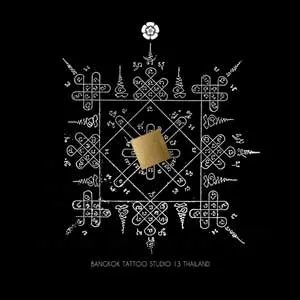
Names such as Hah Taew, Gao Yord and Hanuman describe broad design families. Script, geometry, blessings and interpretation can vary by lineage and practitioner.
Hah Taew is commonly recognised by its five lines, but the text and meaning are not one universal list of five benefits. Ask the practitioner to explain the exact version being offered.
Gao Yord is associated with a multi-spired geometric form and protective beliefs. Exact claims about nine directions, four Buddhas or guaranteed effects depend on the version and lineage and should not be treated as fixed labels.
Hanuman designs are often discussed in relation to courage and strength. Treat those as spiritual associations. A tattoo does not increase physical strength, endurance or resistance to injury.
Benefits of Getting a Sak Yant Tattoo
People seek Sak Yant for reasons including faith, protection, identity, confidence or commitment. Any protective or transformative effect is a matter of belief.
Some wearers believe the blessing offers protection from negative forces or misfortune. It must not be presented as protection from illness, injury or physical danger.
Do not rely on a Sak Yant for health, safety or athletic performance. The procedure carries the same infection and skin-reaction risks as other tattoos and requires the same care with needles, ink, hygiene and healing.
Many people seek Sak Yant for protection, focus, confidence, or a sense of spiritual commitment. If you decide to get one in Thailand, take time to understand the design, the rules, and the practitioner rather than treating it as a quick holiday add-on.