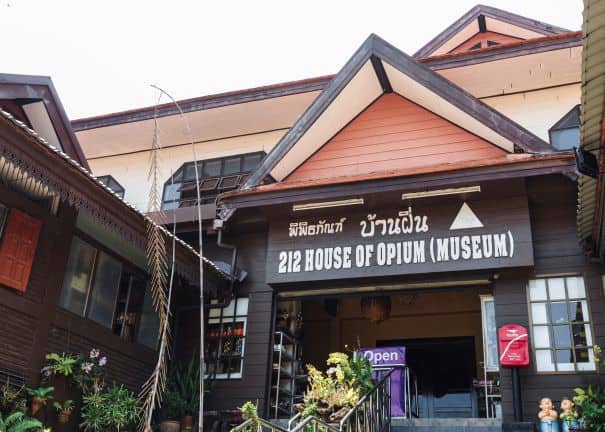
Few museums in Thailand tackle such a controversial yet historically significant topic as the House of Opium. This educational facility presents the complex story of opium’s role in Southeast Asian history, from ancient medicinal uses to its devastating impact during the colonial period and beyond. Rather than glorifying drug use, the museum serves as a sobering reminder of how opium shaped entire regions, displaced communities, and influenced international relations for centuries.
Interactive exhibits guide visitors through opium’s journey from poppy cultivation to processing, using authentic artifacts, vintage photographs, and detailed dioramas. You’ll examine traditional smoking pipes, weighing scales, and processing equipment while learning about the Golden Triangle’s transformation from opium production hub to legitimate agriculture. Documentary films play throughout the galleries, featuring interviews with former growers and addicts sharing their personal stories. The museum’s centerpiece recreates an opium den, complete with period furnishings and mannequins demonstrating historical usage patterns. Educational displays explain ongoing rehabilitation efforts and alternative crop programs that have helped local communities transition away from illicit cultivation.
Walking through these galleries creates a contemplative mood that balances education with respect for those affected by the opium trade. The museum maintains a serious, academic tone without being preachy or judgmental. Soft lighting and thoughtful exhibit design encourage reflection rather than sensationalism. Visitors often leave with a deeper understanding of how historical events continue shaping modern Thailand and neighboring countries.
Plan your visit during cooler morning hours between 8:30 AM and noon when the museum feels less crowded and you can absorb information comfortably. The museum sits along the main road between Chiang Rai and the Golden Triangle, making it easily accessible by rental car, tour bus, or hired taxi. Bring a light jacket as air conditioning keeps interior spaces quite cool, and consider allowing 90 minutes to properly explore all exhibits and watch the documentary presentations.