


Phuket Vegetarian Festival 2027: Dates, Rituals & Events


On this page
Some links are affiliate links. If you book through them we may earn a small commission at no extra cost to you.
The Phuket Vegetarian Festival is the island’s Nine Emperor Gods Festival, a Taoist rite of purification that local Hokkien Chinese families call jia chai. For nine days, devotees in white eat only jay food, spirit mediums in trance pierce their faces and lead firecracker-filled processions through Phuket Town, and 39 shrines across the island hold fire walks and blessing rituals. The 2026 festival ran 10–18 October. The 2027 dates have not been announced yet.
It is free, it is loud, and it is not for the squeamish. It is also one of the most intense religious events you can see in Thailand, listed as a National Intangible Cultural Heritage in 2018.
Quick answer: how to see it. Base yourself in Phuket Old Town and book your room early, because Old Town fills up for the festival. Be on the street by 06:00–08:00 on a procession morning: in 2026 Jui Tui Shrine went out on 16 October at 08:00 and Bang Niew Shrine on 15 October at 06:00. Come back after dark for a fire walk, and stay for the farewell procession to Saphan Hin on the ninth night. Everything is free. The 2026 schedule is below as a guide until the 2027 one is published.
- Dates: Days 1–9 of the ninth Chinese lunar month; 2026 ran 10–18 October, and 2027 dates are not yet announced
- Where: 39 shrines across Phuket; the main action is in Phuket Town
- Cost: Free
- Processions: One major shrine per morning (13–18 October in 2026), starting 06:00–08:00
- Fire walks: Evenings, mostly in the second half of the nine days (14–18 October in 2026)
- Farewell night: The ninth night (18 October in 2026), from the shrines to the seafront at Saphan Hin
- Dress: White clothing, covered shoulders and knees at shrines, closed shoes
- Official schedule (2026): TAT Phuket Office festival page
What Is the Phuket Vegetarian Festival?
The festival honours the Nine Emperor Gods (Kiu Ong Ia) and runs from the first to the ninth night of the ninth Chinese lunar month. Local tradition dates it to 1825, when a travelling Chinese opera troupe fell ill in the tin-mining town of Kathu and recovered after keeping a strict vegetarian diet. Kathu Shrine, in Kathu district about 8 km west of Phuket Town, is still credited as the festival’s birthplace.
For devotees, the nine days mean white clothes, no meat or animal products, no alcohol, no sex and careful speech and behaviour. The aim is to cleanse body and mind for the year ahead. Shrines raise a tall lantern pole (the ko teng) to call the gods down at the start, and send them back to heaven on the last night.
What Happens at the Festival
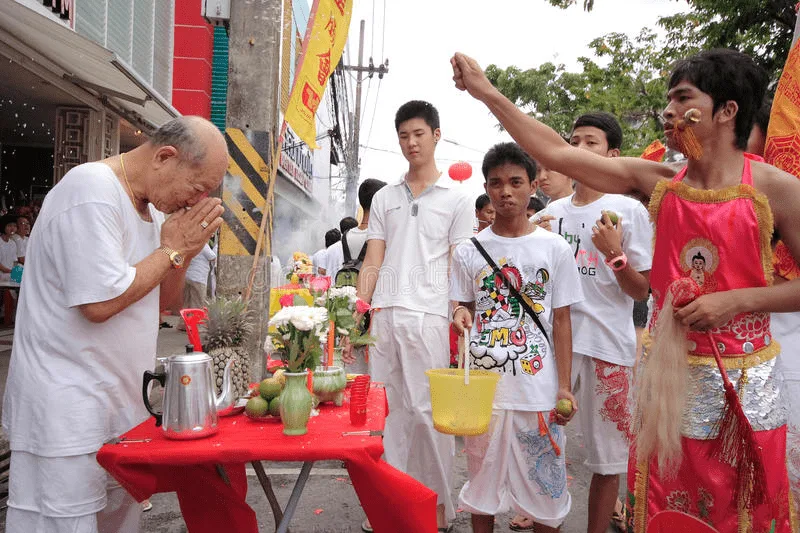
Street processions (iu keng). The defining event. Each shrine carries its gods through the streets in palanquins, led by flag bearers and dozens of spirit mediums. Families along the route set up altars with candles, incense, fruit and tea, and kneel to receive a blessing as the gods pass. Firecrackers are thrown in long strings at the mediums and the palanquins, so the noise and smoke are intense.
Spirit mediums (ma song). Mediums are believed to be possessed by the gods during the festival. In trance they pierce their cheeks with skewers, swords, umbrellas and stranger objects, and devotees believe the gods protect them from pain and serious injury. Many are young men, but women mediums take part too.
Bridge crossing (koi han). Devotees cross a small ceremonial bridge at the shrine and receive a red seal stamped on the back of their shirt, a sign that they have been cleansed of bad luck for the year.
Fire walking (koi hoi). Mediums and devotees walk barefoot across a bed of glowing coals at night. Locals believe only those who have kept the festival rules walk across unharmed.
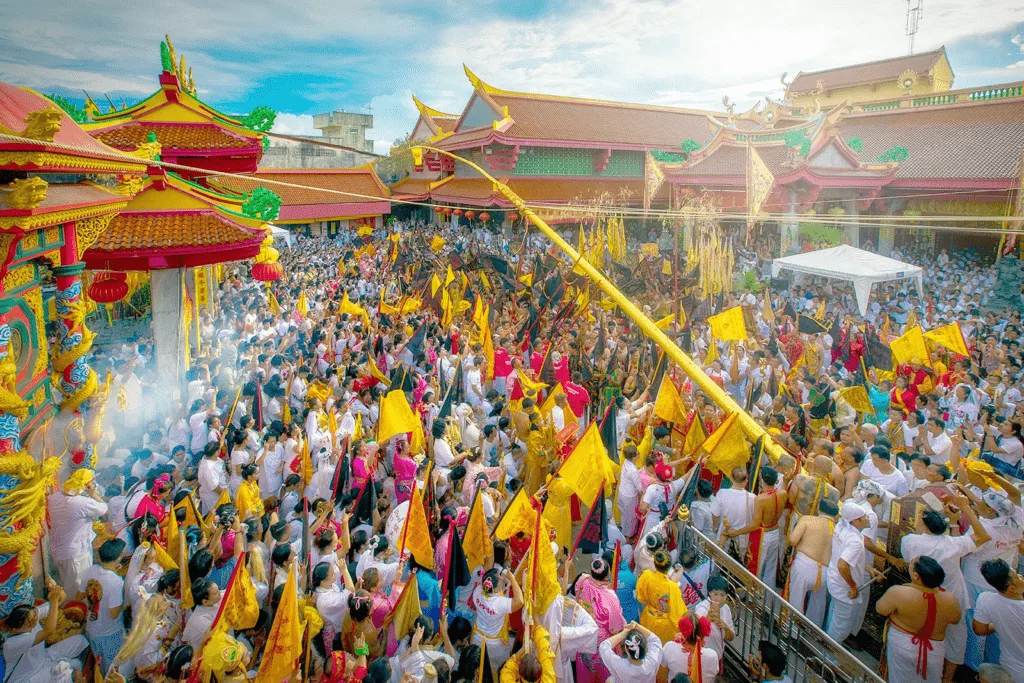
Farewell ritual. On the ninth night the gods are sent back to heaven. Processions leave the shrines late in the evening and the city’s streets fill with people in white, especially along Thalang Road, Phuket Road and the Surin Circle clock tower, on the way to the seafront at Saphan Hin. When the gods leave, the shrines turn off their lights and close their doors.
2026 Procession and Fire Walk Schedule
This was the 2026 schedule for the six main shrines, from the TAT Phuket Office ritual schedule, which lists all 39. Each year’s schedule is different, so treat it as a guide to how the nine days unfold.
| Shrine | Area | Street procession | Fire walk | Bridge crossing |
|---|---|---|---|---|
| Lim Hu Tai Su (Sam Kong) | Phuket Town | 13 Oct, 07:45 | 17 Oct, 20:15 | 18 Oct, 17:45 |
| Tha Rua (Hok Leng Keng) | Ban Tha Rua, Thalang | 14 Oct, 06:09 | 15 Oct, 20:00 | 18 Oct, 20:00 |
| Bang Niew (Bang Liao) | Phuket Town | 15 Oct, 06:00 | 17 Oct, 20:00 | 18 Oct, 16:00 |
| Jui Tui | Phuket Old Town | 16 Oct, 08:00 | 14 Oct, 20:00 | 17 Oct, 20:00 |
| Kathu | Kathu | 17 Oct, 06:45 | 18 Oct, 15:00 | 18 Oct, 19:30 |
| Sui Boon Tong (Lor Rong) | Phuket Town | 18 Oct, 07:00 | 15 Oct, 21:00 | 18 Oct, 20:30 |
The farewell procession to Saphan Hin followed on the night of 18 October. Smaller shrines add their own rituals across the island: in 2026 Hean Lhee Thong in Chalong held a blade-ladder climb on 17 October at 21:00, and several shrines held hot-oil bathing rituals, including Yok Kae Keng (Soi Phaniang) on 11 October at 20:00.
How to plan the nine days (2026 dates)
- 10–12 October: Opening days. Shrines are busy with prayer, the jay food stalls are in full swing, and smaller shrines hold the first processions. A good time to visit the shrines while they are calm.
- 13–18 October: One major procession every morning. Pick one or two; you do not need all six. Jui Tui (16 October) and Bang Niew (15 October) are in town and easiest to reach on foot.
- 14–18 October evenings: Fire walks. Arrive at least an hour early for a view of the coals.
- 18 October: The busiest day: the Sui Boon Tong procession in the morning, bridge-crossing rituals through the afternoon and evening, and the farewell to Saphan Hin at night.
The Main Shrines
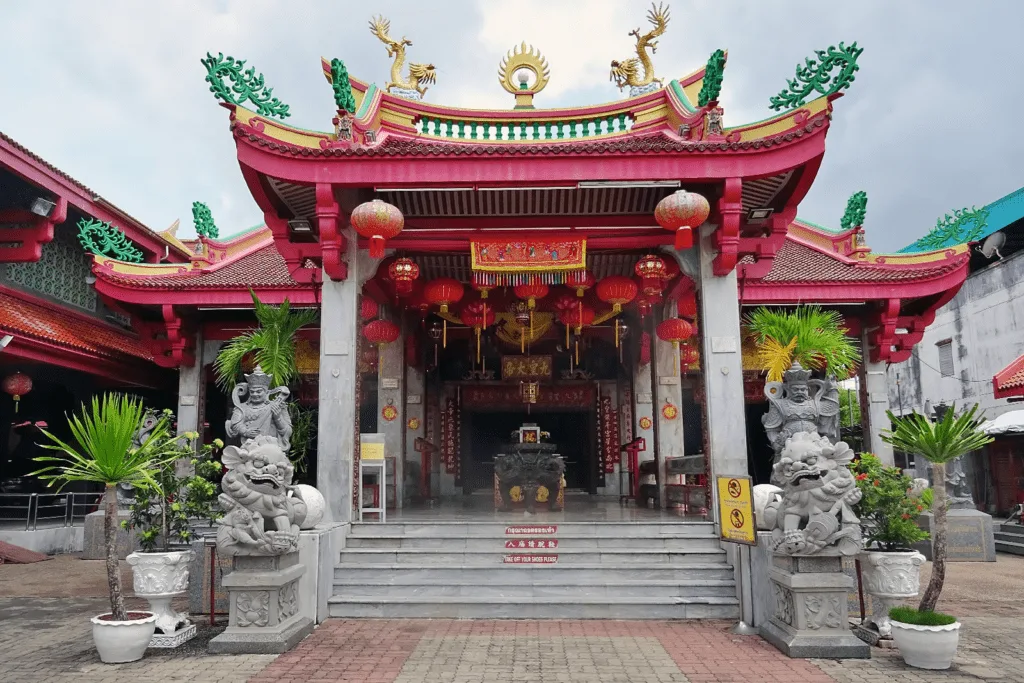
- Jui Tui Shrine (ศาลเจ้าจุ้ยตุ่ย), Soi Phuthon off Ranong Road, Phuket Old Town: the busiest festival shrine, with the main jay food street outside. View Map
- Bang Niew Shrine (อ๊ามบางเหนียว), Talat Yai, south of the Old Town: one of the oldest festival shrines in town, founded in 1904. View Map
- Lim Hu Tai Su Shrine (Sam Kong) (ศาลเจ้าหลิมฮู้ไท้ซู่ สามกอง), northern Phuket Town. View Map
- Kathu Shrine (ศาลเจ้ากะทู้), Kathu district: where the festival began, a 15–20 minute drive west of town. View Map
- Tha Rua Shrine (ศาลเจ้าท่าเรือ), Ban Tha Rua, Thalang, on the road north towards the airport. View Map
- Yok Kae Keng Shrine (ศาลเจ้ายกเค่เก้ง), Soi Phaniang, Phuket Town. View Map
- Kuan Tae Kun Shrine (ศาลเจ้ากวนเต้กุ้น), Sapam, north of Phuket Town. View Map
Jay Food
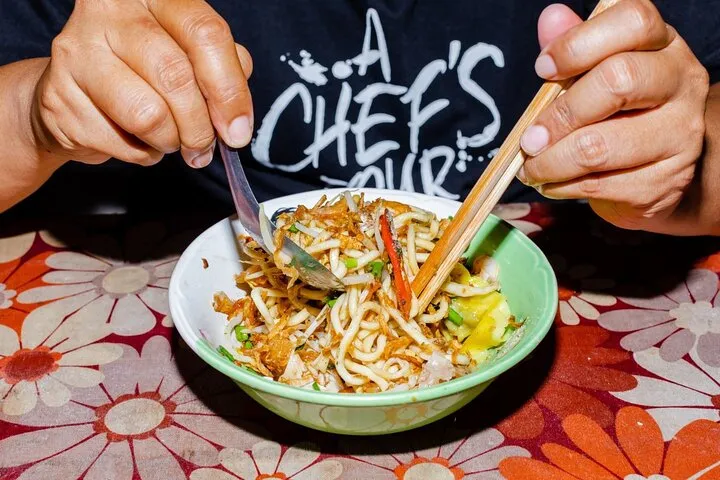
Jay (เจ) is stricter than ordinary vegetarian food. It leaves out meat, fish, eggs, dairy and animal fats, and also pungent vegetables such as garlic, onion, shallots and chives. Look for stalls and restaurants flying yellow flags printed with the red character เจ.
The densest cluster of stalls is on Ranong Road and the lanes around Jui Tui Shrine, where vendors sell mock-meat skewers, fried tofu, noodle soups, curries with rice and sweets from early morning until late. Plenty of Phuket Town restaurants switch to jay menus for the nine days, and some meat-focused places simply close. Eating jay is not required of visitors, but it is the easiest way to join in, and the food is good.
Rules and Etiquette for Visitors
The shrines ask visitors to follow a few simple rules, set out in the TAT Phuket Office guidance:
- Wear white if you can, and cover shoulders and knees inside the shrines.
- Remove your shoes before entering the hall where the gods are enshrined.
- Give way to processions and mediums. Keep your distance and never cut across a procession.
- Ask before photographing gods or rituals inside a shrine; some rituals do not allow photos.
- Make vegetarian offerings only if you bring food or sweets to a shrine.
- By tradition, people in mourning, pregnant women and women who are menstruating do not take part in rituals inside the shrines.
- Devotees also avoid meat, alcohol and sex for the nine days. Nobody expects this of spectators, but don’t drink at a procession.
Practical Tips
- Ear and eye protection: Strings of firecrackers are thrown at the processions. Earplugs are essential, and sunglasses help with flying debris.
- Shoes and clothes: Closed shoes, not sandals, and clothes you don’t mind getting smoky or marked by sparks.
- Timing: Morning processions start between 06:00 and 08:00. Claim a spot on the route 30–60 minutes before the start.
- Getting around: Roads in Phuket Town close for the processions. Walk if you are staying in town; from the beaches, arrive before the roads close or expect to be dropped well short of the route.
- Getting there: Phuket International Airport is about 30 km north of Phuket Town. See our Phuket airport guide for transfers and taxis.
- Heat and rain: October is still wet season in Phuket. Carry water and a light rain layer.
Where to Stay
Stay in Phuket Old Town if the festival is the reason for your trip. The processions start at dawn, the fire walks finish late, and roads close around the shrines, so a beach hotel in Patong, Kata or Karon means a long early taxi ride on every festival morning. In town, Jui Tui, Bang Niew, the jay food stalls and the farewell route are all within walking distance.
Hotels We Like for the Vegetarian Festival
- The Memory at On On Hotel: a 3-star heritage hotel on Phang Nga Road, open since 1929 and the guesthouse used in the film The Beach. Jui Tui Shrine is about 10 minutes’ walk away.
- Casa Blanca Boutique Hotel Phuket: a 3-star boutique hotel on Phuket Road in Talat Yai, on the main road the farewell crowds follow towards Saphan Hin.
- The Tint at Phuket Town Hotel: a 3-star hotel on Dibuk Road among the Old Town’s Sino-Portuguese shophouses, about 15 minutes’ walk from Jui Tui.
Compare live prices: the hotel map below shows availability around the festival dates, or start from our Phuket Town guide to pick an area first.
Should You Book a Festival Tour?
You don’t need one: every ritual is free and public. A guide helps if you want to understand what you are watching and how to take part without causing offence. The one tour built around the festival, Kin Jay, Get Jay with a local guide from Phuket Let’s Go, ran from 10 to 18 October 2026 and is not on sale as of 2 November 2026.
Plan Your Trip
The Vegetarian Festival is the best reason to spend a few nights in Phuket Town rather than on the beach. Between the morning processions and the evening fire walks, there is time for the rest of Phuket. For other dates worth planning around, see our Thailand events calendar and guide to Thai festivals.