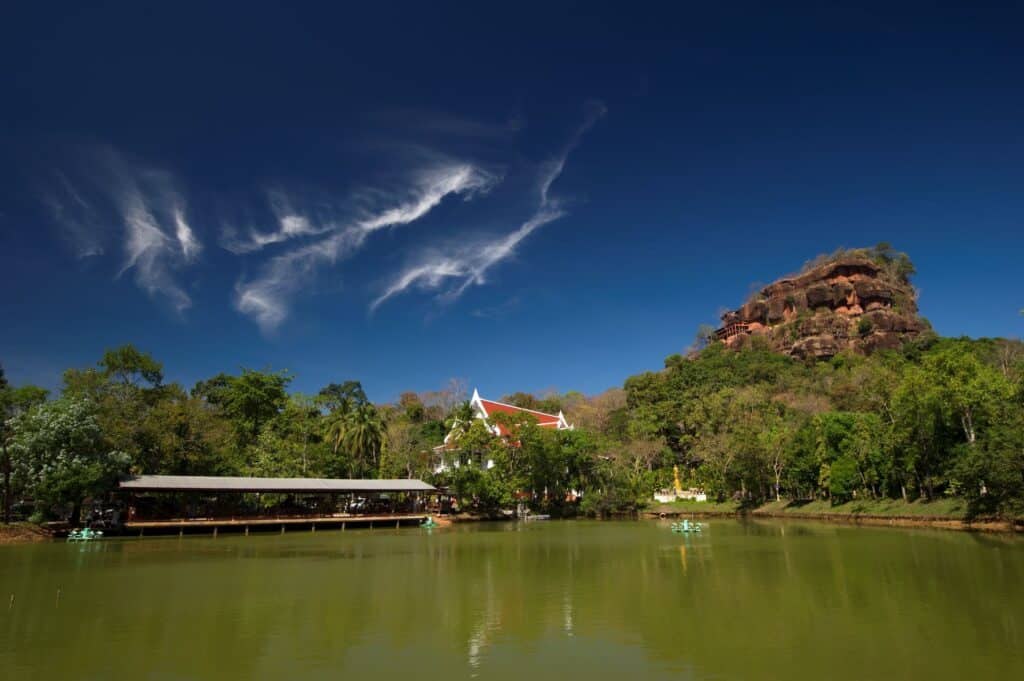
Rising dramatically from the Mekong River plains, Phu Thok stands as one of Thailand’s most distinctive mountain formations. This towering sandstone cliff face in Bueng Kan province offers visitors a rare chance to experience vertical exploration through a series of wooden walkways and staircases built directly into the rock wall. The mountain’s sheer sides and unique accessibility make it unlike any other climbing experience in Thailand, attracting adventurers seeking something beyond the typical temple visit or beach day.
Seven levels of wooden platforms wind their way up the cliff face, each offering increasingly spectacular views across the Mekong River valley. The journey begins with a gentle walk through forest trails before reaching the dramatic wooden structures that cling to the rock wall. As you ascend, the sound of wind through the wooden planks mingles with distant river sounds below. Each platform reveals new perspectives of the surrounding countryside, with the Mekong River meandering through green agricultural fields stretching toward the Laos border. The final levels provide panoramic vistas that encompass both Thai and Laotian landscapes, with small villages dotting the fertile river plains.
Climbing Phu Thok feels like a pilgrimage with an edge of adventure. The wooden walkways create an intimate connection with the rock face, while the gradual ascent builds anticipation for each new viewpoint. There’s a meditative quality to the rhythmic climbing, broken by moments of awe as new vistas unfold. The mountain attracts both serious hikers and casual visitors, creating a friendly atmosphere where people share the unique experience of scaling Thailand’s most accessible vertical cliff.
Early morning visits offer the coolest temperatures and best lighting for photography, though late afternoon provides dramatic sunset views over the Mekong. The climb takes about two hours round trip, depending on time spent at each level. Bring water, wear sturdy shoes with good grip, and dress modestly as this is considered a sacred site. From Bueng Kan town, songthaews or private transport can reach the base. The combination of physical challenge, cultural significance, and river valley views makes this northern adventure well worth the journey.