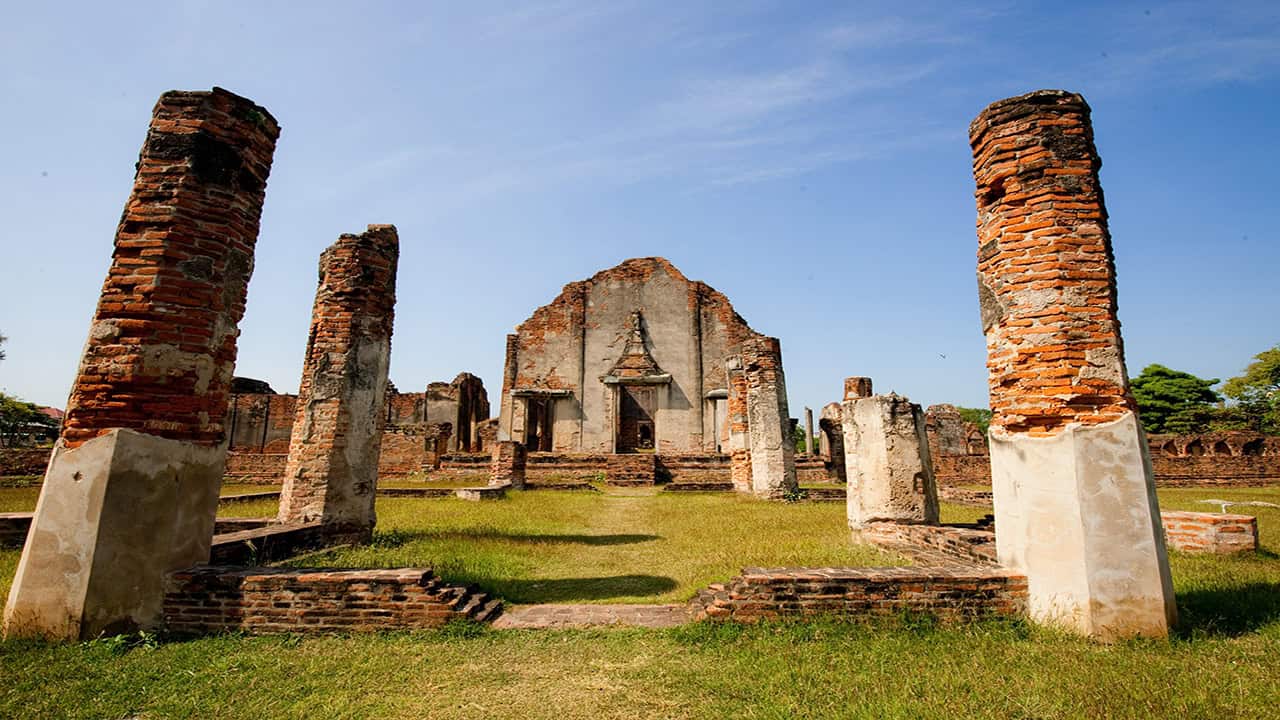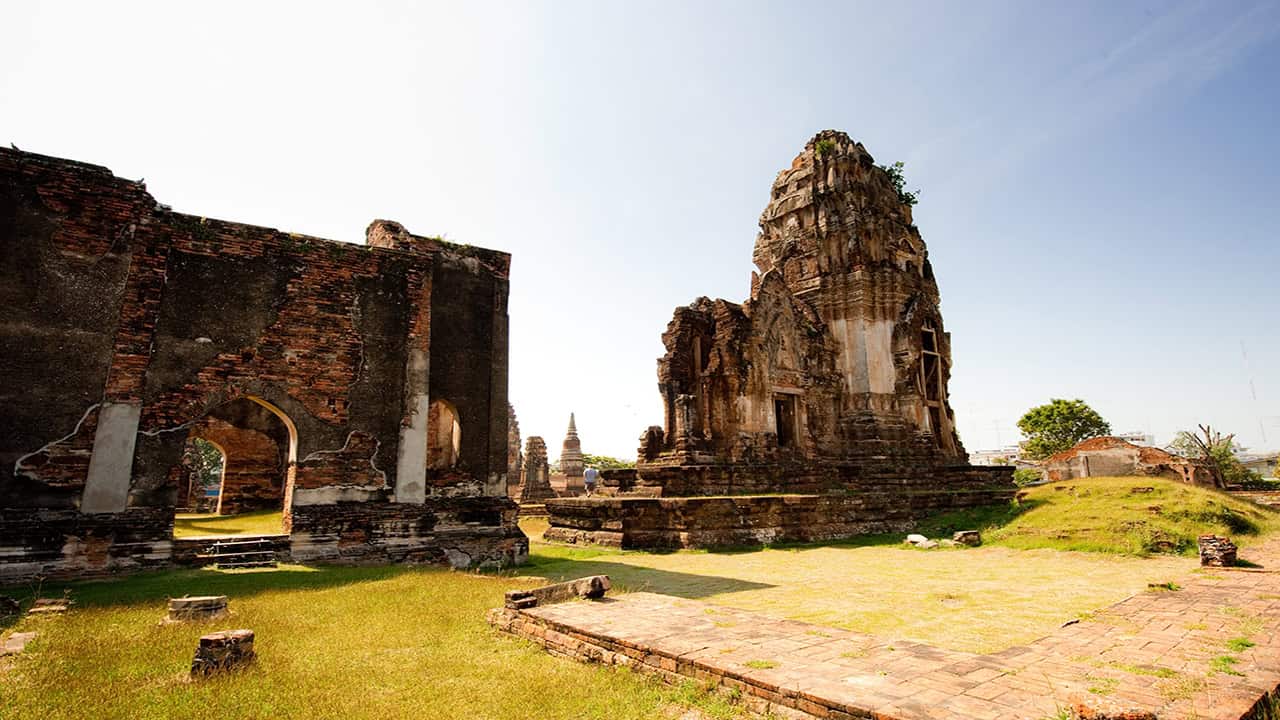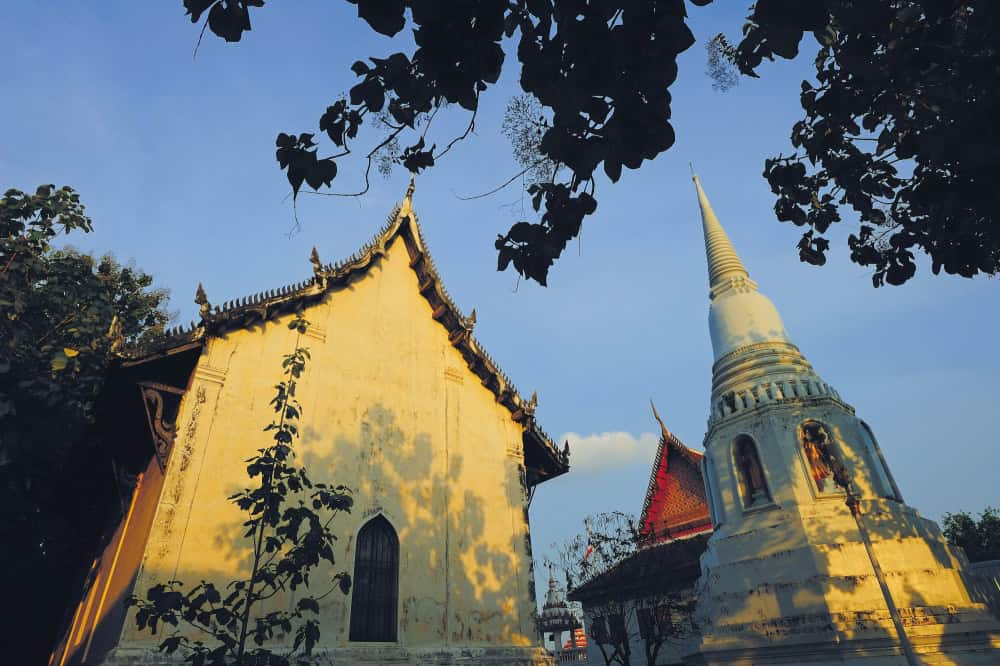
The Wihan Luang enshrines the seated Phra Phuttha Lawaburarak Buddha image in the attitude of being protected by the seven-headed naga. Carved from sandstone, this Buddha statue stands 3 metres tall with a 1.5-metre lap width. Named by Supreme Patriarch Sakol Maha Sangha Parinayok, it symbolises the protective presence of the Buddha over the city of Lop Buri. South of the Wihan Luang lies a modest-sized ordination hall, its doors and windows adorned in French style. To the west stands a towering Phra Prang built with laterite and mortar, its intricate stucco relief of Buddha images and the Lord Buddha’s history on the gable, reflecting the rich tapestry of Mahayana Buddhist sect. The Gopura-arched gate to the grand Prang is of Lawo art, presenting very beautiful stucco relief. The Gopura is believed to have originally been constructed during Khmers ascendancy and underwent renovations during the reign of King Ramesuan, King Maha Chakraphat, and King Narai the Great. Therefore, the patterns are mixed and represent many periods. This Prang originally contained various Buddha images. The famous ones are votive tablets of the Lop Buri period such as Phra Hu Yan and Phra Ruang, which were discovered in large numbers. Additionally, there are “Prang Rai”-satellite Prangs-situated to the northwest. Every star-fruit-shaped corner is adorned with a stucco relief of Thep Phanom deities facing outwards. The deities’ faces are oblong with connected eyebrows, presenting the U-Thong art, while their headdress is in a triangle with a halo. Open daily 07.00-17.00 hrs. Entrance fee: 50 baht or a combined ticket of 150 baht granting access to Phra Prang Sam Yod, Wat Phra Si Rattana Mahathat, the Ambassador’s Residence (Ban Wichayan), and Kraisorn Siharat Throne Hall (Phra Nang Yen). For further details, contact the Office of Fine Arts Unit 4, Lop Buri Branch Tel. (66) 3641 2510, (66) 3641 3779