

Phra Narai Ratchaniwet
พระนารายณ์ราชนิเวศน์
Phra Narai Ratchaniwet is King Narai the Great’s 17th-century palace in central Lopburi, now home to the Somdet Phra Narai National Museum. The grounds are open daily from 07:00 to 17:30; the museum buildings inside keep separate hours, Wednesday to Sunday 09:00 to 16:00, closed Monday and Tuesday. Entry is 150 THB for foreign visitors and 30 THB for Thai nationals, covering both the grounds and the galleries.
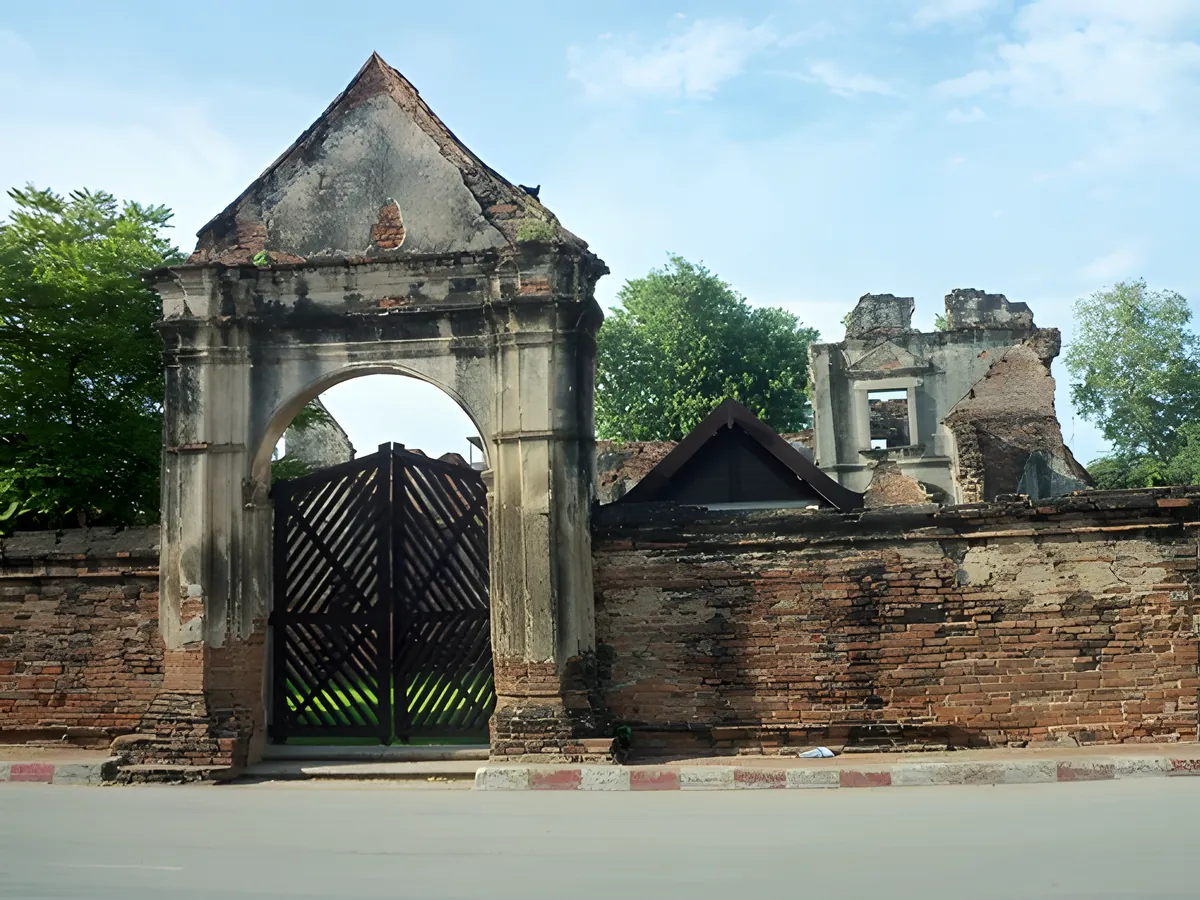
King Narai built the palace in the 1660s as his provincial seat, close enough to Ayutthaya for governance but far enough inland to feel secure from a Dutch naval blockade that had rattled the court a few years earlier. The complex spans three walled courts — outer, middle, and inner — entered through a sequence of arched gateways whose brickwork niches, shaped like lotus buds, once held oil lamps; sources put the total near 11 gates across the compound, lit at night for ceremonial approach. The outer court held elephant stables and reception buildings for foreign missions; the middle court, storerooms and the treasury; the inner court, the king’s private residence, now largely reduced to foundations.
The single building most worth slowing down for is Dusit Sawan Thanya Maha Prasat, the former audience hall, where a mondop-shaped roofline in Thai style sits over a chamber lined with French mirror glass and a coffered ceiling copying a pattern the French envoy’s own chronicle described as “a grid of four squares… with a golden flower pattern and crystal from China.” A windowed alcove partway up the wall, the Sihabanchon, let the king appear above his audience without descending to their level — the point from which he received the French ambassador Chevalier de Chaumont in 1685, an encounter that put Lopburi briefly at the centre of Franco-Siamese diplomacy. Nearby, Chantara Phisan Hall — built in 1665 on the foundations of an earlier Ayutthaya-period residence — shows the same period in pure Thai form: a portico-fronted brick hall with none of the European borrowing, now used to display royal regalia and archaeological finds from the Lopburi region. A third structure, Phiman Mongkut Pavilion, dates from a King Rama IV-era renovation two centuries later, when the complex was restored and given its current name; its three-storey rooms now house the museum’s prehistoric and Khmer-era collections.
Insider Tip: Visit the museum buildings in the cooler first hour after the 09:00 opening — by midday the unshaded stretches between the outer and inner courts get genuinely hot, and there’s little shelter beyond the building interiors themselves.
Watch out: The grounds’ 07:00-17:30 hours are easy to confuse with the museum’s Wed-Sun 09:00-16:00 schedule. Arrive on a Monday or Tuesday and you can still walk the courts and see the exterior architecture, but Dusit Sawan Thanya Maha Prasat, Chantara Phisan Hall, and Phiman Mongkut Pavilion will all be locked.
- Entry: 150 THB (foreigners), 30 THB (Thai nationals)
- Grounds hours: Daily 07:00-17:30
- Museum hours: Wed-Sun 09:00-16:00, closed Mon-Tue
- Highlight: Dusit Sawan Thanya Maha Prasat, the Thai-French audience hall built for King Narai
- Time needed: 1.5-2 hours for grounds plus galleries
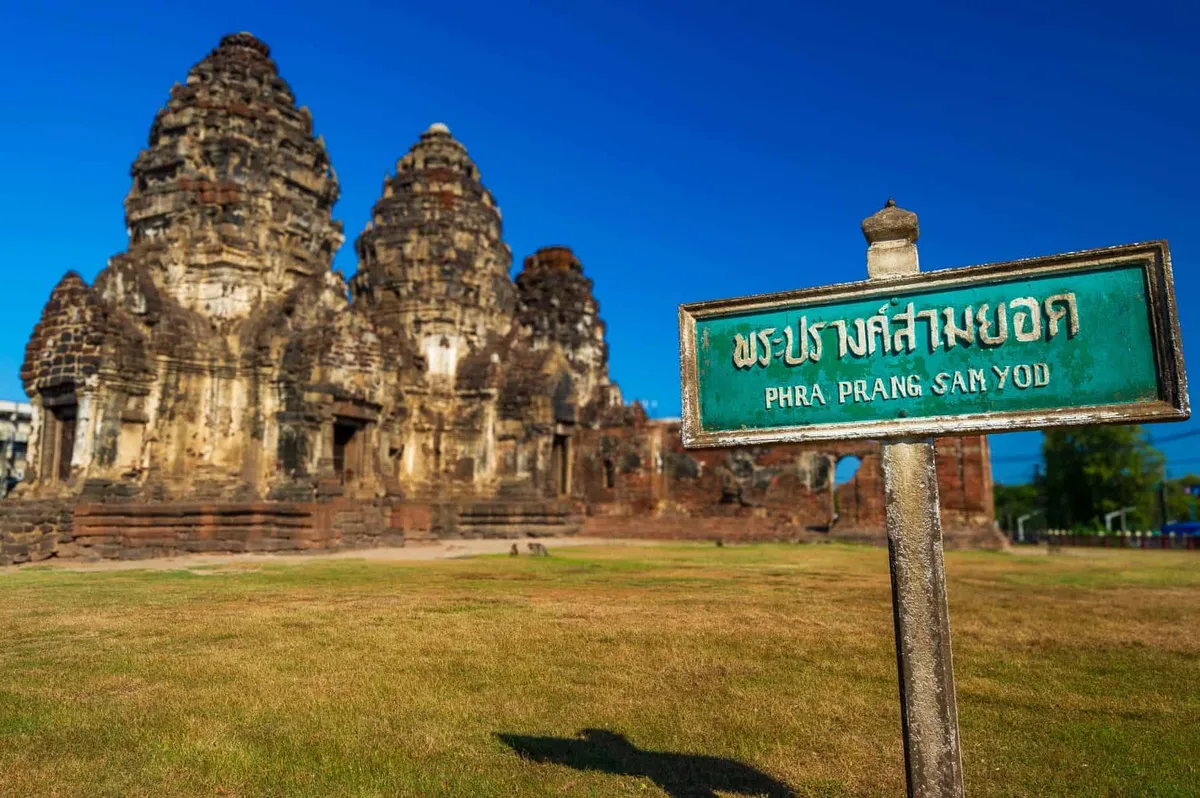
Combine the visit with two sites a short walk away in central Lopburi: Phra Prang Sam Yot, the Khmer-style tower famous for its resident macaques, and the statue of King Narai the Great at the roundabout near the old town. Start planning from the Lopburi destination guide for where to stay and how the old town fits together.
Good to Know
Good for
On site
Location & Directions
Sorasak Road
Lop Buri, Thailand
Show your taxi or Grab driver
พระนารายณ์ราชนิเวศน์
Frequently Asked Questions
What are the opening hours for Phra Narai Ratchaniwet?
How much does it cost to enter?
What is the Dusit Sawan Thanya Maha Prasat?
Is one day enough to see the whole complex?
Is the site suitable for children or visitors with mobility issues?
Spotted something out of date or incorrect? Let us know
Stay Near Phra Narai Ratchaniwet
Live prices for places closest to Phra Narai Ratchaniwet — tap a pin to compare.