
Wat Sao Thong Thong
วัดเสาธงทอง พระอารามหลวง
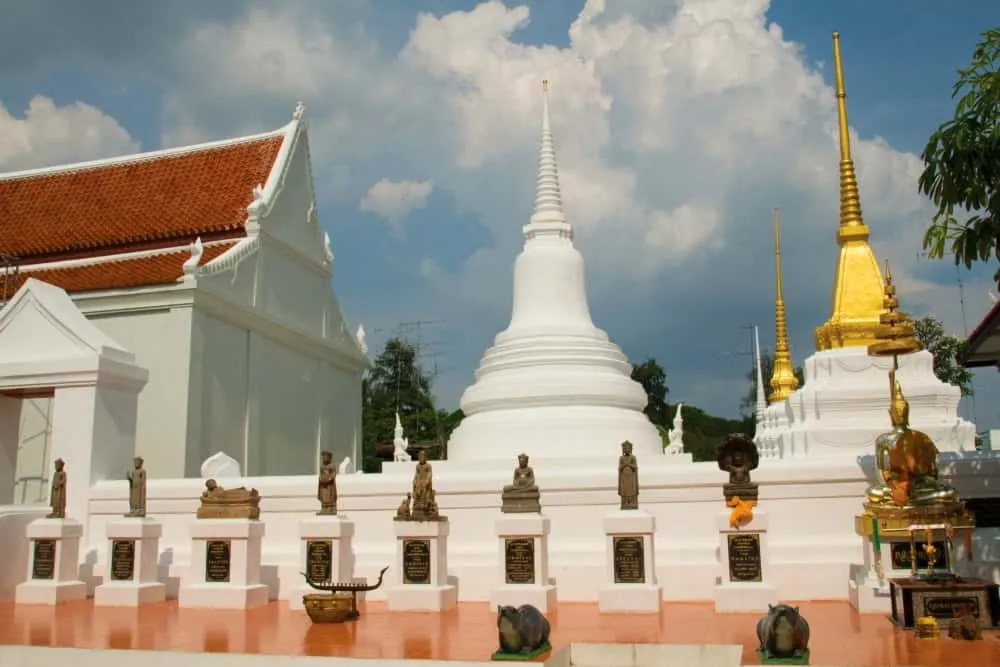
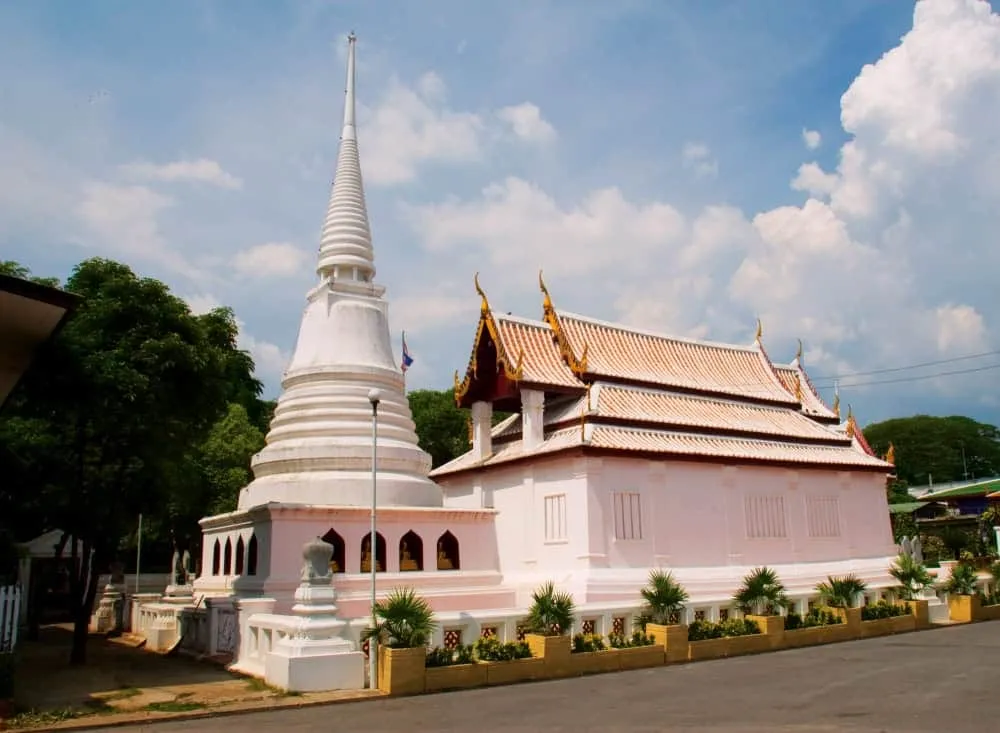
Wat Sao Thong Thong sits on Farangset (French) Road in the historic centre of Lop Buri, the same street that leads to King Narai’s palace, Phra Narai Ratchaniwet. Its wihan (assembly hall) dates to the reign of King Narai the Great (1656-1688) and, by most accounts, was not originally built as a Buddhist hall at all — French cartographers of the period mapped this district as the residence of the Persian embassy, and the building is thought to have served their religious needs before its current use. Entry is free, and the temple is open daily 08:00-16:30.
The temple as it exists today is actually a merger of two older sites: Wat Ruak, which held the ordination hall (ubosot), and Wat Sao Thong Thong, which held the wihan. In the early 20th century a Lopburi royal official recommended combining the two during a monastic inspection tour, and the joined temple took the Wat Sao Thong Thong name that survives now.
Inside the wihan, the principal image is Luang Pho To, seated in the Bhumisparsha posture (subduing Mara, right hand touching the earth) — one of the most revered Buddha images in Lopburi province. The walls around it are set with niches holding smaller Buddha figures in a range of styles and periods, evidence of the building’s long life as a place of worship. The separate ordination hall holds its own principal image, shown in the “stopping the rainstorm” gesture, standing with a raised hand. A handful of smaller structures on the grounds — locally known as the Pichu and Khorasan buildings — are believed to have housed foreign dignitaries and Persian envoys during Lopburi’s years as King Narai’s secondary capital.
Watch out: Local tradition also holds that one Buddha image on the site may have been cast around an iron Christian cross left from an earlier chapel — a claim tied to Lopburi’s brief 17th-century role hosting European missionaries and envoys alongside the Persian community. It’s an intriguing story but treat it as temple folklore rather than settled archaeology; no excavation has confirmed it.
Insider Tip: Pair this temple with Phra Narai Ratchaniwet a short walk away — the palace closes earlier than the temple, so visit the ruins first and use Wat Sao Thong Thong as your last stop of the afternoon.
Dress modestly and remove shoes before entering the wihan and ordination hall. The site is compact enough to see properly in 30-45 minutes, longer if you want to read the informational signage on the building’s mixed religious history.
- Entry fee: Free
- Hours: Daily 08:00-16:30
- Main image: Luang Pho To, Bhumisparsha (subduing Mara) posture
- Built: Wihan dates to King Narai’s reign (1656-1688); merged from two temples in the early 20th century
- Nearby: Short walk from Phra Narai Ratchaniwet on the same street
Getting There
Wat Sao Thong Thong is on Farangset Road in central Lop Buri, opposite the municipal market. View on Google Maps.
Good to Know
Good for
Things to do
On site
Location & Directions
Farangset Road
Lop Buri, Thailand
Show your taxi or Grab driver
วัดเสาธงทอง พระอารามหลวง
Frequently Asked Questions
Was Wat Sao Thong Thong originally a temple of another religion?
Why is the temple called Wat Sao Thong Thong if it started as two temples?
What is the main Buddha image at the temple?
Is there an entry fee?
How does this temple connect to King Narai's palace?
Spotted something out of date or incorrect? Let us know
Stay Near Wat Sao Thong Thong
Live prices for places closest to Wat Sao Thong Thong — tap a pin to compare.