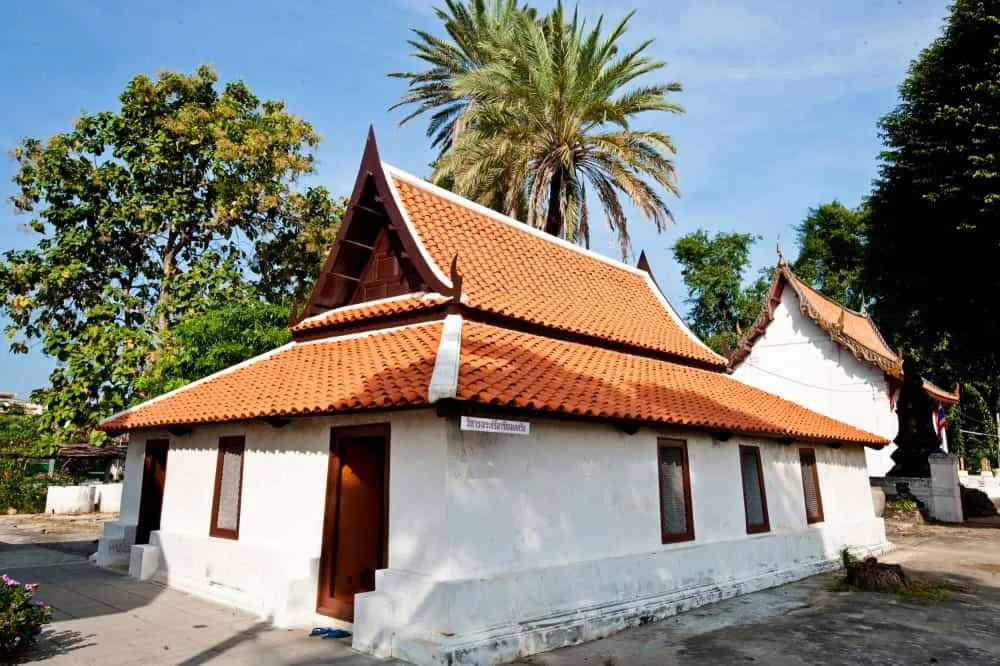





Wat Mani Chonlakhan
วัดมณีชลขัณฑ์ พระอารามหลวง
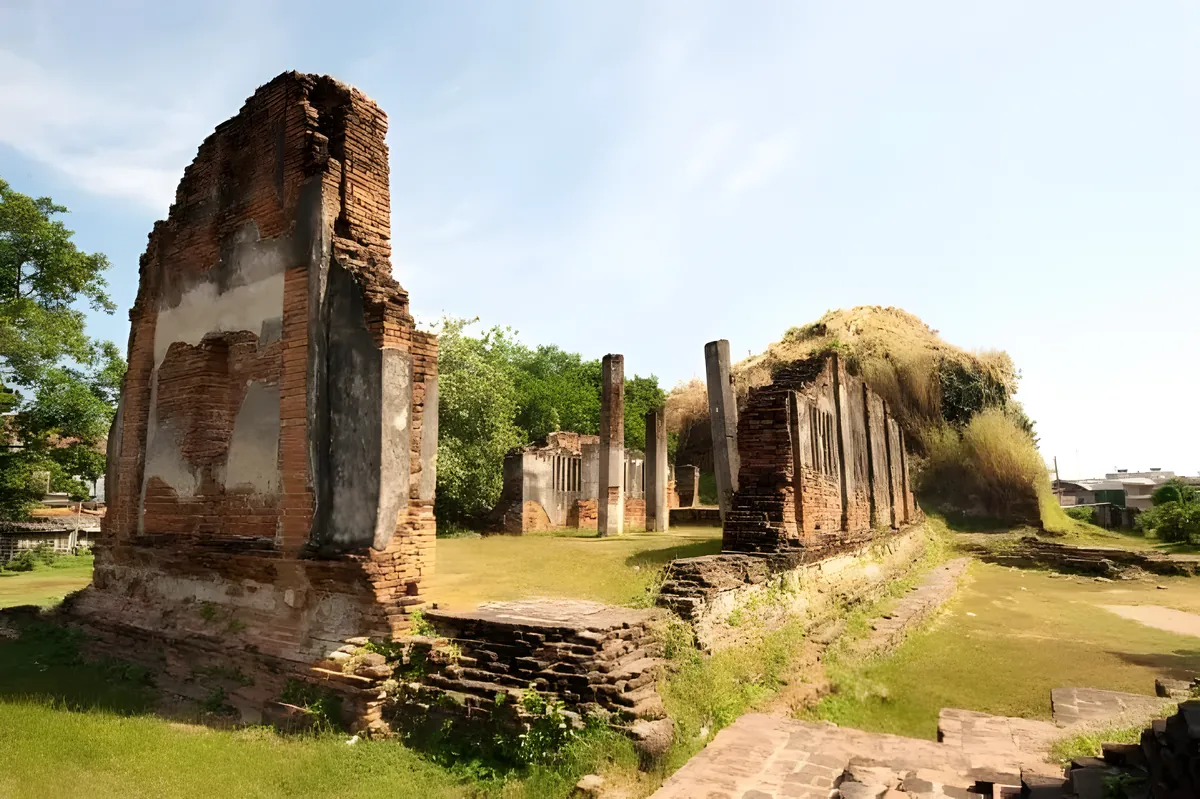
Wat Mani Chonlakhan sits on an island in the Lop Buri River, on ground likely first settled as Wat Koh Kaew during the reign of King Narai the Great (1656-1688). Phraya Aphaironarit developed the temple, and King Chulalongkorn (Rama V) later renamed it Wat Mani Chonlakhan; the Fine Arts Department registered it as an ancient monument on 2 August 1936. Entry is free, open daily 08:00-16:00.
Experience
The temple’s landmark is Chedi Luang Pho Saeng, a whitewashed, twelve-sided chedi with a compact 15.4-metre base but a soaring, slender profile, visible from well outside the temple grounds and used as the temple’s own emblem. According to temple records, it was built during King Mongkut’s (Rama IV) reign by the monk Luang Pho Saeng — teacher of the revered Somdet Phutthachan (To Phrommarangsi) — who is said to have disappeared from Lop Buri without a trace once construction was finished. A sacred bodhi tree on the grounds is said to have grown from a seedling planted by King Chulalongkorn (Rama V).
Atmosphere & Timing
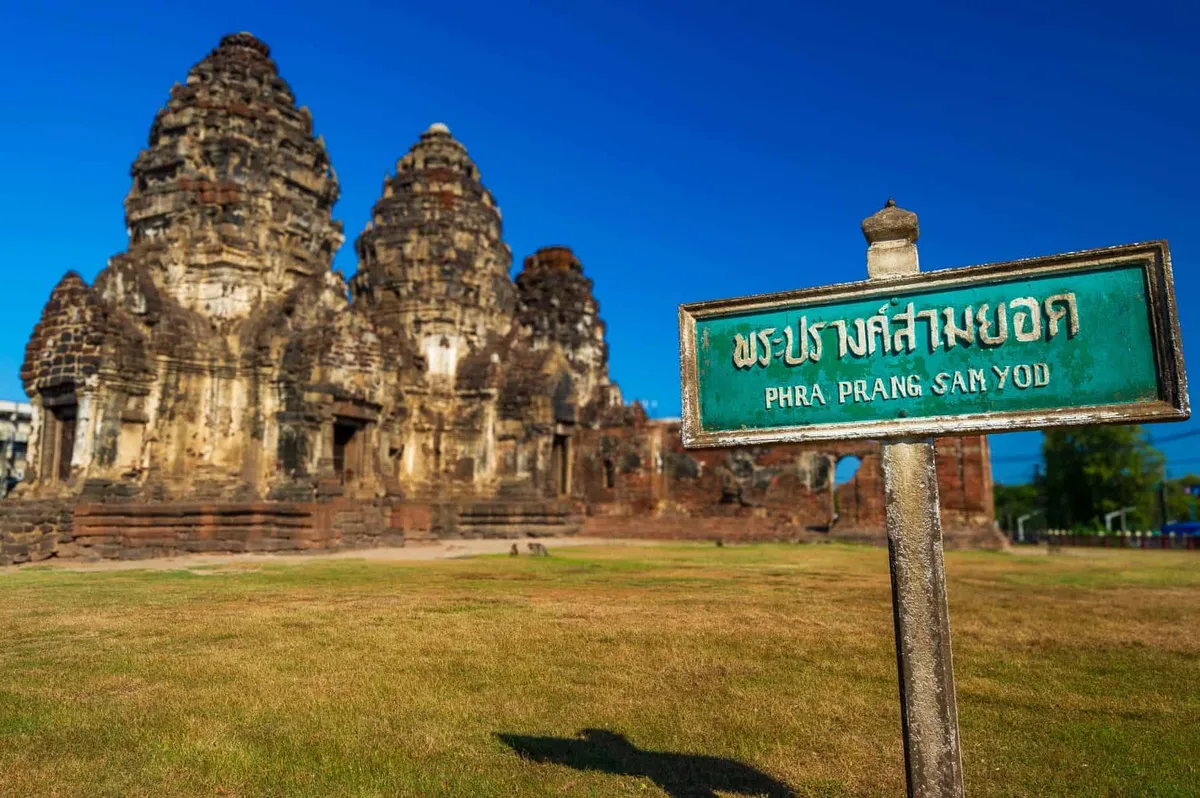
As a royal temple that received patronage from successive kings, Wat Mani Chonlakhan drew nobility for merit-making and blessings partly because of its island setting, ringed by water on all sides. It’s markedly quieter than Lop Buri’s monkey-temple crowds at Phra Prang Sam Yot in town — a contrast worth knowing before you go if you’re after a peaceful visit rather than a photo-op with macaques. Early morning is best for seeing monks collecting alms; the cooler months (November-February) are more comfortable for the walk around the grounds. King Narai’s old palace complex, Phra Narai Ratchaniwet, and its Ho Phra Narai shrine sit a short drive away in town, from the same period the temple traces its founding to.
Insider Tip: Cross to the island via the short bridge on the temple’s south side — most day-trippers stick to Lop Buri’s monkey temples and skip this one, so weekday mornings often mean having the chedi to yourself.
Watch out: Don’t confuse this with Lop Buri’s famous Khmer ruins (Phra Prang Sam Yot or Wat Phra Si Rattana Mahathat). There’s no ancient Khmer masonry here — this is a Rattanakosin-era royal temple with a distinctive Lanna-style chedi.
- Entry fee: Free
- Hours: Daily 08:00-16:00
- Founded: Likely during King Narai’s reign (1656-1688) as Wat Koh Kaew
- Landmark: Chedi Luang Pho Saeng, 15.4m base, built under Rama IV
- Registered monument: 2 August 1936 (Fine Arts Department)
Practical
Dress modestly (covered shoulders and knees) and remove shoes before entering any building. The temple is on an island in Phrommat subdistrict, a short drive from central Lop Buri, with on-site parking.
Good to Know
Good for
Things to do
On site
Location & Directions
Mu 4
Lop Buri, Thailand
Show your taxi or Grab driver
วัดมณีชลขัณฑ์ พระอารามหลวง
Frequently Asked Questions
Is Wat Mani Chonlakhan free to visit?
What is the temple's most notable feature?
How old is the temple?
Is this the same as Lop Buri's monkey temple?
How do I get there?
Spotted something out of date or incorrect? Let us know
Stay Near Wat Mani Chonlakhan
Live prices for places closest to Wat Mani Chonlakhan — tap a pin to compare.