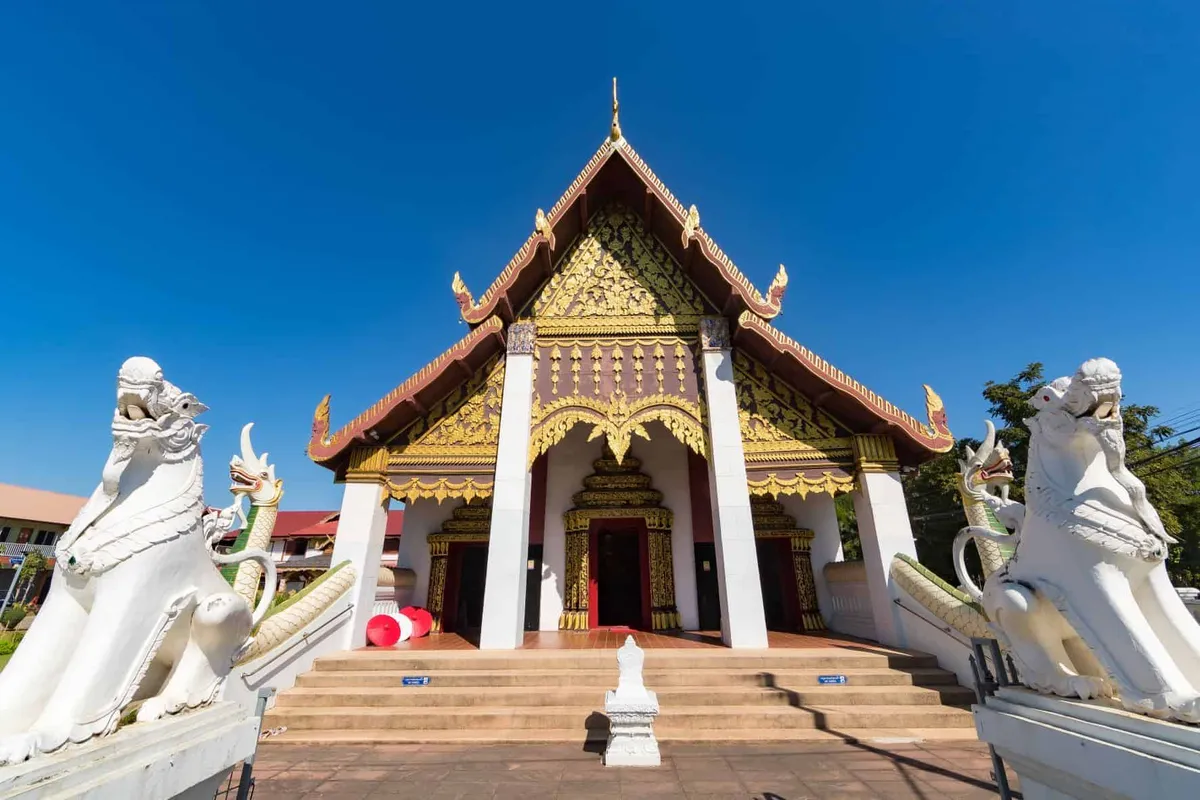













Wat Phumin is located on Phakong Road, Nai Wiang Sub District close to Wat Phrathat Chang Kham Worawihan. According to the Nan Chronicle, Phrachao Chettabut Phrommin, the ruler of Nan built Wat Phumin after reigning Nan for six years. In 1596, it appeared in the Northern Scriptures that it was originally named “Wat Phrommin”. The Ubosot is a tetrahedron shaped building with two large Nagas guarding it. Inside are enshrined four Buddha images in the attitude of subduing Mara facing the door in all four directions. Wat Phumin underwent a major renovation in 1867 by Phrachao Anantaworaritthidet that took seven years to complete. It is assumed that the murals in the Wihan Luang were probably drawn during this period. The painting or “Hup Taem” in Wat Phumin is an allegory in Buddhism, which was divided into three parts: the Jataka tales, way of life, and folk legend of the people of Nan Pu Man, Ya Man. This is a comprehensive mural and hard to find, and is also the most famous mural of Wat Phumin. In addition, Wat Phumin is the only temple with a tetrahedron in Thailand that looks like it sits on the back of two serpents or Naga. The buildings comprise an Ubosot, wihan, and principal chedi. The building in an east-west direction is the wihan, and the building in a north-south direction is the Ubosot. The Thai government used to print a picture of Wat Phumin on 1 Baht banknotes during World War 2, and the Ancient City, Samut Prakan province built a replica of this temple as well. Another interesting aspect is the doors are carved in all four directions using a single piece of golden teak that is 10.16 centimetres thick and carved into a floral pattern of vines, flowers, and leaves that accompany one another well, which is the skill of Nan’s artisans.