

Phrathat Yakhu
เมืองโบราณฟ้าแดดสงยาง และพระธาตุยาคู
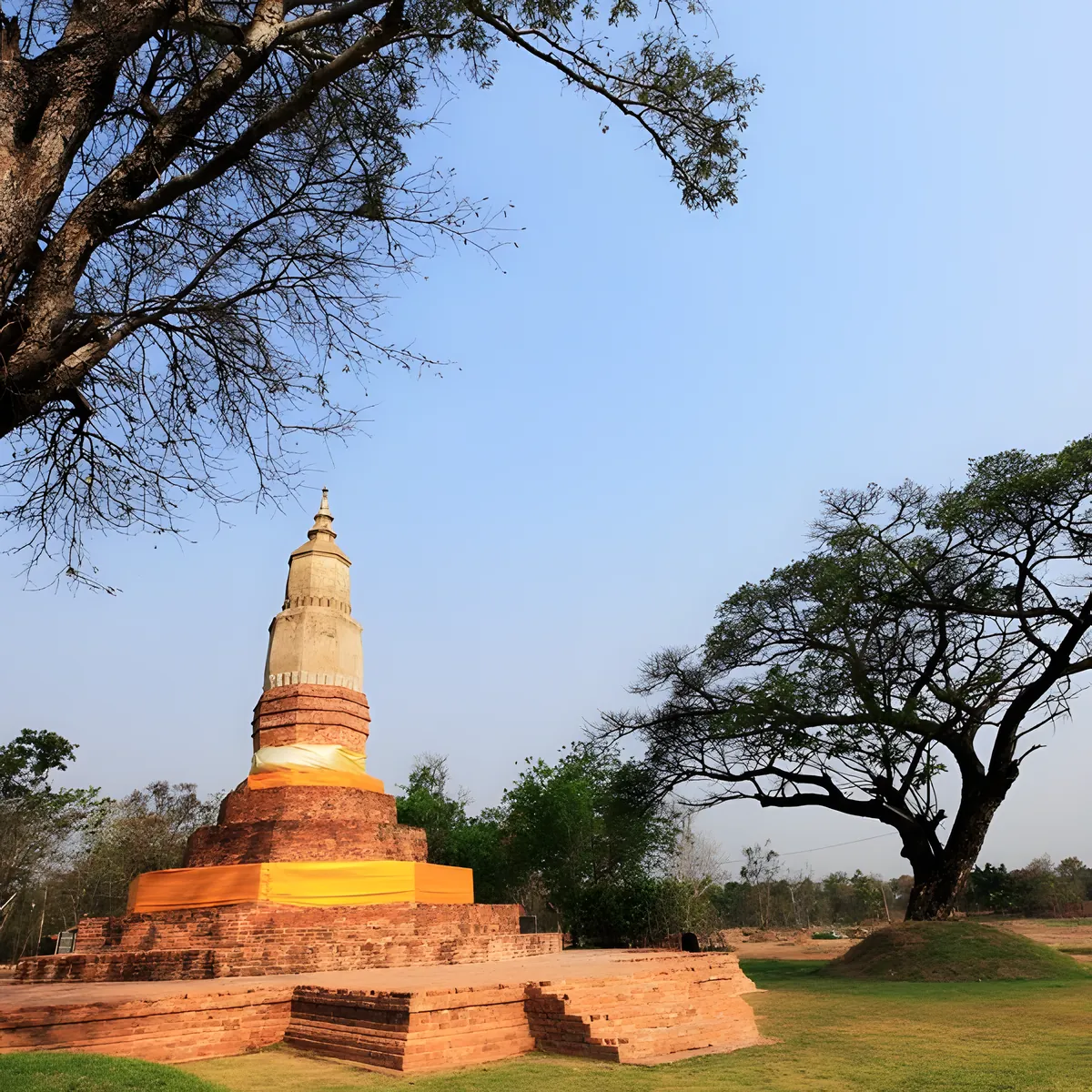
Phrathat Yakhu rises from open rice fields north of Ban Sena in Kamalasai district, the largest surviving monument inside the moated ruins of Mueang Fa Daet Song Yang, an old Dvaravati-period settlement about 19 km from Kalasin town. Entry is free and the site keeps roughly 08:30-16:30 hours daily.
The chedi is a layered building project, not a single-era structure. Its indented-corner base, decorated with Dvaravati-style stucco reliefs, dates to roughly the 8th-10th centuries CE — the oldest surviving portion. An octagonal tier was added on top during the Ayutthaya period, and the bell shape and spire crowning it are Rattanakosin-era additions. Look closely at the base and you can trace the transition: rougher, deeper stucco carving below giving way to the smoother brick-and-plaster work of later restorations above. The name itself comes from the Isan word yaakhu, an honorific for a senior monk — local tradition holds the chedi enshrines the remains of a revered abbot from the old city.
Insider Tip: Walk the perimeter of the ancient city walls and moat, still traceable in the surrounding fields, before or after visiting the chedi itself — Mueang Fa Daet Song Yang was one of the larger Dvaravati-period settlements in the region, and the earthworks give a better sense of its original scale than the chedi alone.
Fa Daet Song Yang fell to the rival city of Chiang Som in a battle that, according to local history, left most of the settlement destroyed. Phrathat Yakhu is said to be the one structure spared, which is why it stands in noticeably better condition than the scattered brick foundations and sandstone boundary markers (bai sema) found elsewhere across the old city site. Several of those carved sema stones, some depicting Jataka scenes, were moved to nearby temples and the Kalasin museum for protection rather than left exposed in the fields.
Watch out: There’s minimal shade around the chedi itself — the surrounding rice paddies offer no tree cover, so bring a hat and water if you’re visiting outside the early morning or late afternoon.
The grounds are open and low-key rather than a managed archaeological park: no gate, no ticket booth, just the chedi standing alone in the fields with a small access road leading in from Kamalasai. Remove your shoes if you climb the base platform, and keep shoulders and legs covered out of respect — it remains an active Buddhist site despite its ruined-city setting. A visit takes 30-45 minutes; pair it with the nearby Wat Pho Chai Semaram, which holds more of Fa Daet Song Yang’s carved boundary stones, or the ancient city site itself for a fuller picture of the settlement.
- Entry fee: Free
- Hours: Daily, roughly 08:30-16:30
- Era: Dvaravati-period base (8th-10th century CE), with Ayutthaya and Rattanakosin-era additions above
- Location: Rice fields north of Ban Sena, Kamalasai district, ~19 km from Kalasin town
- Visit time: 30-45 minutes
Phrathat Yakhu anchors the Kalasin area’s Dvaravati heritage trail. Combine it with the wider Mueang Fa Daet Song Yang ancient city site and the sema-stone collection at Wat Pho Chai Semaram, both a short drive away.
Location & Directions
Kamalasai, Kalasin
Kalasin, Thailand
Show your taxi or Grab driver
เมืองโบราณฟ้าแดดสงยาง และพระธาตุยาคู
Within Walking Distance


Frequently Asked Questions
Is Phrathat Yakhu really from the Dvaravati period?
What does Yakhu mean?
Is Phrathat Yakhu free to visit?
Why is this chedi the best-preserved structure at Mueang Fa Daet Song Yang?
How do I get to Phrathat Yakhu?
Spotted something out of date or incorrect? Let us know
Stay Near Phrathat Yakhu
Compare places to stay in Kalasin, or open the map for options closest to the attraction.