




Experience Bangkok with typical Thai tuk-tuk
Highlights
- Visit the Grand Palace complex
- Cross the river to Wat Arun
- English-speaking licensed guide
- 2-hour tour at a steady pace
- Free cancellation
- Instant confirmation
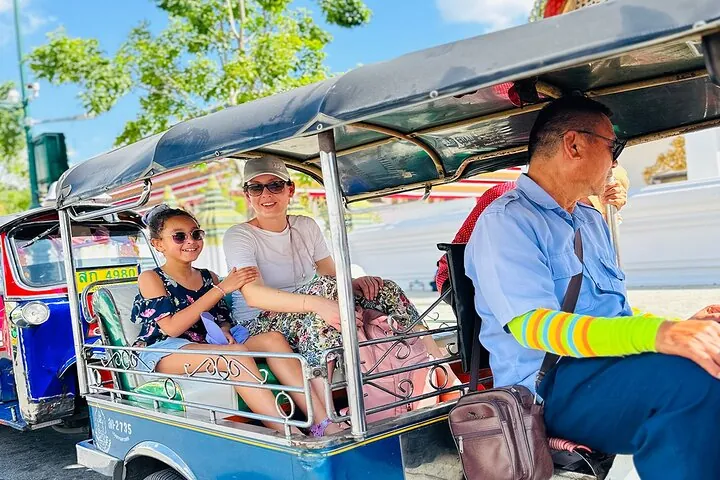
Two hours, one tuk-tuk, and a loop through the old royal quarter of Bangkok. Tuk-tuks are overpriced and mostly a tourist prop these days, but a curated ride with a licensed guide cuts out the negotiation theatre and the “gem scams” that standalone drivers sometimes try. What you get in exchange is a concentrated tour of the neighbourhood around the Grand Palace, at tuk-tuk pace, with someone who can tell you what you’re looking at.
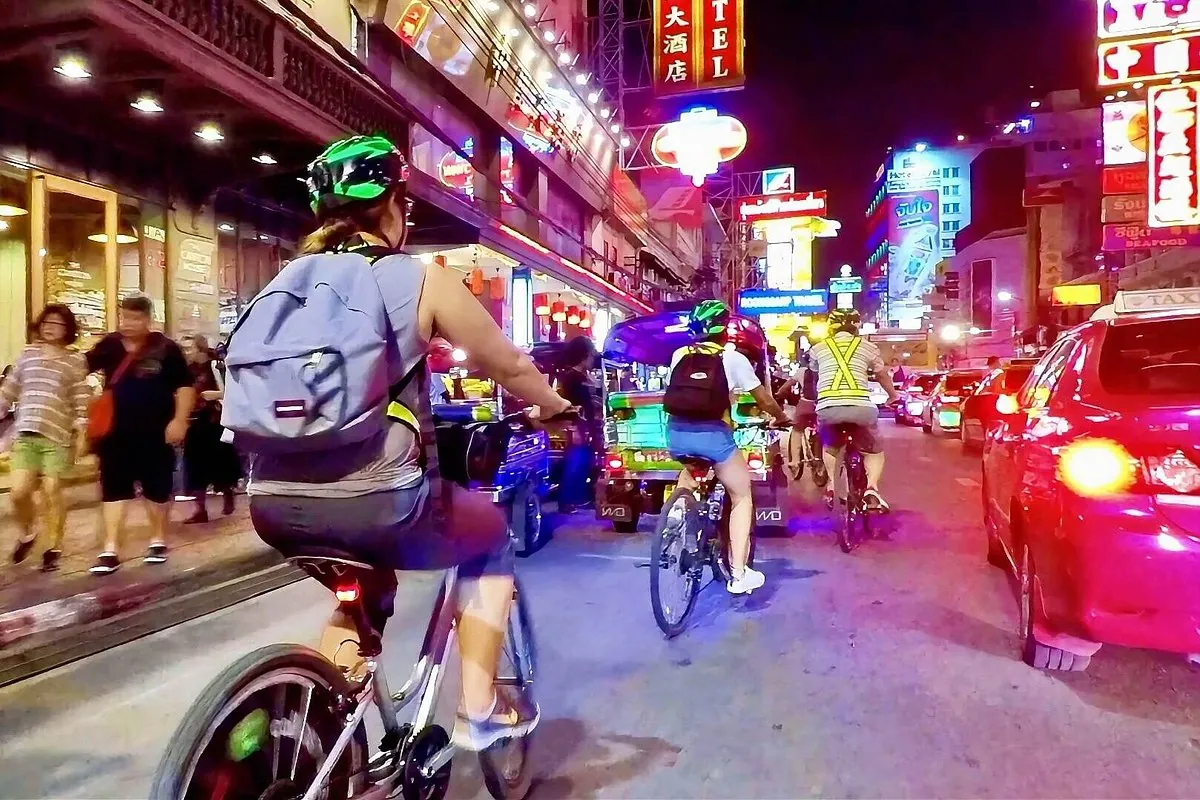
You meet at Sanam Chai MRT, outside the Museum Siam exit. The route passes the Grand Palace complex and Wat Pho, then loops around to a clear-line view of Wat Arun across the Chao Phraya. The 82-metre Khmer-style prang reflected in the river is the photo angle most visitors miss when they cross over by ferry. Short stops follow at the Giant Swing, Wat Ratchanatdaram and its iron-spired Loha Prasat (the Metal Castle), Pak Khlong Talat flower market, and the neon-lit shophouses of Yaowarat Road in Chinatown. The tour ends with a lotus-folding activity: a small hand-made offering the guide teaches you to shape from a fresh flower. Bottled water, licensed guide, and the tuk-tuk are included.
Two hours, easy difficulty, up to 30 people split across tuk-tuks. This is a pass-by tour, not an entry-by-entry one. You don’t go inside the Grand Palace or Wat Pho on this route, which keeps the price low and the pace quick. If you want interior visits, pair this with a separate half-day. Wear something light; Bangkok humidity and open-sided tuk-tuks are a hot combination. Food and snacks aren’t in the price, and tips are optional.
Good option for a first evening in Bangkok or a last afternoon. Avoid the middle of the day in April; the heat through an open tuk-tuk is punishing.
Itinerary
The Grand Palace
The Grand Palace in Bangkok is an architectural landmark that was once home to the kings of the Chakri Dynasty. The palace was built in 1782 by Rama I, the first king of the Chakri Dynasty, when he moved the capital of what was then known as the Kingdom of Siam from Thonburi on the west bank of the Chao Phraya River to Bangkok on the east bank. For 150 years the palace was the home of the Thai King. Today, the complex remains the spiritual heart of the Thai Kingdom. NOTE 1: The tour does not go inside the Grand Palace & Wat Phra Kaew, but only sees it from the outside. NOTE 2: Time mentioned includes traveling time from one place to another.
Sao Chingcha (the Giant Swing)
The Giant Swing is a religious structure. It was formerly used in an old Brahmin ceremony. If you want to show a photo of Bangkok’s landmark to your friends or family, the Giant Swing or Sao Chingcha is one of the best choices. It is located in the heart of Bangkok and in front of the first rank royal temple, Wat Suthat. NOTE: Time mentioned includes traveling time from one place to another.
Wat Ratchanatdaram Worawihan
Located on the grounds of Wat Ratchanatdaram, Loha Prasat is also known as the “metal castle”. It was built in 1846 under the patronage of King Rama III and inspired by two other similar temples in India and Sri Lanka. Loha Prasat is one of the most outstanding pieces of architecture in Bangkok. NOTE 1: The tour does not go inside Loha Prasat, but only sees it from the outside. NOTE 2: Time mentioned includes traveling time from one place to another.
Chinatown - Bangkok
Bangkok's Chinatown is one of the largest Chinatowns in the world and one of the most authentic and unchanged neighborhoods in the city. NOTE: Time mentioned includes traveling time from one place to another.
Pak Khlong Flower Talat Original
Pak Khlong Talat is Thailand’s largest wholesale flower market and is open 24 hours a day, 7 days a week. Pak Khlong Talat means 'market at the mouth of the canal' in Thai. The area originally started as a floating market in the early 18th century. Later, in the 19th century, the area became a large fish market. In the 1950s the area eventually developed into the current Flower Market. NOTE: Time mentioned includes traveling time from one place to another.
Temple Of Dawn (Wat Arun)
Wat Arun, locally known as Wat Chaeng, is situated on the Thonburi side of the Chao Phraya River. It's one of Bangkok's most beautiful temples and one of the major landmarks in the Thai capital. NOTE 1: The tour does not visit Wat Arun, but just sees it from the other side of the river. NOTE 2: Time mentioned includes traveling time from one place to another.
WatPo Thai Traditional Massage School
Wat Pho is one of the oldest temples in the Thai capital. It is also one of the largest temple complexes in Bangkok and has the largest collection of Buddha images in Thailand. Wat Pho maintains the title as the country’s earliest center for public education, specializing in religion, science and literature. Wat Pho is most famous for its large reclining Buddha (46 meters long). NOTE 1: The tour does not go inside Wat Pho, but only sees it from the outside. NOTE 2: Time mentioned includes traveling time from one place to another.
Included
- English speaking guide
- One bottle of drinking water per person
- Typical Thai Tuk Tuk ride
- Folding lotus flower activity
Not Included
- Personal expenses
- Gratuities for tuk-tuk driver and guide (optional)
- Food/snacks
Meeting point & area
View larger map →Meeting point: The meeting point is at metro station (MRT) Sanam Chai, outside at the Exit 'Museum Siam'.
Good to know
Cancellation
For a full refund, cancel at least 24 hours before the scheduled departure time.