






The 11-hour flight is the easy part — and if you’re still booking it, our flights to Thailand guide covers routes and airlines by country. Arrival at Suvarnabhumi is where most first-time visitors get caught out — by the TDAC if they haven’t filled it in, by the wrong taxi queue, by skipping the SIM card and then finding their phone won’t work for Grab.
Here’s what actually happens from wheels-down to your hotel, with the decisions that save you time and money.
Bottom line: Two pre-bookable services can reduce arrival friction. Sawasdee Pass fast-track provides an escort to the priority immigration lane, while a private transfer gives you a named driver and an agreed meeting point. Check the live price and inclusions before booking either service.
Quick answer
For most first-time arrivals at Suvarnabhumi, the real pressure points are immigration, baggage claim, and the first transport decision. Have your hotel address ready before landing, use the official taxi or Airport Rail Link if you are unsure, and leave fast-track for tight connections, young children, or peak long-haul arrival banks.
How we picked these arrival steps
The shortlist starts with the places and options already covered in this article, then weighs the details travellers actually feel on the ground: route, timing, season, cost friction, crowd level, and whether the stop is worth planning around.
We do not add live prices, ratings, opening hours, or claims that need direct operator confirmation unless they are already stated in the guide. Where those details can change, use this shortlist to choose what to compare, then confirm current rules and rates before booking.
How to choose
Choose by how tired you are and how much luggage you have. The Airport Rail Link is best if you are travelling light and staying near BTS or MRT; a taxi is easier for families, late arrivals, and hotels away from train lines. Avoid making any big city plan for the first 90 minutes after landing.
At a glance — the arrival sequence
| Step | Timing | Notes |
|---|---|---|
| Gate → immigration | Allow for a long walk | SAT-1 arrivals use the APM; main-terminal arrivals follow the walking route |
| Immigration | Variable | Flight banks, staffing, passport checks, and lane eligibility all affect the queue |
| Baggage claim | Variable | Fast-track does not make checked bags arrive sooner |
| Customs | Usually brief | Use the red channel if you have goods to declare |
| Arrivals hall → transport | Allow time to navigate | Follow signs for the taxi rank, Airport Rail Link, Grab, or your driver |
Before you land
Get these done in the air or before takeoff:
- Fill in the Thailand Digital Arrival Card (TDAC) if you haven’t already. It’s mandatory. Do it on your phone via official portal using the Wi-Fi at your departure airport. You need your passport, flight number, and the first night’s hotel address. Save the QR code as a screenshot — you’ll be asked for it.
- Note down your hotel address in Thai if you have it. Even with Grab, drivers sometimes need to call to confirm the location and Thai script helps. Most hotels list their Thai address on their website.
- Check your phone for eSIM — if you’ve installed one, activate it now (most need 30 minutes to provision). Saves the SIM-counter queue on landing. Still deciding? Our Thailand eSIM and airport SIM rundown covers the arrival options.
- Last toilet break before landing — Suvarnabhumi’s nearest restrooms to immigration are a 200m walk after deplaning. Long queues form for both.
On the ground: the arrival sequence
The route from gate to transport changes with your arrival gate, immigration queue, and baggage delivery. Here is each step.
1. Gate to immigration
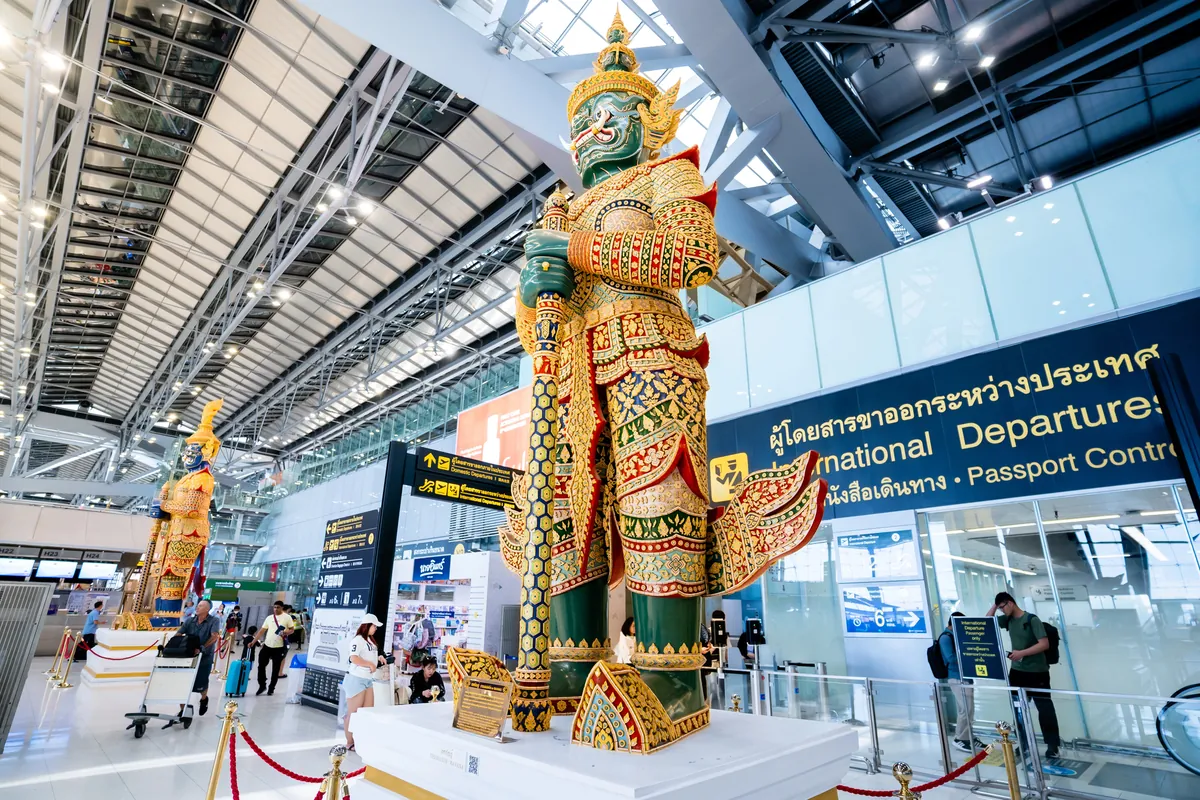
Suvarnabhumi has main-terminal concourses A-G plus the SAT-1 satellite terminal. If your flight arrives at SAT-1, go to level B2 for the automated people mover to the main terminal. From a main-terminal concourse, follow the walking route to immigration.
There are travelators throughout but the walk is still 800m-1.5km depending on your gate. Allow 15-20 minutes.
2. Immigration
Follow the signs and staff directions at passport control:
- Manual counters — available to foreign arrivals; queue length changes with flight arrivals and staffing.
- Automatic channels — AOT currently lists arrival access for Thai, Singaporean, and Hong Kong passengers. Do not assume that the all-nationality departure e-gates also apply when entering Thailand.
You’ll need:
- Passport (with at least 6 months validity remaining)
- TDAC QR code on your phone
- Onward/return ticket if asked (rare, but possible)
Some travelers get a stamp; e-gate users get a printed entry slip. Through 14 September 2026, covered nationalities still get 60 days visa-free; from 15 September 2026 most listed nationalities get 30 days (Mauritius & Seychelles 15 days) under the Royal Gazette framework — check the current rule in our Thailand entry requirements guide before you fly.
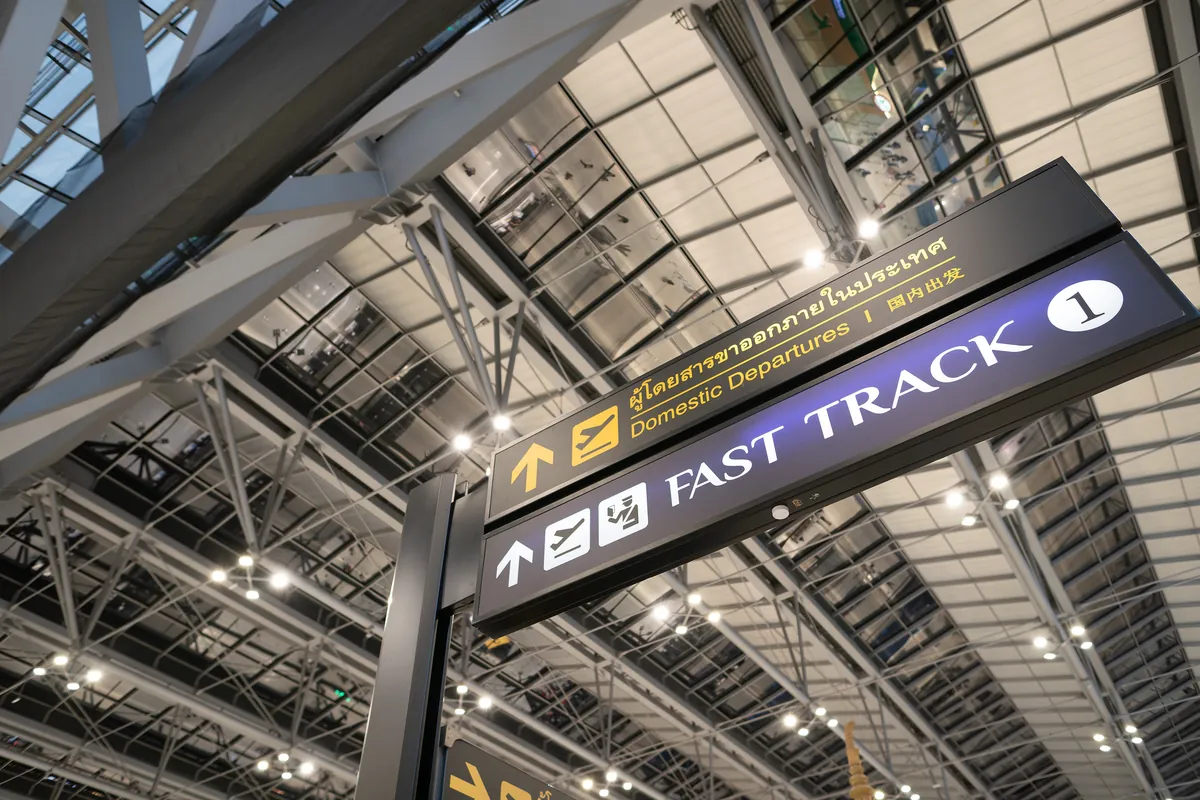
Skip the queue: 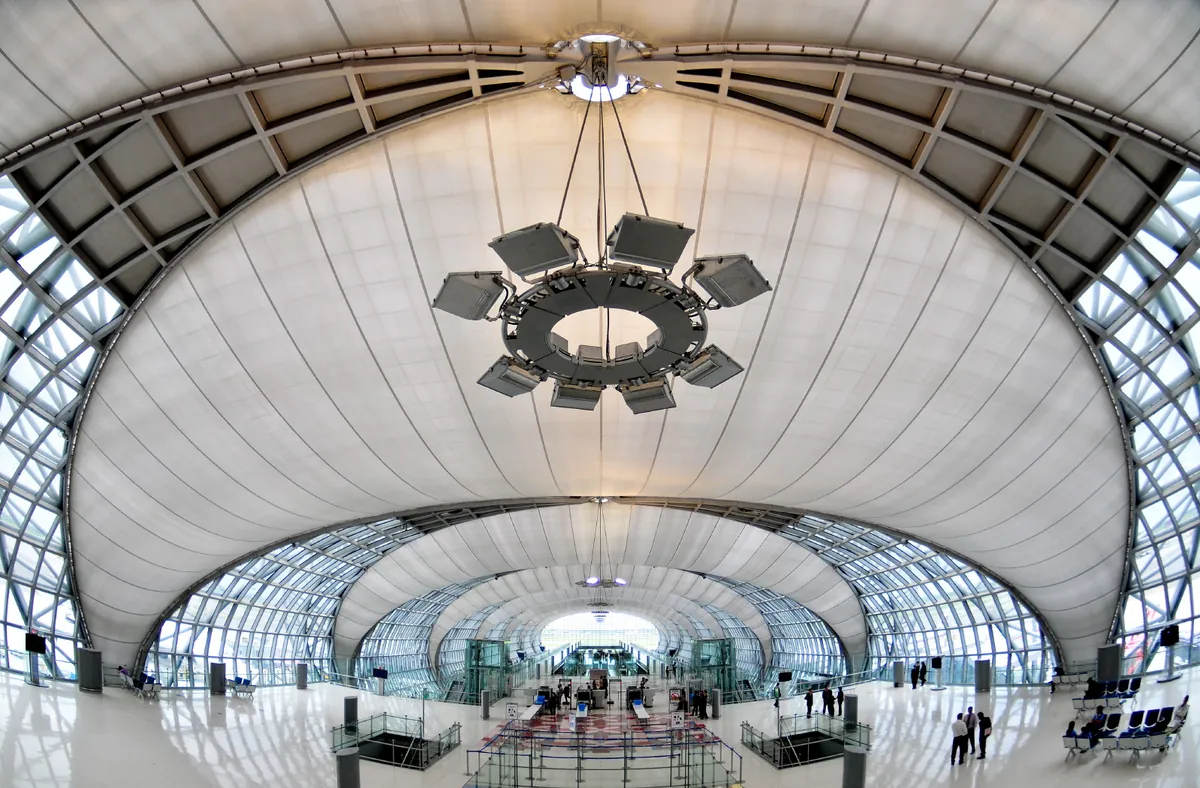 Klook Sawasdee Pass fast-track — a staff member meets you at the gate or inside the terminal and escorts you to the priority immigration lane. The price changes by date and package, and clearance time is not guaranteed. Check the live price on Klook →
3. Baggage claim
Baggage claim is on Floor 2, signed clearly after immigration. Belts are typically active within 15-20 minutes of landing but can take up to 45 minutes for late arrivals.
There are luggage trolleys (free) at the entrance to the baggage hall. Take one if you have more than one bag — the walk out is long.
4. Customs
After collecting bags, walk through the green channel (nothing to declare) unless you’re carrying restricted items. Customs officers occasionally ask to scan bags; usually they don’t.
Watch out: Electronic vapes and e-cigarettes are prohibited imports in Thailand. Leave them at home; the offence and penalty can depend on whether the case involves importation, possession, sale, or use. Also restricted: cigarettes over 200 sticks, alcohol over 1 litre, fresh food, and drone equipment that requires registration or permission.
5. Arrivals hall
Past customs, you enter the public arrivals hall. This is where:
- SIM card counters sell tourist packages from AIS and True. AIS currently lists 49 THB for a one-day package, with longer options at 399 and 499 THB. Check the duration and data allowance before buying.
- Currency exchange booths offer poor rates — use an ATM instead.
- ATMs are available — Bangkok Bank and Krungsri ATMs are next to the exits. Withdrawal fee is 250 THB (Visa) or 350 THB (Mastercard) per transaction; take out the max (typically 30,000 THB) to minimize the fee impact.
- Tourist information can advise on transport — they’re occasionally useful for early-morning arrivals when transport options are limited.
Getting to your hotel
Four options ranked by cost and convenience:
| Option | Cost | Journey time | Pickup |
|---|---|---|---|
| Airport Rail Link City Line | 45 THB | 30 min to Phaya Thai | Floor B (basement) |
| Grab | 350-550 THB | 40-90 min | Level 1, Gate 4 designated pickup |
| Metered taxi | 300-500 THB | 40-90 min | Floor 1 (signed taxi rank) |
| Private transfer (pre-booked) | 800-1,500 THB | 40-90 min | Confirm the operator’s meeting point |
If you are still choosing the first night’s hotel, compare airport-friendly Lad Krabang with rail-connected Phaya Thai in the cheap hotels in Bangkok guide. The right area saves more time than the cheapest room.
Which one should you take?
- ARL is the fastest in evening traffic (no road, just the rail line direct to Phaya Thai BTS)
- ARL is the cheapest at 45 THB
- Metered taxi is the cheapest door-to-door option (300-500 THB)
- Grab gives you a fixed fare upfront — no negotiation, no meter games
- Pre-booked private transfer is the smoothest experience — driver meets you with a sign
- ARL requires walking + escalators + BTS transfer — not ideal with heavy luggage or kids
- Taxi-rank waits vary with the arrival schedule and available drivers
- Grab pickup is at the designated Level 1, Gate 4 area; follow the current airport signs
- Private transfers cost 2-3× a metered taxi but you skip every queue
Avoid:
- Touts in the arrivals hall offering “private taxi” or “limousine” — they’re 800-1,500 THB and won’t be cheaper. Polite “no thank you” works.
- Private cars on Level 4 (departures) — these are the “airport limousine” desks. Three times the price of a metered taxi for the same journey.
Full breakdown of options and prices in our airport transfers guide.
Save time: 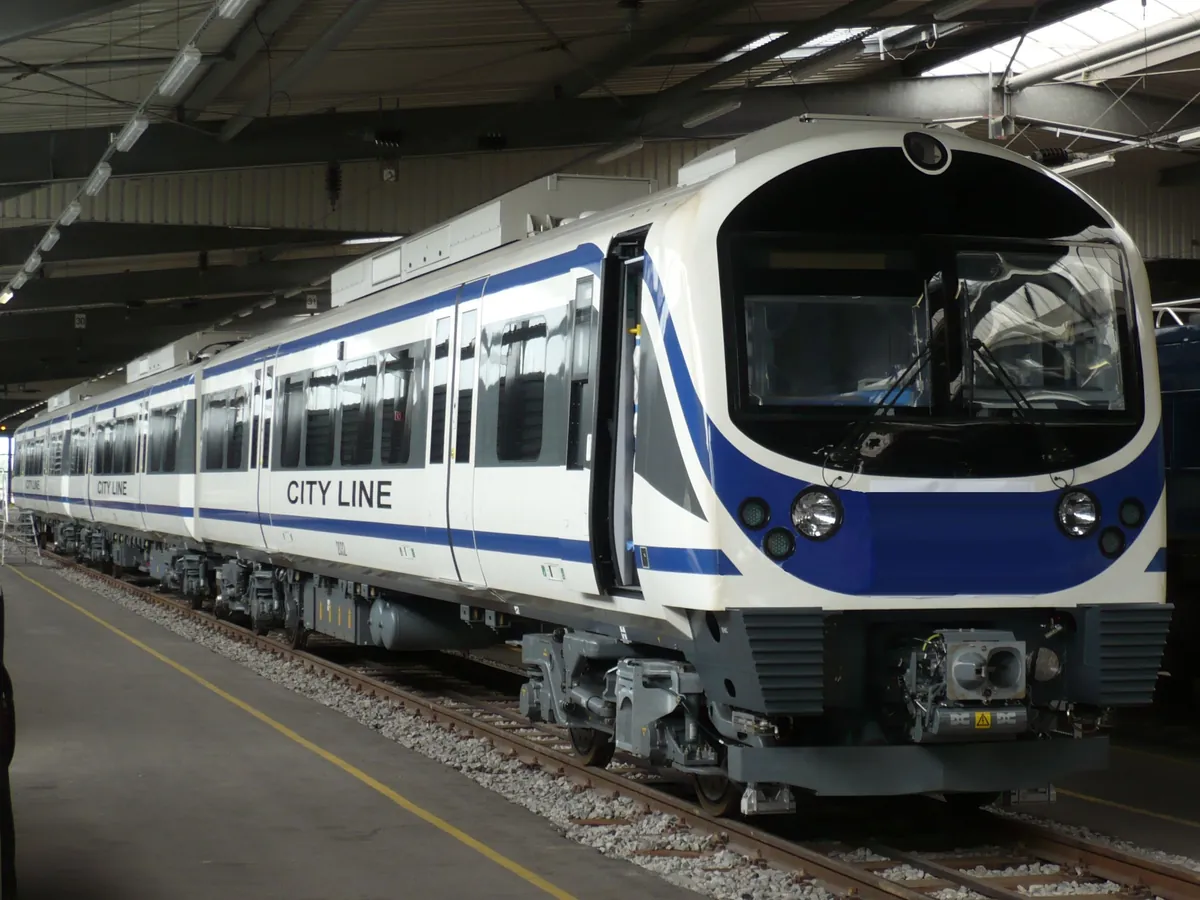 Bangkok BTS one-day pass from $4.05 (4.8★, 11k+ reviews) — the Airport Rail Link ticket is currently best bought at the station, but this Klook pass is useful once you reach the BTS at Phaya Thai and plan several Skytrain rides. Book the BTS pass →
Hands free: If your room is not ready or your flight leaves late, AIRPORTELs luggage delivery sends bags between supported Bangkok airports, hotels and malls so you can use the day without dragging suitcases through stations.
Pre-book it: 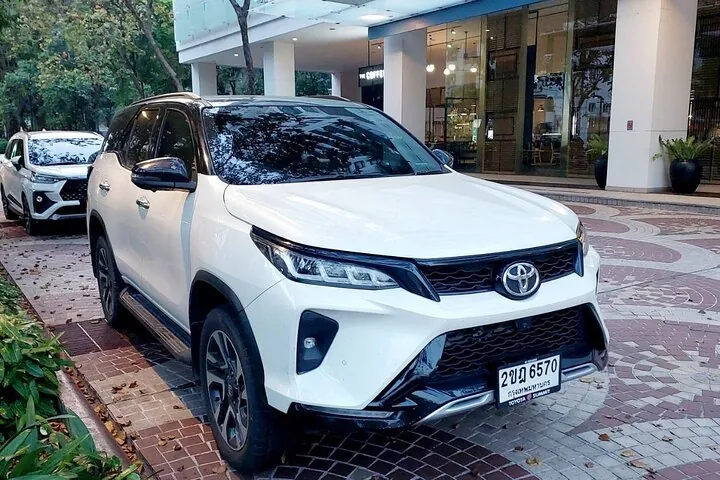 Private Bangkok airport transfer from $50 (Viator) — driver meets you at arrivals with a name sign, fixed price to your hotel, no taxi rank or negotiation. Best for late arrivals or anyone with a lot of luggage. Book on Viator →
Scam warnings
The risks at Suvarnabhumi are mild compared to street-level Bangkok, but two are worth knowing:
- The “your hotel is closed/full” scam — A driver claims your booked hotel is unavailable and offers to take you to “a better one.” This is a commission scam. Insist on going to your booked address; if the driver refuses, get out and find another.
- Currency exchange touts offering “best rate” — Stay with bank-branded ATMs or the official SuperRich counter downtown. Anyone approaching you with a rate is overcharging.
Insider Tip: If you’re greeted in the arrivals hall by anyone holding your name or your hotel’s name — and you didn’t pre-book a transfer — ignore them. It’s almost always a commission tout. Real hotel transfers go straight to the kerb to wait at a pre-arranged spot, not the arrivals hall.
First-hour checklist
Things to do in your first hour on the ground:
- Activate your eSIM if you haven’t (or buy a SIM at the AIS counter)
- Withdraw 10,000-30,000 THB from a bank ATM (Bangkok Bank, Krungsri, or KBank)
- Open Grab and verify you can request a ride before you walk to the taxi rank
- Screenshot your hotel address in Thai if your phone has data — paste from the hotel’s website
- Drink water — you’ll be dehydrated from the flight and Bangkok humidity hits immediately
Pro Tip: The airport ATM withdrawal fee is 250 THB for Visa or 350 THB for Mastercard per transaction regardless of amount. If you need 20,000 THB for the first few days, take it all out in one withdrawal instead of multiple smaller ones — saves 4-5 fee charges.
Once you’re settled
- Rest before exploring — Sukhumvit/Silom/Khao San are all 30-45 minutes from the airport in evening traffic. Plan a low-key first evening.
- Check meal options near your hotel before going far. Bangkok’s street food scene is everywhere — you don’t need to travel to find it.
- First-day SIM data usage will be high — Google Maps, Grab, hotel check-in confirmations. A 1GB tourist SIM lasts most people 3-4 days; an unlimited eSIM is worth the small premium.
See our things to do in Bangkok guide for day-one ideas, and the getting around Thailand guide for onward travel.
Onward travel
- Bangkok airports guide — BKK vs DMK comparison
- Airport fast-track Thailand — full fast-track + lounge guide
- Thailand airport transfers — every option compared by airport
- Best eSIM for Thailand — providers worth using
Skip the queues at Suvarnabhumi


Suvarnabhumi Airport (BKK) Fast-Track Meet & Greet
Live provider price

We earn a commission on bookings — you pay the same price.