






Thailand’s best-established outdoor climbing base is the limestone around Railay and Tonsai in Krabi. Local guide services publish large route inventories in the wider Krabi area; exact counts change with rebolting and access. Koh Tao also has guided granite climbing. Access, heat, rain, and fixed-anchor condition vary by area. Pair Krabi climbing days with visit Krabi logistics and rest-day paddling around Ao Nang or Railay Beach.
Quick answer
Railay and Tonsai are the easiest places to start: guides, rentals, and many established routes sit close together. Koh Tao has current guided climbing. Treat Chiang Mai, Koh Yao Noi, and Phang Nga as access-sensitive options that need direct confirmation before you build a trip around them. Compare current operator quotes and written inclusions.
| Best for | Climbing area | Why it works | Main tradeoff |
|---|---|---|---|
| First climbing trip | Railay and Tonsai (Krabi) | Guides, rentals, limestone, beach access | Busy in dry season |
| Current island option | Koh Tao | Guided granite and beginner courses | Fewer routes than Krabi |
| Access-sensitive option | Chiang Mai, Koh Yao Noi, or Phang Nga | Quieter trip if legal access exists | Confirm operator and access first |
How we picked these climbing areas
We compared guide access, route variety, beginner options, season, accommodation, and how easily climbing pairs with the rest of a Thailand trip. Honesty about closed or uncertain access matters more than listing every limestone wall that ever appeared in an old guidebook.
How to choose
Start with Krabi if you are new to climbing in Thailand. For any other area, confirm legal access, a current guide, route information, fixed-anchor condition, and insurance before booking accommodation. Season planning: best time to visit Thailand (Andaman vs Gulf windows differ).
Where to climb
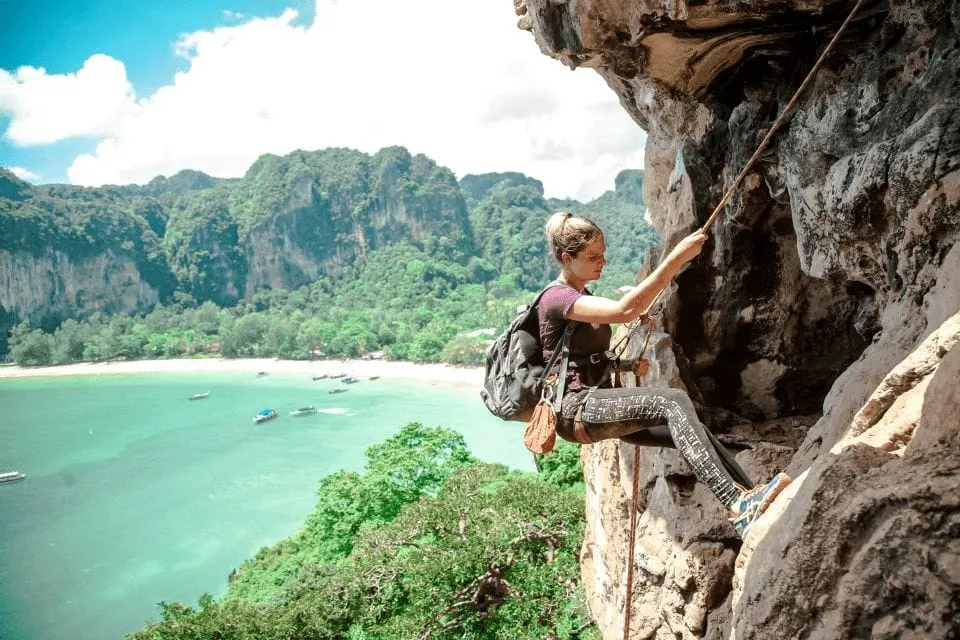
Railay Beach and Tonsai
Large concentration of bolted limestone routes, guides, and rental shops. Routes range from beginner sessions to steep and multi-pitch climbing. Use a current guidebook because access and fixed hardware change. Book through operators that state inclusions (gear, transport, food) in writing.
Book a rock climbing day at Railay Beach, Krabi
Koh Tao
Current guided climbing and beginner courses on granite. Works as an add-on between dives or beach days, with fewer routes than Krabi. Goodtime Adventures and similar shops publish introductory half-day and one-day top-rope courses. Check current price and syllabus for your dates rather than copying old blog numbers. Surface days: scuba diving in Thailand if your group mixes climbers and divers.
Chiang Mai
Do not plan to climb at Crazy Horse Buttress. Local operators have stated that access is suspended and climbing there can be treated as trespass. Stale transport pages are not evidence that access has reopened. Ask a current local guide which legal alternatives are operating. For non-climbing outdoor days, use hiking in Chiang Mai.
Koh Yao Noi and Phang Nga
Access and operator availability can change. Obtain direct confirmation of the route, legal access, guide, and required equipment before building a trip around either area. Phang Nga Bay limestone looks dramatic from the water; that does not equal dependable bookable climbing access.
Safety, anchors, and gear
Coastal limestone has a specific fixed-anchor risk: hidden stress-corrosion cracking can affect stainless-steel bolts in warm marine environments. Do not rely on appearance alone; avoid routes with unknown or suspect hardware and use current local rebolting information.
Before a route, use current local information and carry appropriate helmet, harness, rope, connectors, and belay equipment. Check weather, tides where relevant, and escape options. Heat can be severe even in drier months. Start early and carry water.
Equipment: many shops rent ropes and hardware; climbers often prefer their own shoes and harness. Each life-safety item should be suitable, current, undamaged, and marked to the relevant CE or UIAA standard. EN 12277 applies to harnesses, not every piece of climbing equipment.
Difficulty: published grades in the Krabi area commonly span beginner slabs through hard sport routes (local guides often cite ranges such as 5a through 8b+). Treat grades as guidebook-specific; climb within your recent experience.
Season
There is no single nationwide climbing season. Krabi is generally easier in its drier Andaman months; northern heat, smoke, and rain follow a different pattern; Gulf-island conditions differ again. Check the specific crag, recent rain, and daily heat. Stop if rock, access paths, or fixed equipment are unsafe.
Where to stay near the crags
Choose by walking or boat distance to the crag, drying space for gear, and whether you want quiet evenings or a busier beach base. Campsites and hostels exist near popular Krabi climbing zones; resorts suit mixed groups. Book ahead in Krabi’s busier dry-season months. For other areas, check local weather and access rather than applying Krabi’s season nationwide.
Rest-day options near Krabi
- Kayaking around Railay, Ao Nang, and Krabi Town
- Snorkelling toward Koh Phi Phi with operators that provide decent masks, fins, life jackets, and reef guidance
- Hiking only when heat and energy allow, e.g. Doi Inthanon if you later travel north, or lighter trails near your base; see hiking in Thailand
Use non-climbing days to recover. Thailand’s heat can make a simple walk feel like a workout.
Guided tours and costs
Guided trips range from short beginner sessions to private guiding and multi-pitch days. Equipment, transport, food, and lodging are package-specific. Check written inclusions. Ask about the guide’s relevant training, experience on the exact crag, first-aid preparation, and rescue plan. UIAA accredits member-federation training programmes; it does not directly certify individual guides. IFMGA is a separate professional qualification and is not a universal requirement for a Thai single-pitch guide.
Check current availability and prices for the Railay climbing day
Prices depend on duration, group size, route, equipment, and transfers. Check that your travel insurance covers outdoor climbing and rescue.
Krabi is the easiest first climbing base; Koh Tao has a current guided option. For Chiang Mai, Koh Yao Noi, or Phang Nga, confirm legal access and a current operator before booking the rest of the trip.