








Thai cuisine is regional: menus in Chiang Mai, Khon Kaen and Phuket reflect different ingredients and food traditions. This guide explains 20 dishes found across Thailand, including common variations and dietary cautions.
If you only have time to eat ten things on a first trip: Tom Yum Goong, Pad Thai, Som Tam, Khao Soi, Massaman Curry, Mango Sticky Rice, Pad Kra Pow, Gai Yang with sticky rice, Khao Man Gai, and one regional speciality from wherever you happen to be (Hoi Tod in Phuket, Khao Niaow Mu Yang in Isan, Khao Mok Gai in the south, etc.).
The best way to taste these is at street level: markets, shophouse stalls, and the family-run restaurants where the same recipe has been cooked daily for 30 years. Our Bangkok street food guide covers the highest-density spots for many of these dishes, and Thai cooking classes are widely available if you want to learn one or two yourself.
Quick answer
Begin with tom yum and pad thai, then move on to green curry and som tam. Say “pet noi” for a little spicy or “mai pet” for not spicy, because default heat in non-tourist spots is no joke.
| Best for | Pick | Why it belongs | Main tradeoff |
|---|---|---|---|
| Hot and sour soup | Tom Yum ( ต้มยำ ) | Thailand’s signature soup, with lemongrass, galangal and lime | Can be very hot; ask for “pet noi” |
| A safe first noodle dish | Pad Thai ( ผัดไทย ) | Mild, sweet-sour and sold almost everywhere | Often made sweeter for tourists |
| A curry with rice | Green Curry ( แกงเขียวหวาน ) | Coconut-rich and fragrant | Usually hotter than red curry |
| Something fresh | Som Tam ( ส้มตำ ) | Pounded green papaya salad from Isan | Fermented fish sauce versions are pungent and very spicy |
How we picked these dishes
We selected widely encountered dishes from central, northern, northeastern and southern Thai cooking, then checked defining ingredients, common variations and dietary cautions. Recipes differ between regions and cooks, so the descriptions focus on what is typical rather than prescribing one definitive formula.
How to order Thai food like a local
- “Pet noi” / “Mai pet”: “a little spicy” / “not spicy.” If you don’t ask, default heat will hurt. Thai cooks in tourist areas already dial it back for foreigners, but in non-tourist spots the chilli is no joke.
- “Mai sai pak chee”: “no coriander.” If you’re one of the 15% who think coriander tastes like soap.
- Order by pointing. Most street vendors don’t speak English but will gesture-confirm what’s in the dish. If something looks good on another table, point at it.
- Watch the locals queue. Stalls with a constant Thai customer line are almost always worth the wait. Empty shopfronts in tourist areas usually aren’t.
- “Tao rai krap/ka?”: “how much?” (krap for men, ka for women). Knowing this single phrase saves you from getting overcharged at markets.
Learn to make them yourself
A half-day cooking class is one of the best-value activities in Thailand: most hands-on classes cost $25-45, cover 3-5 dishes, and open with a wet-market walk where the teacher shows you the difference between galangal and ginger before you cook with them. Three consistently well-reviewed options:
- Bangkok: Hands-on cooking class with market tour in Sathon: 3.5 hours in a small group.
- Chiang Mai: Cooking class and organic farm visit: five hours, you choose six dishes and pound a curry paste from scratch.
- Phuket: Blue Elephant cooking class with market tour: the premium pick, taught in a century-old Sino-Portuguese mansion.
Prefer eating to chopping? Food walks hit 6-8 tasting stops in 3-4 hours. See all food tours and cooking classes ->.
1. Tom Yum Soup ( ต้มยำ )
Tom yum is a hot-and-sour soup commonly made with lemongrass, galangal, makrut lime leaves, chillies and fish sauce. Shrimp, chicken and mushrooms are common additions, and recipes vary.
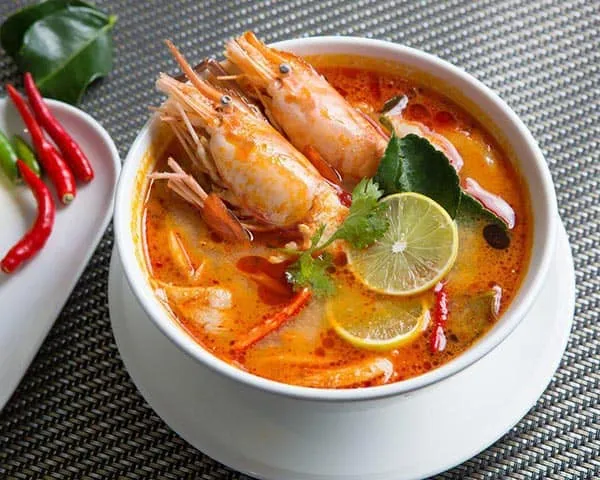
Lemongrass gives the broth a citrus aroma, while galangal is more peppery and resinous than ginger. The tough aromatics usually flavour the broth rather than being eaten.
Makrut lime leaves add another citrus aroma. Coconut milk or evaporated milk appears in creamy versions, while clear tom yum omits it.
Fish sauce gives this soup its salty kick while mushrooms provide texture along with some added nutrition benefits like B vitamins, minerals and antioxidants. Lastly, shrimp or chicken can be added depending on your preference for protein source although either one will work well in this recipe.
Order tom yum goong for shrimp or tom yum gai for chicken, and ask whether the kitchen serves a clear or creamy version.
Tom Yum Soup is a spicy, sour and savory dish that is sure to tantalize your taste buds.
2. Pad Thai ( ผัดไทย )
Pad Thai is a stir-fried rice-noodle dish commonly made with egg, tofu, bean sprouts and a tamarind-based sauce. Dried shrimp, fish sauce, fresh shrimp or other proteins are common, so it is not automatically vegetarian.
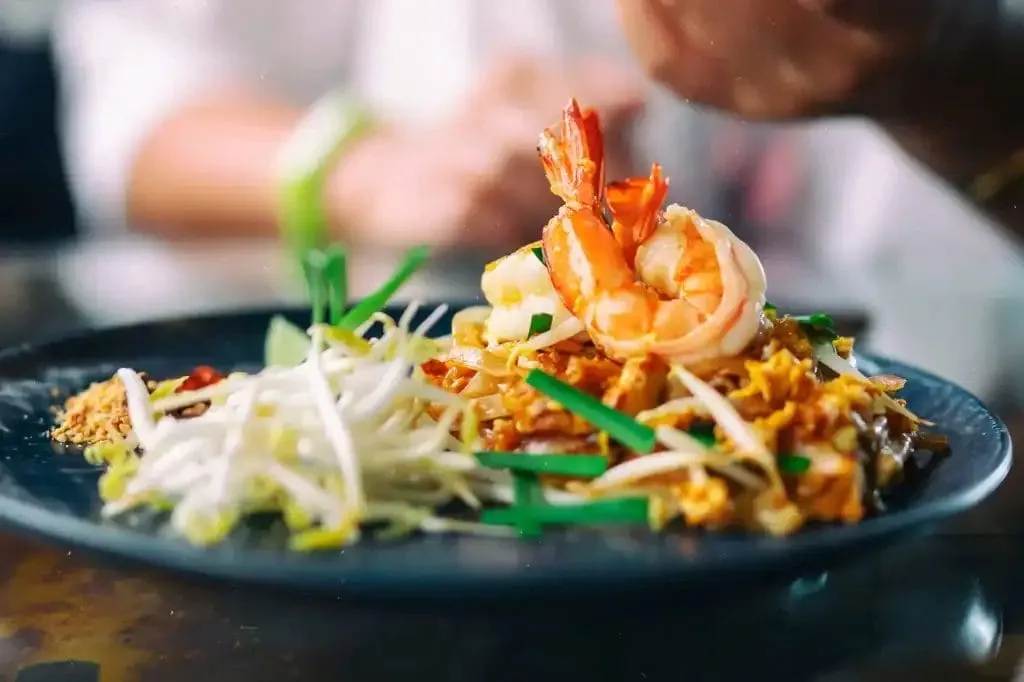
Tamarind supplies the sauce’s main sour note, balanced by palm sugar and fish sauce. Lime is normally served alongside and is not a direct substitute for tamarind in the sauce.
Peanuts, chilli flakes and lime are often served as condiments, allowing diners to adjust the finished dish.
Whether you are eating out at a restaurant or making it yourself at home, Pad Thai is an excellent meal option. You will surely enjoy this tasty noodle dish no matter how you choose to prepare it.
Pad Thai is a delicious and popular dish in Thailand, perfect for enjoying on your holiday.
3. Green Curry ( แกงเขียวหวาน)
Green curry combines a green-chilli curry paste with coconut milk. Fish sauce and shrimp paste are common, and chicken, beef, fish balls or vegetables may be added.
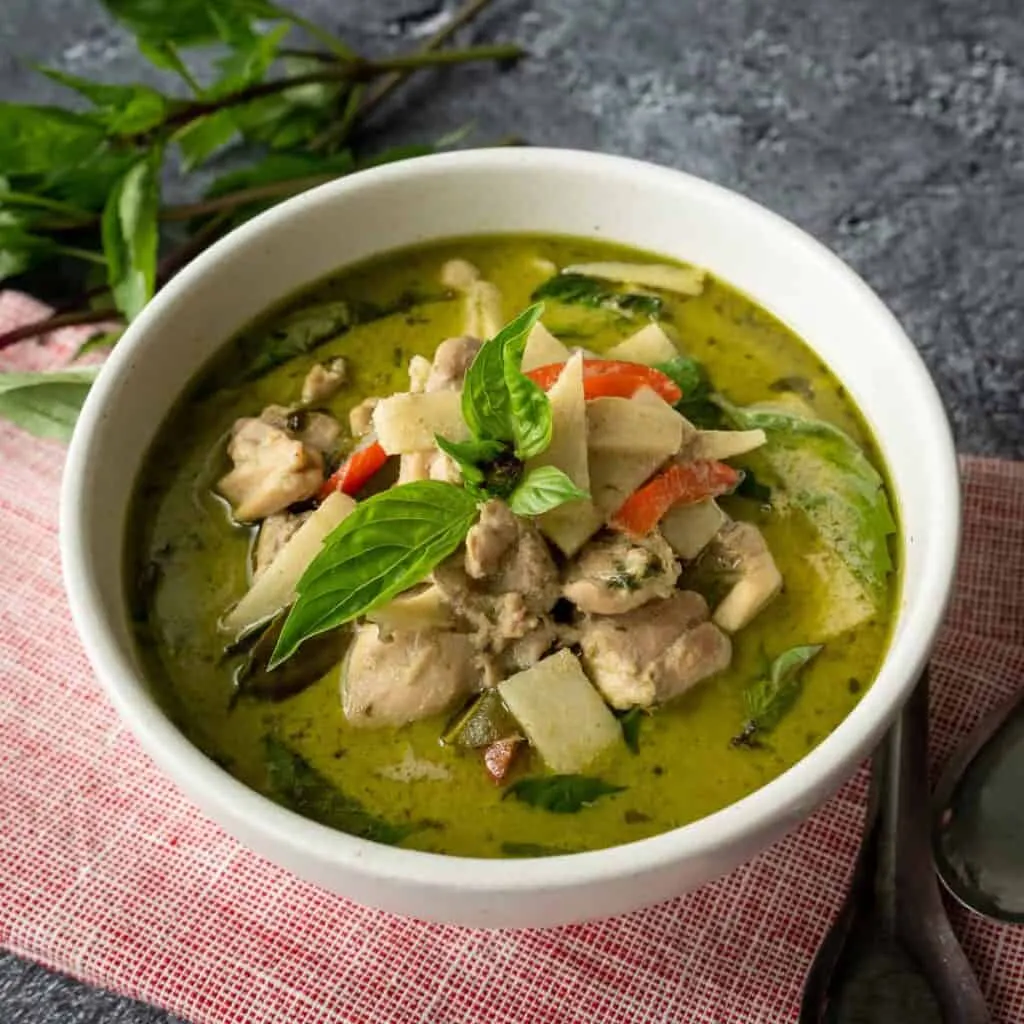
Vegetable versions are not necessarily vegetarian because the paste or seasoning may contain shrimp paste or fish sauce. Ask the kitchen if this matters to you.
When making Green Curry at home, it’s important to use fresh ingredients in order to get the best flavor possible. You should also adjust the amount of chillies used depending on how spicy you like your food – if you want it milder then use fewer chillies; if you prefer it spicier then add more.
Green curry is normally simmered until the chosen protein is safely cooked and the vegetables are tender. Cooking time depends on the ingredients rather than a fixed 15-minute rule.
If you’re feeling adventurous, why not try adding some additional flavors into your Green Curry? A squeeze of lime juice adds brightness while kaffir lime leaves give off an intense citrus aroma which really brings out the flavors in this classic Thai dish.
4. Som Tam ( ส้มตำ )
Som Tam is a popular Thai dish that can be found in many restaurants and street stalls throughout the country. It’s a spicy salad made from shredded green papaya, tomatoes, garlic, chillies and lime juice. The combination of these ingredients creates an incredibly flavourful and refreshing dish.
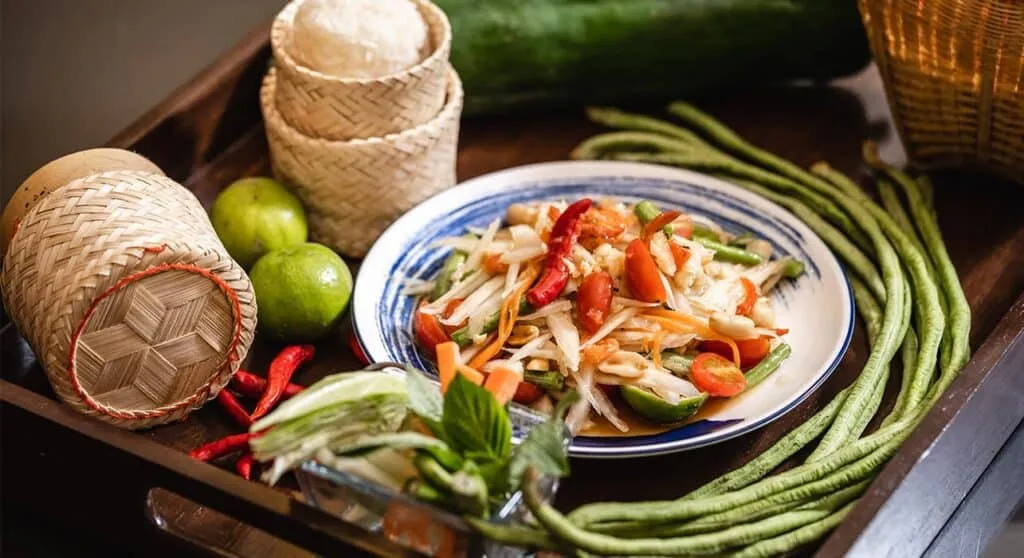
Som tam is mixed and lightly pounded in a mortar so the dressing coats the papaya without turning it into a puree. A blender or food processor does not reproduce that texture.
When making Som Tam at home, it’s important to adjust the amount of chilli used according to your own preference for spice level. You can also add dried shrimp or peanuts for added flavour if desired. Once all of the ingredients are combined together in the bowl, give them one final mix before serving either on its own or alongside some steamed jasmine rice for extra sustenance.
For something special when eating out in Thailand, seek out Som Tam. It rarely disappoints.
5. Khao Soi ( ข้าวซอย )
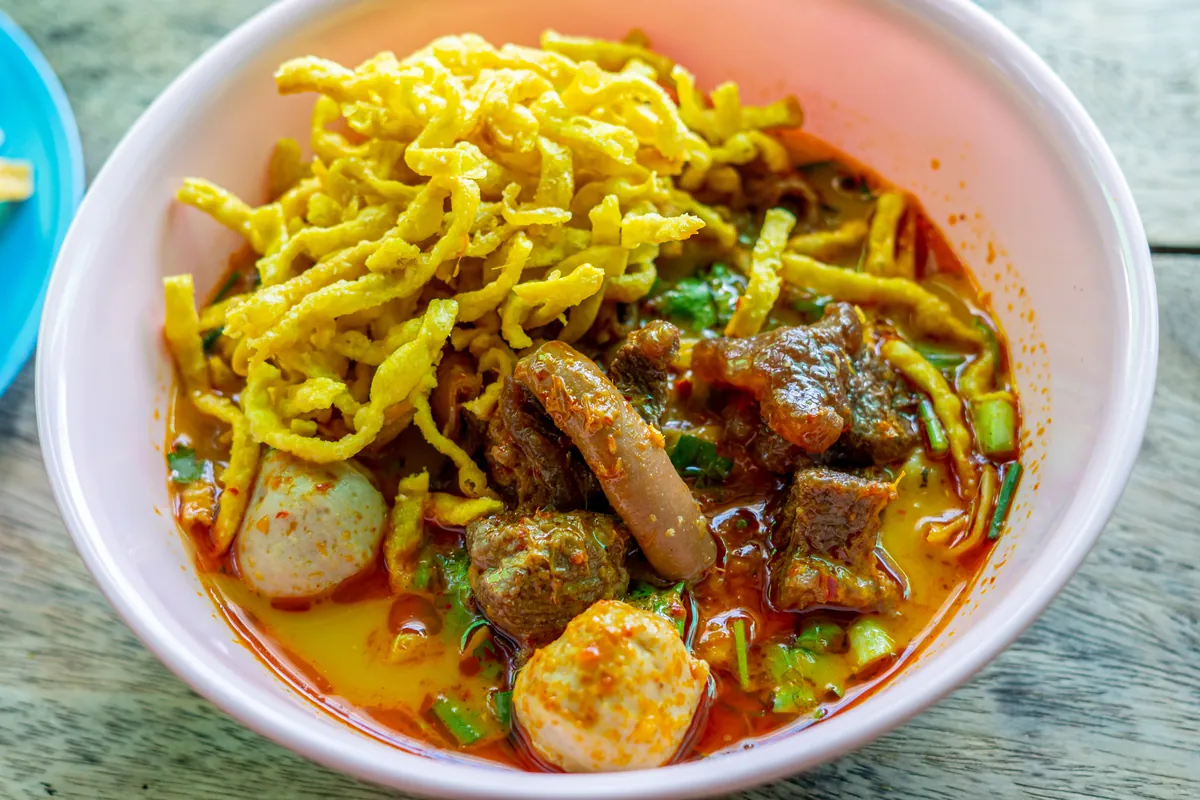
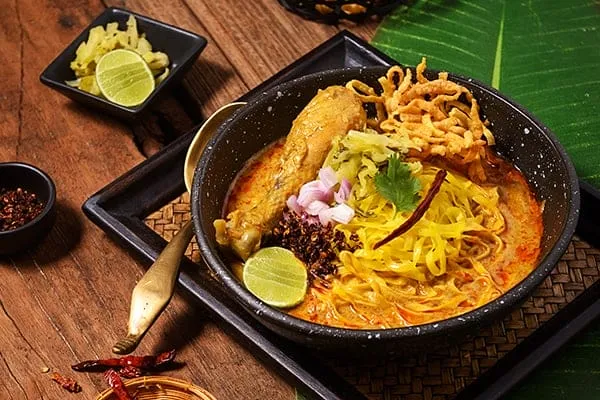
Khao soi is a northern Thai curry-noodle dish associated with Chiang Mai and the region’s Chin Haw Muslim food traditions. It combines egg noodles, coconut curry broth and crisp fried noodles, with pickled mustard greens, shallots and lime served alongside.
The base for this dish starts with the broth which is made from a combination of spices such as turmeric, coriander, cumin, lemongrass, galangal (Thai ginger), garlic and shallots. This mixture is then simmered together to create an aromatic curry soup that forms the foundation for Khao Soi. To add depth to the flavor profile of this dish, tamarind paste or fish sauce can be added depending on preference.
Chicken and beef are common versions. Boiled egg is not a defining ingredient, while the crisp noodle topping is.
For those who prefer their food spicier, they can opt for chili oil or chili powder when preparing their own version at home. However, if you are eating out at a restaurant, make sure to ask your server first as not all restaurants offer these options on their menu. Don’t forget about the extra toppings either – pickled cabbage gives Khao Soi an acidic kick while shallots provide sweetness and lime wedges bring brightness to each bite making it truly irresistible.
Khao soi is a northern Thai curry noodle soup with egg noodles, coconut curry broth, pickled greens, shallots, lime, and crisp fried noodles on top.
6. Massaman Curry ( แกงมัสมั่น )
Massaman curry reflects Muslim and Persian-influenced food traditions in Thailand. Beef and chicken are common; pork versions exist but are less typical because of the dish’s Muslim associations. The coconut-based curry often includes potatoes, onions, peanuts and warm spices.
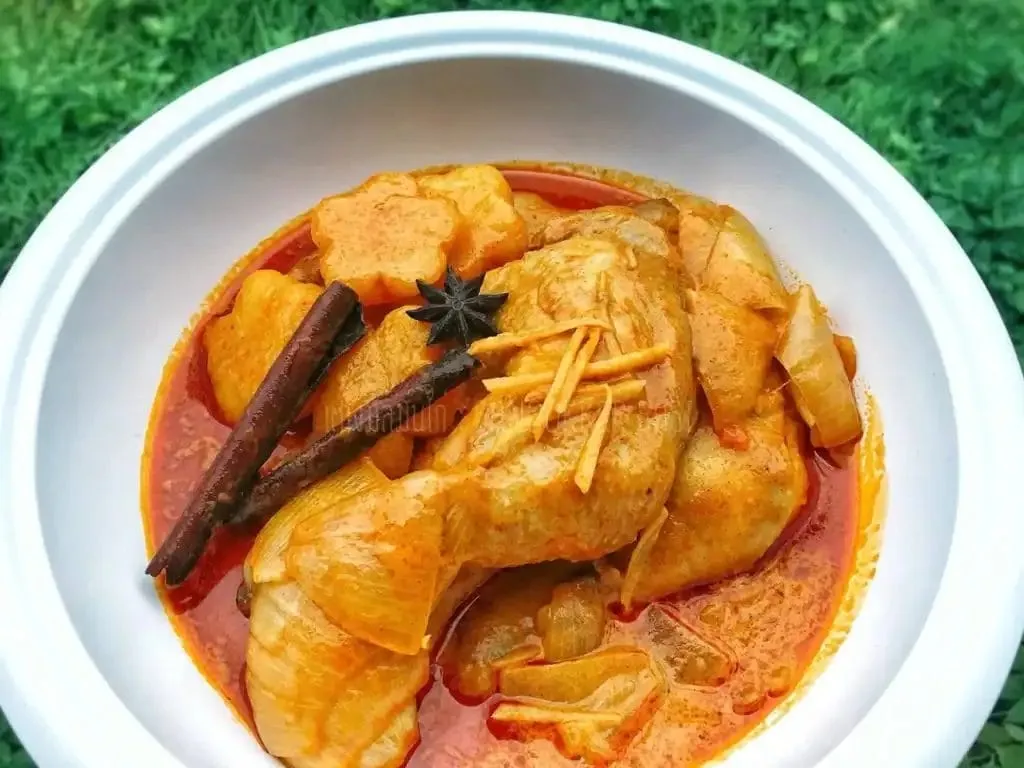
The main ingredients of massaman curry are potatoes (which give it its unique texture), onions, garlic and shallots. To make the dish even more delicious you can add other vegetables like carrots or bell peppers to the mix. Massaman curry also often includes roasted peanuts for added crunchiness. The combination of these ingredients creates a richly flavored stew that’s perfect for any occasion.
When making massaman curry at home it’s important to use quality ingredients – fresh herbs like lemongrass and kaffir lime leaves will really elevate the flavor of your dish. You should also make sure to toast your spices before adding them to the pot so they release their flavors properly during cooking time. Finally don’t forget about fish sauce – this ingredient adds umami flavor which makes all the difference for authentic Thai food.
If you want something truly special, try adding some tamarind paste into your massaman curry. This sour fruit will bring out all those amazing flavors even more. Serve with jasmine rice on the side for a complete meal experience; one bite of this deliciousness will have you coming back for seconds every time.
Massaman Curry is a delicious and unique dish, combining the flavors of Thailand with the spices of India.
7. Khao Pad or Thai Fried Rice ( ข้าวผัด )
Khao pad is Thai fried rice, usually cooked with egg, garlic, seasoning and a chosen protein. Vegetables vary by cook and may include onion, tomato, spring onion or Chinese kale; carrots, peas and peppers are not universal.
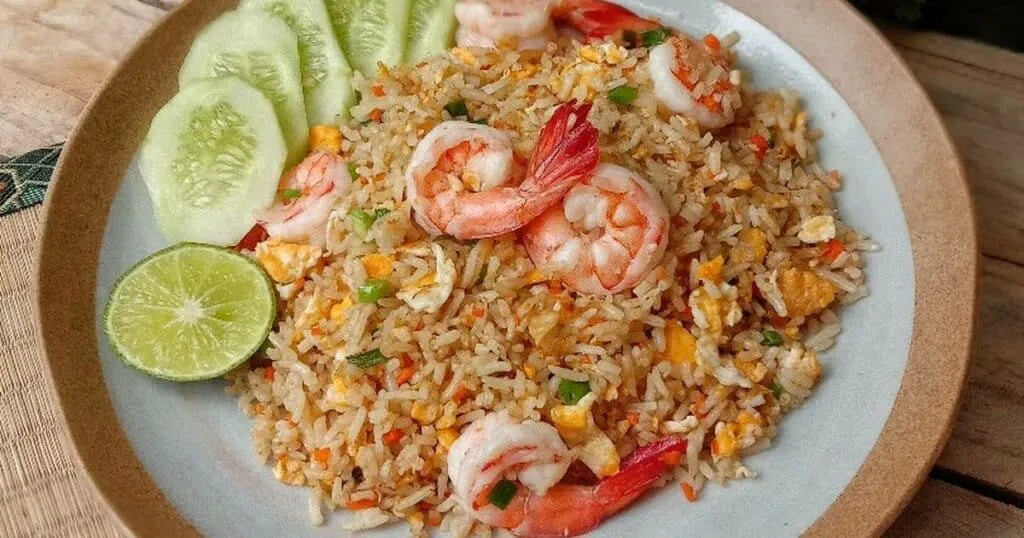
The key to making a good Khao Pad lies in the preparation of the rice – it needs to be cooked until just done so that each grain remains separate when fried. Once you have your cooked rice ready, heat some oil in a wok or large pan on medium-high heat before adding the garlic and onion until they become fragrant. Then add your chosen protein (such as chicken, beef or shrimp) along with any vegetables you want to include like carrot slices or diced bell pepper pieces. Stir fry everything together for several minutes until the meat has cooked through completely before pouring in the sauces mentioned above (fish sauce, oyster sauce etc). Finally add your cooked jasmine rice into the mix while stirring continuously so that everything gets evenly coated with all those delicious flavors.
Once everything looks well combined, turn off the heat and serve this tasty dish while it is still hot. Khao Pad can be enjoyed on its own, but if you are looking for something more substantial, try pairing it with an omelette or some grilled pork skewers; both make great accompaniments.
Khao Pad is a popular and delicious dish in Thailand, perfect for both lunch and dinner.
8. Pad Kra Pow Moo or Stir-Fried Basil & Pork ( ผัดกะเพราหมู )
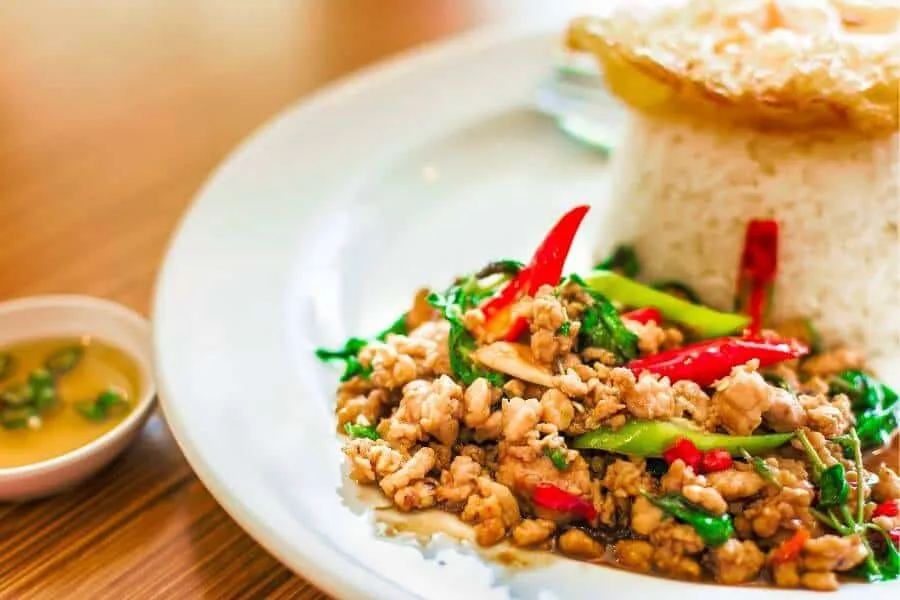
Pad krapao moo is pork stir-fried with garlic, chilli and holy basil, usually served over rice and often topped with a fried egg.
Fresh holy basil is the defining herb. Sweet basil, Thai basil and dried basil produce a different flavour.
If you’re looking for something different from your usual takeout options, Pad Kra Pow Moo served with steamed jasmine rice or noodles is the perfect dish. If you’re feeling adventurous, try adding other vegetables such as mushrooms or bell peppers into your stir fry to make it even more flavorful. Once everything has been cooked through properly, serve up and enjoy.
Pad kra pow moo is a reliable street-food order: minced pork stir-fried with holy basil, garlic, chilli, and fish sauce, usually served over rice with a fried egg.
9. Laab or Spicy Salad ( ลาบ )
Laab is a popular dish in Thailand, and it’s easy to see why. This spicy salad is made with minced pork or chicken that has been cooked in a flavorful mix of herbs and spices. The main ingredients are usually fish sauce, lime juice, chili peppers, garlic, shallots, lemongrass and mint leaves. It’s then served over steamed sticky rice or lettuce leaves for an extra crunchy texture.
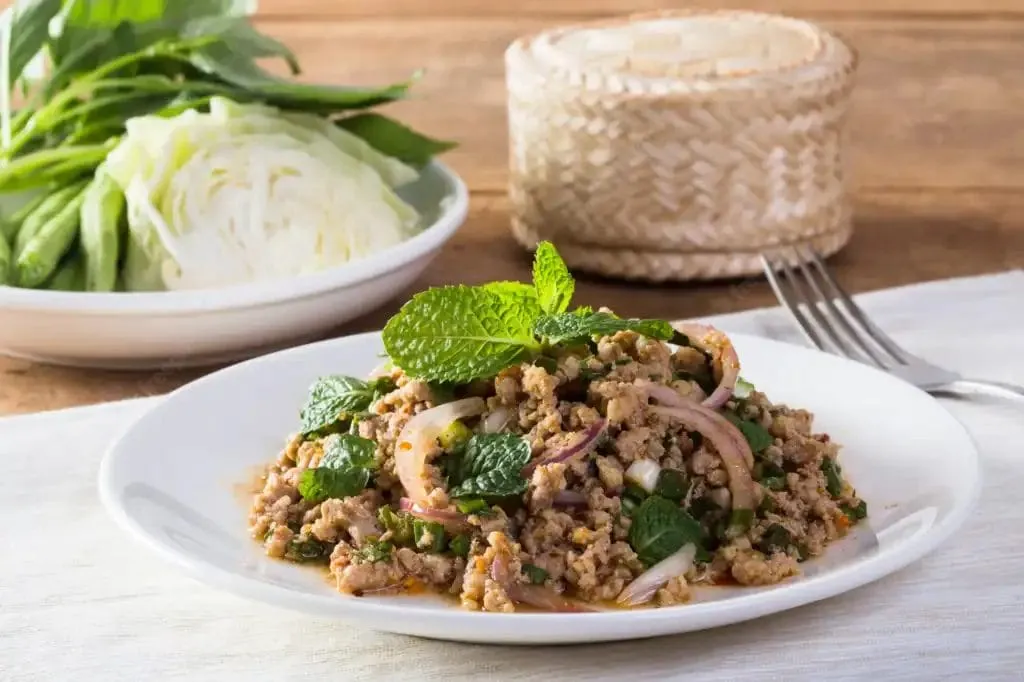
The dressing is salty from fish sauce, sour from lime and hot from chilli. Toasted rice powder adds a nutty aroma and light texture.
When preparing Laab at home you can adjust each ingredient according to your taste preferences – add more chilli if you like it spicier or reduce it if you don’t want too much heat. You can also experiment with different types of meat such as beef or duck instead of pork or chicken for a unique twist on this classic Thai dish.
Larb is commonly served with sticky rice, cucumber and raw vegetables. It is finished with toasted rice powder and herbs rather than chopped peanuts.
Laab is a spicy minced-meat salad with lime, chilli, fish sauce, mint, shallots, and toasted rice powder. It is sharp, salty, and usually eaten with sticky rice.
10. Khao Niew Mamuang or Mango Sticky Rice ( ข้าวเหนียวมะม่วง )
Khao niao mamuang is ripe mango served with steamed glutinous rice that has absorbed sweetened coconut cream. Some vendors add salted coconut sauce and crisp mung beans.
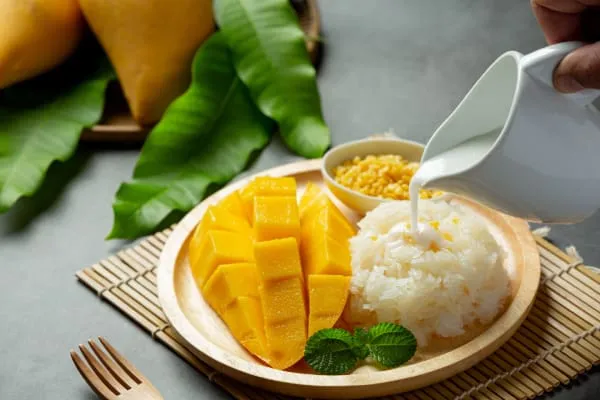
The glutinous rice is soaked and steamed, then mixed with sweetened coconut cream. It is not normally boiled directly in coconut milk.
When ready to serve, the cooled sticky rice is placed on a plate alongside sliced mangoes that have been peeled and cut into wedges or cubes. To add even more flavor, some people like to sprinkle sesame seeds over their Khao Niao Mamuang for added texture and nuttiness.
This simple yet delicious dessert can be found all across Thailand, from street vendors selling individual portions out of carts to upscale restaurants offering larger servings as part of their set menus. Therefore, there is no excuse not to try it while you are visiting.
Khao niao mamuang is mango sticky rice: ripe mango served with coconut-sweetened sticky rice and a salty coconut cream drizzle.
11. Panaeng Curry
Panang curry is a thick, relatively dry coconut curry, commonly served with beef, pork or chicken and finished with makrut lime leaf. Recipes vary; a large mix of carrots, peppers and mushrooms is not defining.
The key ingredient in Panaeng curry is red chili paste which gives it its signature flavor. Red chili paste is made by blending dried chilies with garlic, shallots, lemongrass, galangal (Thai ginger), shrimp paste and other herbs and spices. This mixture is then simmered until it becomes thick like a paste. Coconut milk adds creaminess to the dish while also balancing out some of the spiciness from the chili paste.
Panang curry paste often contains peanuts as well as chillies and aromatics. Fish sauce and shrimp paste are also common, so ask before ordering if you have allergies or dietary restrictions.
Panaeng Curry is a delightful way to experience traditional Thai cuisine without having to go far from home. This dish combines sweet and spicy flavors, making it an ideal meal for any night during the cold winter season. It is sure to become one of your favorite dishes when you are looking for something flavorful yet comforting.
12. Gai Yang ( ไก่ย่าง )
Gai Yang is a popular Thai dish that consists of grilled chicken marinated in a blend of spices. The marinade usually includes garlic, coriander root, black pepper, turmeric and fish sauce. This gives the chicken its signature flavor and aroma. It’s often served with sticky rice or jasmine rice and a side of sweet chili sauce for dipping.
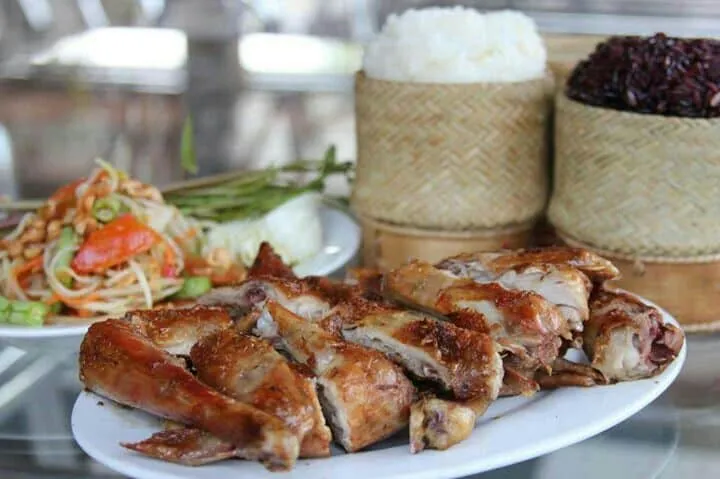
The key to making great Gai Yang is all in the marinating process. The longer you let it sit in the marinade, the more flavorful it will be when cooked. For best results, allow at least four hours for your chicken to soak up all those delicious flavors before grilling or roasting it over an open flame or charcoal grill until crispy on the outside but still juicy inside.
Gai Yang can be served as part of a meal, accompanied by other dishes such as som tam (green papaya salad), khao niew (sticky rice) and khanom Jeen (rice noodles). Alternatively, for something light yet satisfying, it can be paired with steamed vegetables like broccoli or cauliflower.
Gai Yang is a delicious grilled chicken dish that is sure to tantalize your taste buds and leave you wanting more.
13. Pad See Ew or Stir Fried Noodles in Soy Sauce ( ผัดซีอิ้ว)
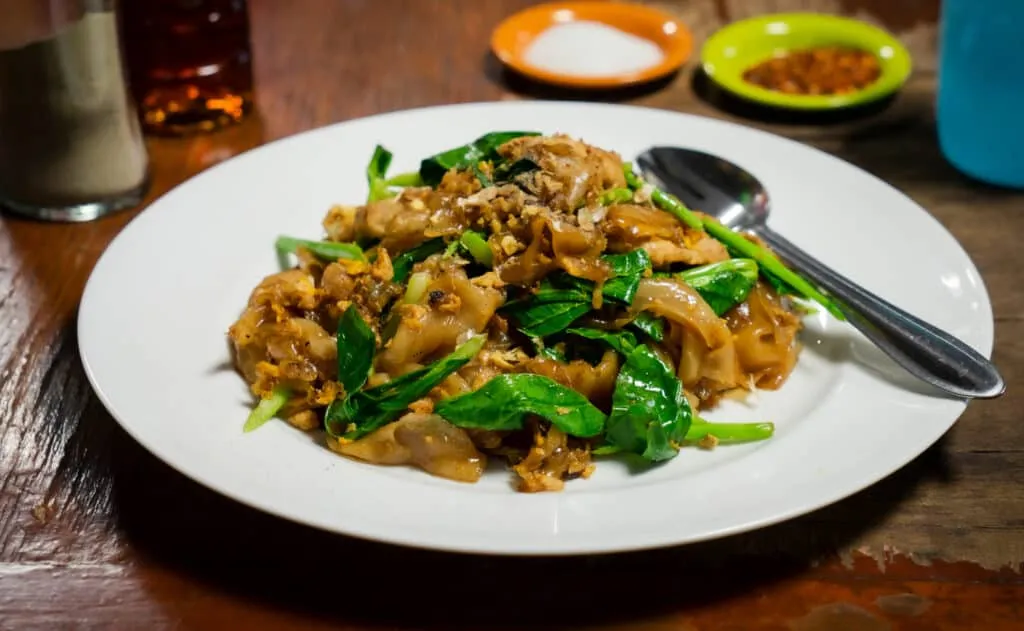
Pad see ew uses wide rice noodles stir-fried with egg, Chinese broccoli, soy seasoning and usually pork, chicken, beef, shrimp or another protein. The protein is added alongside the vegetables, not instead of them.
The key to making Pad See Ew delicious is to get the perfect balance between salty and sweet flavors from the combination of soy sauce and sugar. To achieve this balance, it’s important to use fresh ingredients like high quality dark soy sauce (not light) and jasmine rice noodles which will give you an authentic taste.
Before beginning to cook Pad See Ew at home, it is best to prepare all the ingredients so that everything cooks evenly without burning or sticking together. Start by heating some oil in a wok over medium heat and then add garlic followed by the egg until scrambled. Next, add the vegetables and lastly, add the noodles. Lastly, pour in the dark soy sauce mixture while stirring constantly for about three minutes on medium heat before turning off the heat. Serve hot with chopped green onions if desired.
Pad See Ew is a delicious and popular Thai dish that is sure to tantalize your taste buds.
14. Roti Gluay or Fried Banana Pancakes ( โรตีกล้วย )
Roti gluay is a street snack made by stretching wheat-flour dough thin, adding banana and frying it on a griddle. It is often finished with condensed milk or sugar; it is not a crepe batter.
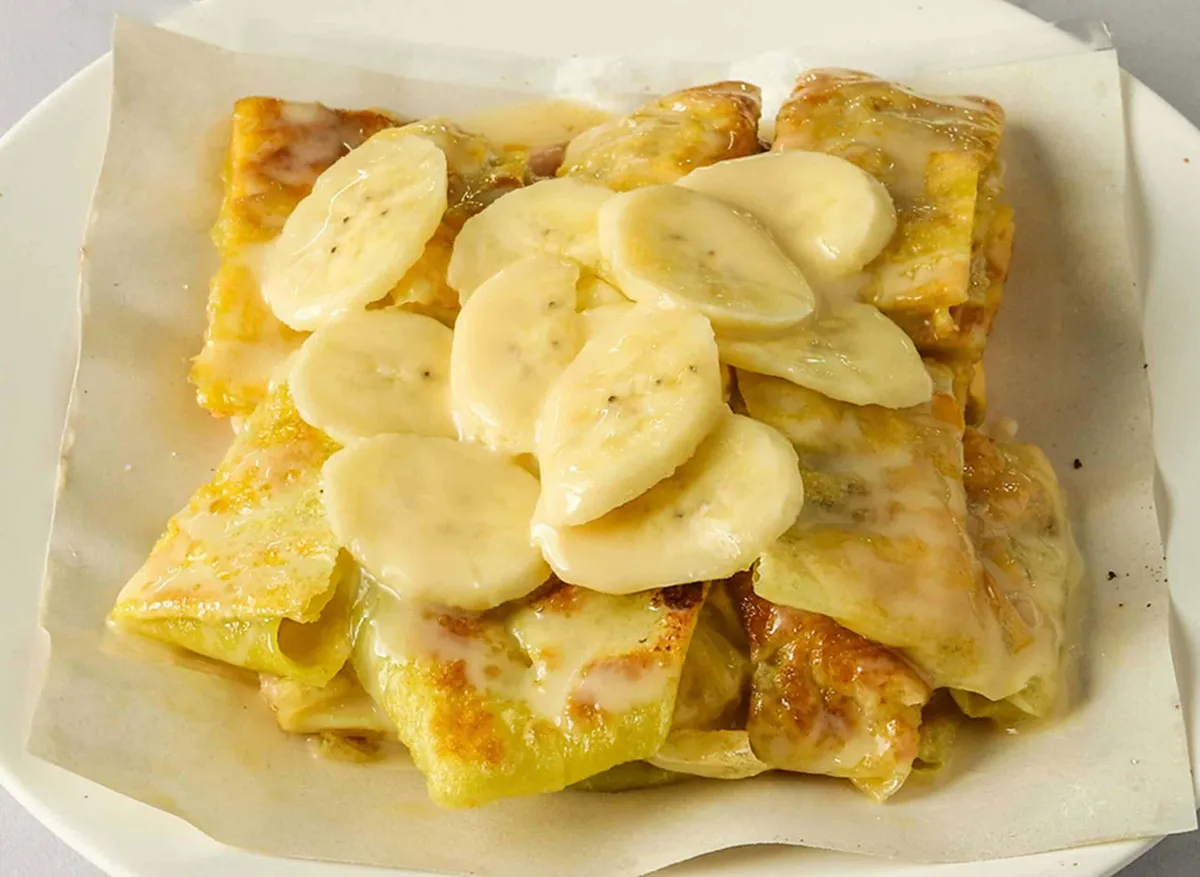
The key to making great Roti Gluay is using fresh ingredients and cooking it just right so that the outside is crispy but not burnt while the inside remains soft and chewy. The batter should be thin enough so that it spreads out evenly when poured into the pan but thick enough so that it doesn’t run off too quickly once you add the banana slices. Once cooked, let them cool slightly before sprinkling them with sugar for an extra sweet kick.
Savoury roti options vary. Mataba is a recognised filled roti commonly made with spiced meat or vegetables and egg.
No matter how you enjoy your Roti Gluay – plain or stuffed – this tasty treat will surely satisfy your taste buds. So, next time you find yourself in Thailand, don’t forget to give these yummy pancakes a try; they won’t disappoint.
Roti gluay is widely sold at evening street stalls and markets.
15. Yam Talay or Thai Spicy Seafood Salad ( ยำทะเล )
Yam Talay is a popular Thai seafood salad that combines the freshness of fish, prawns and squid with the zesty flavors of chili, lime juice and herbs. It’s an incredibly refreshing dish that can be served as a starter or main course.
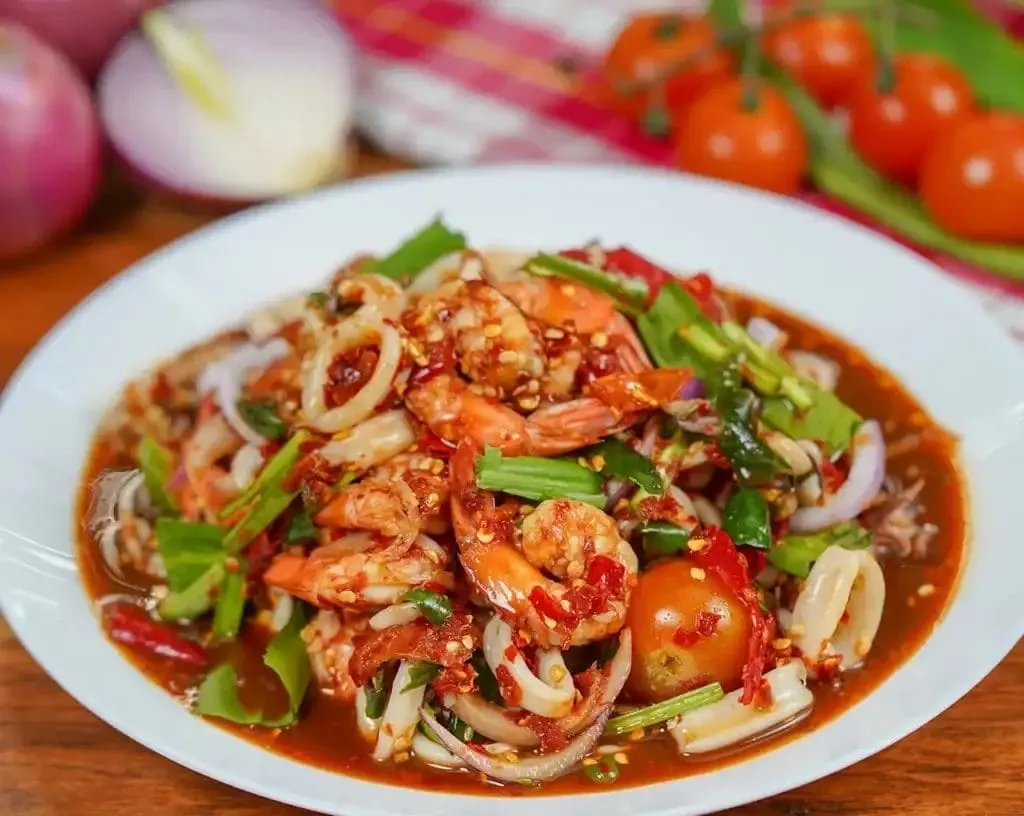
The key to making this dish is to use only the freshest ingredients. The seafood should be cooked just until it’s done but still tender, while the vegetables should be crisp-tender. The dressing should also be made with freshly squeezed lime juice for maximum flavor.
To make Yam Talay, start by preparing all your ingredients: cook your seafood (shrimp, squid and/or fish) in boiling water; thinly slice some red onion; julienne some cucumber; mince some garlic; chop up some fresh cilantro leaves; prepare a dressing of lime juice, fish sauce and sugar (to taste); and finally cut up one or two bird’s eye chilies into thin rings for garnish.
Combine all the ingredients in a large bowl; add the cooked seafood first, followed by the onions, cucumbers and garlic. Pour over the dressing mixture and toss everything together gently so that everything is evenly coated with dressing. Top off with cilantro leaves and chilli rings for added flavor and color. Serve chilled or at room temperature as part of a meal or on its own as an appetizer; either way it will definitely tantalize your taste buds.
Yam Talay is a delicious and refreshing seafood salad that is sure to tantalize your taste buds.
16. Gaeng Som or Thai Sour Curry ( แกงส้ม )
Gaeng som is a sour, spicy water-based curry without coconut milk. Fish, shrimp and vegetables are common; southern versions can be particularly hot. Tamarind commonly supplies the sourness.
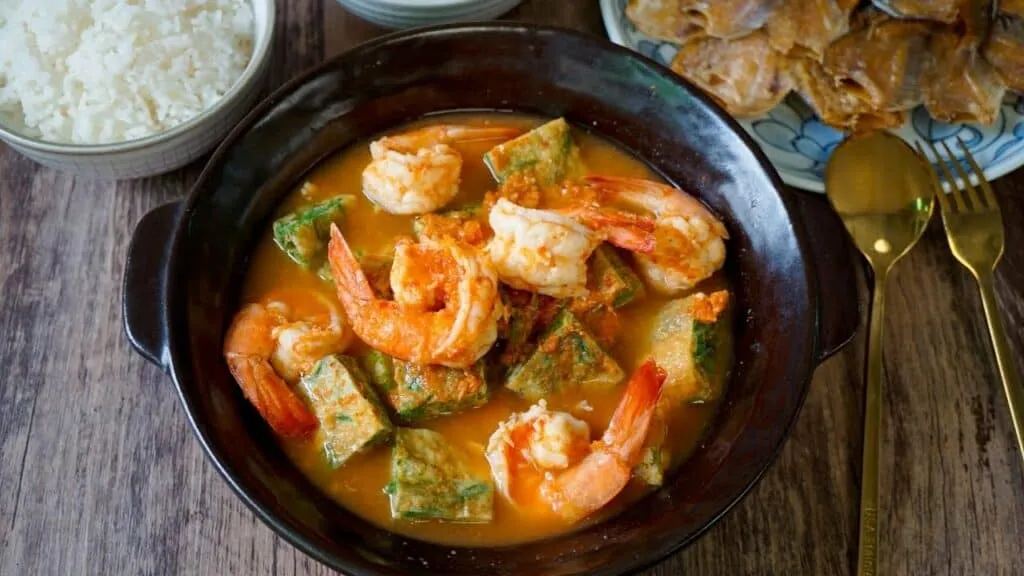
The curry paste and exact souring agents vary by region. Because fish or shrimp paste may be used in the paste or broth, vegetable versions are not automatically vegetarian.
Common additions include fish, shrimp, green papaya, cha-om omelette or other vegetables, depending on the region. The broth remains light rather than creamy.
Gaeng som is sour, spicy, and lighter than coconut-based curries. It can be made with fish, chicken, pork, or vegetables, with tamarind giving the broth its sharp edge.
Gaeng Som is a delicious and unique dish that should not be missed when visiting Thailand. It’s savory and spicy flavors will leave you wanting more, making it the perfect accompaniment to any Thai meal.
17. Pad Pak Boong or Stir Fried Morning Glory ( ผัดผักบุ้ง )
Pad pak boong is water spinach stir-fried quickly with garlic, chilli and savoury seasonings such as fermented soybean paste, oyster sauce or fish sauce. Recipes vary and are not automatically vegetarian.
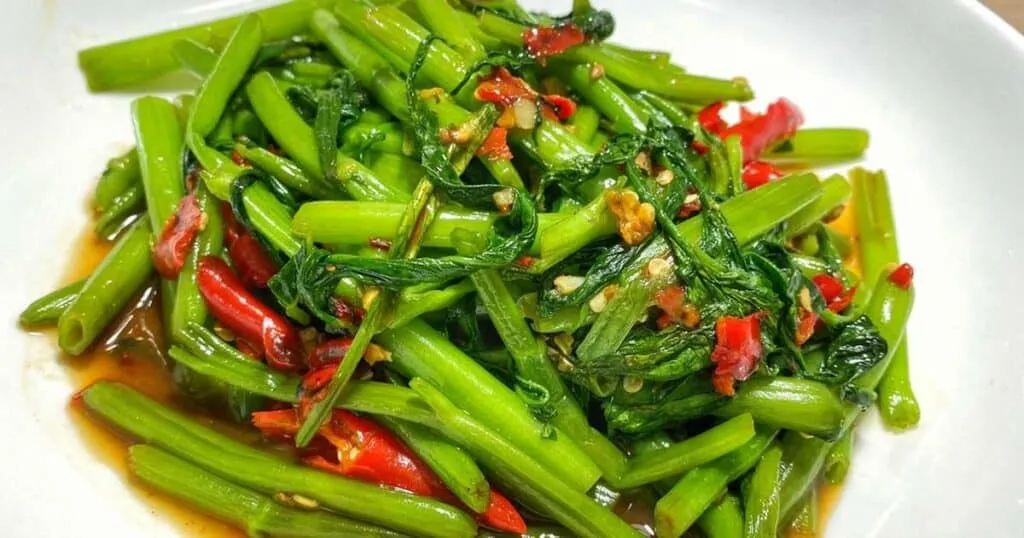
The main ingredients used to make Pad Pak Boong are morning glory (water spinach), garlic, chilies, fish sauce, oyster sauce and oil for frying. Other optional ingredients include shallots or onions depending on preference.
To prepare the dish first wash the morning glory thoroughly to remove any dirt or debris then cut into 2 inch pieces discarding the tough ends of the stem if necessary. Next heat some oil in a wok over medium high heat then add chopped garlic followed by sliced chillies if desired before adding the morning glory stirring constantly until it wilts down slightly about 1 minute before adding fish sauce and oyster sauce stirring to combine everything together well before turning off the heat after another minute or so when all vegetables should be tender but still crunchy yet cooked through properly without being overcooked at all which would make them soggy instead of having an enjoyable texture like they should have when served up hot right away while still piping hot from cooking freshly just moments ago.
Pak Boong can be served as part of a larger meal, such as Khao Moo Deng (barbequed pork with rice), or eaten alone as an appetizer platter alongside other Thai favorites like Gai Yang (grilled chicken), Yam Talay (Thai seafood salad) and Kai Jeow (Thai style omelette). This delicious stir-fry is also great for leftovers, making it perfect for packing up in lunch boxes.
Pad Pak Boong is a popular and delicious dish in Thailand that can be enjoyed as part of any meal. It’s the perfect way to experience traditional Thai flavors, so why not give it a try on your next holiday?
18. Kai Jeow or Thai Style Omlette ( ไข่เจียว )
Kai Jeow is a popular Thai-style omelette that is made with eggs, garlic, and onions. It can be served as an appetizer or main dish and is often accompanied by a dipping sauce such as sweet chili sauce or fish sauce. The ingredients are simple but the flavors are complex and delicious.
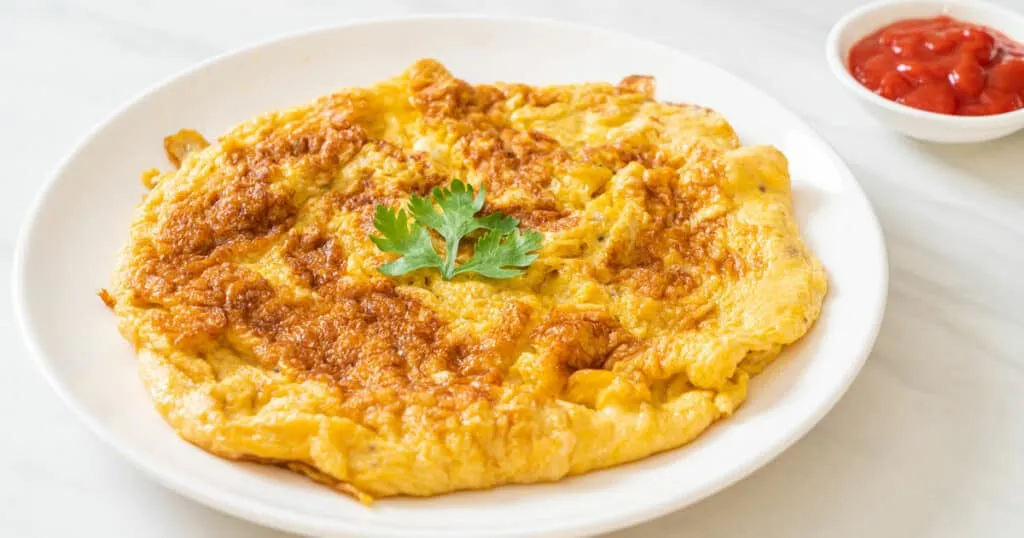
To make Kai Jeow, start by whisking together two eggs in a bowl until they become light and fluffy. Then add finely chopped garlic and onion to the egg mixture before pouring it into a hot pan greased with oil. Cook over medium heat for about three minutes until the edges of the omelette begin to brown. Flip it over carefully using a spatula then cook for another minute on the other side until golden brown. Serve immediately while still warm with your favorite dipping sauces.
Kai jeow contains egg and often fish sauce, so it is not vegan. Fillings and seasonings vary by cook.
Kai Jeow is a delicious and simple dish that can be enjoyed by all – from the adventurous eater to those looking for something more familiar. Its versatility makes it an excellent choice when visiting Thailand, so why not give it a try?
19. Khao Moo Deng or Barbequed Pork with Rice ( ข้าวหมูแดง )
Khao moo daeng is rice topped with slices of red roast pork and a sweet-savoury red gravy. Cucumber, boiled egg, Chinese sausage and a small bowl of broth are common accompaniments, but recipes vary.
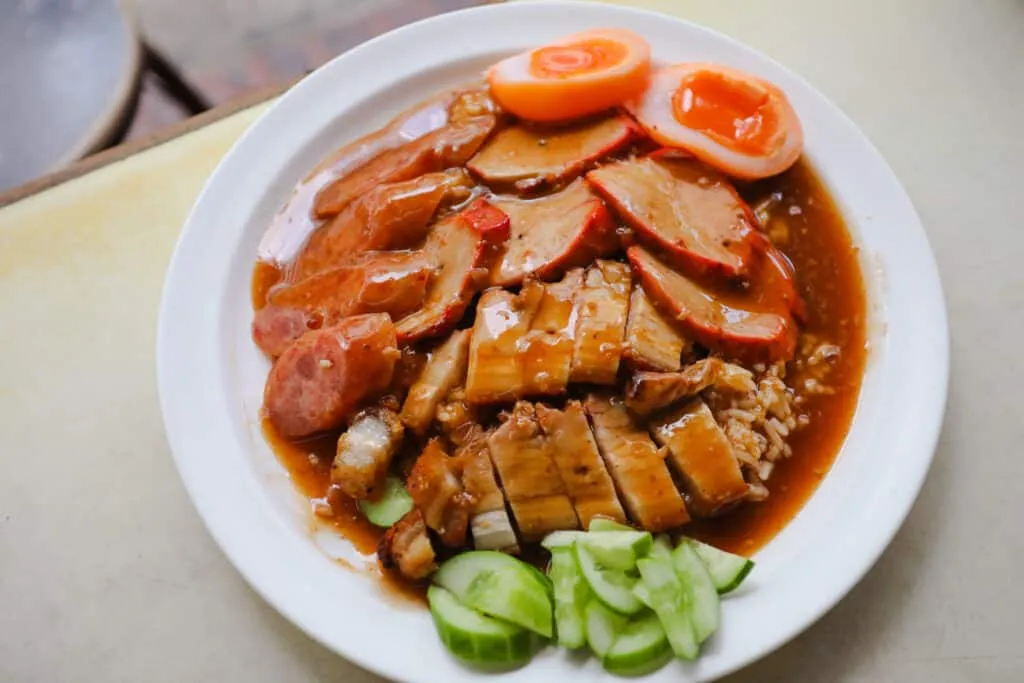
The marinade, roasting method and gravy formula differ between shops, so there is no single dependable ingredient list for every version.
Khao Moo Deng is a delicious dish that can be enjoyed as part of an authentic Thai feast. Other dishes such as Pad See Ew stir fried noodles in soy sauce, Gai Yang grilled chicken, Yam Talay seafood salad, Gaeng Som sour curry, Roti Gluay fried banana pancakes, Kai Jeow omelette style eggs and thick, nutty Panaeng curry are all excellent accompaniments. This dish pairs perfectly with cold beer or refreshing cocktails making it ideal for entertaining guests during holidays spent in Thailand.
Khao moo deng is red pork over rice, usually served with sweet-savoury gravy, cucumber, boiled egg, and a small bowl of broth.
20. Khao Man Gai ( ข้าวมันไก่ )
Khao Man Gai is a popular Thai dish that consists of boiled chicken served with rice cooked in chicken broth. The traditional version includes white jasmine rice, boiled chicken, and a flavorful sauce made from garlic, ginger, soy sauce, sugar and cilantro. It’s usually garnished with cucumber slices and fresh cilantro leaves.
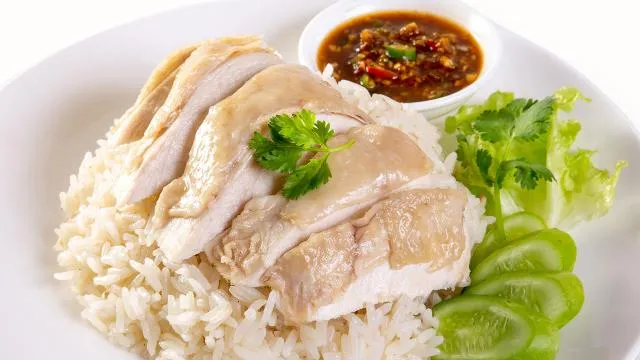
The chicken is gently poached until safely cooked through, then sliced. Cooking time depends on the size and cut; use a food thermometer rather than a fixed 15-minute estimate. The rice is cooked with chicken stock and fat.
Thai khao man gai is usually served with a fermented-soybean dipping sauce containing ginger, chilli and vinegar, though shop recipes vary.
It is usually served with cucumber and a small bowl of clear broth.
Where to start
From the spicy and sour Tom Yum Soup to the famous northeastern classic Som Tum, Thailand’s food scene rewards adventurous eating. The best place to start is at street level: hawker stalls, night markets and shophouse restaurants where these dishes are made fresh to order at a fraction of restaurant prices. Bangkok and Chiang Mai have the highest concentration of food options, but every province has its own regional specialities worth seeking out. For more on navigating the street food scene, see our Bangkok street food guide.
How to choose what to eat first
Choose the option that fits the day you are actually planning, then use the details in each section to decide whether the tradeoff is worth it.