




Ngao Mangrove Forest Research Centre
ศูนย์วิจัยป่าชายเลนหงาว (ศูนย์วิจัยป่าชายเลนจังหวัดระนอง)
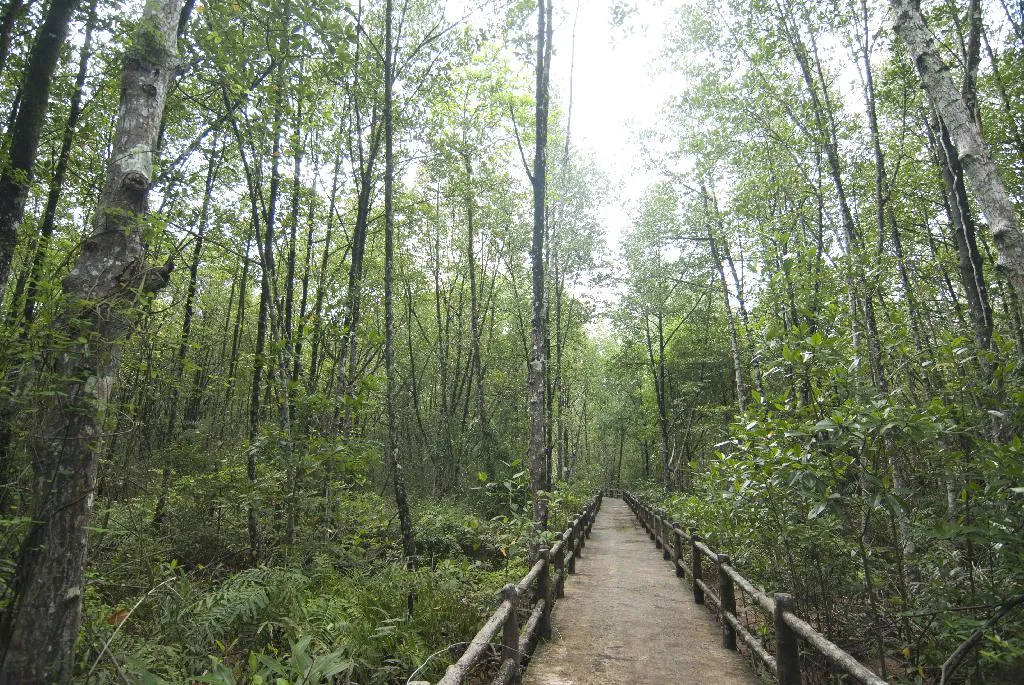
The Ngao Mangrove Forest Research Centre sits on the mainland about 9 km south of Ranong town, not on Koh Phayam island as its old English name and some listings suggest. A raised boardwalk runs roughly 2 km through tidal mangrove swamp, not rainforest, despite the mistranslated “Rainforest of Ngao” name still used on some signage and older listings. The Thai name, ป่าชายเลน, means mangrove forest, and that is exactly what is here: stilt-rooted trees standing in brackish mud, part of the Ranong Biosphere Reserve that UNESCO designated in 1997, the only one of Thailand’s biosphere reserves protecting a mangrove coastline.
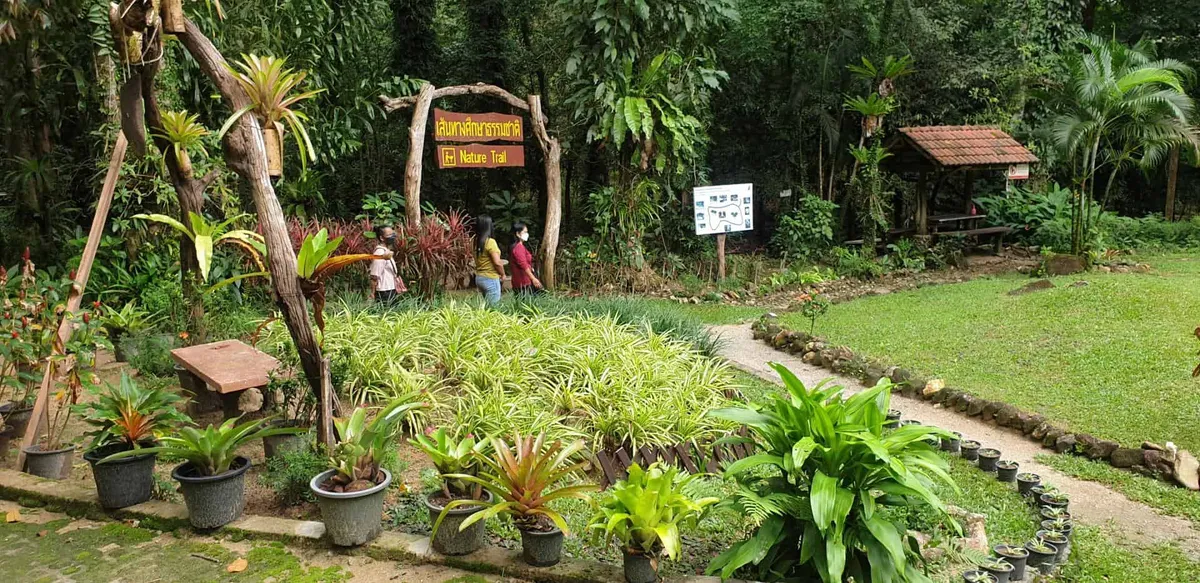
The boardwalk keeps your feet dry over mudflats that would otherwise be impassable. Fiddler crabs wave their oversized claws below the rails and mudskippers flip across the surface at low tide. Look up and there’s a decent chance of long-tailed macaques moving through the canopy, and the reserve is known among birders for kingfishers (including the brown-winged kingfisher) and the secretive mangrove pitta. The centre’s research trees include a mangrove specimen estimated at 200 years old and a black mangrove reckoned at over 300, among the oldest documented in Thailand. Interpretive signage along the trail identifies species and explains the centre’s ongoing work on mangrove reforestation and carbon-sequestration research.
Insider Tip: Go on a rising or high tide. At low tide the mudflats are exposed and smell distinctly of sulphur and decay, normal for a healthy mangrove system, but not everyone’s idea of pleasant. High tide brings the water up under the boardwalk and the fiddler crabs and mudskippers are more active.
Watch out: This is a research station first and a visitor attraction second. There’s no café, gift shop, or visitor centre beyond basic signage, and mosquitoes are a genuine problem near the mudflats. Bring repellent. It suits a focused hour, not a half-day out.
- Entry: Free
- Hours: Daily, roughly 08:30–17:00
- Trail: ~2 km boardwalk through tidal mangrove forest
- Location: Ngao subdistrict, Mueang Ranong district, about 9 km / 15 minutes’ drive south of Ranong town on Phet Kasem Road
- Best for: Birdwatching, a short mangrove-ecology stop, not a beach or rainforest day out
Getting here requires your own transport: a car or rented motorbike from Ranong town, since there’s no public bus route out to the site. Combine it with Raksawarin Hot Springs on the same side of town, or the waterfall trails at Namtok Ngao further inland, to make a fuller half-day out of Ranong. For accommodation and the rest of what the area covers, see the Ranong destination guide.
Location & Directions
185 Moo 4, Ban Lang, Phet Kasem Road
Ranong, Thailand
Show your taxi or Grab driver
ศูนย์วิจัยป่าชายเลนหงาว (ศูนย์วิจัยป่าชายเลนจังหวัดระนอง)
Frequently Asked Questions
Is this a rainforest or a mangrove forest?
Is it in Koh Phayam or on the mainland?
How much does it cost to visit?
How long does the visit take?
What wildlife might I see?
Spotted something out of date or incorrect? Let us know
Stay Near Ngao Mangrove Forest Research Centre
Live prices for places closest to Ngao Mangrove Forest Research Centre: tap a pin to compare.