




Food & Cooking in Thailand
104 tours across 13 destinations
Thai cooking culture is built around regional differences: Isan food from the northeast is sour and spicy, Northern cuisine leans mild and herb-forward, Central plains give you the familiar pad thai and green curry, Southern food is coconut-heavy with seafood. Hands-on cooking classes typically cost $25-45 and cover 3-5 dishes plus a market visit. Food walks (tuk-tuk or on foot) through Chinatown in Bangkok or Warorot Market in Chiang Mai hit 6-8 tasting stops in 3-4 hours and tell you what you're eating.
1 tours in Chiang Rai
Showing 1 to 1

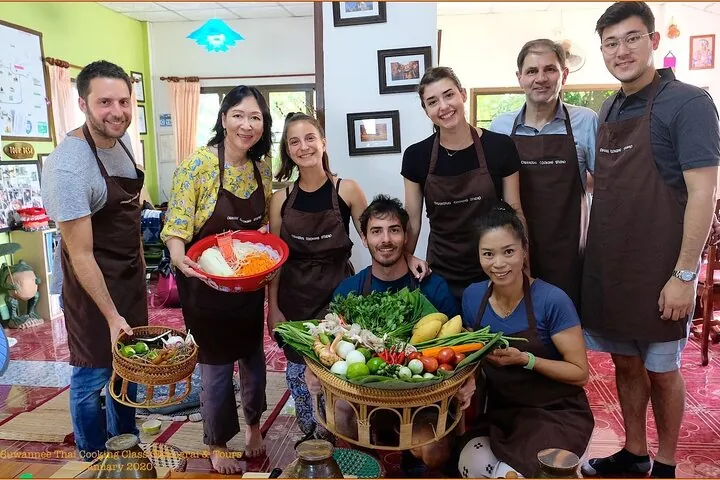
Food & Cooking in Thailand: FAQ
How many dishes will I cook in a typical class?
Most half-day classes cover 3-5 dishes (one curry, one stir-fry, one soup, one appetizer, sometimes a dessert). Full-day classes can hit 6-8. You eat what you cook. Come hungry and skip breakfast if the class starts before 11am.
Are cooking classes vegetarian-friendly?
Almost universally yes. Operators swap fish sauce for soy or mushroom sauce and offer tofu or mushroom mains. Flag your preference at booking so the market shop is tailored. Most teachers take pride in accommodating.
Is the market visit part of the class?
On most classes, yes: you spend 30-60 minutes at a wet market before cooking, learning what each herb and chili is. A few urban classes skip the market and pre-source ingredients; check the itinerary on the tour page.
What's the difference between a food tour and a cooking class?
Food tours are walking or tuk-tuk circuits with 6-8 tasting stops: you eat, the guide explains. Cooking classes have you in an apron making the food yourself. Food tours are better for one-night visitors; classes reward at least one extra day to digest everything.