
Bangkok Art Biennale 2026: Contemporary Art Across Bangkok


On this page
The Bangkok Art Biennale (BAB) transforms Thailand’s capital into a vast contemporary art gallery, placing installations by international and Thai artists in unexpected locations: ancient temples, museums, shopping malls and a university art centre. The 2026 venues are Wat Arun, Wat Pho, Wat Prayoon, the BACC, Museum Siam, the National Museum Bangkok, One Bangkok, CentralWorld, Siam Paragon and the Silpakorn University Art Centre. BAB2026 runs 29 October 2026 – 28 February 2027, making it one of Southeast Asia’s most ambitious (and longest-running) art events.
What makes BAB distinctive is the venue strategy. Where else would you find a contemporary video installation inside a 200-year-old temple, or a sculpture garden in a luxury mall? Past editions have placed works at Wat Pho, Wat Arun, the Bangkok Art and Culture Centre (BACC), CentralWorld, and along the Chao Phraya River. Many venues are free to enter, making the biennale genuinely accessible.
The artist roster mixes big international names with emerging Southeast Asian talent. Themes tend toward social commentary, environmental issues, and the collision of tradition with modernity, fitting for a city that embodies all three. A full circuit of all venues takes 2-3 days if you’re thorough, or you can cherry-pick the highlights in an afternoon.
Practical tips: Download the official BAB app or pick up a map at the BACC: the venues are scattered across the city. The Chao Phraya Express Boat connects many riverside venues efficiently. Evening visits to the temple installations are particularly atmospheric. The biennale opens in late October and runs through February, spanning Bangkok’s cooler season and making outdoor walking between venues comfortable throughout.
BAB2026: Angels and Mara
The 2026 edition is titled “Angels and Mara”: a theme drawn from Buddhist cosmology. Mara is the demon of temptation and obstruction in Buddhist narrative, the force that attempted to prevent the Buddha from reaching enlightenment; angels (or devas) represent protection, aspiration, and transcendence. The curatorial team is using this duality to examine forces shaping contemporary life: algorithmic attention, ecological collapse, political polarisation, cultural preservation.
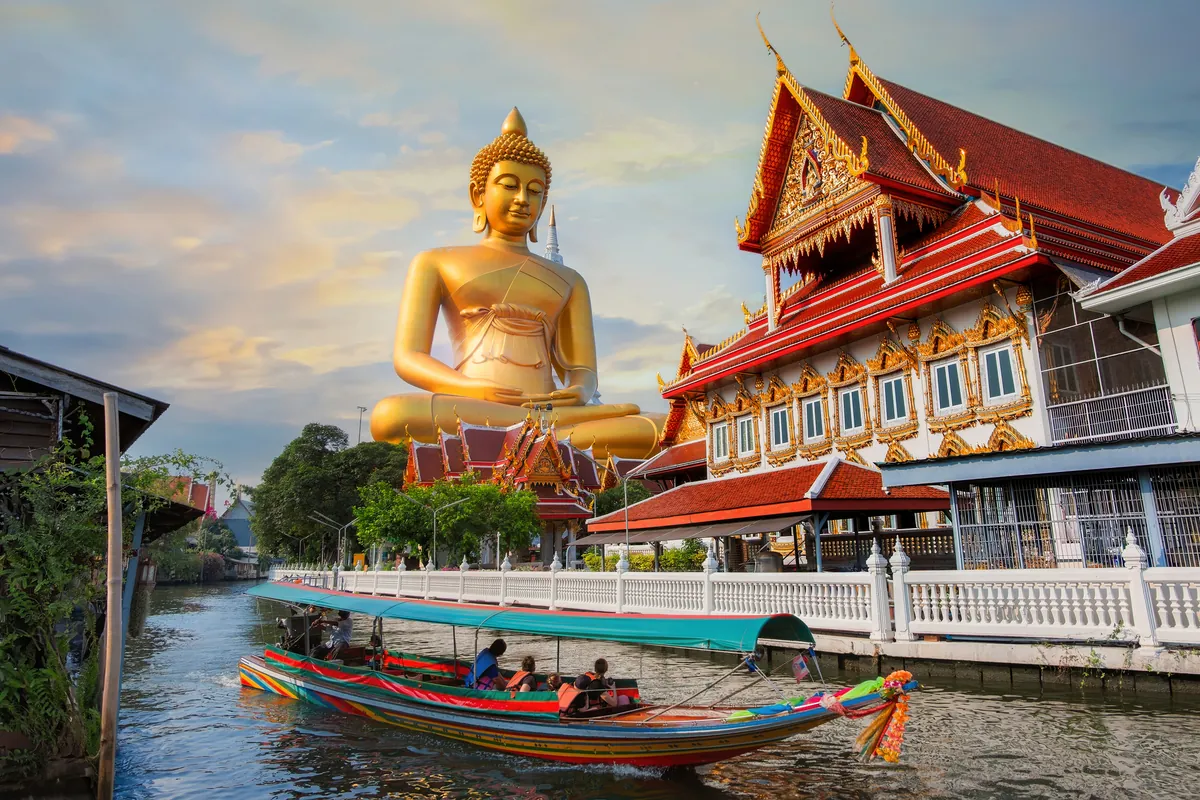
That the biennale operates inside actual temples (Wat Pho, with its 46-metre reclining Buddha; Wat Arun, its Khmer prang rising from the Chao Phraya’s west bank) adds a genuine charge to this theme. A contemporary sculpture installed in an active Buddhist temple is not commentary from a distance. The context is the work. It is the kind of curatorial risk that rarely pays off cleanly in commercial gallery settings and tends to produce either something electric or something awkward. The Bangkok Art Biennale has, in past editions, produced both.
- Dates: 29 October 2026 – 28 February 2027
- Theme: Angels and Mara
- Main venues: Wat Pho, Wat Arun, BACC, riverside locations, and galleries across Bangkok
- Admission: Not yet published; temple venues charge their own entry fees
- Getting around: Chao Phraya Express Boat (central pier at Sathorn/Saphan Taksin) + BTS
- Season: Bangkok’s cool dry season: ideal for walking between outdoor venues
The Venue Strategy
Since its first edition in 2018, the Bangkok Art Biennale has operated on a deliberate principle of spatial disruption: put the art where it does not obviously belong. The effect on the viewer is different from a white-cube gallery or a purpose-built festival space. Standing in the courtyard of Wat Pho while a sound installation competes with monks chanting in the ordination hall requires a different kind of attention.
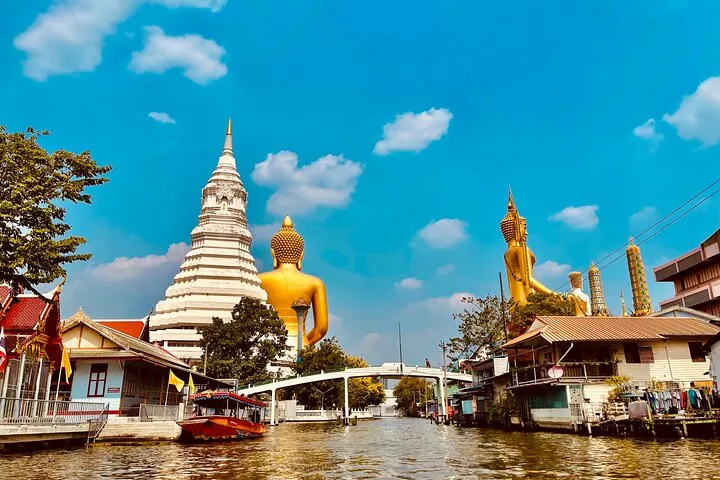
The Chao Phraya River corridor forms the natural backbone of the venue map. The National Museum Bangkok and Museum Siam on the east bank, the BACC (a few stops up the BTS), and the temple sites on the west bank (Wat Arun most prominently) can be connected by the public river ferry in under 20 minutes. A single boat ride past the skyline at sunset, knowing that installations are hidden inside the building you just drifted past, is itself a curatorial experience.
Not every venue works equally well. Shopping malls are a practical concession: the malls provide logistics, security, and climate control, and their footfall exposes art to audiences who would never visit a gallery. The tradeoff is that mall installations can feel decorative rather than challenging. The temple and riverfront venues carry more weight.
Insider Tip: Evening visits to the temple installations are qualitatively different from daytime visits. Wat Arun is atmospheric enough without contemporary art; add a light-based installation after dark and the effect compounds. Wat Pho is open until 6:30 PM: time your visit to arrive around 4:30 PM, see the temples in the late-afternoon light, and then stay for the shift into evening.
Practical Navigation
The biennale’s venues are scattered across Bangkok rather than concentrated in one district, which means getting around efficiently requires planning. The official BAB app (available on iOS and Android from the opening date) shows all venue locations, opening hours, and artist information. A physical map is available at the BACC and at venue reception points.
The Chao Phraya Express Boat handles the riverside circuit well. Sathorn/Saphan Taksin is the main interchange with the BTS Skytrain. From there you can reach the BACC, Jim Thompson House area, and further north toward Nonthaburi. Wat Pho and the Grand Palace area are best reached by boat to Tha Chang pier.
Riverside installations are best in the morning before tour groups arrive, or in the early evening. The BACC is air-conditioned and makes a good midday stop when Bangkok’s December-February heat (cooler than peak season but still 28-33°C) starts to wear.
Watch out: Temple sites have dress codes: covered shoulders and knees are required at Wat Pho and Wat Arun. This applies regardless of whether you are there for the biennale or as a regular visitor. Sarong rental is available at the main gates for around 50-100 THB, but a light linen shirt or wrap is more comfortable for a long day of venue-hopping.
When to Go
BAB2026 runs from late October through late February, four full months. The sweet spot is November through January, when Bangkok’s weather is at its best: dry, clear, and cooler than the rest of the year (daytime highs around 28-32°C, evenings around 20-25°C). February is still pleasant. Late October at opening is humid but manageable, and seeing the installations when they are newly installed has its own logic.
The biennale is a biennial, it runs every two years. BAB2026 is followed by an approximately two-year gap before the next edition. If you are planning a Bangkok trip in this window and have any interest in contemporary art, architecture, or the intersection of sacred space with modern culture, scheduling around the biennale makes the visit considerably richer.