Ban Chan Rom Weaving Village
หมู่บ้านทอผ้าไหมบ้านจันรม
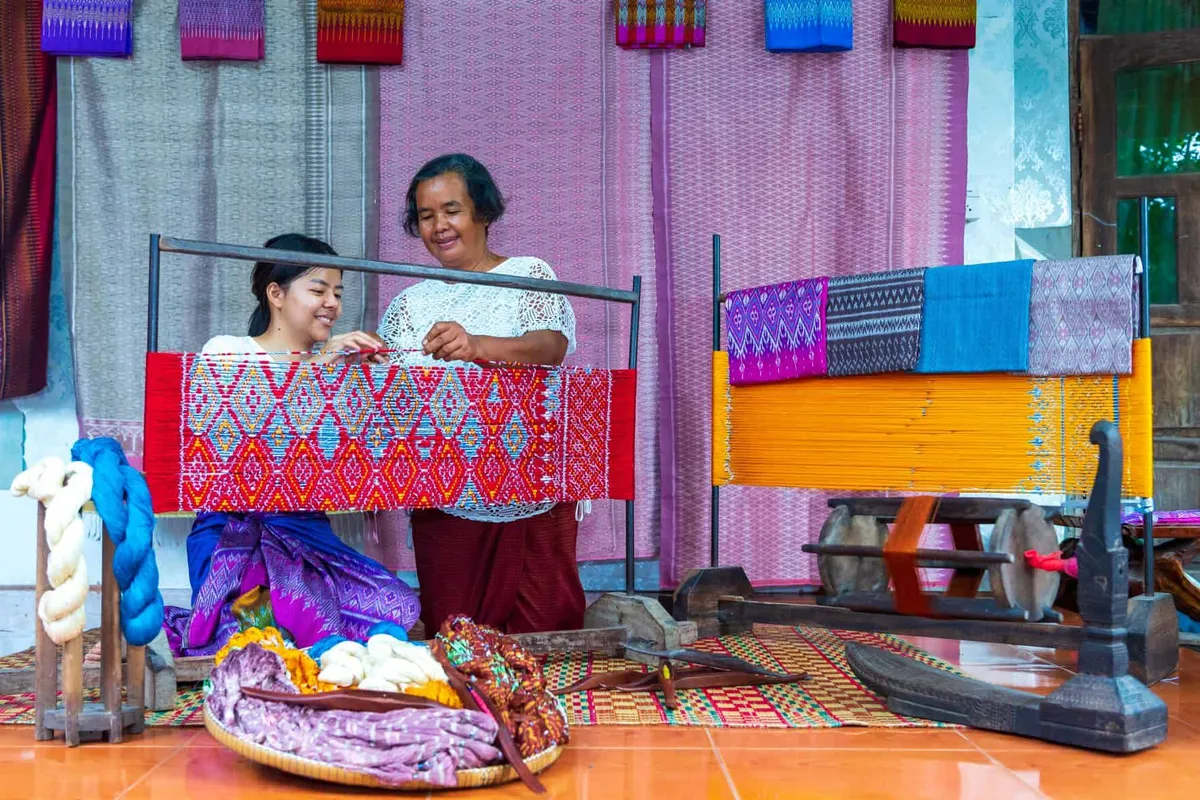
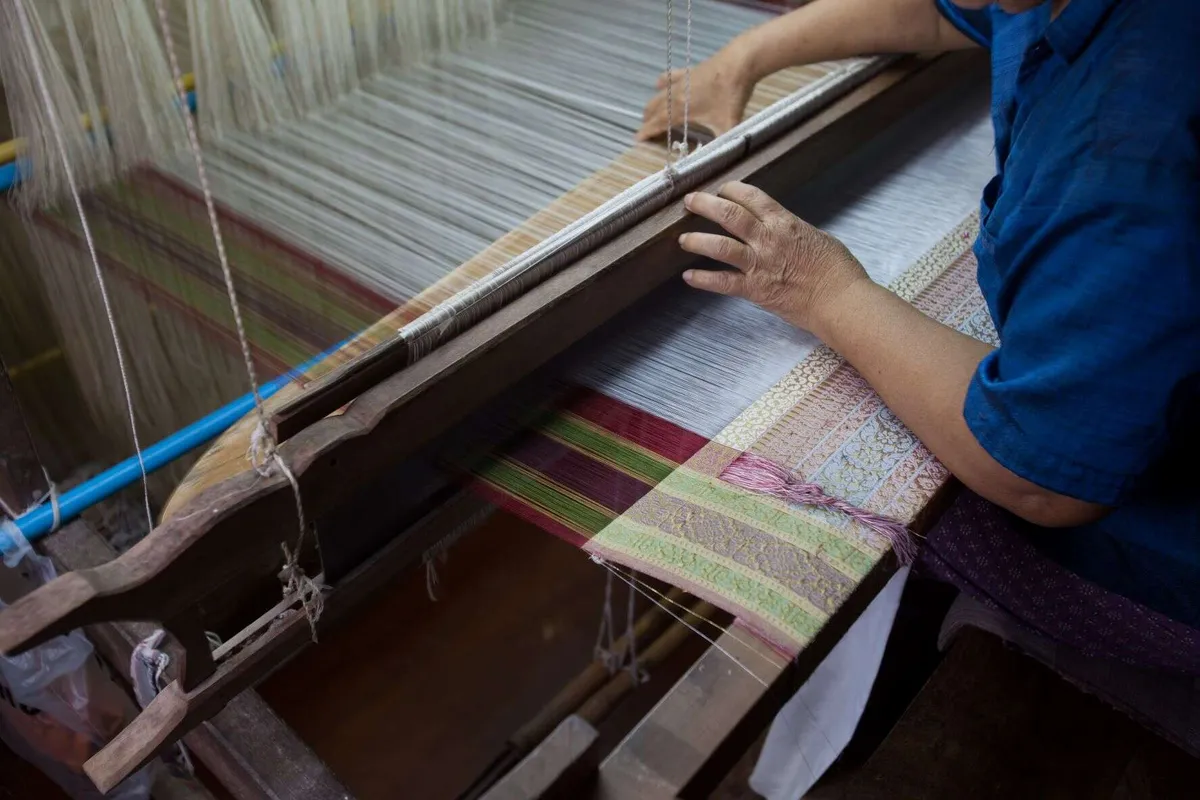
Silk weaving and silversmithing carry on side by side at Ban Chan Rom, a working village roughly 9 km east of Surin town on Highway 2077, the road toward Sangkha. Families here raise their own mulberry trees and silkworms, reel the cocoons into thread, dye it with local plant dyes, and weave it into mudmee (ikat) silk on wooden looms set up in open-sided houses along the village lanes — the same process, largely unchanged, that’s made this stretch of Isan a centre of Thai silk for generations.
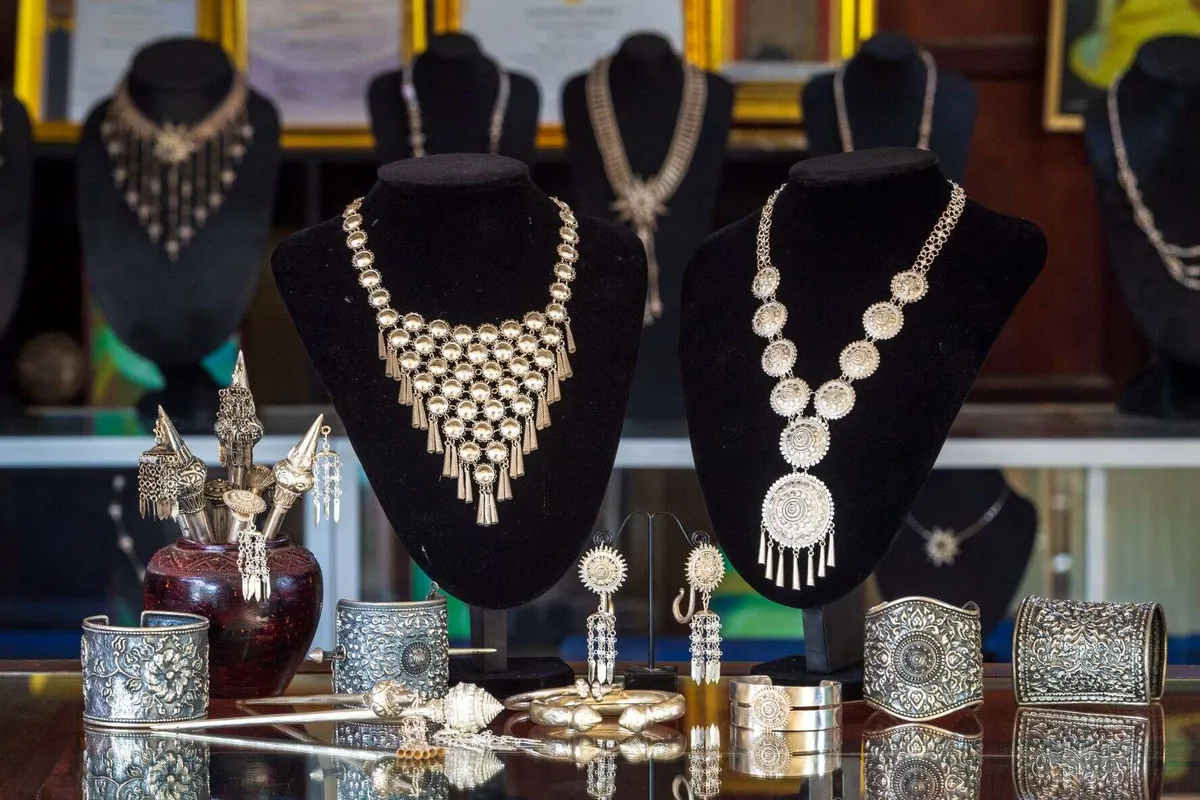
The patterns are specific to the region: mudmee cloth in hook (ลายขอ), naga (ลายนาค), chicken (ลายไก่), and peacock (ลายนกยูง) motifs, alongside check-weave cotton-silk blends and heavier ceremonial cloths like amprom and sa-mor-e. Less advertised but just as central to the village’s reputation is silverwork — several households produce handmade silver jewellery alongside the looms, so a visit here covers two crafts, not one. Weavers are generally happy to explain what they’re doing and let you watch the whole sequence, from raw cocoon to finished cloth on the loom.
Insider Tip: Ask which house is currently dyeing thread rather than just weaving — the natural-dye stage (bark, leaves, and insect-derived reds) is more interesting to watch than the loom itself and isn’t happening at every stall.
The pace here follows the village, not a tour schedule — mornings tend to be the most active time at the looms, with the rhythmic knock of the shuttle audible from the lane before you reach a house. There’s no formal shop front or ticket booth; buying directly from a weaver or silversmith is how the transaction works, and prices are set per piece rather than posted.
Watch out: Not every household weaves or sells daily — this is a residential village first, not a staffed attraction, so some lanes may be quiet on a given visit, particularly outside morning hours.
- Entry fee: Free
- Hours: Daily 08:30-16:30 (household activity varies)
- Getting there: Car or motorbike via Highway 2077, ~9 km east of Surin town; no regular public transport
- What to bring: Cash for direct purchases from weavers/silversmiths
- Specialty: Mudmee silk weaving and handmade silver jewellery
Plan a car or motorbike trip out from Surin town rather than relying on public transport, since there’s no direct bus service. Combine it with other Surin-area craft villages if you’re building a day around Isan textiles — Ban Chan Rom’s silver work is the detail most visitors miss, so ask about it rather than assuming the village is only about silk.
Location & Directions
Mueang Surin, Surin
Surin, Thailand
Show your taxi or Grab driver
หมู่บ้านทอผ้าไหมบ้านจันรม
Frequently Asked Questions
Is Ban Chan Rom free to visit?
What can I see besides silk weaving?
How far is Ban Chan Rom from Surin town?
Can I buy silk directly from the weavers?
Is public transport available to Ban Chan Rom?
Spotted something out of date or incorrect? Let us know
Stay Near Ban Chan Rom Weaving Village
Compare places to stay in Surin, or open the map for options closest to the attraction.