





Ban Na Tong
ชุมชนบ้านนาตอง
Ban Na Tong is a working farming village in Phrae’s Cho Hae valley with two specific draws: a resident population of endangered Pu Lou turtles, and a small museum built around a 4,500-year-old human skeleton. It’s genuinely a place people live and farm — roughly 100 households in Moo 9, Tambon Cho Hae — not a staged cultural village, about a 30-minute drive from Phrae town on the road toward Wat Phra That Cho Hae.
The turtles are Pu Lou (เต่าปูลู), or big-headed turtles — an endangered species recognisable by an oversized head that can’t retract into the shell and a long, muscular tail that lets them climb. A resident population lives in the village stream, and it’s become a minor conservation point of interest locally; visitors can watch, and in some cases feed, the turtles as part of a walk through the village.
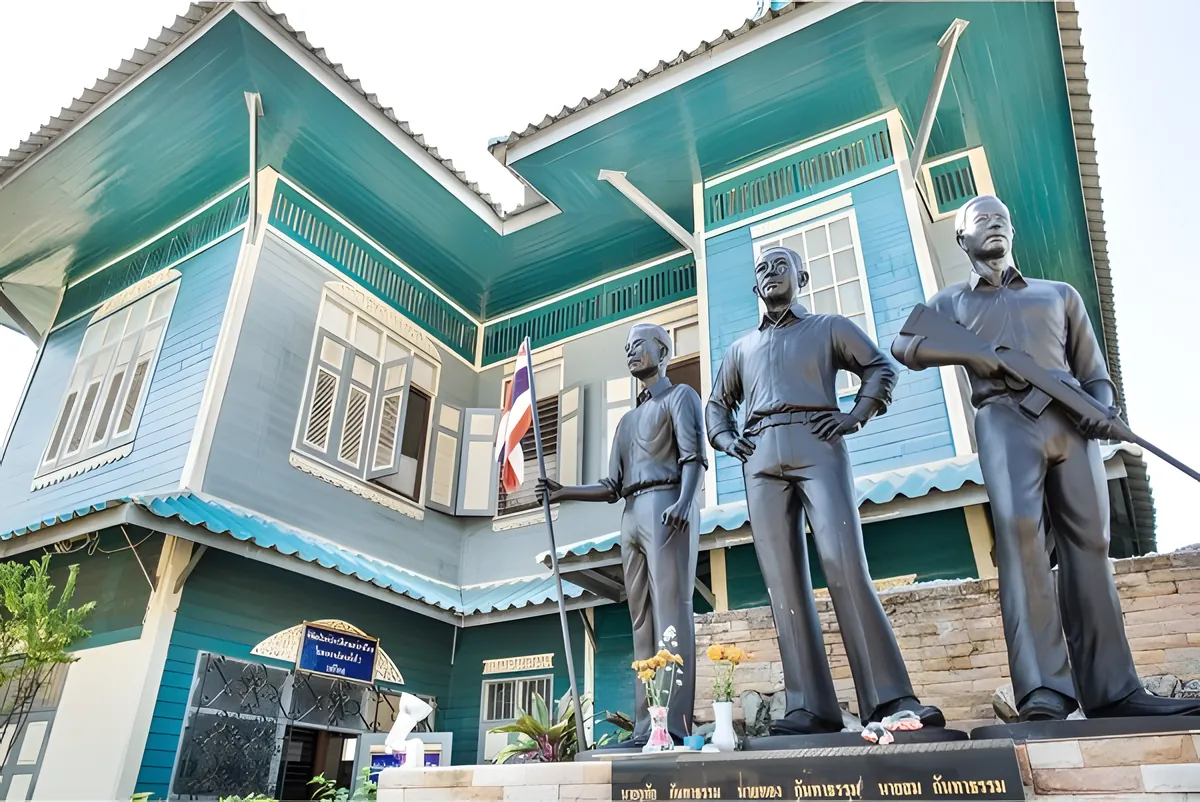
The second draw is the Ban Na Tong Museum, built around the discovery of “Na Tong Man” — human skeletal remains found in nearby Pu Pan Ta Mee Cave and dated to roughly 4,500 years old, with the find verified by the SEAMEO Regional Centre for Archaeology and Fine Arts (SPAFA). The remains and accompanying stone tools are displayed alongside information on the excavation. It’s a modest, locally run museum rather than a national institution, but the find itself is a genuine piece of Southeast Asian prehistory.
Insider Tip: Time a visit for June or July, when rice planting is underway in the valley. Outside planting season, the fields carry the village’s pesticide-free peanut crop, grown as a rotation on the same paddy land.
Watch out: There’s minimal English signage at the museum, and no confirmed fixed hours for turtle viewing — check with a homestay operator or the village community group before the drive if seeing the turtles is your main reason for going.
Beyond the museum and turtles, the pace here is simply slower: a stream to wade in, a small local cafe for a coffee break, and farmers happy to explain what’s growing if you ask. There’s no formal ticketing or guided-tour structure — this is a homestay-and-wander destination, best paired with the Cho Hae temple route rather than visited as a standalone trip. Dress is casual but modest, bring cash (there’s no ATM in the village), and wear shoes suited to unpaved paths if you plan to walk down to the stream or cave.
- Entry fee: Free
- Distance from Phrae: About 30 minutes’ drive via the Wat Phra That Cho Hae road
- Known for: Pu Lou (big-headed) turtles and the Ban Na Tong Museum
- Age of “Na Tong Man” remains: Approx. 4,500 years, SPAFA-verified
- Village size: Around 100 households, Tambon Cho Hae
Location & Directions
Moo 9
Phrae, Thailand
Show your taxi or Grab driver
ชุมชนบ้านนาตอง
Frequently Asked Questions
What makes Ban Na Tong different from other Phrae villages?
Is there an entry fee?
How far is Ban Na Tong from Phrae town?
Can I stay overnight in Ban Na Tong?
What's the best time to visit Ban Na Tong?
Spotted something out of date or incorrect? Let us know
Stay Near Ban Na Tong
Live prices for places closest to Ban Na Tong — tap a pin to compare.