








Phrae
แพร่
Old-town teak mansions, eerie sandstone canyons, and the indigo-dyed mo hom shirt that is Thailand's most recognisable craft cotton — all in a province most visitors skip entirely.
Recommended by us

Ban Wong Buri
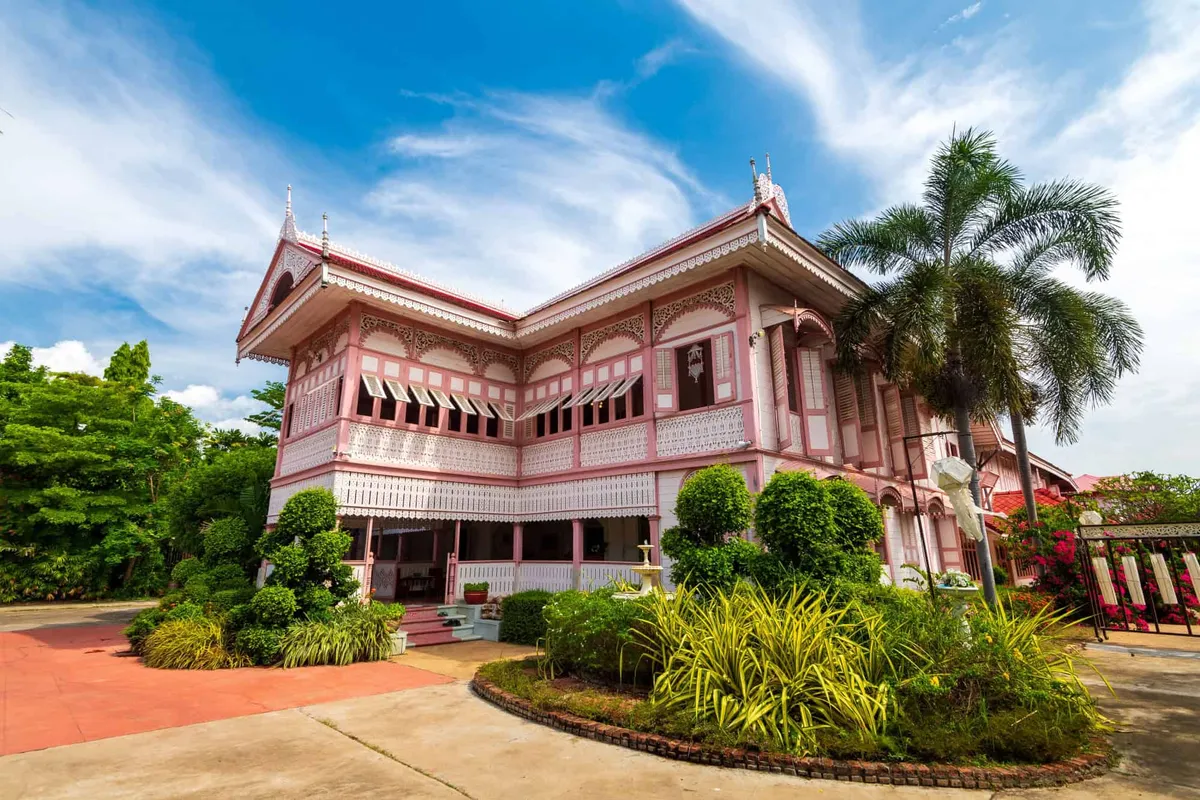
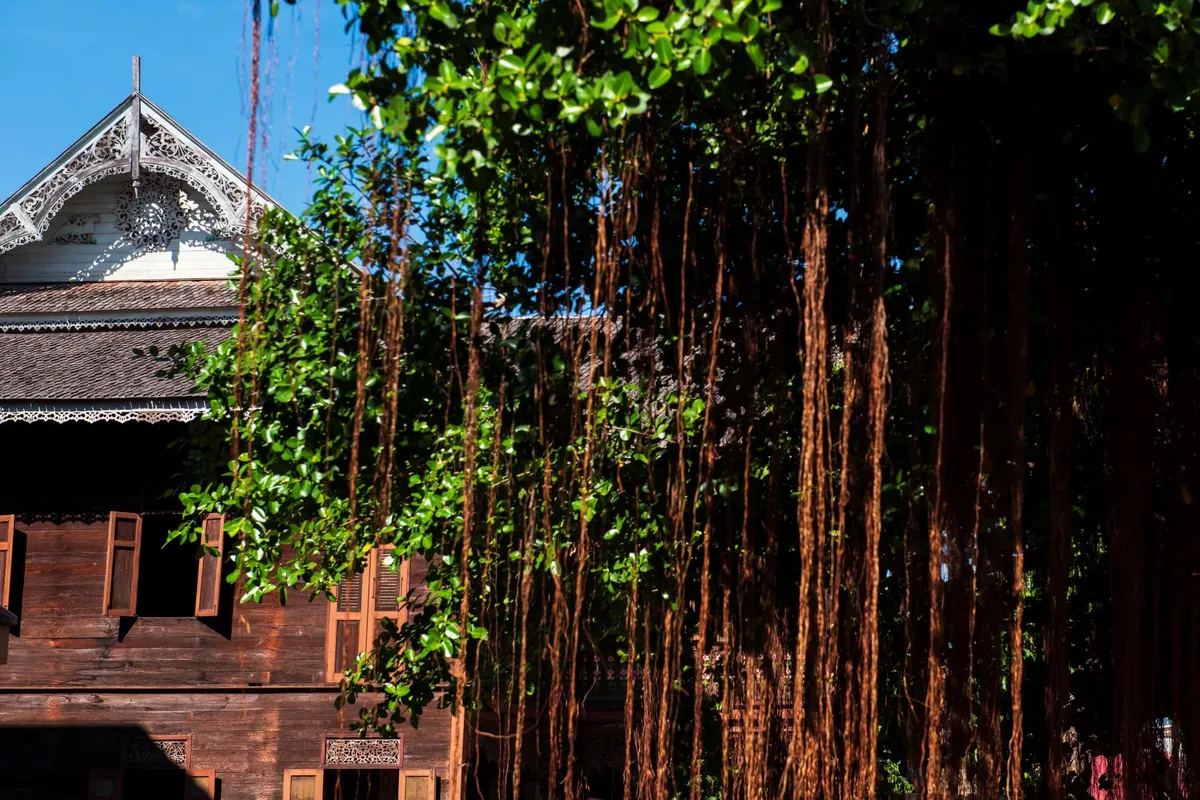
A 19th-century teak mansion built by a local timber merchant — the woodwork is exceptional, and the family history of Phrae's teak trade is told through the rooms. One of the best-preserved examples of northern Thai domestic architecture.

Wat Chom Sawan
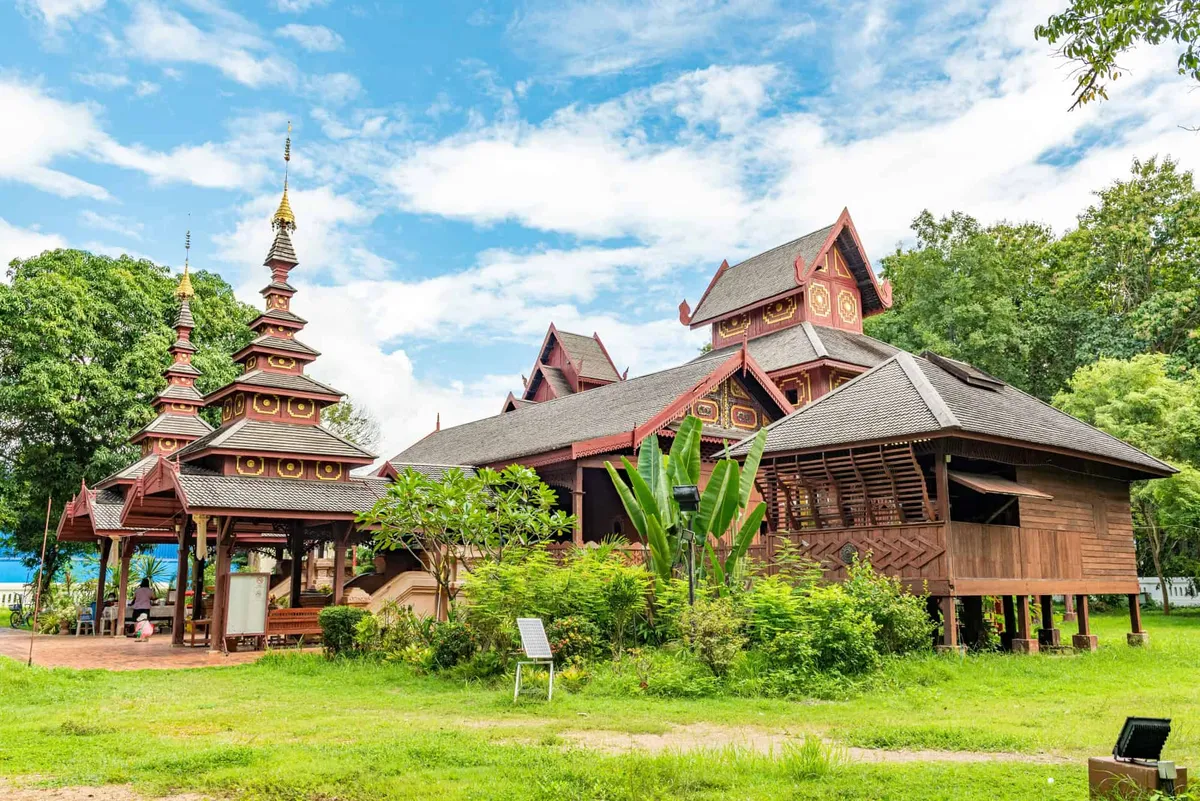
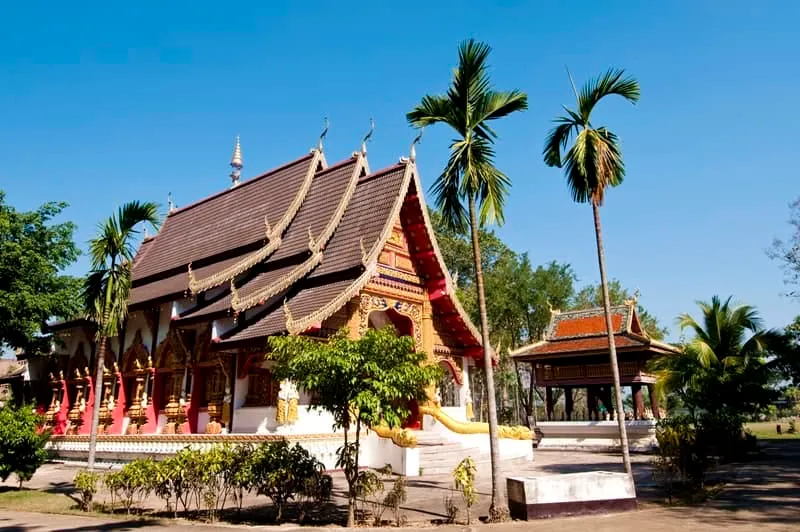
A Shan-Burmese temple in the old town with an unusual layered roof structure and carved wooden interiors. Built by Shan teak merchants in the early 1900s — the craftsmanship reflects both traditions at once.

Tham Pha Nang Khoi
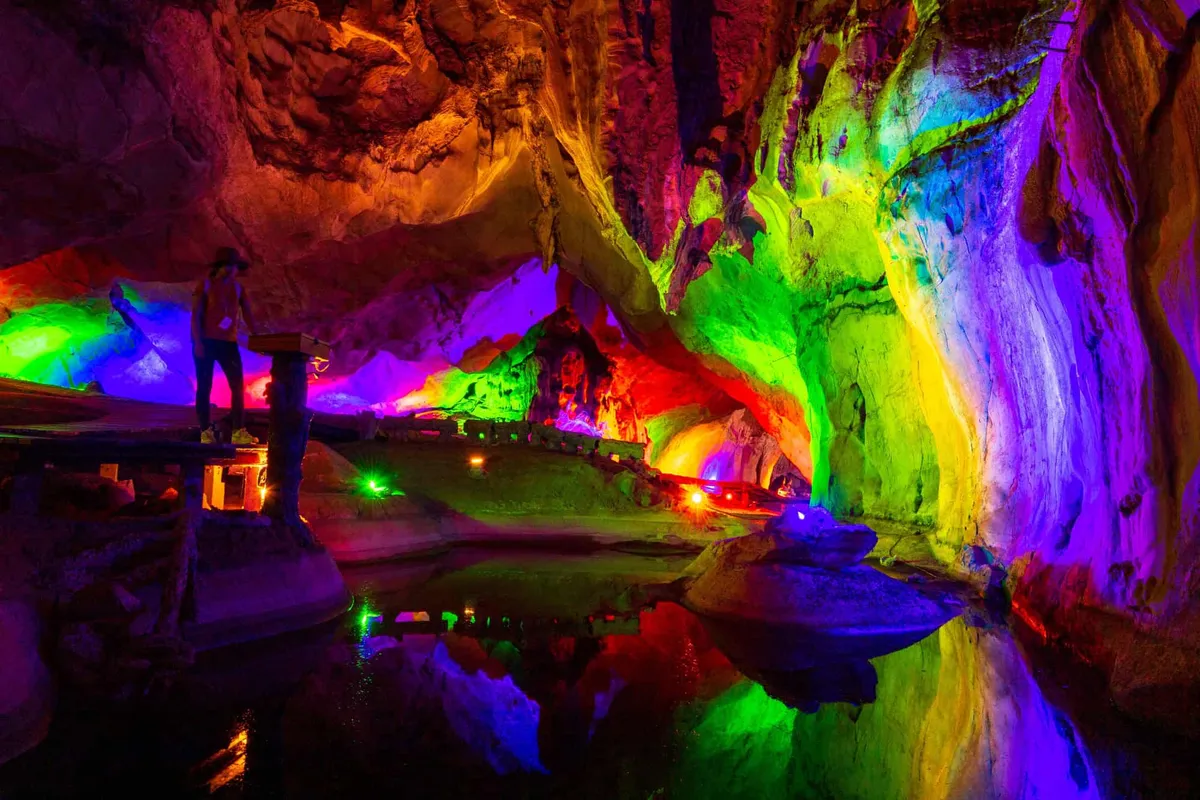
A large limestone cavern with stalactites and a series of chambers going deep into the hillside. The cave also functions as a Buddhist shrine — bring a torch beyond the lit sections.

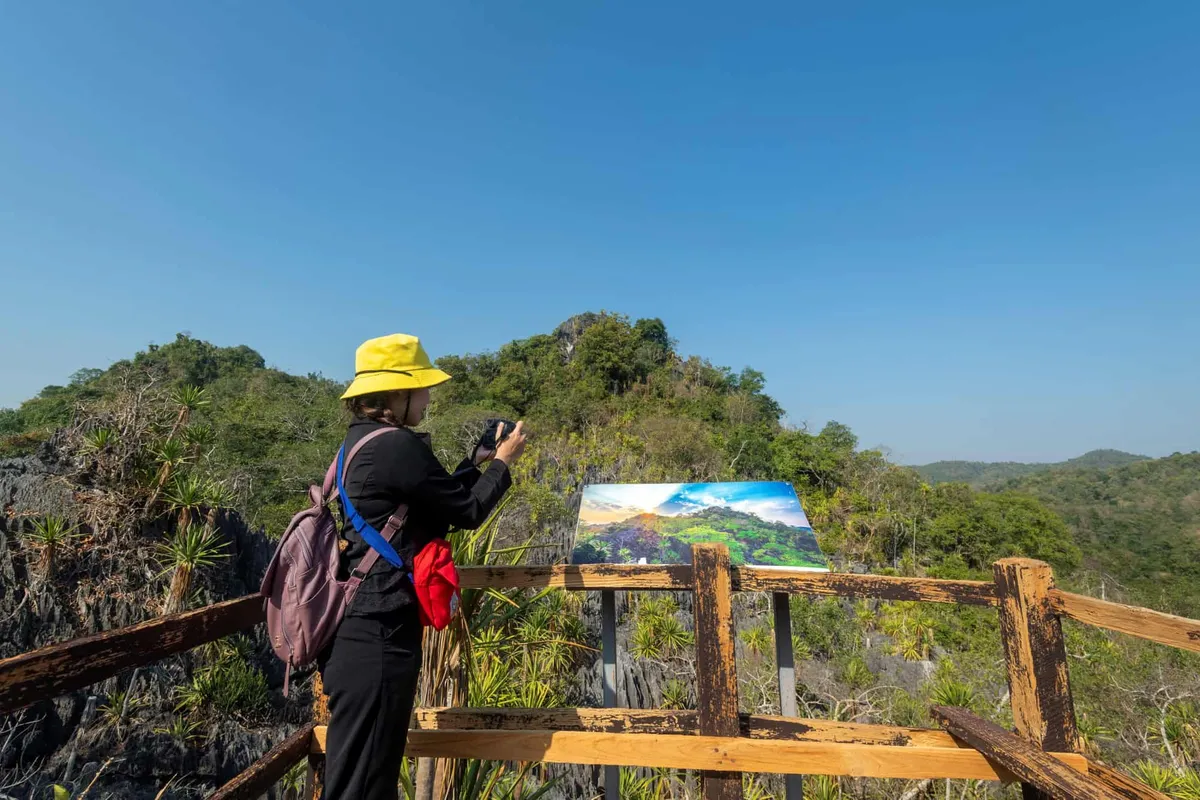
Doi Pha Klong National Park
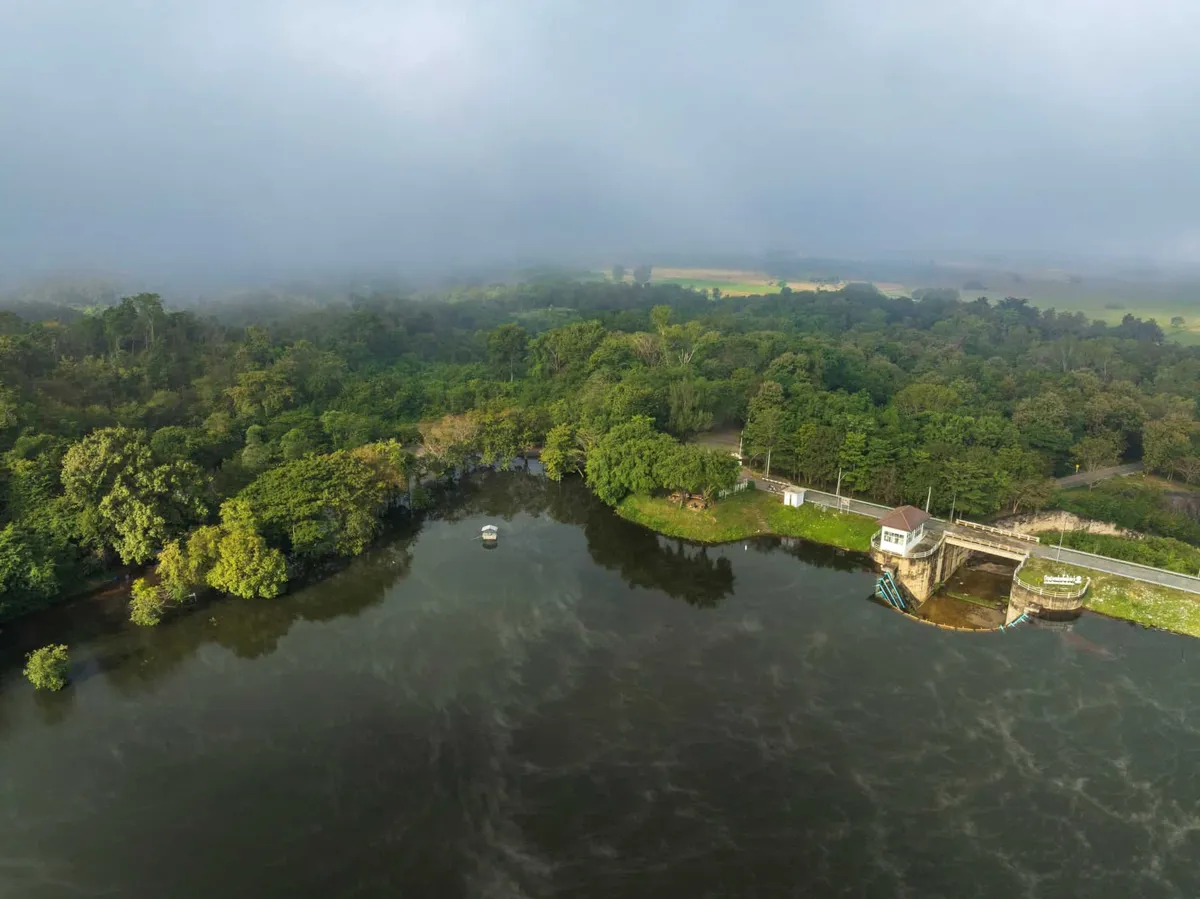
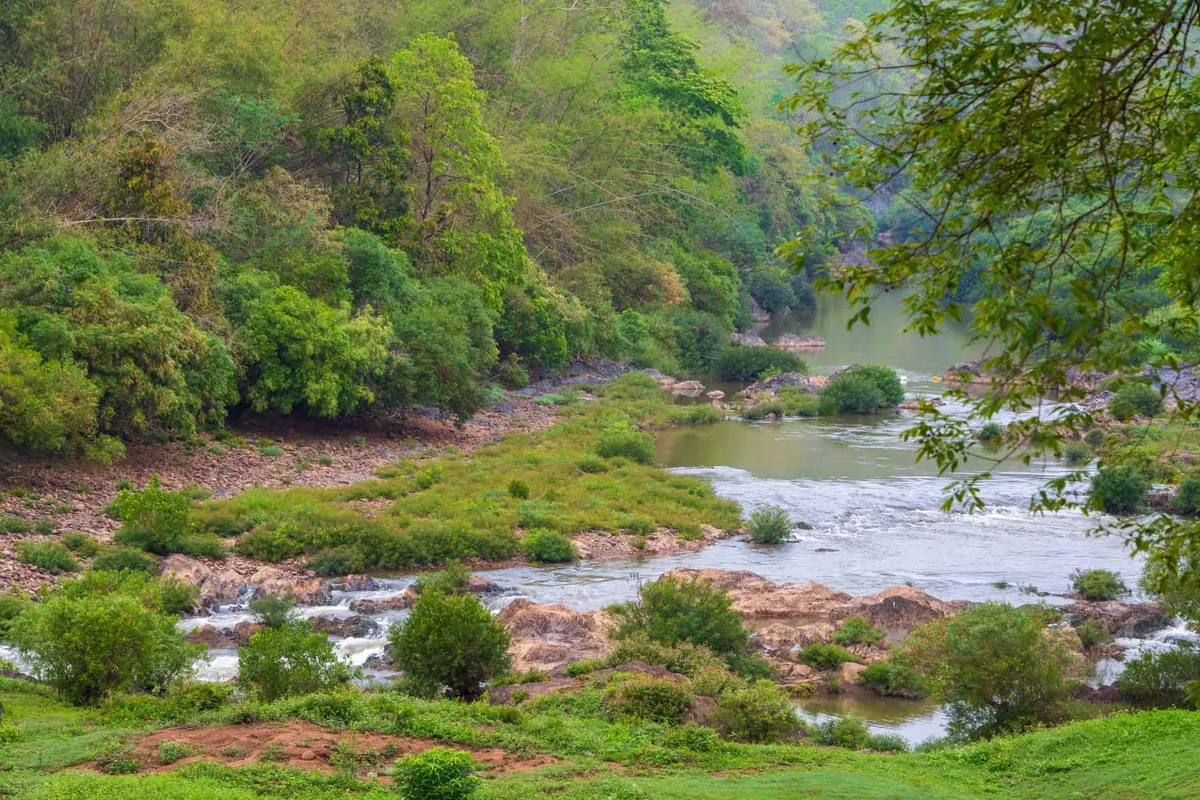
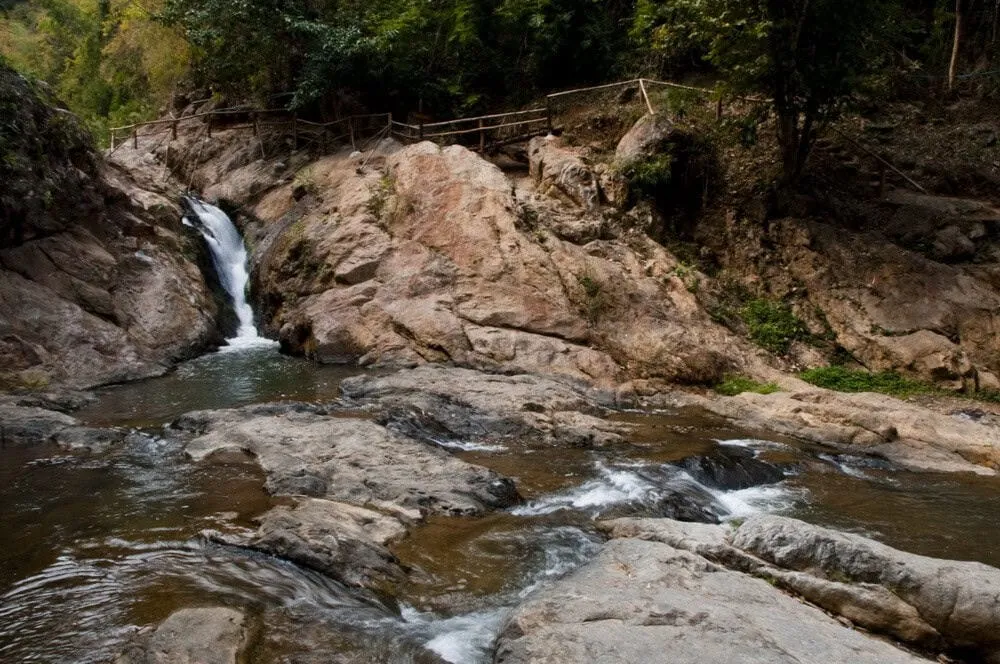
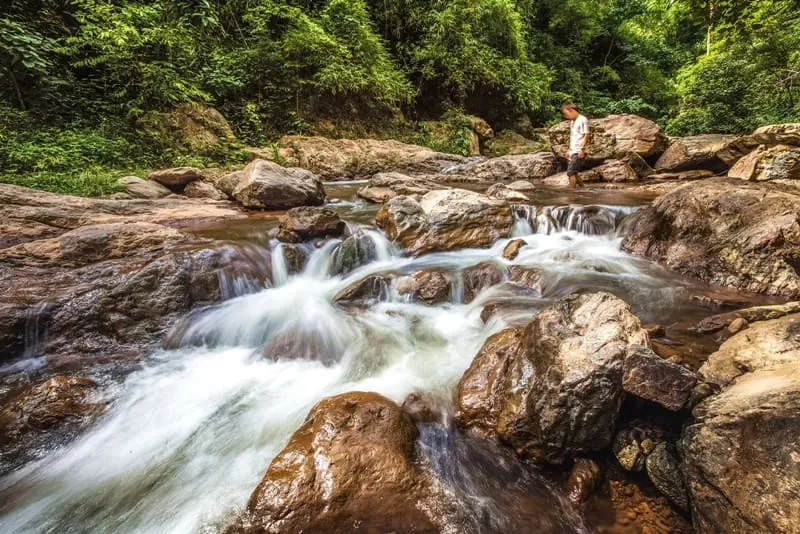
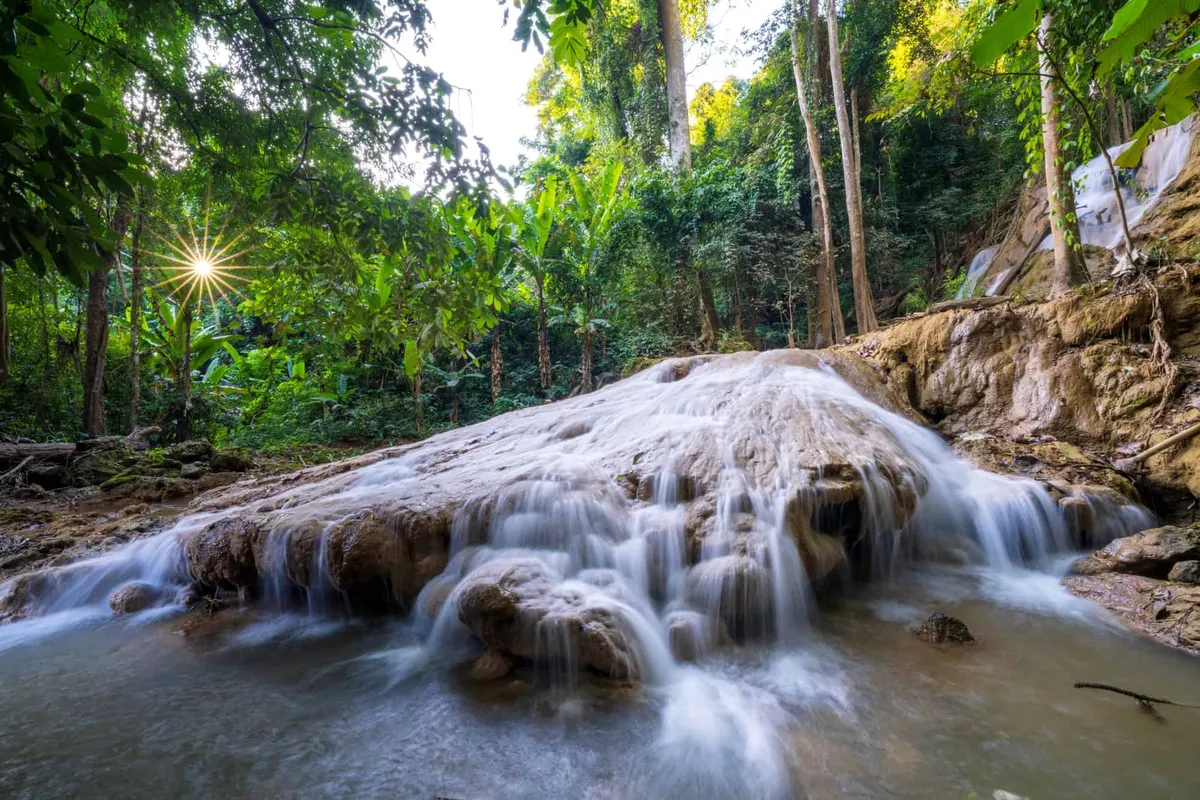
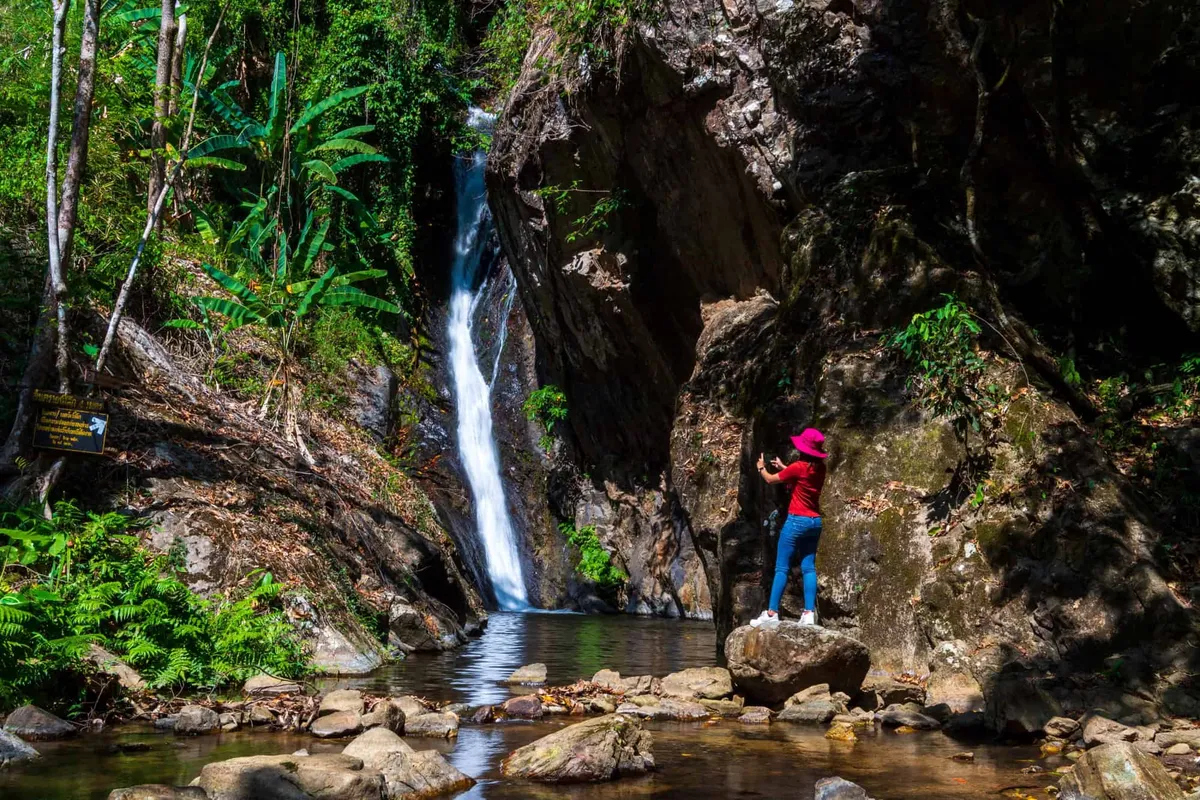
A quiet highland park with a river canyon, waterfalls, and forest trails. Almost no foreign visitors — the cooler months (Nov–Feb) are the time to come.
Get to Phrae
The overnight train from Bangkok to Den Chai (nearest station) takes about 8 hours — from Den Chai it's a 25-minute minivan ride into Phrae.

eSIM for Thailand
Land with data already working and skip the airport SIM queue. We tested six plans — code THAIHOLIDAY saves 10%.

Travel insurance
Hiking and cave exploration in a remote northern province — sort cover before you go and check the trekking and medical-evacuation terms.
Wats, shrines & spiritual sites
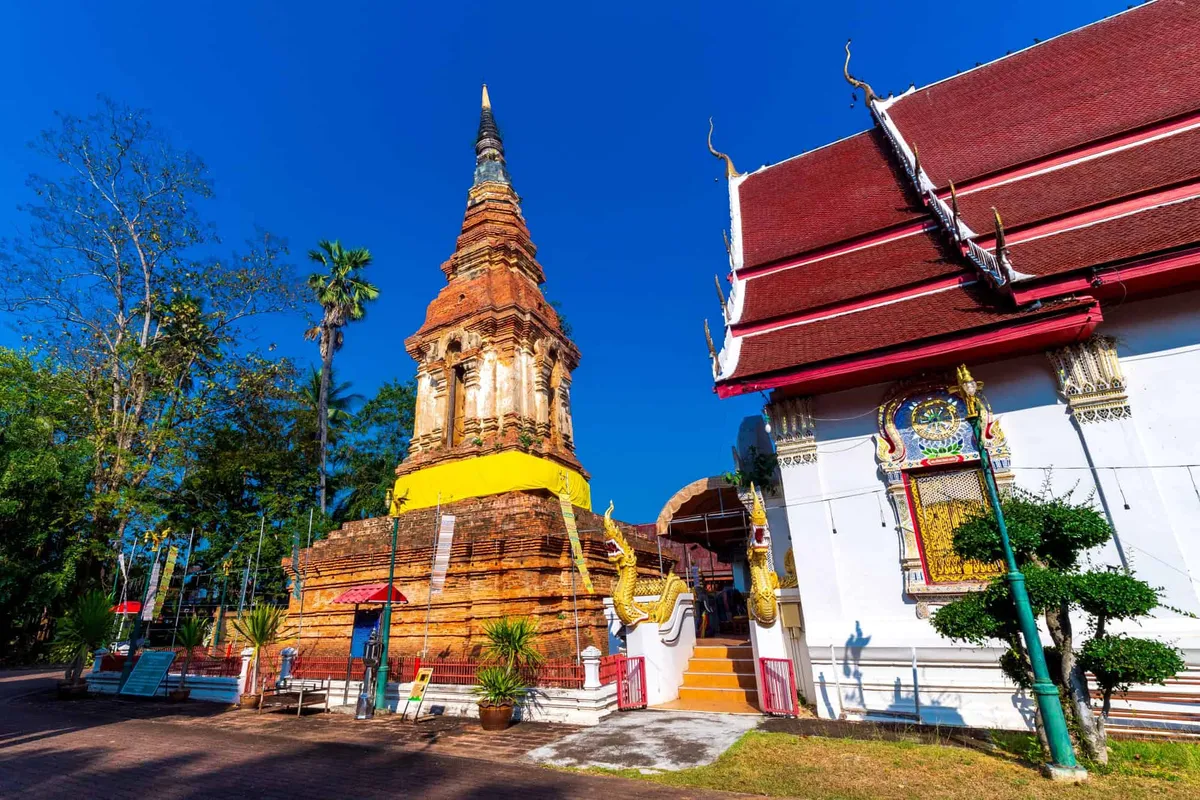
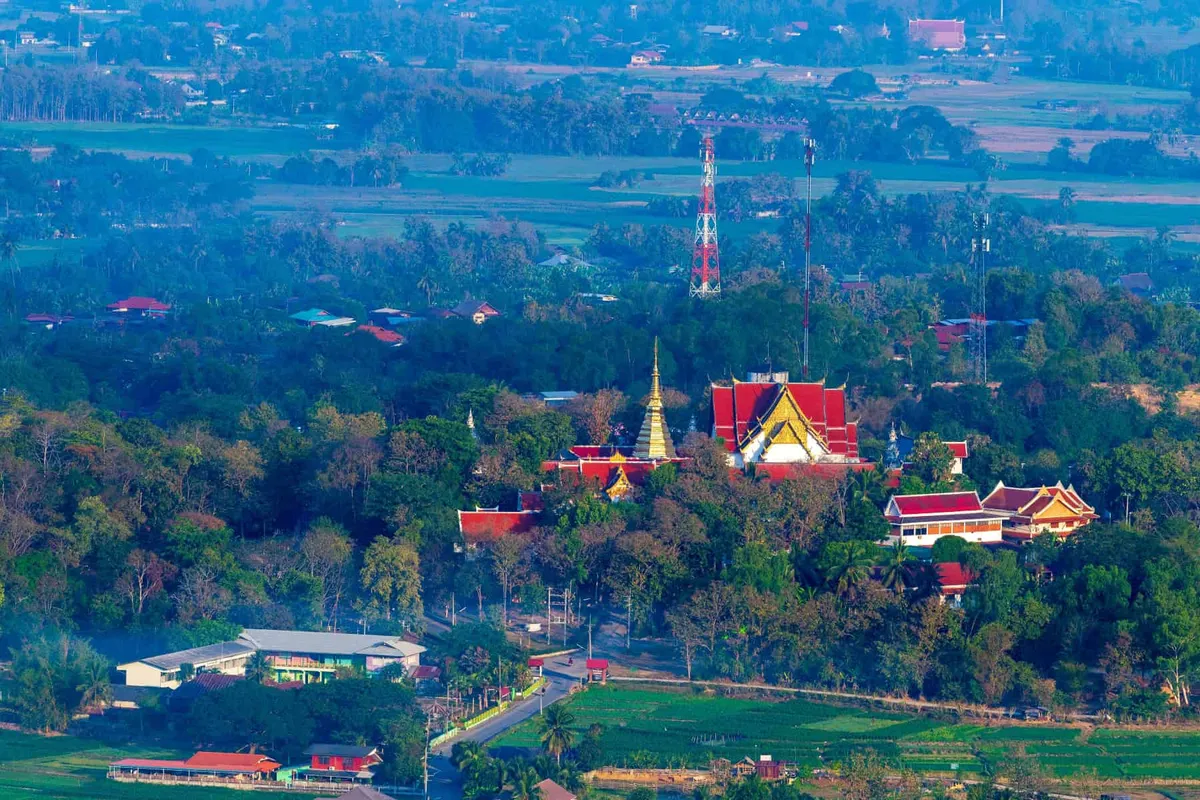
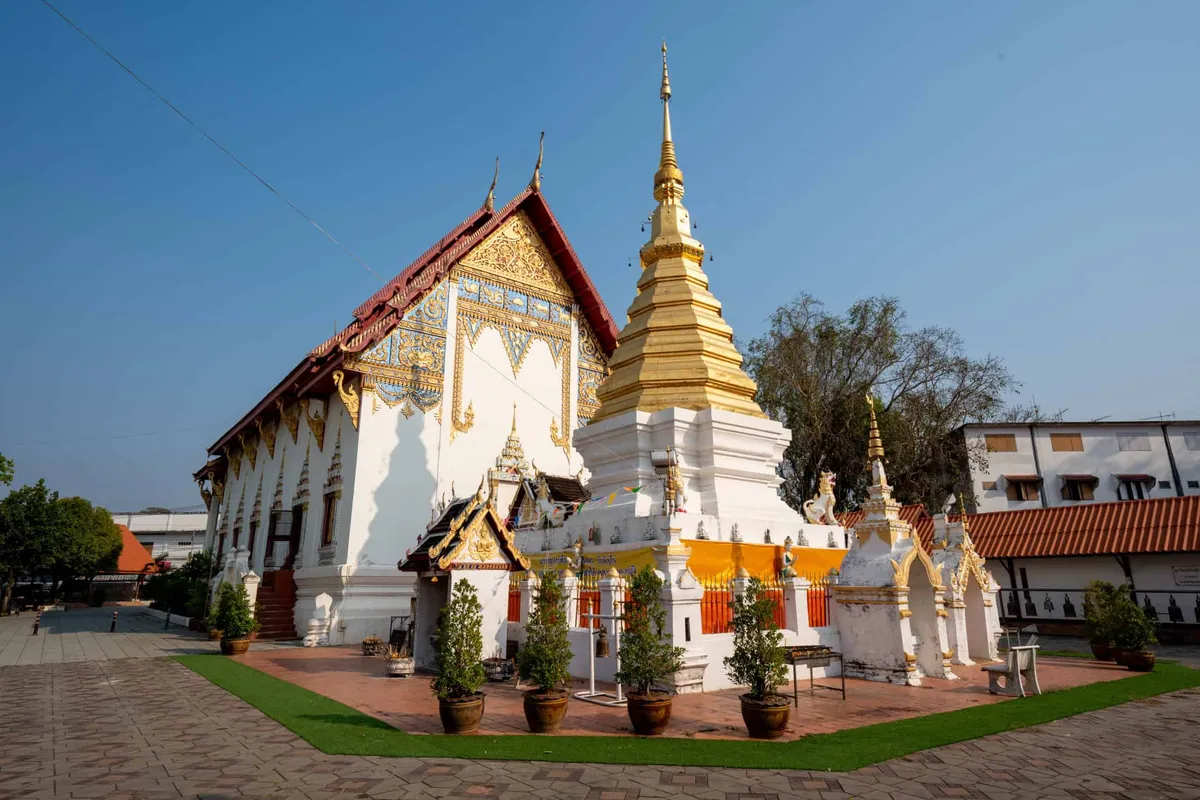
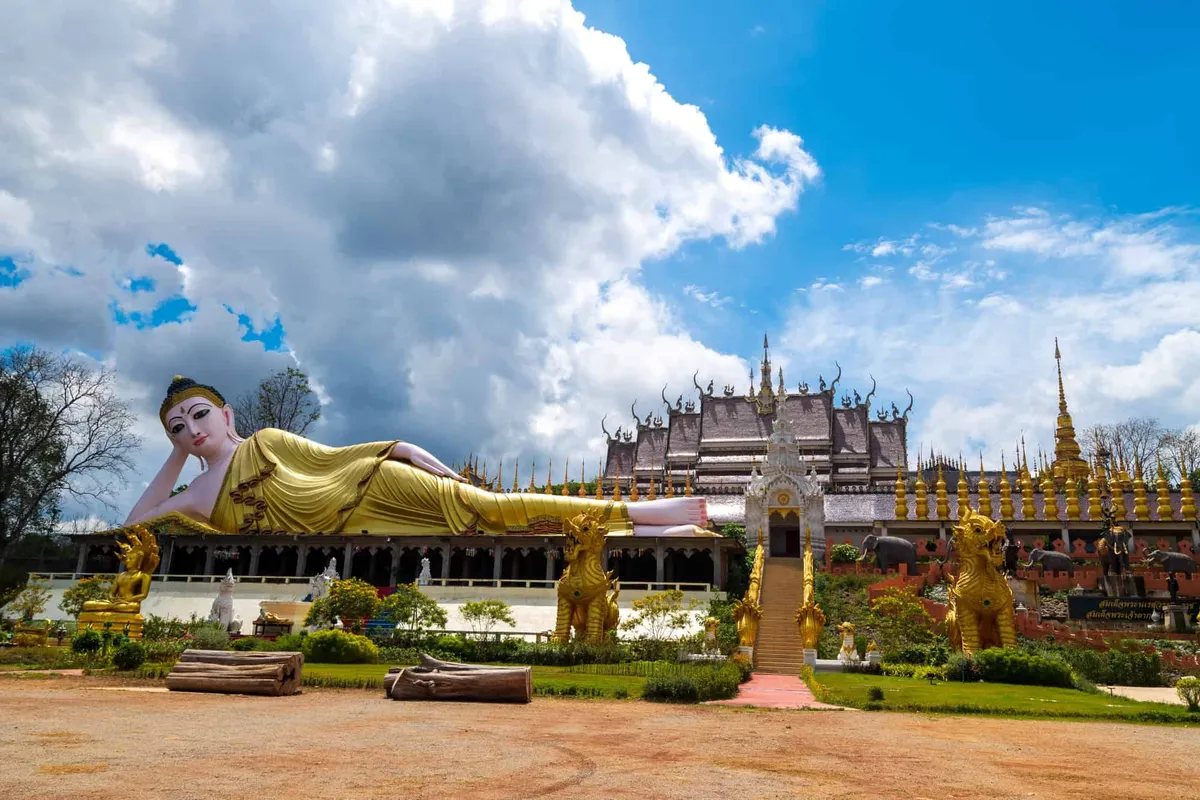
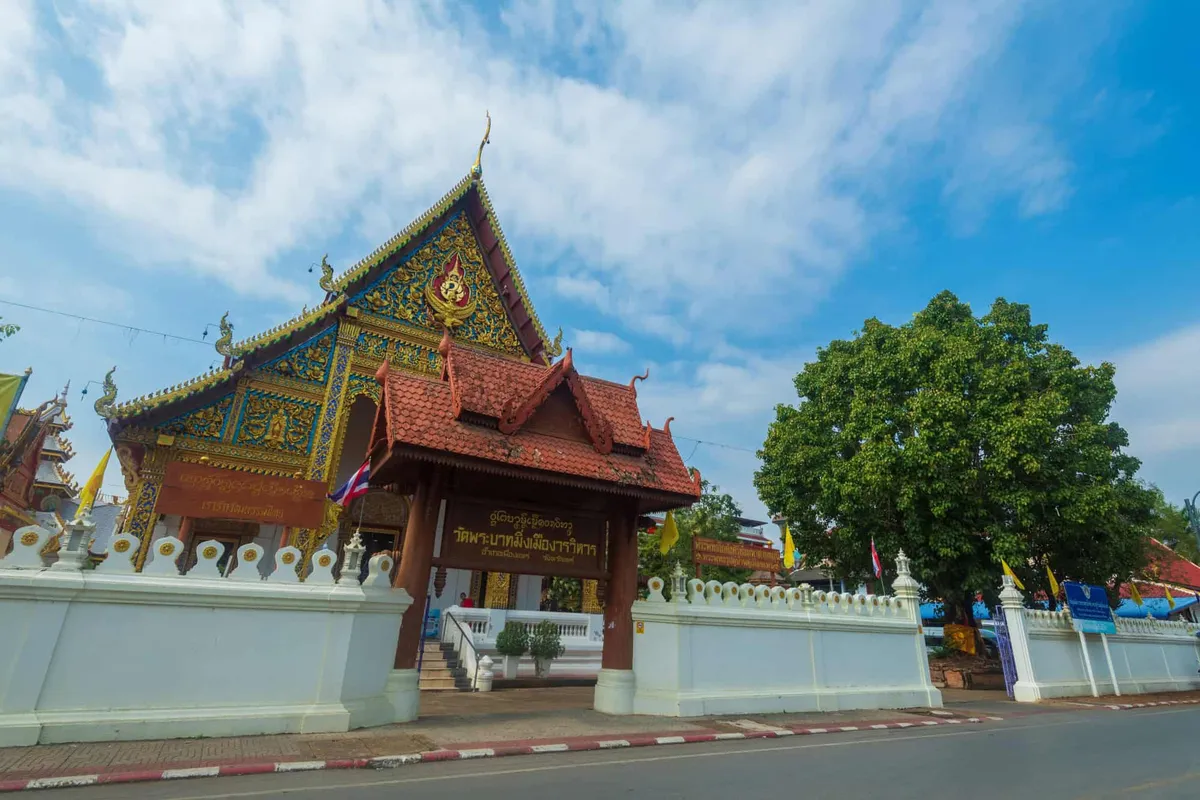
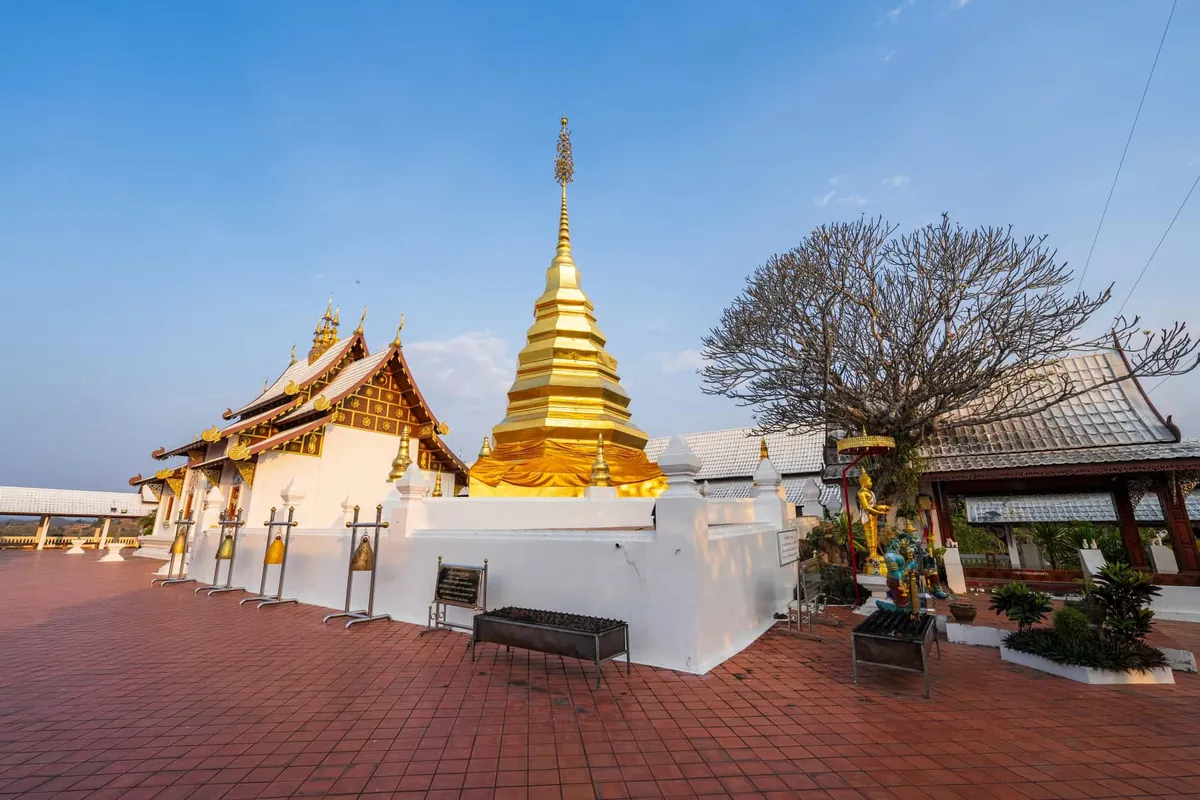
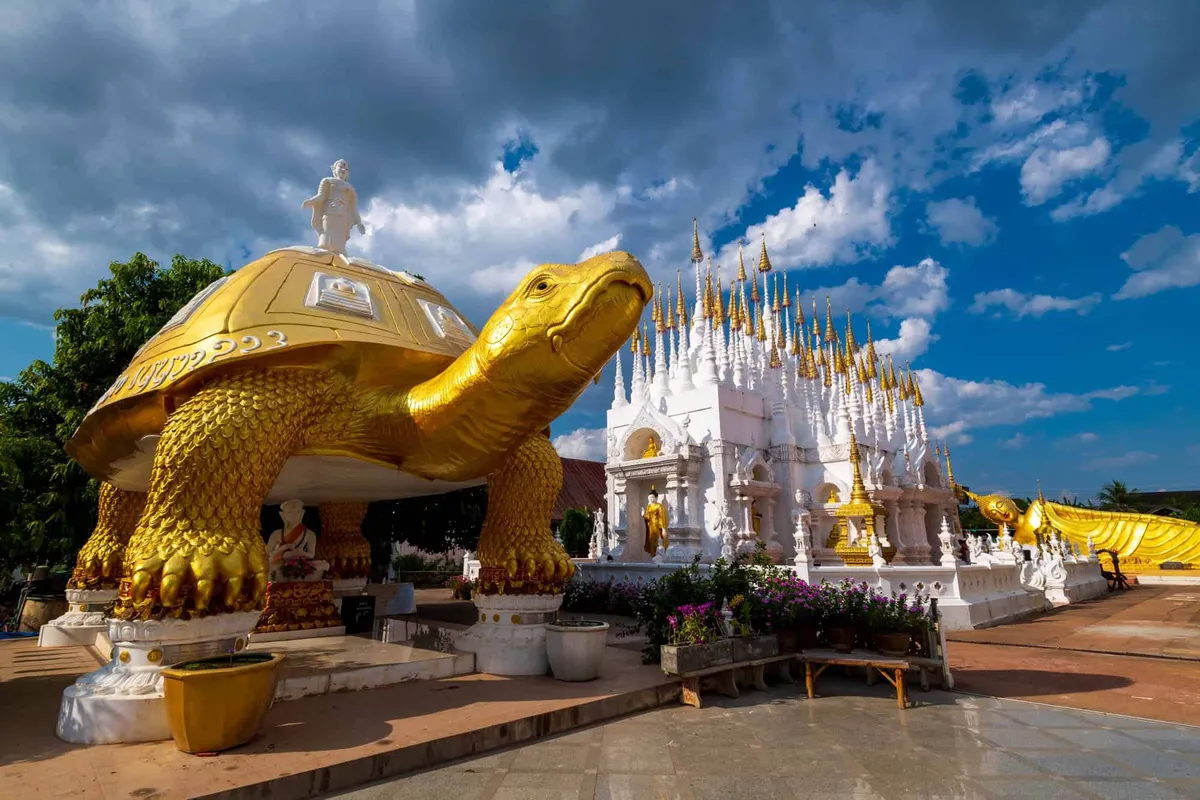
Temples in Phrae

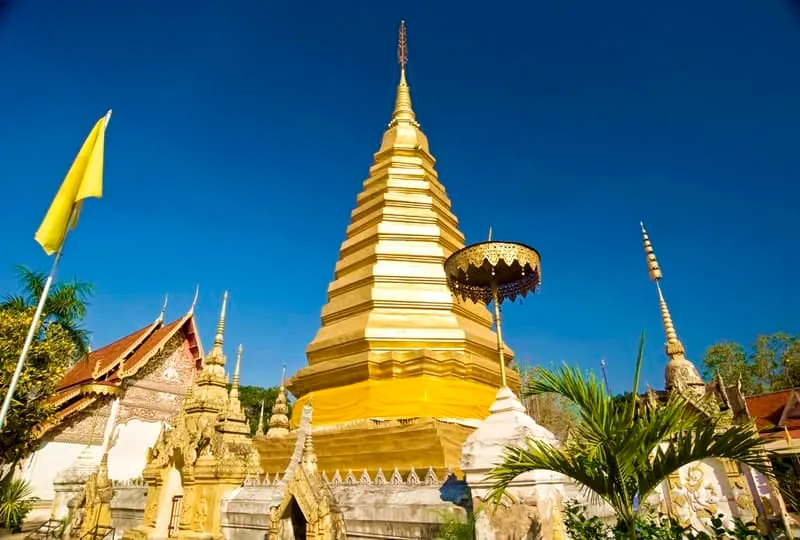











Waterfalls, peaks, caves & parks
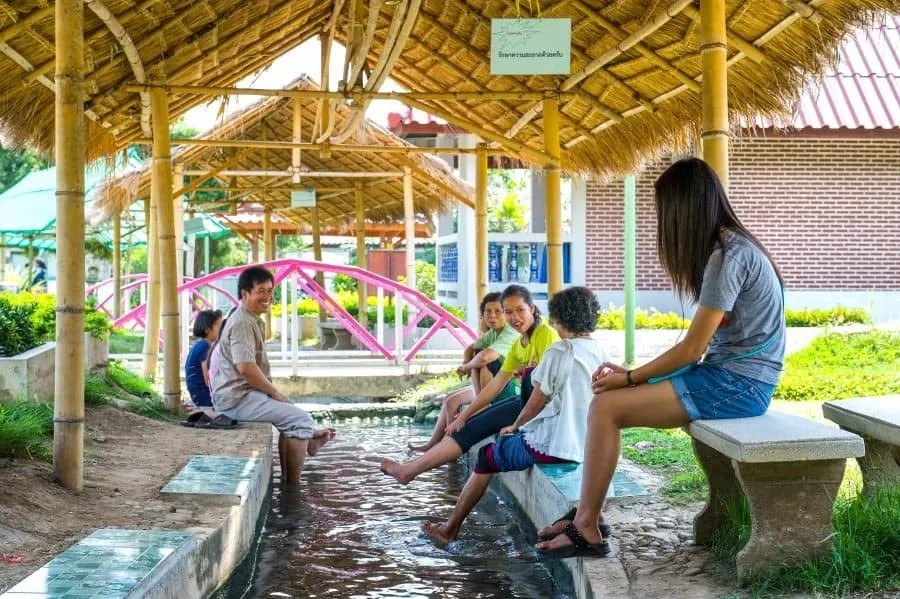
Nature & outdoors around Phrae







Museums, history & heritage
Museums & culture in Phrae











Things to do on the map
Tap a pin for details — 40 places in Phrae plotted.
When to go
Nov–Jan The cool dry season is the best window — comfortable temperatures for walking the old-town moat circuit, teak mansion visits, and the drive out to Phae Mueang Phi. Mae Yom National Park's Pha Ing Mok viewpoint produces sea-of-mist views at dawn from November through January.
Feb–Apr Burning season brings significant haze across upper northern Thailand and Phrae is consistently one of the worst-affected provinces. Outdoor sightseeing is workable but air quality can be poor for days at a time; bring a mask and check PM2.5 readings before heading out. April is the hottest month, often exceeding 35°C before the rains break.
May–Oct The monsoon runs May through October with August the heaviest month (around 350mm). Temple visits remain practical between showers, but Mae Yom's forest trails become muddy. The Yom River rises and the valley turns intensely green.
About Phrae
Last updated September 2026
Overview
Phrae sits in a wide valley on the east bank of the Yom River, roughly 550 kilometres north of Bangkok, and most travellers blow past it on the way to Chiang Mai or Nan. That oversight is their loss. The province has one of the best-preserved teak old towns in northern Thailand — a moat-ringed district of colonial-era mansions, antique wooden shophouses, and active temples — alongside a geological curiosity that looks like it belongs on another continent, a sacred hilltop chedi dating to the Sukhothai era, and a craft tradition unique to this province.
Phrae was one of the wealthiest provinces in Thailand at the turn of the 20th century, when European teak companies held concessions here and the local nobility grew rich as middlemen. That wealth produced the mansions. When the teak ran out and the money moved on, the old town was left largely intact — no resort-strip expansion, no megamall. The pace suits the pace.
The province is also the undisputed home of Thailand’s mo hom indigo-dyed cotton. The short-collared mo hom shirt has become the national symbol of everyday Thai craft wear, and the fabric is still produced by hand at Ban Thung Hong using traditional natural-dye techniques. This is where you buy the real thing.
Top Things to Do
Vongburi House (Ban Vongburi) is the standout building in the old town. Built between 1897 and 1907 in a European Gingerbread style for a teak-trade lord, the two-storey teak mansion was constructed with a Chinese craftsman brought from Canton overseeing much of the carving. Its pink-and-white exterior is distinctive; inside, 20 rooms display late-19th-century furniture, teak antiques, documents including early-20th-century slave concessions, and photographs from the boom era. The Association of Siamese Architects gave the house its Outstanding Conservation Award in 1993. Part of the complex is still occupied by the family’s descendants.
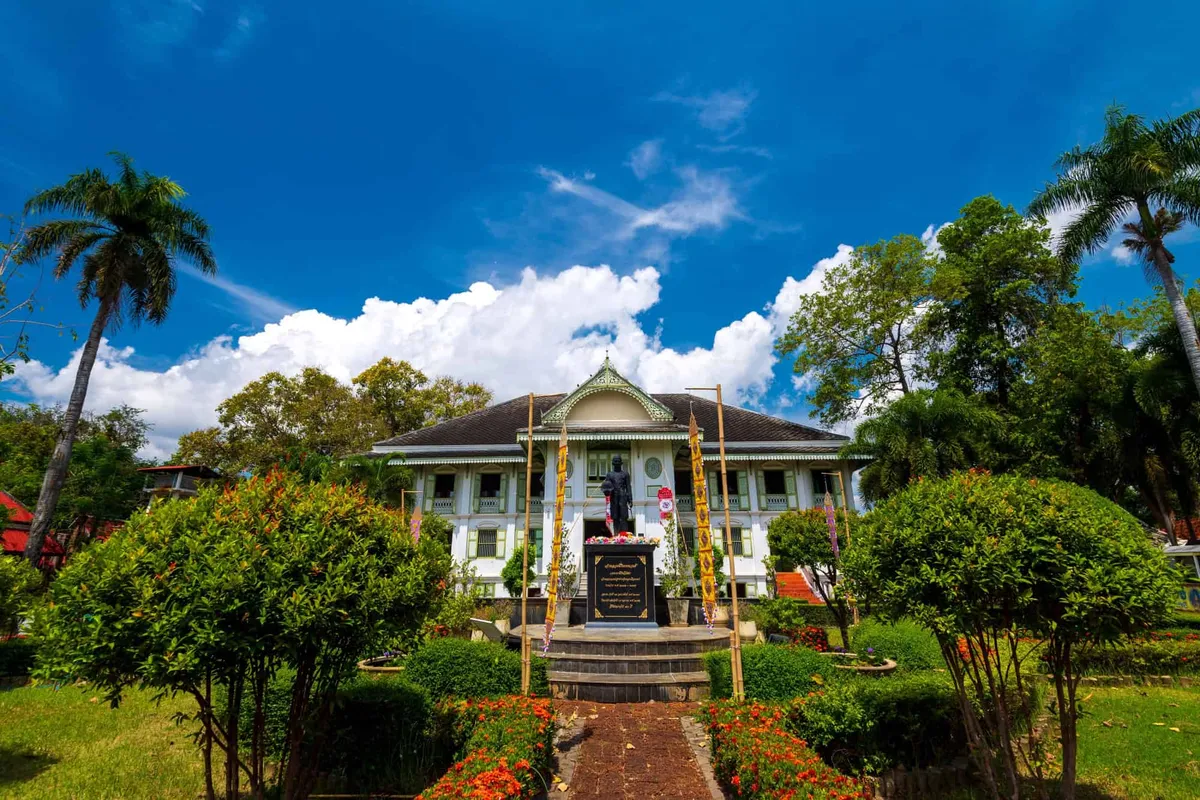
Khum Chao Luang is a short walk away — the former residence of Phrae’s last lord, built in 1892, blending European and Asian architectural styles across two storeys of brick and cement. Notable for its 72 windows and doors and intricate gable carvings, the building sheltered King Bhumibol and Queen Sirikit during royal duties in 1958 and now serves as a free-entry museum with period furnishings and historical photographs. The lord himself fled to Luang Prabang in 1902 when Phrae was absorbed into the Siamese central administration.
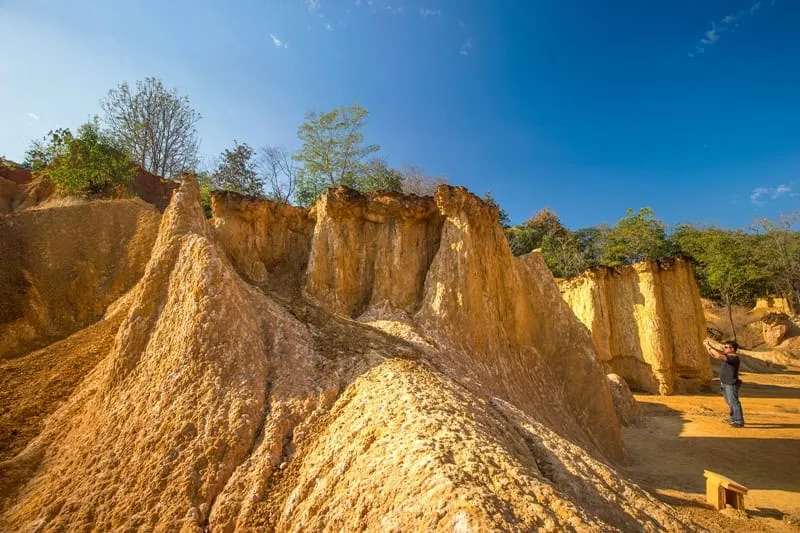
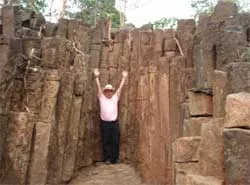
Phae Mueang Phi Forest Park is 8 kilometres northeast of town and entirely unlike anything else in northern Thailand. Erosion has carved the sandstone and clay into a landscape of pillars, mushroom rocks, and canyon walls — some pillars reaching 20 to 30 metres — with deep channels running between them. The Thai name translates loosely as “ghost town grove”, which captures the atmosphere well. The protected area is small (0.27 km²) but concentrated; give it a full morning, ideally at dawn when the light catches the formations from a low angle and the tourist coaches have not arrived. Entry is free.
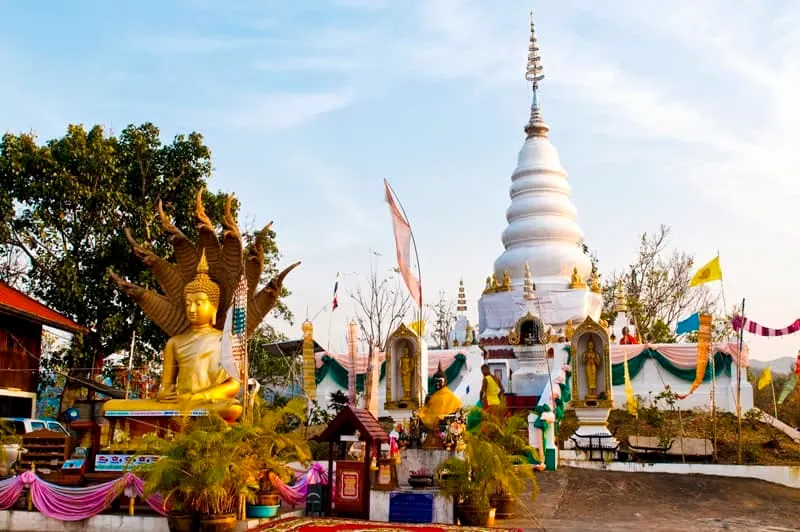
Wat Phra That Cho Hae sits on a low hill about 10 kilometres southeast of town and is the most revered temple in the province. The 33-metre octagonal chedi, built in the Chiang Saen style and covered with gilded copper plates, was constructed around 1337 on the order of Phaya Lithai of Sukhothai to enshrine Buddha relics. The name translates as “temple of the relic wrapped in satin cloth” — the chedi is still ceremonially wrapped in fine cloth during the annual festival. The viharn houses a large seated Buddha image in the earth-touching mudra. The temple was restored in 1924 by Khru Ba Srivichai, the revered northern monk who also oversaw construction of the road to Doi Suthep.
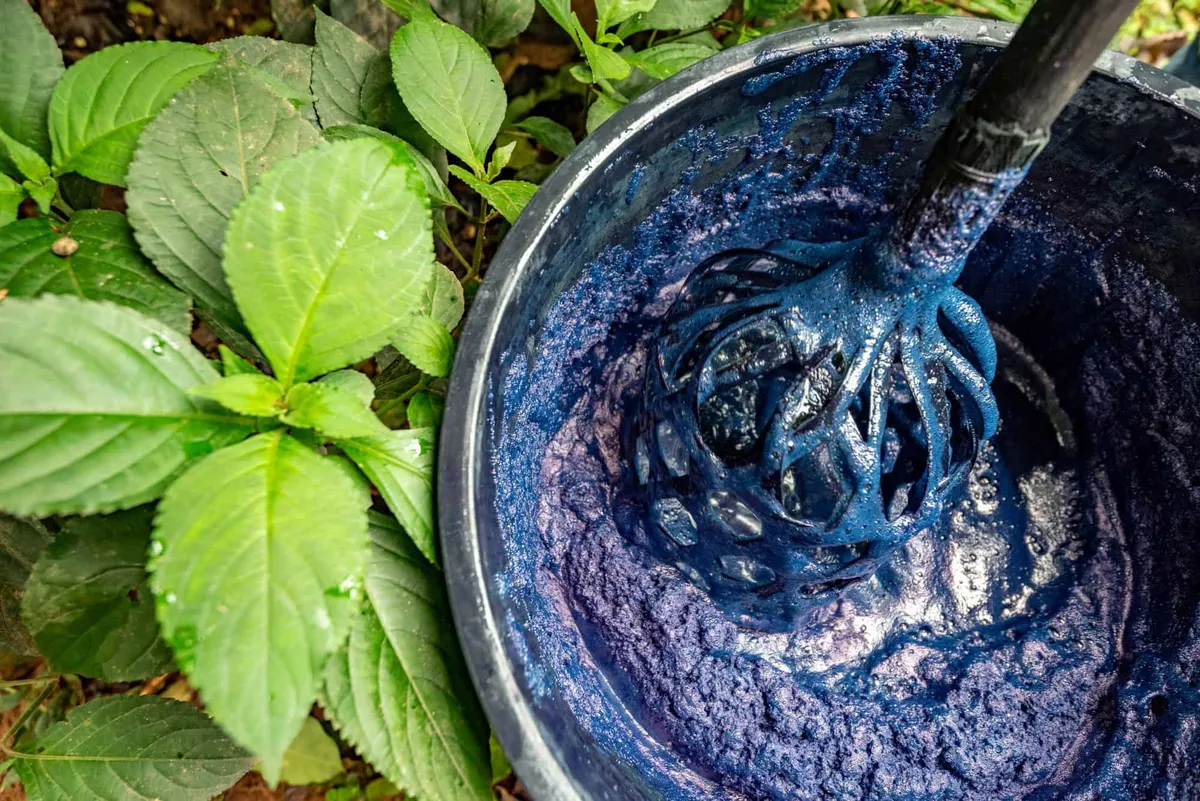
Ban Thung Hong is the village where mo hom is made. The process is slow: cotton cloth is dip-dyed in natural indigo (using the hom plant) repeatedly — 10 to 15 cycles over several days — until the deep blue-black colour is fixed. The Phuan people, who migrated from Laos in the late 19th century, brought the craft with them, and it has been passed down through families in this village since. You can watch the dyeing in progress and buy shirts, fabric, and accessories direct from the workshops at prices well below anything sold in Bangkok.
Wat Chom Sawan in the old town is worth a visit for its architecture alone — a Shan-Burmese style temple built in the early 20th century by the Shan community that settled in Phrae during the teak trade. The carved teak interior and the gilded spire are unusually refined for a provincial town, and the temple sees almost no foreign visitors despite being a five-minute walk from Vongburi House.
Mae Yom National Park is 80 kilometres north in Song District, straddling the border into Lampang province. The park protects one of the largest natural teak forests remaining in Thailand, along with mixed deciduous and hill evergreen forest, and the Yom River runs through it for over 20 kilometres. Kaeng Suea Ten — a two-kilometre stretch of rapids in front of the park headquarters — is a pleasant stop in the dry season. The Pha Ing Mok viewpoint offers sea-of-mist views at dawn from November through January when cloud fills the valley below.
The Teak Museum in Phrae town documents the province’s forestry history — how the teak concessions operated, the role of elephants in the trade, and the environmental consequences of the clearances. It is a compact display but unusually honest for a government museum about the resource extraction that defined the region.
Where to Stay
Phrae has a quiet selection of guesthouses and small hotels, mostly within or just outside the old-town moat. Accommodation is simple and affordable — budget guesthouses from around 400 baht per night, mid-range options in renovated old buildings. There are no international chains and no resort complexes. That suits the town. The most atmospheric option is to stay inside the moat district, where you can walk to Vongburi House and Wat Luang and eat at the Hua Dong Night Market without a vehicle.
Getting There
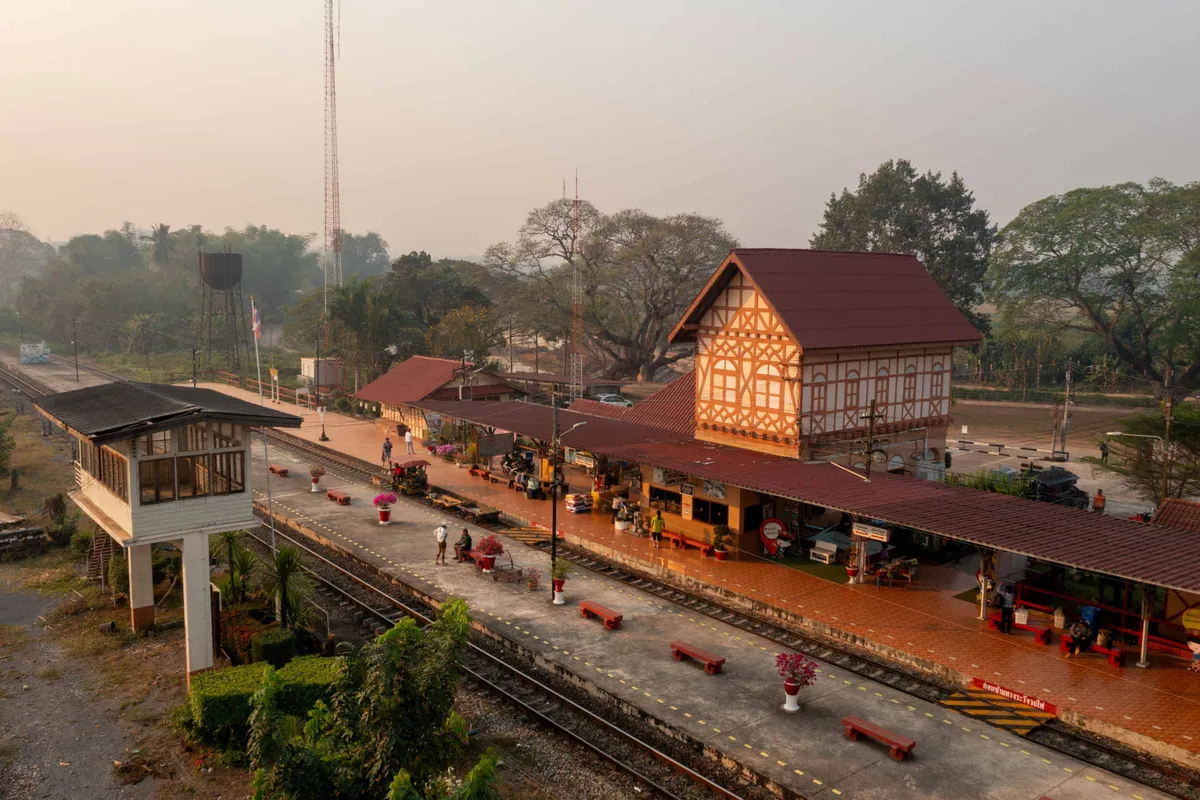
Phrae is around 550 km by road from Bangkok. The fastest practical option for most visitors is an overnight bus from Mo Chit Northern Bus Terminal, with services operated by Sombat Tour and NakornchaiAir taking around 7.5 to 8 hours. By train, the northern line runs to Den Chai station (the nearest stop, 28 kilometres from Phrae town), with the faster trains covering the Bangkok–Den Chai route in around 7 hours; shared transport from Den Chai to Phrae town takes 30 minutes. Nok Air flies from Don Mueang to Phrae Airport on a limited schedule.
From Chiang Mai, Phrae is about 2.5 hours by road via Highway 11 and 101 — a comfortable day-trip distance, though the town rewards an overnight stay. Nan is around 1.5 hours east, making a Phrae–Nan loop a logical circuit for travellers exploring the upper north.
Within Phrae, a bicycle handles the old-town circuit well. A hired driver for a half-day covers Phae Mueang Phi, Wat Phra That Cho Hae, and Ban Thung Hong in one run; agree a price before departure.
Best Time to Visit
November through January is the best window — dry, cool, and clear, with temperatures dropping comfortably in the evenings. The teak mansions and old town are at their best in this light, and the Phae Mueang Phi rock formations are most photogenic without haze.
February to April brings the burning season. Phrae is, by official statistics, one of the most smoke-affected provinces in Thailand during this period. PM2.5 readings can spike sharply in March when agricultural burning peaks across the upper north. If you visit in this window, check air quality apps daily and consider whether spending extended time outdoors is sensible on high-pollution days.
The monsoon from May to October fills the Yom River, turns the rice paddies vivid green, and makes Mae Yom’s interior trails wet. The old town remains entirely accessible year-round — rain falls mainly in afternoon bursts — and temple visits are unaffected by the wet season. If you avoid the smoke months, an October visit catches the tail of the rainy season when everything is green and the crowds are thin.
Frequently Asked Questions about Phrae
How do I get to Phrae from Bangkok?
What is the best time of year to visit Phrae?
How long do you need in Phrae?
How do I get around Phrae?
Where can I buy genuine mo hom fabric in Phrae?
Spotted something out of date or incorrect? Let us know
Plan your
Phrae trip