




Green peafowl feed on the rice paddy edges bordering the forest in Huai Khao Kam subdistrict, Chun district, part of a wider network of protected forest in Phayao province that researchers have identified as mainland Southeast Asia’s largest surviving wild population of the species, estimated at 4,000-5,000 birds. There’s no enclosure and no ticket booth: locals in Huai Khao Kam plant crops for the birds and leave nesting cover at the tree line, and the peafowl walk out onto open ground to feed on their own schedule.
Sightings cluster at the forest margin where farmland meets tree cover, rather than on a marked trail through the woods itself. Peahens and juveniles are the birds you’ll see most reliably, picking through stubble and irrigation channels; adult males with full trains show up less often outside the display season. When a male does display, from roughly November to February, he fans a train that can run past a metre and a half, and the sound carries: a harsh, far-carrying call rather than anything musical. Rice farmers on motorbikes pass along the field tracks while you watch, a reminder that this is working farmland the birds have adapted to, not a reserve built around them.
Chun district runs an annual green peafowl count between November and March, a community effort that doubles as informal tourism promotion for the area. Ask locally and you may find volunteers who can point you to fields the birds have been using that week. Outside the display months the atmosphere is quieter: a scattering of hens at first light, then nothing once the sun climbs and the heat pushes the birds back under cover.
Insider Tip: Sightings aren’t guaranteed on any single visit. This is wild-animal viewing, not a zoo exhibit. A local motorbike taxi or homestay host who’s tracked which paddies the peafowl have been feeding in that week improves your odds far more than showing up cold.
Watch out: Midday visits are close to pointless. Peafowl retreat into forest cover once temperatures climb, so arriving after 9:00 or 10:00 usually means an empty field.
- Entry: Free, no gate or booking
- Best time: Dawn or the last hour before dusk; November-February for full courtship displays
- Location: Forest edge, Huai Khao Kam subdistrict, Chun district, roughly 45 km north of Phayao town
- Getting there: Own transport or a hired driver from Phayao town; public transport doesn’t reach the viewing fields
- What you’ll see: Wild green peafowl (Pavo muticus), mostly hens and juveniles outside display season
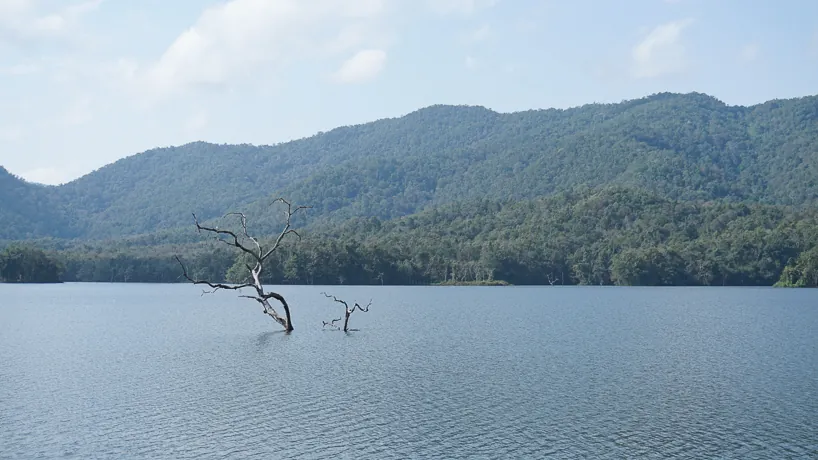
This is farmland and forest edge, not a paved facility. Wear shoes suited to muddy field tracks and bring water, since there’s no on-site shop. Combine the visit with Doi Phu Nang National Park, part of the same peafowl population network about an hour’s drive north, or Nam Chun Reservoir in the same district for a half-day loop. Phayao’s visit guide covers the rest of the province’s temples and Kwan Phayao lakefront for a fuller itinerary.
Location & Directions
Chun, Phayao
Phayao, Thailand
Show your taxi or Grab driver
ข่วงนกยูง
Frequently Asked Questions
Are these peacocks wild or kept in a zoo?
When is the best time to see the peacocks display?
What time of day should I visit?
Is this the same population as Doi Phu Nang National Park?
Do I need a guide or can I go alone?
Spotted something out of date or incorrect? Let us know
Stay Near Natural Thai Peacock Forest
Live prices for places closest to Natural Thai Peacock Forest: tap a pin to compare.