

Naga Fireball Festival 2026: Dates and Where to Watch


DepositPhotos (standard license)
On this page
On the night of Ok Phansa (the end of Buddhist Lent) glowing reddish-pink orbs are reported rising silently from the Mekong River in Nong Khai province, in Thailand’s far northeast. They lift off the water, climb, and vanish. Locals call them Bung Fai Phaya Nak, the Naga Fireballs, and believe they are breathed out by the Naga, the serpent said to live beneath the river, to mark the Buddha’s return from heaven. In 2026, Ok Phansa falls on Monday 26 October, and that evening is when the fireballs are expected.
Quick answer: where and how to watch. Be on the Mekong bank in Nong Khai province after dark on 26 October 2026. For the best odds of seeing fireballs, go downriver to Phon Phisai or Rattanawapi, where most sightings are logged; for the festival stage, food and hotels, stay in Nong Khai town. Watching is free, so the only things to book are a room and your transport: Nong Khai rooms go first, so reserve now from the hotels below and check trains or buses on 12Go.
Sleep in town, drive out for the night. There are few hotels in Phon Phisai or Rattanawapi, so most fireball watchers sleep in Nong Khai town and drive downriver after dark. These open on the night of 26 October: LePont Riverfront Resort on the Mekong, Amanta Hotel with free parking for the drive out, or The MACEO Hotel with 24-hour check-in for a late return. More in Hotels We Like for the Naga Fireballs.
- When: Ok Phansa night, Monday 26 October 2026
- Festival dates: Nong Khai town 22–28 October; Rattanawapi 24–26 October; Phon Phisai 25 October–3 November 2026
- Where: Mekong riverbank, Nong Khai province. Most fireballs are reported in Phon Phisai (about 50 km downriver of town) and Rattanawapi (about 80 km)
- Entry fee: Free to watch from the riverbank
- Viewing window: After dark, sporadic bursts with long gaps
- Getting there: Overnight train from Bangkok (about 10 hours), or fly to Udon Thani then drive 55 km
- Alcohol: Buddhist-holiday sales ban; licensed hotels and entertainment venues exempt
The Phenomenon: What You Are Actually Watching
Stand on the Mekong’s Thai bank on Ok Phansa night and you are waiting for the same thing thousands of Thai and Lao people wait for every year: small, silent lights, reddish-pink to pale orange, rising from the water without sound or smoke, then disappearing into the dark. They come in bursts and lulls. You might see three in quick succession, then nothing for 20 minutes or more.
Local officials count them every year. Nong Khai province logged 371 fireballs in 2024 and 287 in 2025, when the bulk (237) were reported in Rattanawapi district and 50 in Phon Phisai, according to the provincial tally reported by PPTV. Spread along tens of kilometres of river, that can mean only a few at any single viewing point.
The cause is unresolved. The best-known natural explanation points to flammable gases such as methane and phosphine bubbling from riverbed sediment and igniting at the surface, the process behind will-o’-the-wisps in marshland. Sceptics question whether such gas could stay alight as the lights climb. A 2002 iTV documentary showed soldiers on the Lao bank firing tracer rounds into the air during the festival, which angered many Thai viewers and remains disputed. Critics also note that the lights cluster on one night of the Buddhist calendar each year, which is hard to square with random geology. Whatever you conclude, the night itself, with thousands of people quietly watching the water, is worth the trip.
Where to Watch: Phon Phisai, Rattanawapi or Nong Khai Town
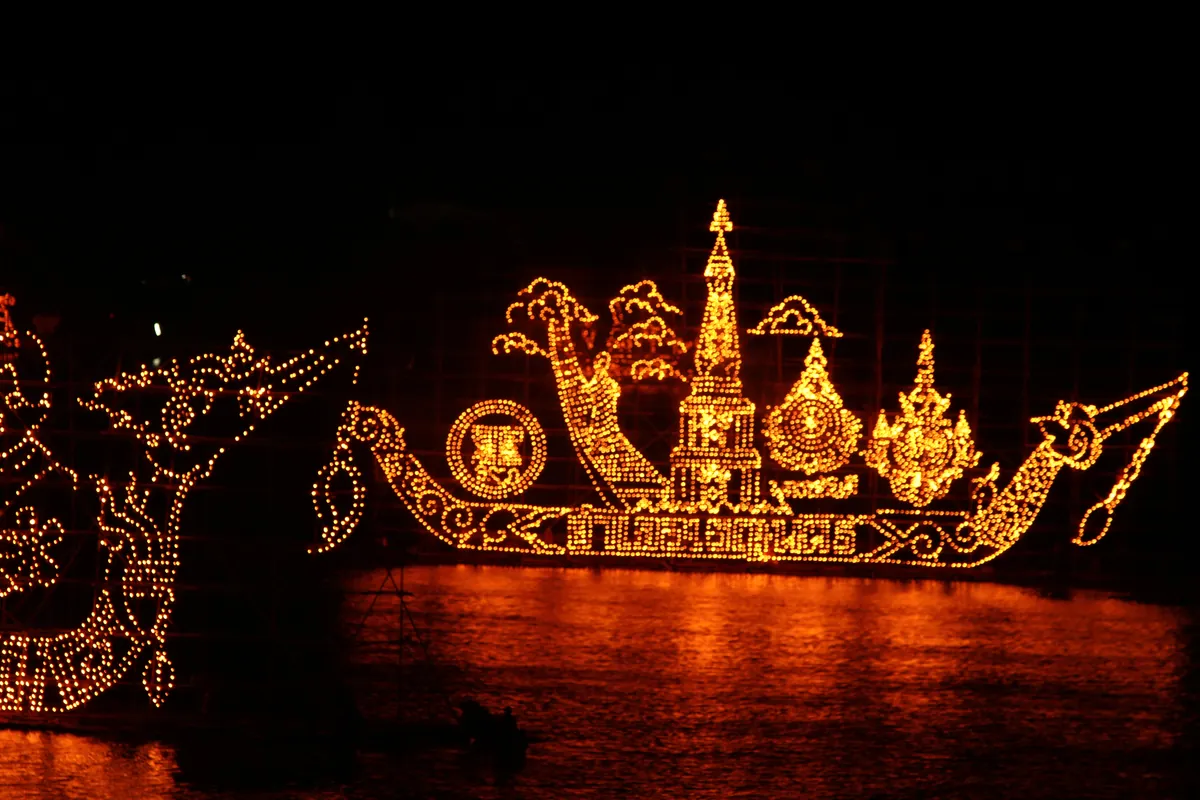
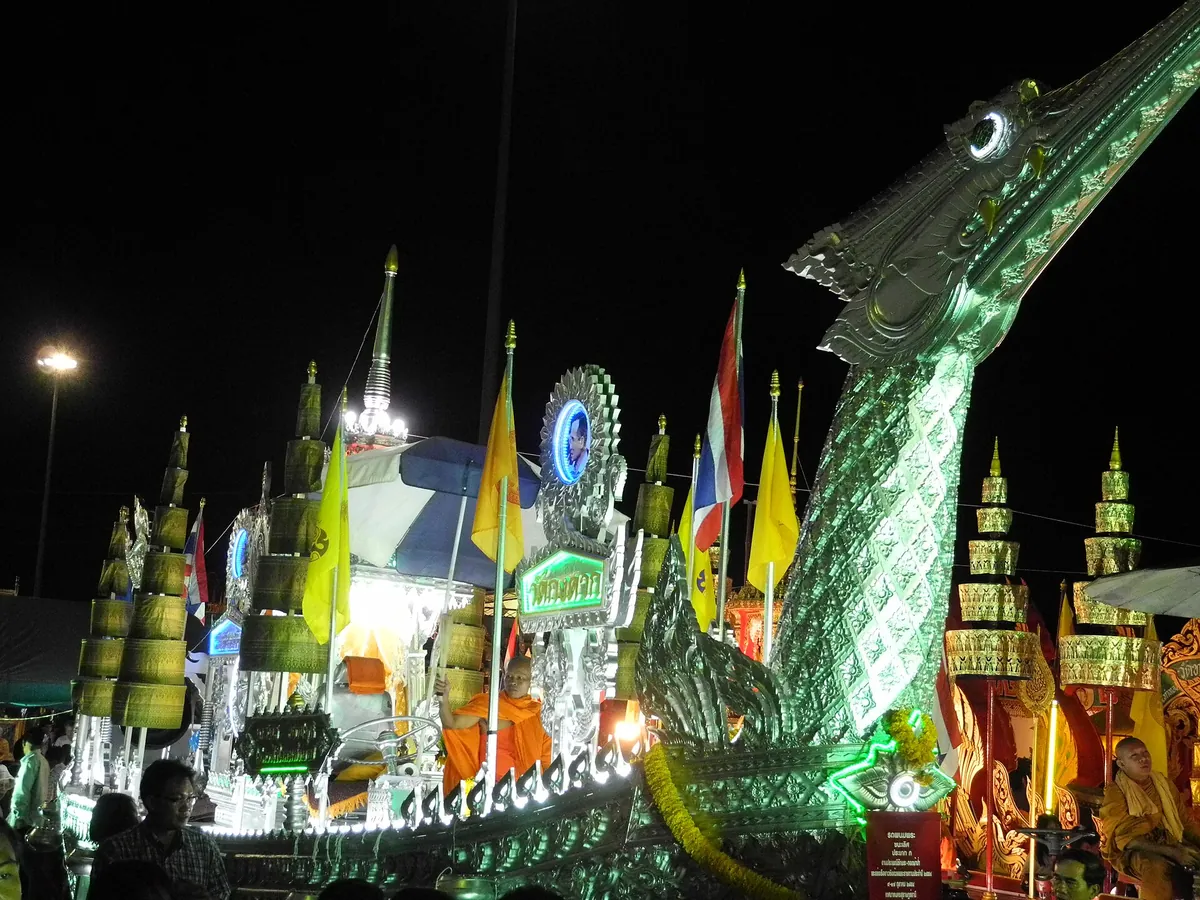
Nong Khai town hosts the province’s main festival, “Ok Phansa and the World Naga Fireballs”, at the riverside cultural plaza with the twin Naga statues by Wat Lam Duan. Expect a stage show telling the Naga legend in light and sound, long-boat races for a royal trophy, banana-leaf krathong floats on the river, and street-food rows. It is the easiest place to base yourself, but the town reach of the river sees few fireballs.
Phon Phisai, about 50 km downriver, is the traditional centre of fireball watching and has a riverside temple scene, a long-running fair and the Chalermraja Cultural Centre museum. Rattanawapi, about 80 km downriver, has in recent years logged the most sightings; in 2025 Ban Nong Kaeo and Ban Dong Mot Daeng were among the busiest spots. Both districts set up viewing areas along the bank and run their own festival programmes.
Insider Tip: Choose one district and commit to it. Roads between town and the downriver districts clog on Ok Phansa evening, and you will spend the best hours in a car if you try to hop between viewing spots. Bring a mat or sarong for the bank and plan to stay from dusk.
Getting There
Nong Khai is about 615 km northeast of Bangkok, on the Laos border opposite Vientiane.
- Train: Special Express 25 leaves Krung Thep Aphiwat Central Terminal at 20:25 and reaches Nong Khai at 06:25 (Seat61). Second-class sleeper berths cost about 900 THB upper and 1,000 THB lower. Book early for festival week.
- Fly: Flights from Bangkok to Udon Thani take about an hour; Nong Khai is 55 km on by taxi, van or hotel transfer. Udon Thani also works as a fallback base.
- Bus: Day and night buses from Bangkok’s Mo Chit terminal take roughly 10 hours.
- To Phon Phisai and Rattanawapi: there is no festival shuttle to rely on. Hire a car, book a driver through your hotel, or join a local tour from Nong Khai. Agree the return time before you set off.
Compare train, bus and van times on 12Go Bangkok to Nong Khai, or Udon Thani to Nong Khai if you are flying in.
Hotels We Like for the Naga Fireballs
There are few hotels in Phon Phisai or Rattanawapi, so most visitors sleep in Nong Khai town and drive out for the evening. Book early: rooms for Ok Phansa night fill weeks ahead.
Each name opens Booking.com for the night of 26 October (check-in 26th, check-out 27th).
- LePont Riverfront Resort Nongkhai: 4-star resort on the Mekong on Kaeo Worawut Road, with river-view rooms and a river-facing pool, walking distance from Tha Sadet Market and the town festival grounds. Our review.
- Amanta Hotel Nongkhai: 4-star hotel on Kaeo Worawut Road with a pool, spa and free parking, a practical base if you are driving downriver to Phon Phisai. Our review.
- The MACEO Hotel: central hotel on Prajak Road, walkable to the riverfront, with 24-hour check-in that helps after a late return from the viewing spots. Our review.
- Wooden Tree Nongkhai: small guesthouse and coffee shop in the Si Khun Mueang area, close to the riverside night market, for a budget stay in town. Our review.
For live prices across town, use the hotel map below or start from our Nong Khai guide.
Practical Notes
Ok Phansa is a Buddhist holiday with a ban on alcohol sales. Since 2025, licensed hotels, licensed entertainment venues, international airport terminals and some approved tourist venues may still serve, but convenience stores and riverside stalls will not sell. Dress modestly if you go into temple grounds; many Thai visitors wear white.
Watch out: The riverbank at night is largely unlit and the ground is uneven. Bring a torch and mosquito repellent. Fireball counts vary widely from year to year and from spot to spot; come for the festival night as a whole and treat any fireballs you see as a bonus.