



Pang Kha Royal Project and Development Centre
ศูนย์พัฒนาโครงการหลวงปังค่า
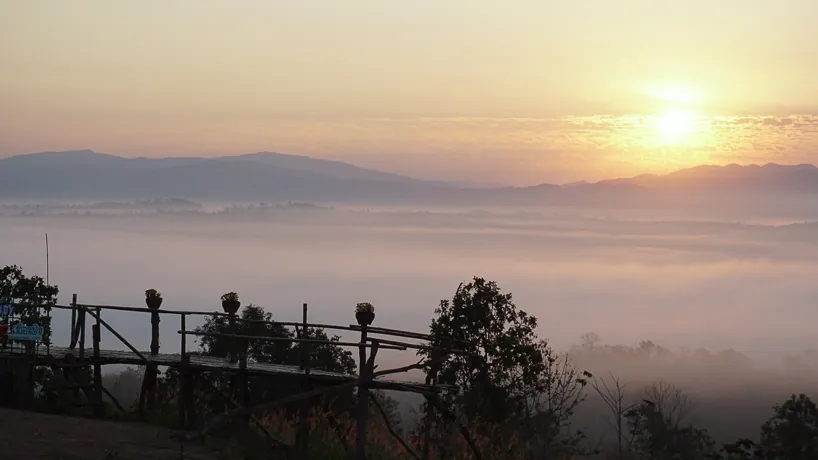
Pang Kha Royal Project and Development Centre grows temperate crops (avocado, seedless grapes, giant pumpkins) on terraced mountainside at 500-1,300 metres in Phayao’s Pong district. Entry is free, open daily 06:00-18:00, and the site remains a working royal-initiative farm rather than a manicured park.
King Bhumibol Adulyadej (Rama IX) founded the centre in 1987 near Ban Sipsong Pattana, in what was then a Hmong and Yao hill-tribe area cultivating opium poppy and clearing forest for shifting cultivation. The Royal Project offered cash crops and technical support instead, a pattern repeated at dozens of royal development centres across the north. The centre now covers roughly 35,000 rai (5,600 hectares) of hillside, with an average temperature of 25.8°C that drops well below that at night in the cool season.
Demonstration plots line walking trails through the research station: seedless grapes on trellises, avocado and persimmon orchards, Japanese eggplant, zucchini, Hong Kong kale, and cape gooseberry alongside cut-flower fields grown for both study and sale. Labels in Thai and English explain what’s being trialled and why. The Sipsong Pattana hill-tribe village next to the centre sells handicrafts (woven cloth, silverwork, reed-organ instruments) made by the Hmong and Yao families the project was built to support, and staff are used to visitors wandering through without buying anything.
Insider Tip: Come between December and February for the flower fields in full bloom. Outside that window the demonstration plots are still working farmland, worth a visit for the setting more than the colour.
Watch out: This is a research station with no restaurant or visitor centre selling food. Bring water and snacks, and expect a rough final stretch of road after Pong town.
The drive from Phayao town covers about 100 km through mountainous terrain, mostly on Route 1148 past Pong district. Allow 2 to 2.5 hours each way and a full tank of fuel, since fuel stops thin out past Pong. A private vehicle or hired driver is the only practical way in; there’s no public transport to the site itself.
The centre still sells what it grows: a small handicraft and produce shop near the entrance stocks fresh lychee, avocado, and preserved fruit in season, alongside woven textiles and silverwork from the Sipsong Pattana village. Staff are agricultural researchers first and tour guides second, so don’t expect a polished visitor experience: the appeal here is a working royal-project farm you can walk through freely, not a curated attraction. Pair it with nearby Phu Lang Ka in Pong district if you’re making the long drive from Phayao worthwhile, since both sit in the same mountainous corner of the province and share the cool-season draw.
- Entrance: Free
- Hours: Daily 06:00-18:00
- Elevation: 500-1,300 m
- Established: 1987, under King Bhumibol’s royal initiative
- Getting there: ~100 km / 2-2.5 hrs by car from Phayao town via Pong district
Location & Directions
Pong, Phayao
Phayao, Thailand
Show your taxi or Grab driver
ศูนย์พัฒนาโครงการหลวงปังค่า
Frequently Asked Questions
Is Pang Kha Royal Project free to visit?
Why was the project built here?
What can I actually see on a visit?
How far is it from Phayao town?
What's the best time to visit?
Spotted something out of date or incorrect? Let us know
Stay Near Pang Kha Royal Project and Development Centre
Live prices for places closest to Pang Kha Royal Project and Development Centre: tap a pin to compare.