


Phra Archan Man Phurithatto Museum
พิพิธภัณฑ์อาจารย์มั่น ภูริทัตโต
Wat Pa Sutthawat, on the edge of Sakon Nakhon city, is where Phra Ajahn Mun Bhuridatto spent his final years and died in 1949. This museum sits inside the monastery’s forest grounds specifically to hold what he left behind — and to mark the place regarded as the heart of Thailand’s modern Forest Tradition (Kammatthana), the meditation-focused monastic lineage that shaped Thai Buddhism through most of the 20th century.
Ajahn Mun (1870–1949) trained under Ajahn Sao Kantasilo before spending decades as a wandering forest monk (thudong) across Northeast Thailand, Laos, and Burma, living in caves and remote forest monasteries in strict adherence to the Buddha’s original forest-dwelling discipline. He returned to Sakon Nakhon in his last years, taught at Wat Pa Sutthawat, and died there in 1949. Nearly every major Thai Forest Tradition teacher of the following generations, including the monks who later built the Forest Sangha’s international reputation, traces their lineage back to him directly or through his students.
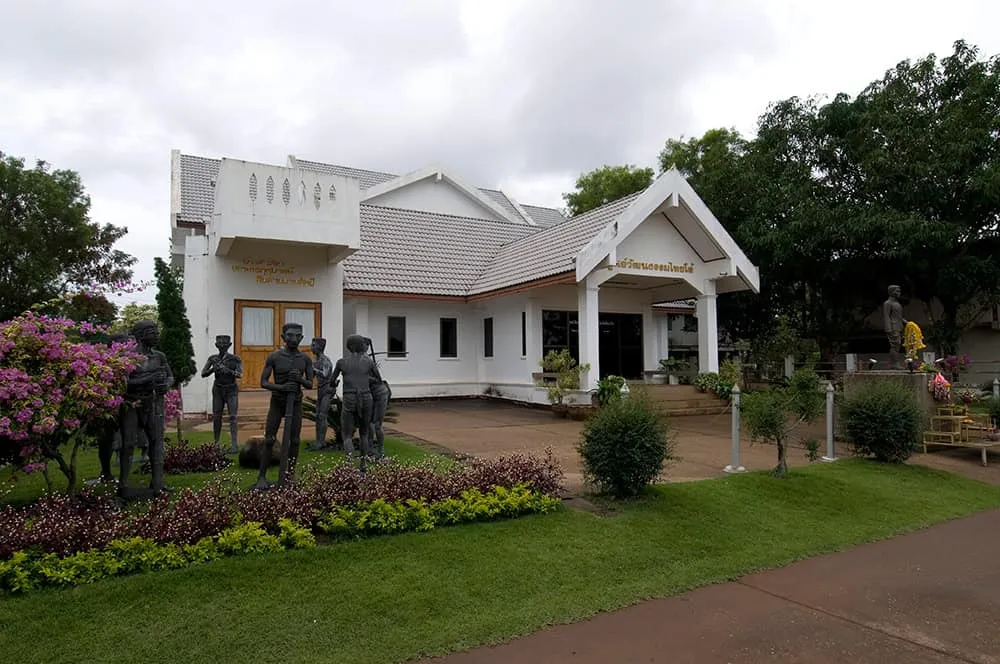
The museum building is a single-story, concrete structure in an adapted Thai style, with light-wells set into both long walls that keep the interior naturally bright without direct sun. Inside, a seated meditation image of Ajahn Mun sits at the centre of the main hall. A glass reliquary nearby holds what devotees revere as his cremated remains — believed, in keeping with Thai Buddhist tradition around highly accomplished monks, to have transformed into small crystalline relics (phra sarira) rather than ordinary ash. Around the hall, glass cases display his robes, alms bowl, walking stick, and handwritten dhamma notes, alongside photographs documenting the forest monasteries he founded or lived in across the Northeast.
Insider Tip: Come with the same quiet you’d bring to an active temple, not a general-interest museum — Wat Pa Sutthawat is a working monastery, and the museum sits within its grounds rather than as a standalone attraction.
Watch out: Almost nothing here is translated at length; captions give names and dates in English, but the deeper context — who Ajahn Mun was and why the Forest Tradition matters — is something worth reading up on beforehand, unless you already know the history.
Dress modestly, as at any Thai temple: shoulders and knees covered, shoes off before entering the main hall. Morning visits tend to be quieter, and the grounds themselves — mature trees, open lawns, a scattering of other monastic buildings — are worth walking beyond the museum itself. Because the site is an active place of pilgrimage as much as a museum, expect Thai visitors here to be paying respects rather than sightseeing; keep photography respectful and avoid it directly around the reliquary if others are praying.
- Entry fee: Free
- Hours: Daily 06:00–18:00
- Location: Wat Pa Sutthawat, That Choeng Chum subdistrict, Mueang Sakon Nakhon
- Who: Phra Ajahn Mun Bhuridatto (1870–1949), founding figure of Thailand’s Forest Tradition (Kammatthana)
- Dress code: Shoulders and knees covered; shoes off in the main hall
Location & Directions
Mueang Sakon Nakhon, Sakon Nakhon
Sakon Nakhon, Thailand
Show your taxi or Grab driver
พิพิธภัณฑ์อาจารย์มั่น ภูริทัตโต
Frequently Asked Questions
Who was Ajahn Mun Bhuridatto?
Where exactly is the museum?
Is there an entry fee?
What's on display?
What should I wear to visit?
Spotted something out of date or incorrect? Let us know
Stay Near Phra Archan Man Phurithatto Museum
Live prices for places closest to Phra Archan Man Phurithatto Museum — tap a pin to compare.