Phraya Srisoontorn Voharn (Noi Ajarnrayangkul) Monument
อนุสาวรีย์พระยาศรีสุนทรโวหาร (น้อย อาจารยางกูร)
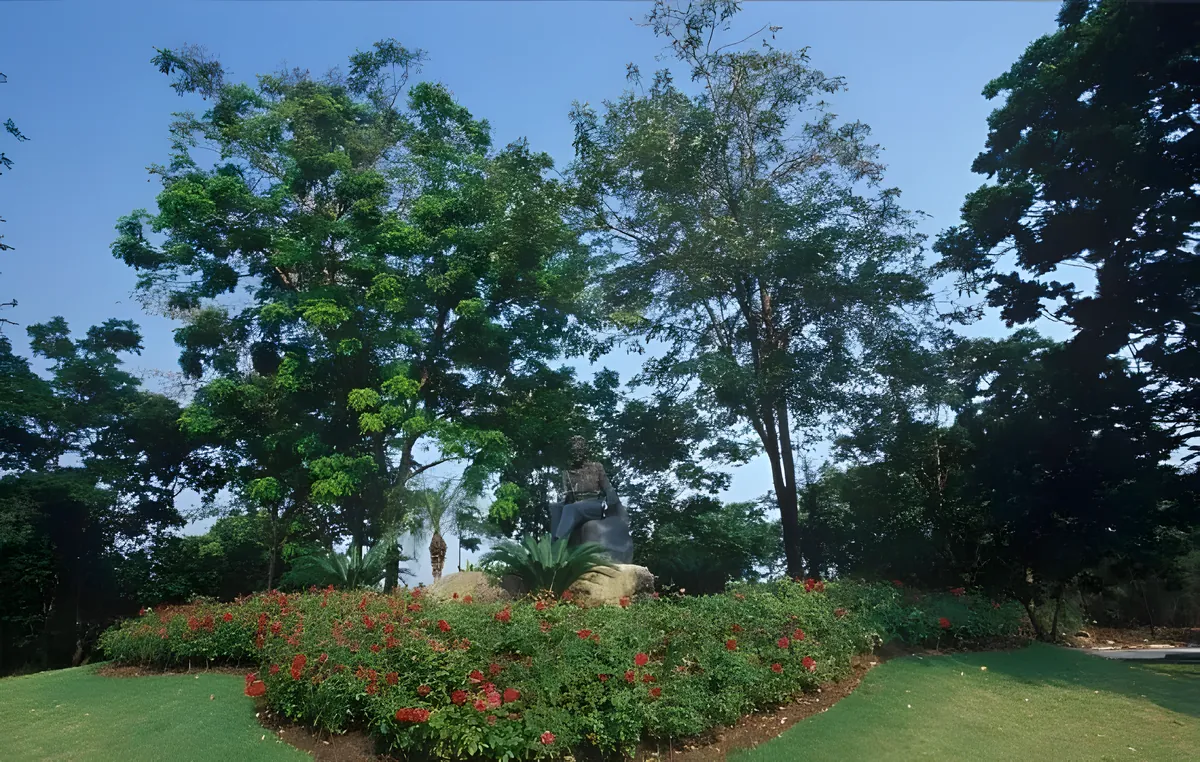
A 2.65-metre bronze statue on Sri Sothon Tat Mai Road in central Chachoengsao honors Phraya Sri Sunthon Wohan (Noi Acharyankura), the scholar who wrote Thailand’s first standardized Thai-language textbooks. Unveiled on 8 June 1999, it’s free to visit, has no set hours, and takes about fifteen minutes to see properly.
Noi Acharyankura was born in Ban Sothon — now part of Chachoengsao’s town centre — on 5 July 1822. He served in the royal court from the reign of Rama III through Rama V, eventually earning the noble title Phraya Sri Sunthon Wohan for his work as a language scholar. His six textbooks, starting with Mula Bot Sap (the primer that taught reading, spelling, and vocabulary) through to Waiphotphichan, became the standard curriculum for teaching Thai literacy for generations of schoolchildren — a role roughly comparable to a national reader series. In 2022, on the 200th anniversary of his birth, UNESCO listed him as an internationally significant figure for education and culture, and Chachoengsao’s provincial government now marks the anniversary each year with a formal ceremony.
The statue stands on a plinth in a small landscaped plaza at the edge of town, with Thai-language plaques detailing his life and works around the base. It’s a working piece of civic space rather than a tourist draw — locals cut through on foot, motorbikes idle nearby, and the occasional school group stops for a history lesson. Around his birthday each July, provincial officials and descendants of the family lay wreaths and offer incense at the statue; outside that week, expect a quiet street-corner monument rather than a crowd.
Chachoengsao sits about an hour east of Bangkok, and this monument works best as a five-minute stop woven into a longer town-centre walk rather than a destination on its own. There’s no dedicated parking or visitor facilities — you park on the street or arrive on foot from elsewhere in town. If you want the context beyond the plaques, the six textbooks he authored moved Thai-language teaching from ad hoc temple-school methods toward a fixed, repeatable curriculum: Mula Bot Sap covered spelling and basic vocabulary, while later volumes like Aksonprayok and Sangkoyokpitan built up grammar and sentence construction. That system stayed in use well into the 20th century, which is part of why the 2022 UNESCO recognition landed as more than a ceremonial gesture locally.
Insider Tip: Pair this with Chachoengsao City Shrine, a five-minute walk away — both sit in the compact old town centre and make an easy 30-minute add-on to a Bang Pakong River day trip.
- Entry fee: Free
- Height: 2.65 metres (bronze)
- Unveiled: 8 June 1999
- Location: Sri Sothon Tat Mai Road, Chachoengsao Municipality
- Visit duration: 10-15 minutes (longer during the early-July commemoration)
Location & Directions
Mueang Chachoengsao, Chachoengsao
Chachoengsao, Thailand
Show your taxi or Grab driver
อนุสาวรีย์พระยาศรีสุนทรโวหาร (น้อย อาจารยางกูร)
Within Walking Distance




Frequently Asked Questions
Who was Phraya Sri Sunthon Wohan?
Is there an entrance fee?
When was the monument built?
Why is Phraya Sri Sunthon Wohan significant?
How long should I spend here?
Spotted something out of date or incorrect? Let us know
Stay Near Phraya Srisoontorn Voharn (Noi Ajarnrayangkul) Monument
Compare places to stay in Chachoengsao, or open the map for options closest to the attraction.