




Prasat Sadok Kok Thom
อุทยานประวัติศาสตร์สด๊กก๊อกธม
Prasat Sadok Kok Thom is the largest and most intact Khmer sanctuary in eastern Thailand, an 11th-century temple roughly 34 km northeast of Aranyaprathet in Sa Kaeo province. It’s smaller than the big Isan sites — Phimai is Thailand’s largest Khmer temple overall, Phanom Rung its best-preserved — but Sadok Kok Thom carries outsized historical weight thanks to a single inscribed stone found here. Entry is 50 THB, daily 08:00-17:00.
That stone, catalogued by scholars as K.235, is what makes this site matter beyond its stonework. Carved in Sanskrit and Old Khmer across 340 lines and dated 8 February 1053, it records two and a half centuries of unbroken service by one family to the Khmer royal court, most of them as chief chaplains to successive kings. Buried in the genealogy is something bigger: the stele traces the Devaraja, or “god-king,” cult all the way back to Jayavarman II’s founding of Angkor around 802 CE. Historians rank it among the handful of texts that make Angkorian chronology reconstructable at all — a temple dedication that doubles as a history book.
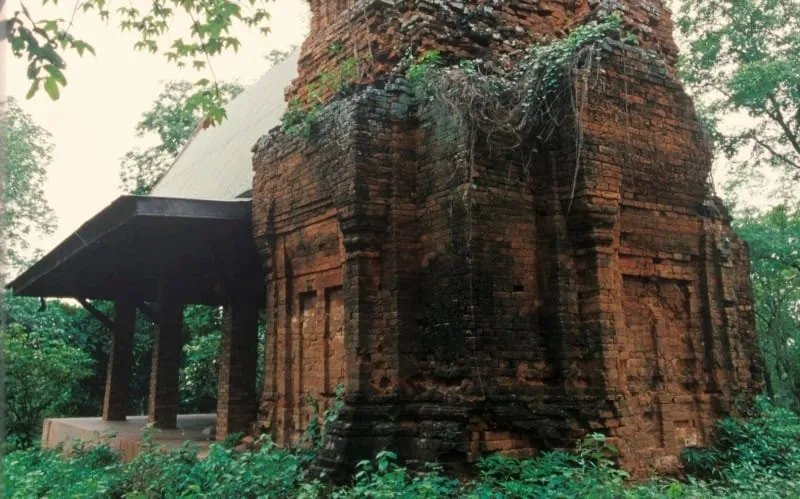
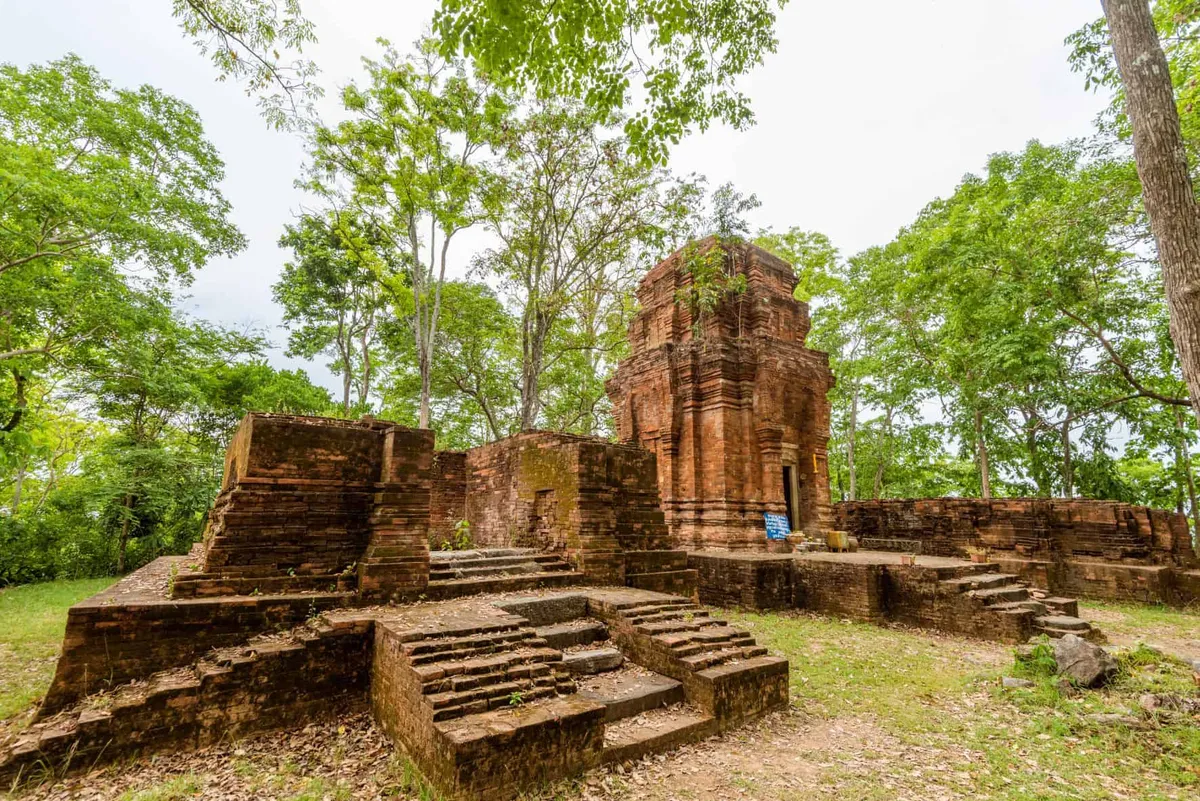
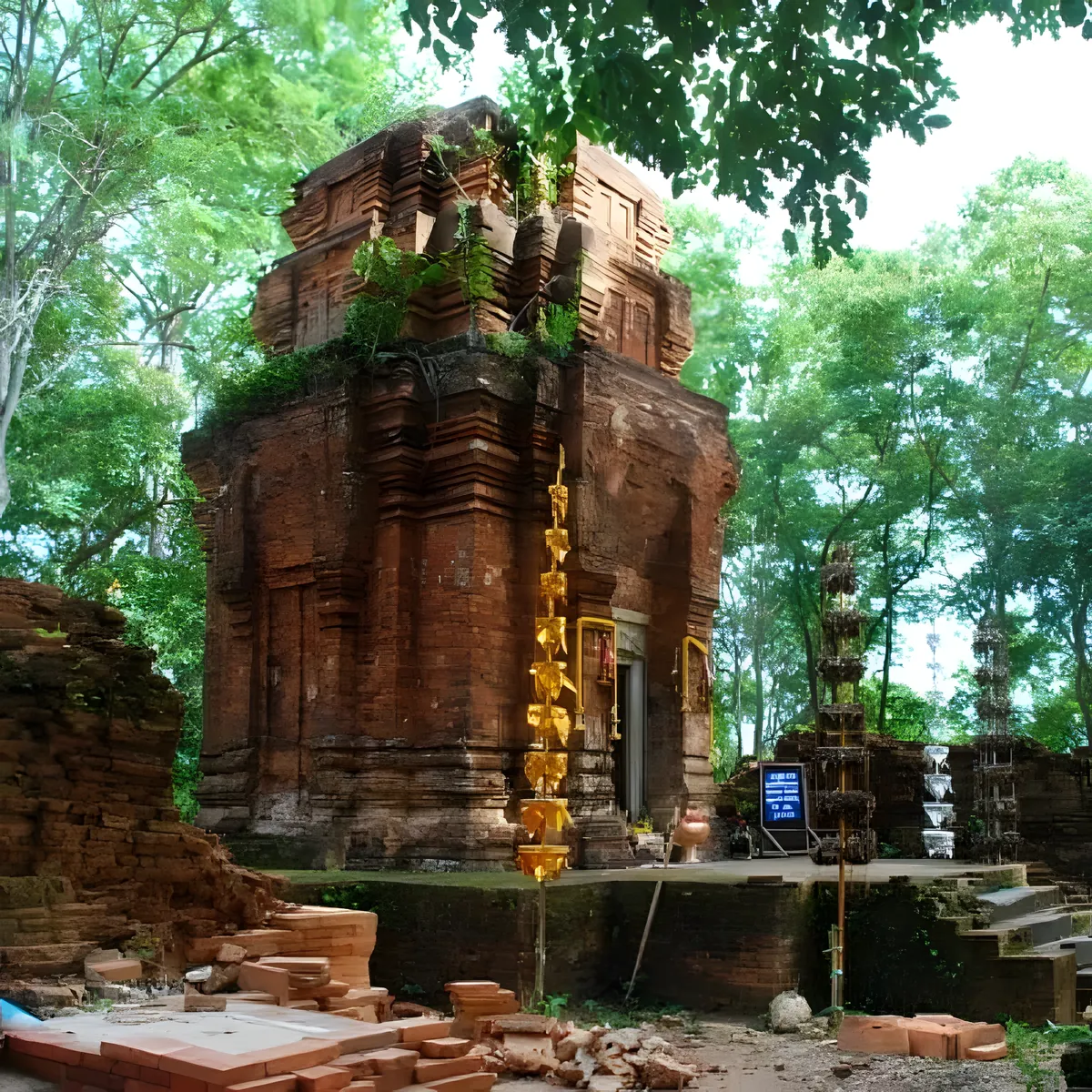
The physical stone isn’t here to see, though. It was shipped to Bangkok in the 1920s and entered the National Museum’s collection, where a fire tore through the building on the night of 9 November 1960 and badly damaged it; conservators later pieced much of the text back together. What remains on site is the sanctuary itself — a moated enclosure of laterite and sandstone walls, a processional causeway leading in, galleries ringing the courtyard, and a central sandstone prang carved with door lintels and pediments depicting Hindu deities and guardian figures. Built originally as a Shaivite temple, it was later adapted for Buddhist worship, and restoration has stabilised rather than over-rebuilt the structure — the weathering on the sandstone is genuine, not staged.
The temple reached its finished form in the 11th century under King Udayadityavarman II, maintained by the same Brahmin priestly family the inscription honours and provisioned with food and labour from the rice-farming villages that surrounded it — the same arrangement of temple, patron family and supporting farmland found across the Khmer Empire’s rural sanctuaries. The stele records at least one moment of real trouble in that history: it describes King Suryavarman I dispatching soldiers to punish people who had desecrated shrines in the area, a rare glimpse of local unrest rather than the usual dedication-and-donation record most temple inscriptions stick to.
Walking the grounds takes an hour if you read the information panels, less if you’re here mainly for photographs. Bas-reliefs on the central tower reward slow looking — figures and mythological scenes emerge from the stone differently depending on the angle of the light, which is why early morning or late afternoon visits photograph better than midday. Shade is limited across most of the site, so the heat builds through the day.
Insider Tip: Come in the first or last hour of opening — the light rakes across the carved reliefs at a low angle and the heat hasn’t built up yet, and you’ll likely have the causeway to yourself.
Watch out: This is a remote site with no food vendors and limited shade — bring water and sun protection, and expect uneven ground around the older foundations if you’re wearing anything other than closed shoes.
Sa Kaeo has two other Khmer ruins worth knowing about if the period interests you: Prasat Mueang Phai and Prasat Baan Noi, both smaller and closer to Sa Kaeo town, make a reasonable same-day pairing with Sadok Kok Thom if you’re touring the province’s Khmer sites in sequence.
- Entry: 50 THB (flat rate, adults and children)
- Hours: Daily 08:00-17:00
- Built: Mid-11th century, Shaivite Hindu temple later adapted for Buddhist use
- Famous for: The K.235 stele (dated 1053), a key source on the Devaraja cult
- Getting there: ~34 km NE of Aranyaprathet; car or driver required
Prasat Sadok Kok Thom is in Khok Sung district, Sa Kaeo province.
Location & Directions
Khok Sung, Sa Kaeo
Sa Kaeo, Thailand
Show your taxi or Grab driver
อุทยานประวัติศาสตร์สด๊กก๊อกธม
Frequently Asked Questions
Is Prasat Sadok Kok Thom worth visiting if I've already seen Phimai or Phanom Rung?
What does the inscription actually say?
Is the original inscription stone on site?
How much does it cost and when is it open?
How do you get there?
What's actually left to see?
Spotted something out of date or incorrect? Let us know
Stay Near Prasat Sadok Kok Thom
Live prices for places closest to Prasat Sadok Kok Thom — tap a pin to compare.