
Supachalasai Stadium
สนามกีฬาแห่งชาติ ศุภชลาศัย
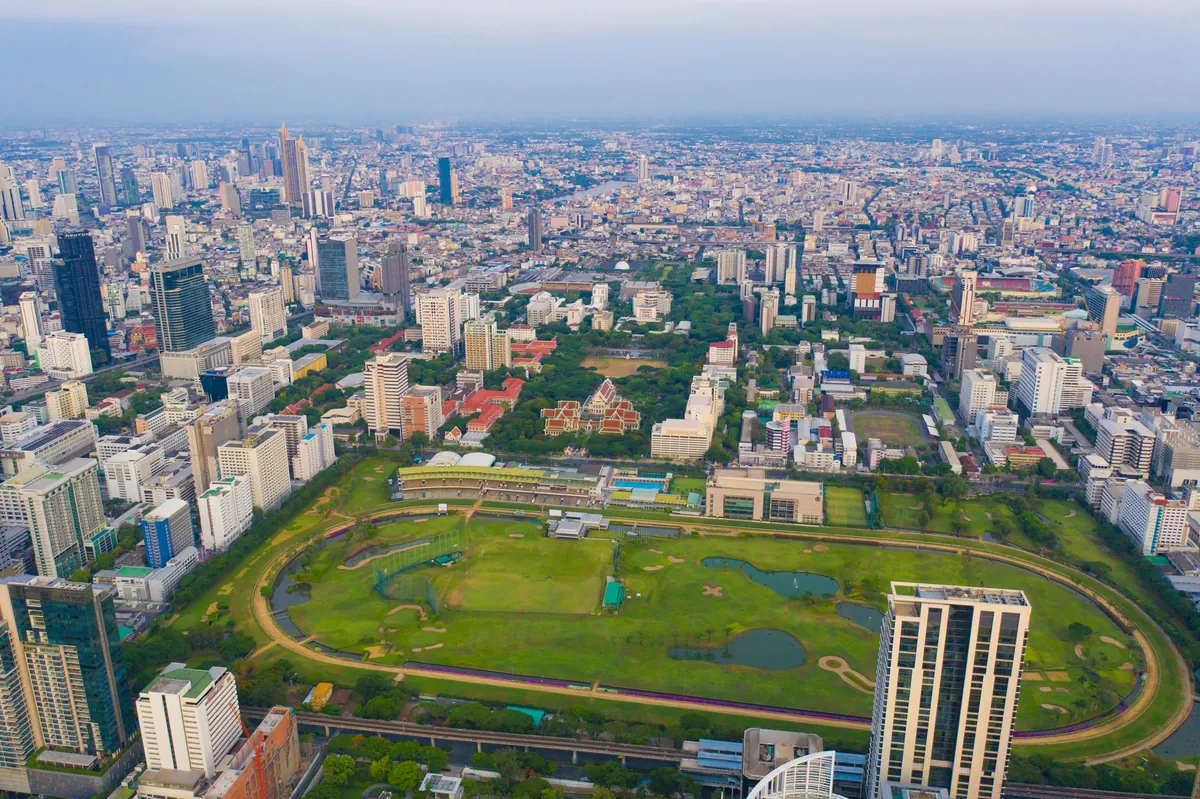
Bangkok’s oldest stadium stands on the former grounds of Windsor Palace, demolished in 1935 to make way for it. Construction started in 1937; the venue opened in 1938 when King Ananda Mahidol presided over a men’s athletics competition here, and it was completed and formally named Suphachalasai on 4 May 1941, honouring Luang Suphachalasai, the first Director-General of the Department of Physical Education and widely regarded as the father of modern Thai sport. Built in reinforced concrete with an Art Deco design, it seats 19,793 for sport and can be reconfigured for roughly 35,000 at concerts.
The stadium was Thailand’s national football home from 1948 until 1998, when the team moved to Rajamangala National Stadium, and it has hosted three Asian Games (1966, 1970, 1978) plus a match at the 2007 AFC Asian Cup. Today it still runs Thai League and Thai FA Cup fixtures, and its concert calendar has grown: acts including Seventeen and Treasure have both been booked into the venue in 2026. Outside of scheduled events, the open grounds and running track pull in a steady crowd of local joggers, amateur football teams, and families using the free public space, giving the place a lived-in, neighbourhood feel that Bangkok’s newer stadiums don’t have.
The stadium’s future is genuinely uncertain. Landowner Chulalongkorn University’s 29-year lease with the Department of Physical Education, which paid around 153 million THB a year to operate it, has expired, and the Ministry of Tourism and Sports is now negotiating terms that could see part of the venue leased to private concert promoters. Preservation campaigners argue the historic building, and its role as free public sports space, shouldn’t be sacrificed to that arrangement; nothing was finalised as of mid-2026.
Insider Tip: The National Stadium BTS station is named after this building, not the other way round, a useful landmark if you’re navigating central Pathum Wan, since the stadium itself sits back from the road behind MBK and Siam Square rather than facing directly onto a shopfront strip.
Watch out: Public access to the track and grounds can shift with the ongoing lease dispute. Check for scheduled events or renovation closures before making a special trip, rather than assuming the daily-training routine is guaranteed to hold.
- Built: 1937-1938, completed and named 1941; on the former grounds of Windsor Palace
- Capacity: 19,793 (sport), up to ~35,000 (concerts)
- Address: 154 Rama I Road, Pathum Wan: BTS National Stadium station, ~500m walk
- Entry: Free for public track/grounds access; ticketed for matches and concerts
- Status: Active: Thai League/FA Cup fixtures and concerts, lease dispute over its long-term future unresolved
Combine a visit with the shopping strip along Rama I and Phra Ram 1: MBK Center and Siam Square are both a short walk away, making the stadium an easy stop before or after a few hours browsing central Bangkok.
Location & Directions
154 Rama I Road
Bangkok, Thailand
Show your taxi or Grab driver
สนามกีฬาแห่งชาติ ศุภชลาศัย
Frequently Asked Questions
How old is Supachalasai Stadium?
Is Supachalasai Stadium still in use?
What's the stadium's capacity?
How do you get to Supachalasai Stadium?
Can you just walk in and use the track?
Spotted something out of date or incorrect? Let us know
Popular tours in Bangkok




Stay Near Supachalasai Stadium
Live prices for places closest to Supachalasai Stadium: tap a pin to compare.