
Wat Lokkayasutharam
วัดโลกยสุธาราม (วัดพระนอน)
Wat Lokkayasutharam holds one of Thailand’s largest outdoor reclining Buddhas — about 42 metres long and 8 metres high, built from brick under a layer of stucco, lying on its right side facing east in the pose associated with entering parinirvana. It sits in the western part of Ayutthaya Historical Park, a short walk from Wat Phra Si Sanphet, in an open field with no gate, ticket booth, or fixed closing time. Entry is free.
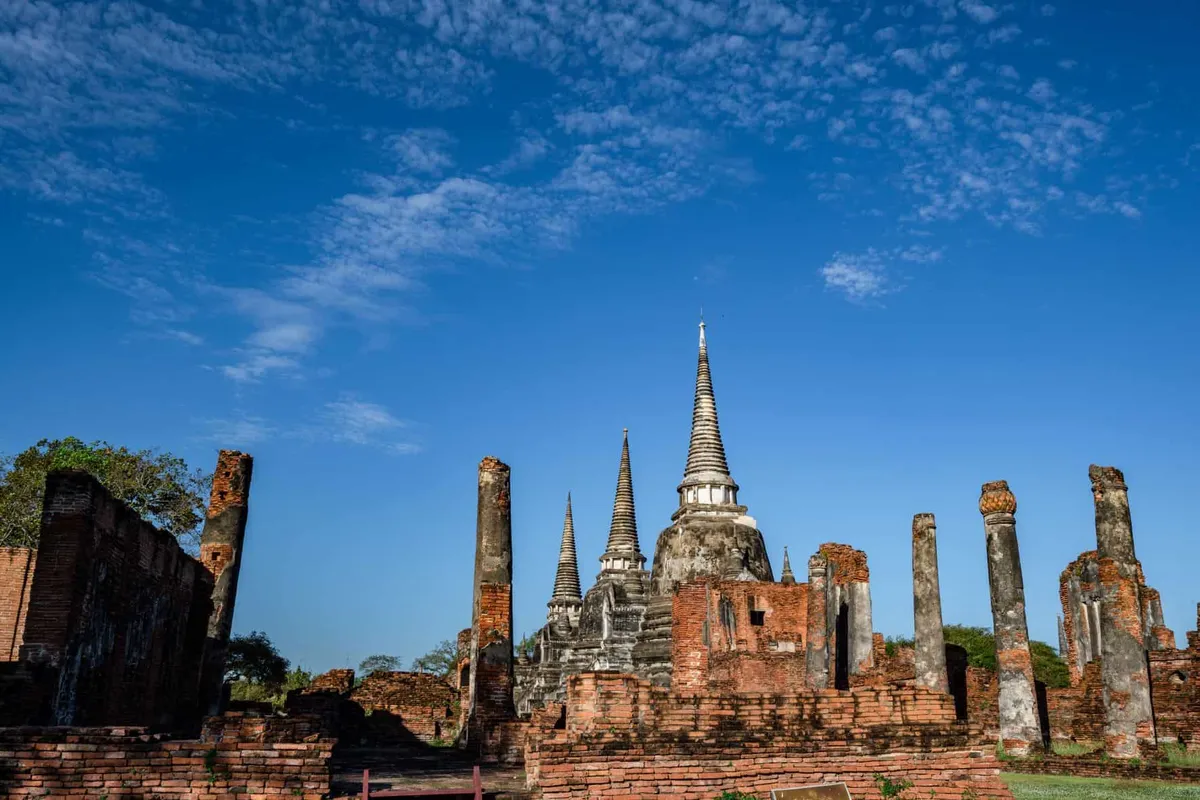
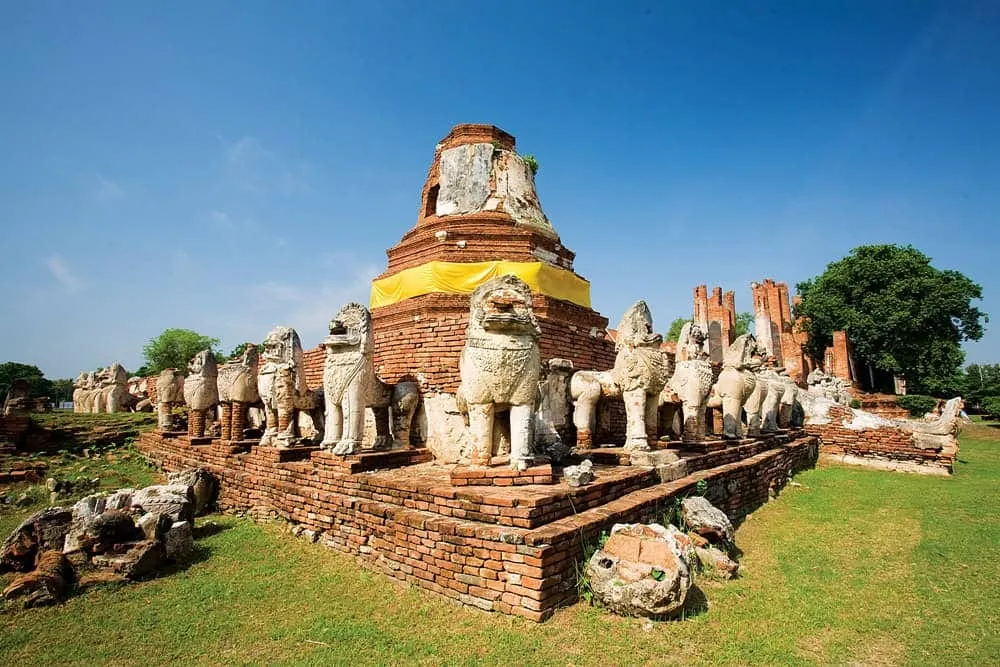
The temple’s exact founding date isn’t recorded. What survives — the reclining Buddha and the ruined base of a prang, along with scattered chedi foundations — points to an early construction within the Ayutthaya Kingdom’s history: the prang’s style matches those at nearby Wat Ratchaburana and Wat Mahathat, both dated to the early 15th century, and one theory credits King Intharacha I, who ruled Ayutthaya from around 1409 to 1424. Like most of the historical park’s temples, everything but the reclining Buddha and a few brick foundations was destroyed or abandoned after the Burmese army sacked the city in 1767. The statue survived largely because of its sheer bulk — not the kind of thing an invading army could easily topple or cart away.
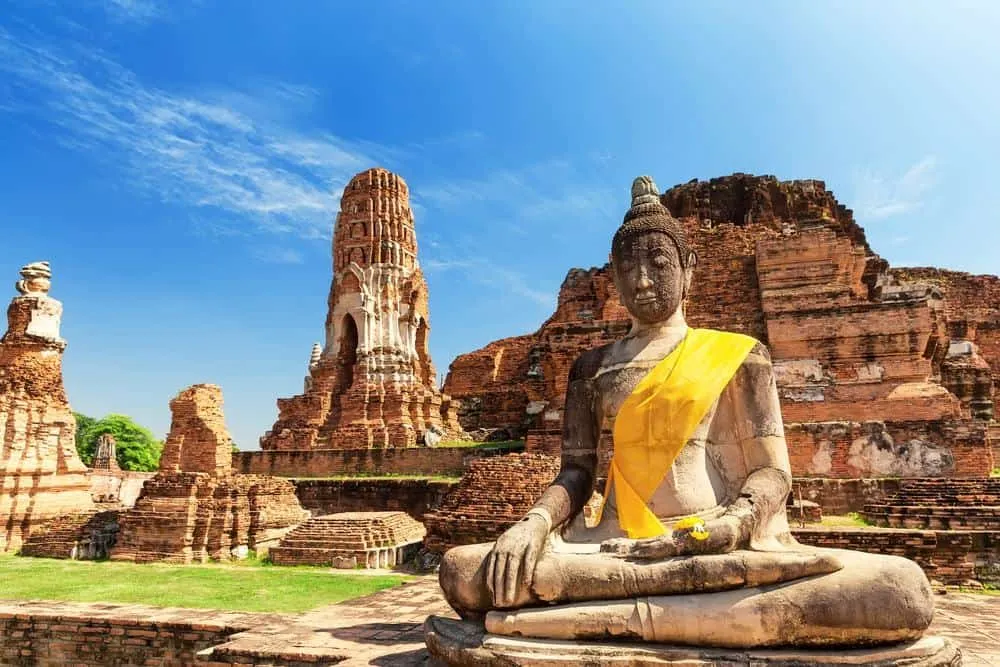
Up close, the scale is the main event. The Buddha’s head rests on a plain support, the face carries the calm, slightly upturned expression typical of Ayutthaya-period Buddha imagery, and centuries of exposure have worn the stucco down to bare brick in places, especially along the torso. A saffron-coloured cloth is draped over one shoulder, replaced periodically by the local community and by visiting pilgrims. Because the statue stands in open ground rather than inside a walled compound, you can walk its full 42-metre length and see it from every angle — something not possible at Wat Pho in Bangkok, where the reclining Buddha is enclosed within a building.
Insider Tip: Come at sunrise or in the last hour before sunset. There’s no roof and no shade anywhere near the statue, so midday visits mean full sun on bare brick with nowhere to escape the heat — and the low-angle light in early morning or late afternoon is when the worn stucco and brickwork show up best in photos.
The open-air setting is also what separates Wat Lokkayasutharam from the more enclosed, ticketed sites elsewhere in the park. There’s no formal entrance, so it’s easy to combine with a bicycle loop that also takes in Wat Phra Si Sanphet and Wat Mahathat, both within a few minutes’ ride. Locals still bring offerings here, so it functions as a living devotional site even though the surrounding temple structure has been ruins for over 250 years.
Watch out: Because there’s no fence or staff on site, it’s tempting to climb onto the statue’s base for photos — don’t. The brick-and-stucco surface is centuries old and fragile in places, and climbing on it is both disrespectful and damaging.
- Entry: Free — no ticket booth, no fixed closing time (most visit 08:00-17:00)
- Reclining Buddha: ~42 metres long, 8 metres high, brick core under stucco
- Founding: Date unrecorded; architectural style suggests early 15th century (Ayutthaya Kingdom)
- Destroyed: 1767, in the Burmese sack of Ayutthaya — the statue itself survived
- Nearby: Wat Phra Si Sanphet, Wat Mahathat, Wat Ratchaburana
Location & Directions
199/29 U Thong Road
Ayutthaya, Thailand
Show your taxi or Grab driver
วัดโลกยสุธาราม (วัดพระนอน)
Frequently Asked Questions
How long is the reclining Buddha at Wat Lokkayasutharam?
Is it really free to visit?
When was Wat Lokkayasutharam built?
What happened to the rest of the temple?
Is Wat Lokkayasutharam the same place as Wat Lokaya Sutha?
What should I wear or bring?
Spotted something out of date or incorrect? Let us know
Tours visiting Wat Lokkayasutharam

Stay Near Wat Lokkayasutharam
Live prices for places closest to Wat Lokkayasutharam — tap a pin to compare.