




Ancient Uthaithani
เมืองอุไทยธานีเก่า
Ancient Uthaithani is the site of the province’s first capital — not a mysterious lost civilization, but a working Ayutthaya-era town abandoned in living memory. The administrative seat of what’s now Uthai Thani Province stood here at Ban Uthai Kao until 1903, when it was moved downriver to Ban Sakae Krang for better access to trade routes. What’s left today is two ruined temple compounds standing quietly in the district that took over the old town’s role, renamed Nong Chang in 1917.
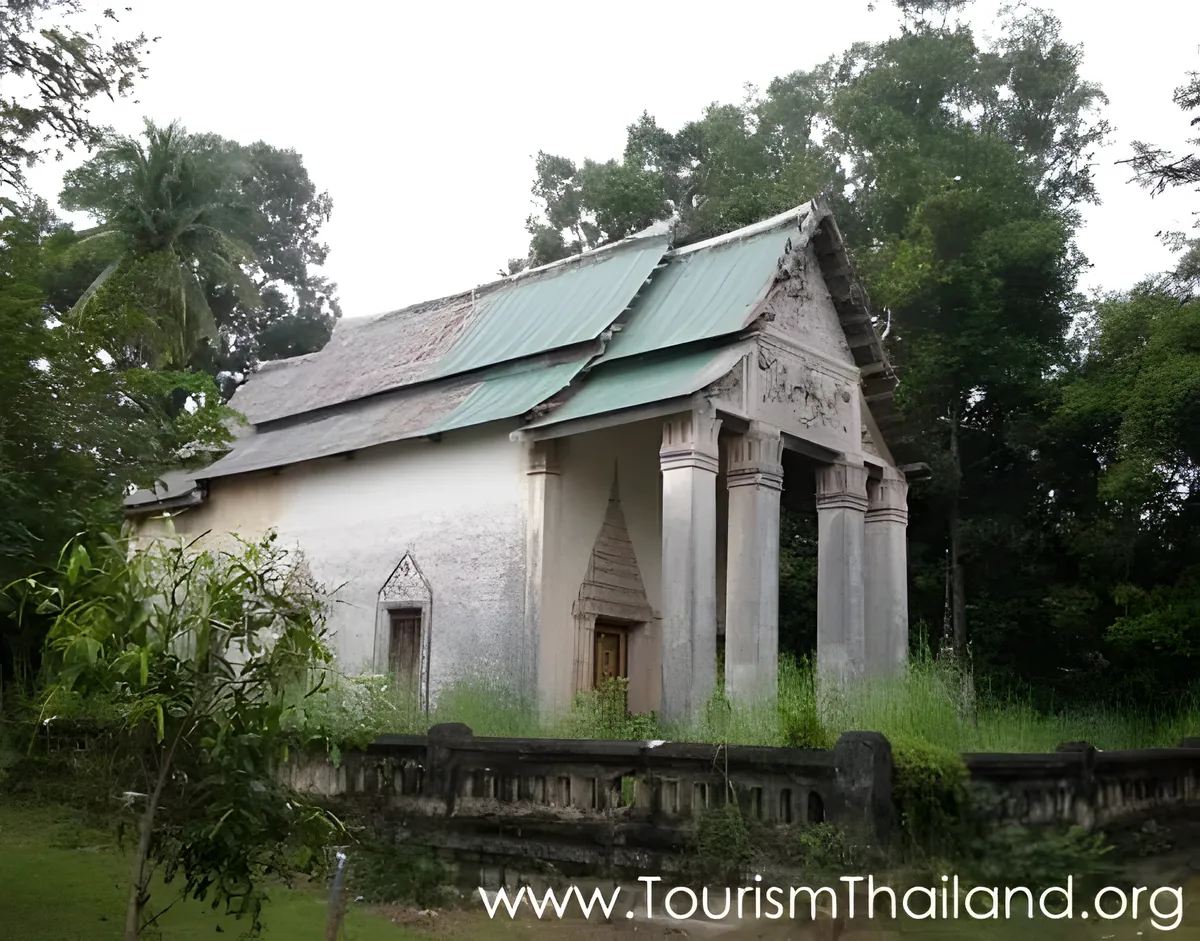
The physical remains are modest and specific rather than sprawling. Wat Chaeng holds a weathered chedi and the broken shell of an ordination hall built in late-Ayutthaya style, its stucco worn back to bare brick in places. A short walk away, Wat Hua Muang has its own ruined ordination hall and a second ancient chedi, smaller and more overgrown. There’s no rebuilt city wall or moat to walk along, no gift shop, no interpretive centre — just two temple footprints and the quiet fields that grew up around the old town after the district seat left.
That absence of polish is really the point. Local tradition traces the settlement back to the Sukhothai period, when a chieftain called Thao Maha Phrom is said to have founded a town among Karen and Mon villages here, giving rise to the name that eventually became Uthai Thani. Whatever the legendary founding, the temple ruins standing today date to the town’s later, better-documented life as an Ayutthaya-era provincial seat — centuries of continuous use that ended abruptly when the administration packed up and left for the river.
Morning or late afternoon light works best for photographing the brickwork without the flat glare of midday. The site sits about 19 km from present-day Uthai Thani town, reached by car or motorbike rather than public transport — there’s no direct bus service out to Ban Uthai Kao. Insider Tip: Ask locally for “Wat Chaeng, Uthai Kao” rather than “Ancient Uthaithani” — the ruins are known by their temple names in the district, and the modern English label doesn’t mean much to people living there. Watch out: signage is minimal and in Thai only, so it helps to have the temple names written down or a map pin ready before you set off.
- Location: Ban Uthai Kao, Uthai Kao subdistrict, Nong Chang district, Uthai Thani
- What survives: a ruined chedi and ordination hall at Wat Chaeng; a ruined ordination hall and chedi at Wat Hua Muang
- History: Uthai Thani’s provincial capital until 1903, when the seat moved to Ban Sakae Krang
- Entry: free, unticketed, no fixed hours
- Distance: about 19 km from Uthai Thani town
Two related stops make the trip worthwhile as a half-day loop rather than a single detour. The Local History and Cultural Museum of Uthai Thani Province fills in the background on how the province’s various old towns fit together, and the Ancient City of Bueng Khok Chang — a separate Dvaravati-period site elsewhere in the province — shows how much earlier the region’s settlement history actually runs.
Location & Directions
Uthai Kao, Nong Chang, Uthai Thani
Uthai Thani, Thailand
Show your taxi or Grab driver
เมืองอุไทยธานีเก่า
Frequently Asked Questions
What exactly is Ancient Uthaithani?
What can you actually see there today?
Why did the provincial capital move away from here?
Is there an entrance fee?
How far is it from Uthai Thani town?
Spotted something out of date or incorrect? Let us know
Stay Near Ancient Uthaithani
Live prices for places closest to Ancient Uthaithani — tap a pin to compare.