



Ban Thale Nok is a Muslim fishing village on Ranong’s mangrove coast that lost roughly half its buildings and dozens of residents — including 16 schoolchildren and their teacher — to the December 2004 tsunami. What’s here today is a rebuilt community running one of southern Thailand’s better-known community-based tourism (CBT) programmes, not a passive sightseeing stop.
Recovery came through the North Andaman Tsunami Relief (NATR) fund, a locally founded charity that helped villagers repair fishing boats in the immediate aftermath, then trained young people to run community tourism as a new income stream alongside fishing. A women’s cooperative making handmade soap from local ingredients grew directly out of that recovery effort and still operates today. By 2008 the programme had matured enough to win the silver Kinnaree Award for Outstanding Performance in eco-tourism at Thailand’s national tourism awards — recognition for a model built from scratch after a disaster, not a heritage site preserved for its own sake.
Insider Tip: Skip the drive-through visit. The village is set up for people who stay — most guests spend two days to a week living locally and joining in, which is a completely different experience from a 30-minute stop.
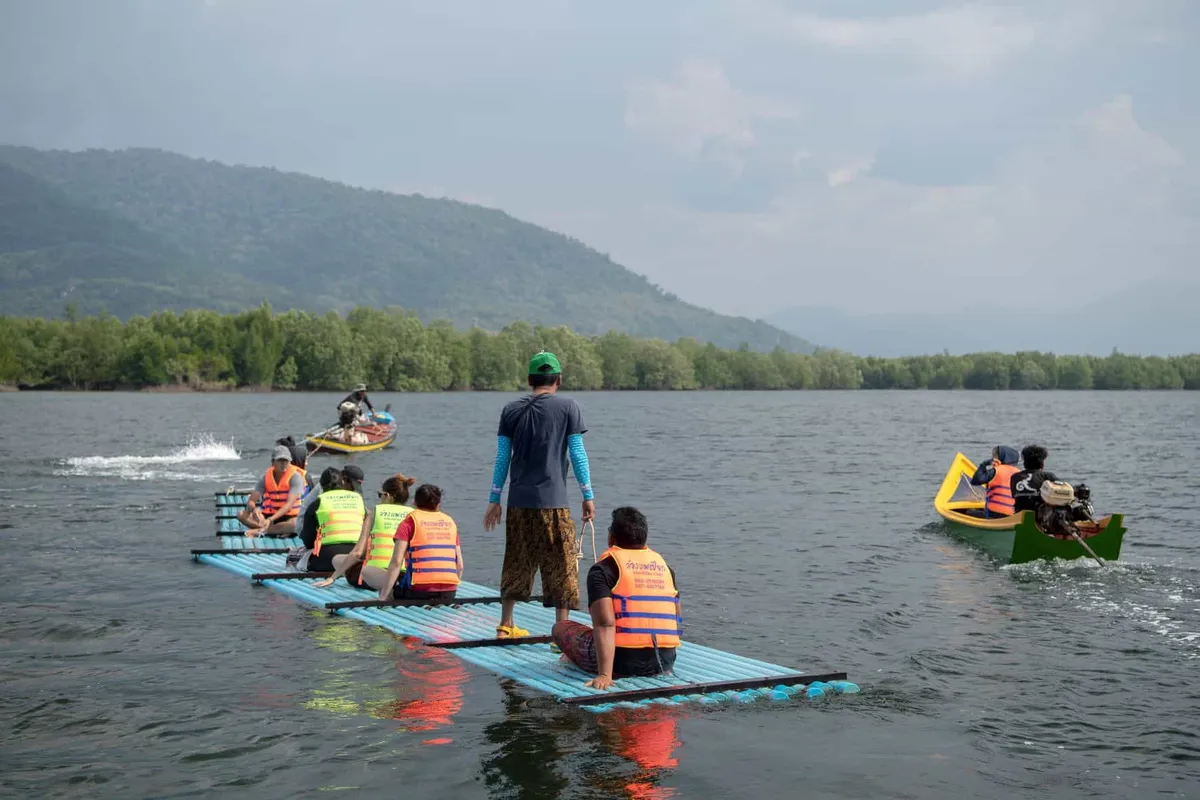
Activities run through the village’s tourism collective rather than informal drop-ins: going out with fishing crews, replanting mangroves in the surrounding channels, learning batik dyeing or soap-making with the women’s cooperative, or simply staying in a homestay and eating with a local family. The mangrove forest around the village is genuinely worth the time on its own — kingfishers and herons work the tidal channels, and locals still harvest shellfish and crabs from them, largely unchanged from before the tsunami.
Watch out: This isn’t a site with opening hours or a ticket booth — bookings go through Andaman Discoveries or the North Andaman Network, the operators that formalised the post-NATR tourism programme. Showing up without arranging a visit first means missing the activities and putting a Muslim family household on the spot.
Dress modestly out of respect for the Muslim community — covered shoulders and knees, and swimwear only where locals are also swimming. Early morning is when the fishing fleet comes in and the village is most active; ask before photographing people directly, which residents appreciate even though photography of the village itself is generally welcome.
- Entry: Free to walk through; organised activities and homestays carry program fees set by the booking operator
- Community: Muslim fishing village, rebuilt after the 2004 tsunami
- How to visit: Book through Andaman Discoveries or the North Andaman Network
- Location: Kamphuan subdistrict, Suk Samran district, Ranong
- Recognition: Silver Kinnaree Award, Outstanding Performance in eco-tourism (2008)
Location & Directions
Suk Samran, Ranong
Ranong, Thailand
Show your taxi or Grab driver
บ้านทะเลนอก
Frequently Asked Questions
What happened to Ban Thale Nok in the 2004 tsunami?
What can visitors actually do here?
How do I book a visit or homestay?
Is Ban Thale Nok free to visit?
Is Ban Thale Nok a Muslim or Buddhist community?
Spotted something out of date or incorrect? Let us know
Stay Near Ban Thale Nok
Live prices for places closest to Ban Thale Nok — tap a pin to compare.