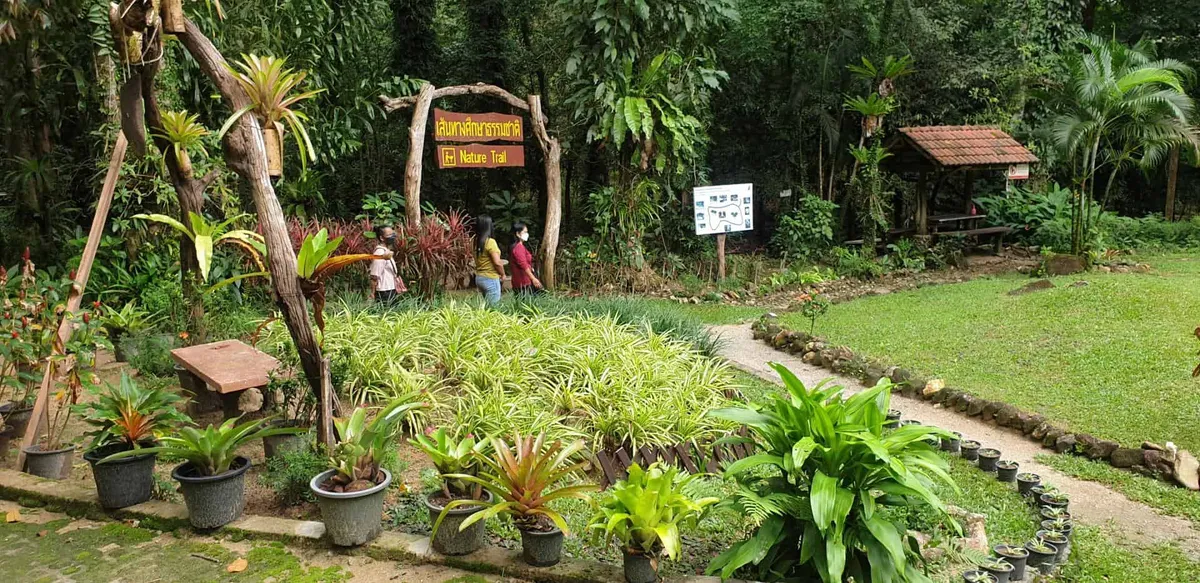







Ban Hatsompaen Community
ชุมชนบ้านหาดส้มแป้น
Ban Hatsompaen is a community-based tourism village in Mueang Ranong whose name traces back to Chinese settlers: “Huay Sam Pian” (Hokkien for “deep in the valley”) became corrupted over generations into the Thai “Hatsompaen.” Those early Chinese immigrants came to mine tin, and the community has preserved that heritage as its defining attraction for more than a century.
The signature activity for visitors is traditional tin panning, known locally as ror rae. Using a shallow pan called a liang, residents show guests how to scoop riverbed sediment, rinse away the sand, and read the heavy dark grains of cassiterite that remain. It is a hands-on lesson in a craft that once shaped the economy of Ranong Province, and the community maintains it as living cultural practice rather than performance. The area also holds some of Thailand’s highest-grade kaolin deposits; a local ceramics group works this white clay into glazed pottery, and visitors can watch the process and buy finished pieces.
Other points of interest within the community include Wat Hat Som Paen, whose hexagonal chedi is more than a hundred years old and was conserved by encasing the original structure inside a new one during the 1990s, and a mountain-ringed reservoir that makes a quiet backdrop for a walk. Homestay accommodation is available, with overnight packages combining panning, ceramics, and meals with local families.
Insider Tip: Go on a weekday morning and bring cash in small notes: panning and ceramics sessions are paid per activity directly to the families running them, not through a central ticket booth.
- Entry: Free (activities and homestays paid separately)
- Hours: Monday–Friday, 09:00–15:00 (closed weekends)
- Signature activity: Ror rae tin panning with a liang pan
- Also on-site: Kaolin ceramics workshop, Wat Hat Som Paen temple
- Getting there: Taxi or hired vehicle from Ranong town, about 30 minutes
The community is open weekday mornings only, closing at 15:00, and entry is free. Getting there from Ranong town requires a local taxi or hired vehicle; bring clothes you do not mind getting muddy if you plan to try the panning yourself.
Location & Directions
Mueang Ranong, Ranong
Ranong, Thailand
Show your taxi or Grab driver
ชุมชนบ้านหาดส้มแป้น
Frequently Asked Questions
Is Ban Hatsompaen open on weekends?
Is there an entry fee?
What actually happens during the tin-panning demonstration?
How do I get to Ban Hatsompaen from Ranong town?
Is Wat Hat Som Paen the same thing as Ban Hatsompaen?
Spotted something out of date or incorrect? Let us know
Stay Near Ban Hatsompaen Community
Live prices for places closest to Ban Hatsompaen Community: tap a pin to compare.