
Ku Mahathat (Prang Ku Ban Kwao)
กู่มหาธาตุ (ปรางค์กู่บ้านเขวา)
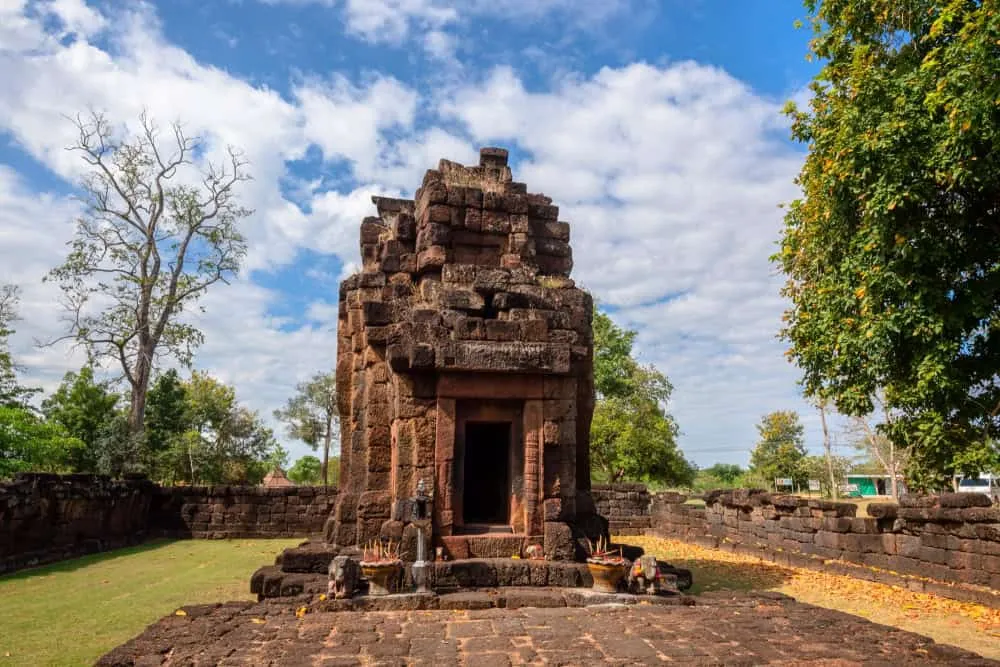
Ku Mahathat is a 13th-century Khmer ruin at Ban Khwao, in Maha Sarakham’s Mueang district, about 20 minutes’ drive from Maha Sarakham city beside the small Nong Krathum lake. Built as an arogyasala — a Buddhist hospital chapel — under the Khmer king Jayavarman VII, it’s a single laterite prang tower rather than a sprawling temple complex, and it sees almost no visitors.
Jayavarman VII, a devout Mahayana Buddhist, commissioned roughly a hundred of these hospital chapels across his empire in the late 12th and early 13th centuries, with several built in what’s now Isan. Ku Mahathat’s square tower stands about 8 metres from ground to top and roughly 5 metres wide, built in the Bayon style from fitted laterite blocks. Excavation here turned up two sandstone images, one identified as Bhaisajyaguru — the Medicine Buddha — a fitting find given the site’s original role as a place of healing rather than worship in the Hindu sense some ruins in the region show. An information panel notes a Sanskrit inscription still legible on the central tower.
The Fine Arts Department registered Ku Mahathat as a national historic site in 1935, then restored it between 1997 and 1998 using anastylosis — dismantling the loosened stonework and reassembling it in its original position rather than replacing the material. That restoration means what stands today is largely the original laterite, just put back the way it was found. Fallen blocks and information boards around the tower explain the site’s layout to the handful of visitors who make the trip, most of them day-tripping from Maha Sarakham city rather than stopping specifically for the ruin.
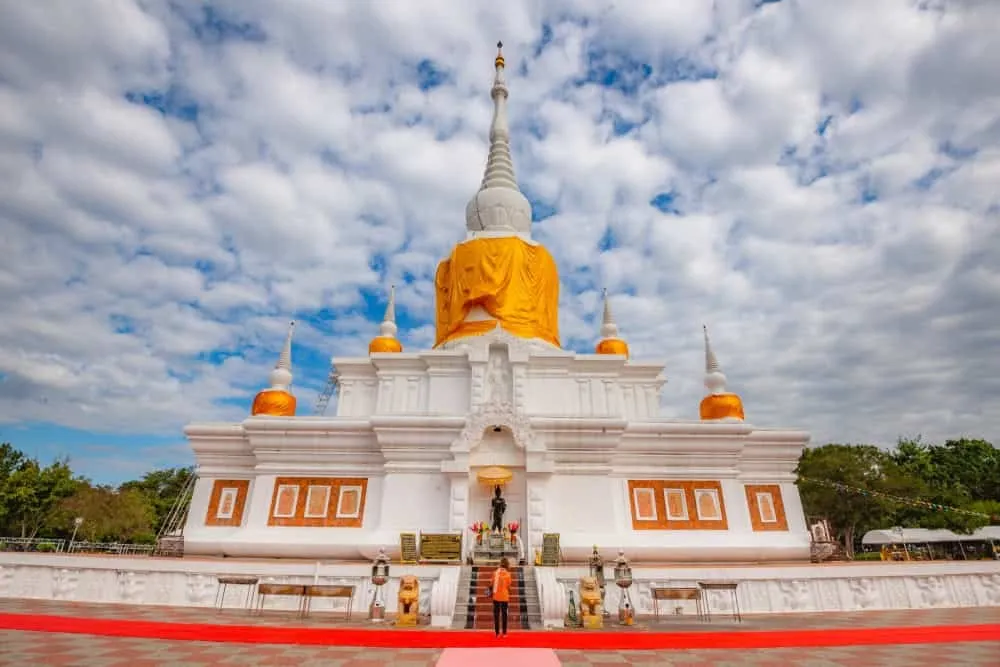
Compare it with Ku Santarat, another Khmer-era site in the province, if you want to see how Maha Sarakham’s ruins vary — Ku Mahathat’s story as a hospital chapel rather than a temple is what sets it apart. Phrathat Na Dun, a later Buddhist stupa elsewhere in the province, makes a reasonable pairing for a half-day of heritage sites if you’re driving out from the city.
Insider Tip: Go in the late afternoon — the low sun picks out the laterite’s texture and the lintel carvings far better than midday light, and you’ll likely have the site to yourself either way.
Watch out: there’s no shade shelter over the ruin itself, and the ground around it is uneven laterite and grass — comfortable closed shoes matter more here than at a paved temple site.
- Built: c. 13th century, under Jayavarman VII
- Original use: Arogyasala (Buddhist hospital chapel)
- Material: Laterite, Bayon-style Khmer
- Protected since: 1935 (restored 1997–1998)
- Entry: Free, daily 08:00–17:00
Location & Directions
Mu 17 Maha Sarakham-Roi Et Road
Maha Sarakham, Thailand
Show your taxi or Grab driver
กู่มหาธาตุ (ปรางค์กู่บ้านเขวา)
Frequently Asked Questions
Is Ku Mahathat a temple or a hospital?
How old is Ku Mahathat?
What is Ku Mahathat made of?
Is there an entry fee?
Is Ku Mahathat related to Angkor Wat?
Spotted something out of date or incorrect? Let us know
Stay Near Ku Mahathat (Prang Ku Ban Kwao)
Live prices for places closest to Ku Mahathat (Prang Ku Ban Kwao) — tap a pin to compare.