


Maha Sarakham
มหาสารคาม
The Buddhist heartland of central Isan — ancient Dvaravati relics, Khmer hospital ruins, silk-weaving villages, and a university town that keeps the khaen alive.
Recommended by us
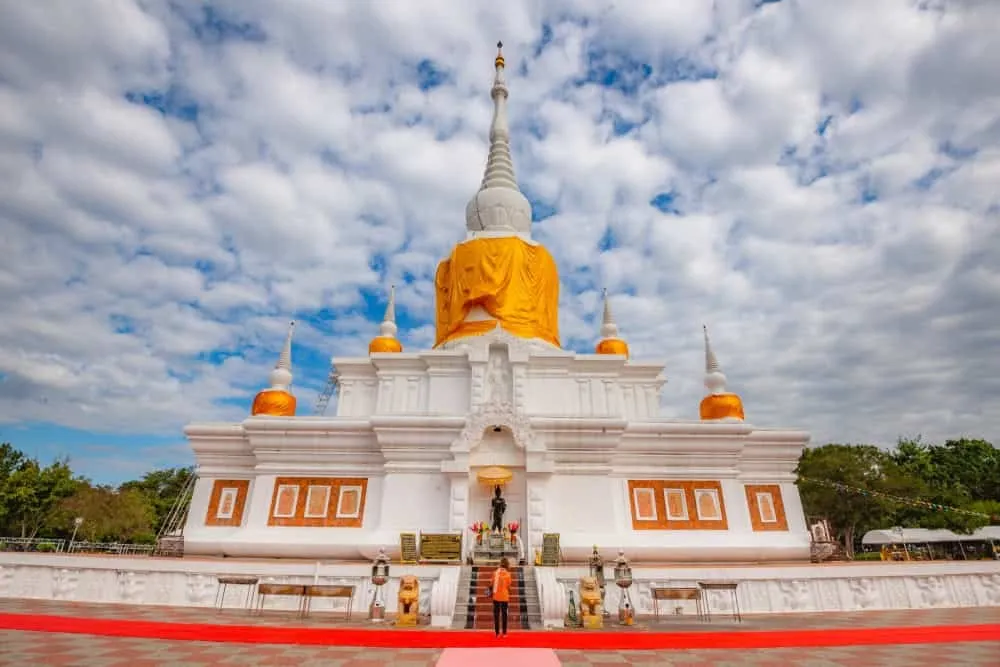
Phrathat Na Dun
The defining landmark of the province — a 50m Dvaravati-era stupa believed to enshrine a relic of the Buddha. Quiet on weekdays, busy on Buddhist holy days.

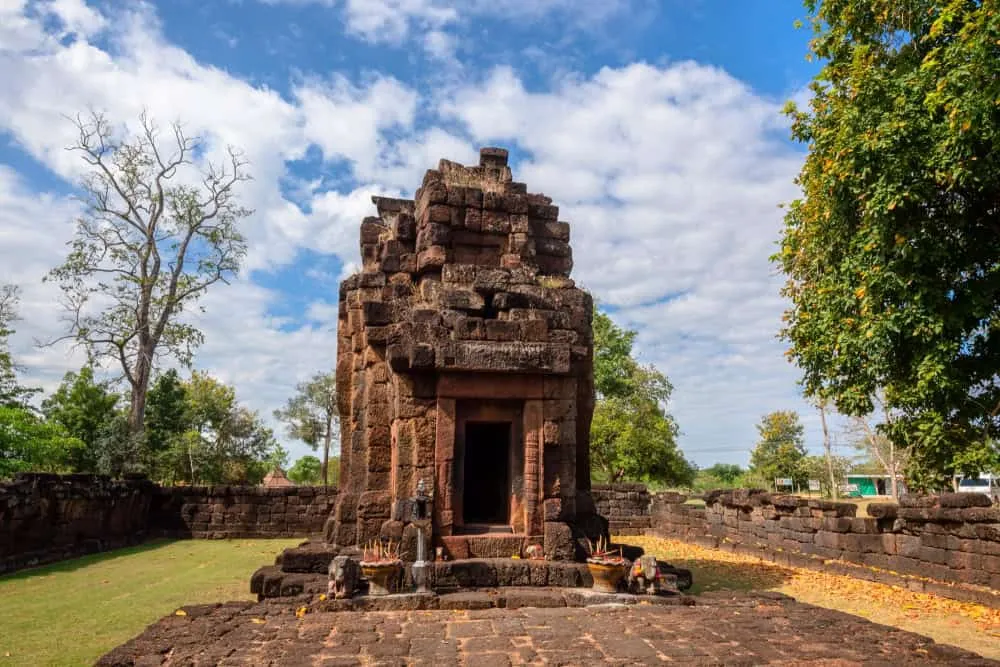
Ku Santarat
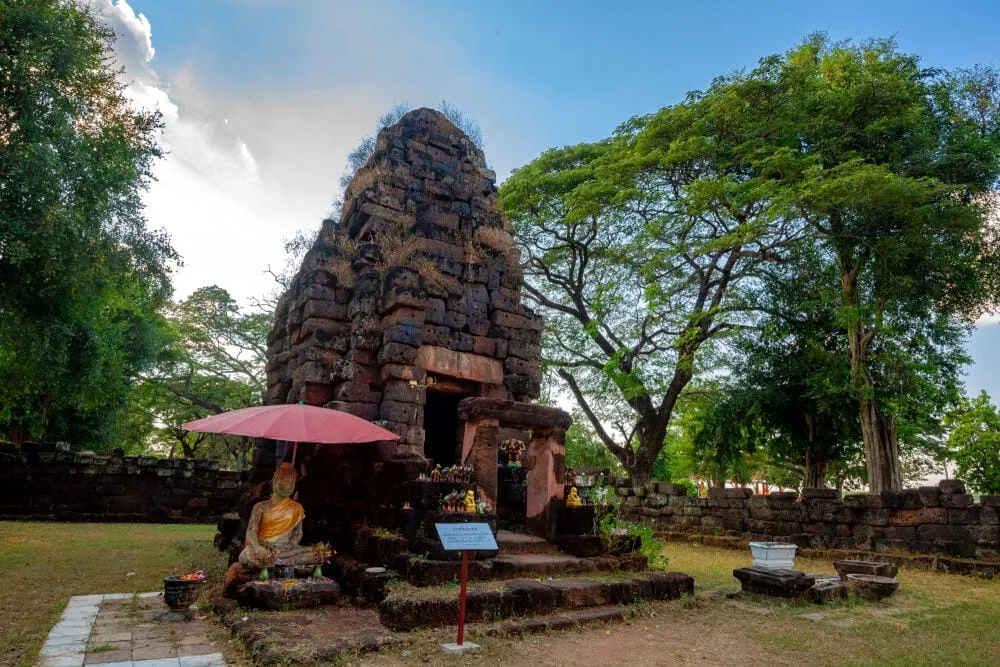
A Khmer-era laterite sanctuary tucked in the province's rural northeast — one of the less-visited remnants of the ancient highway through Isan.

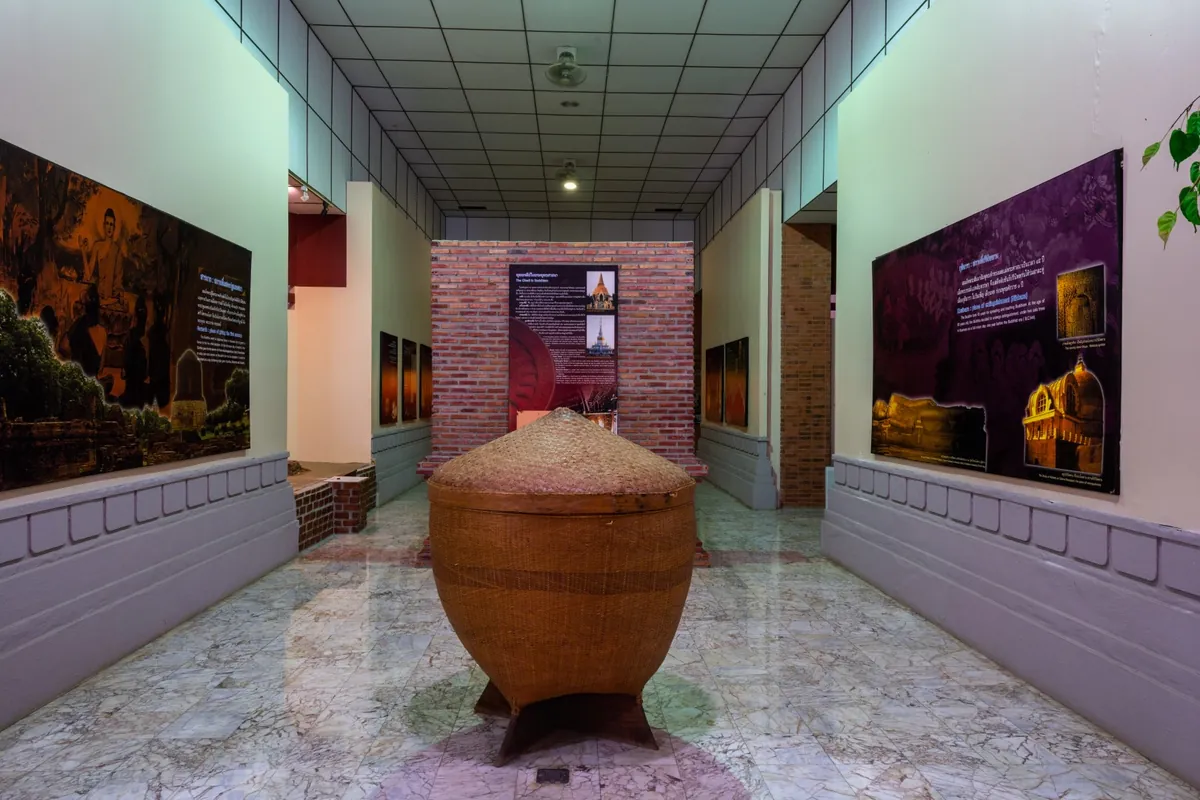
Nakhon Champa Si Museum
The provincial museum covering the Dvaravati and Champa Si periods, with artefacts drawn from the Na Dun excavation site nearby.

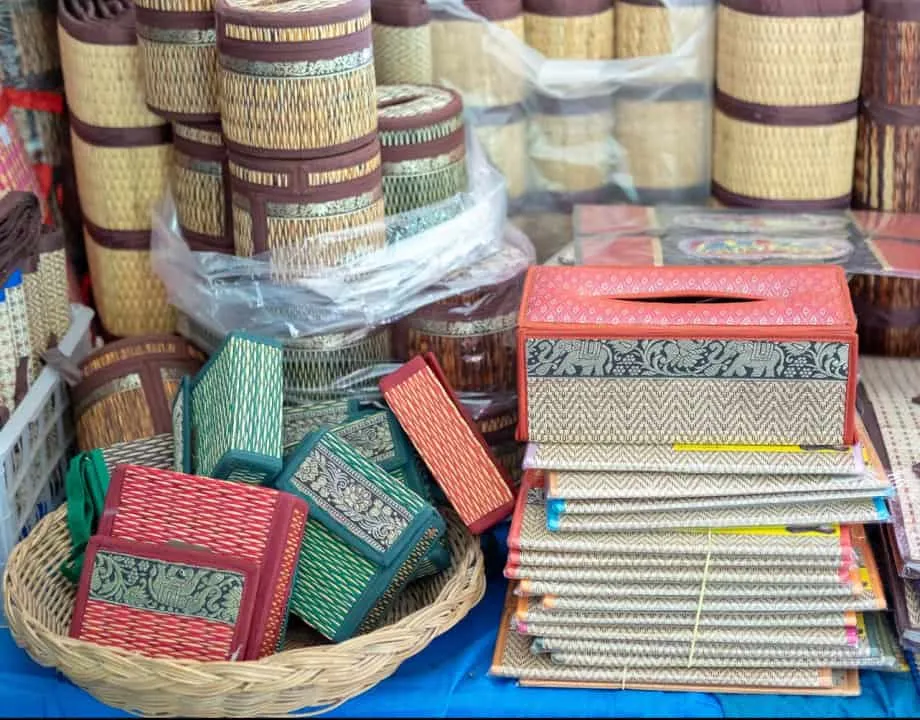
Nong Khuean Chang Handicraft Village
A weaving community famous for mudmee silk — you can watch the looms running and buy direct from the weavers.
Get to Maha Sarakham
Buses from Bangkok's Mo Chit terminal take around 5–6 hours; the town is also reachable by bus from Khon Kaen in under an hour.

eSIM for Thailand
Land with data already working and skip the airport SIM queue. We tested six plans — code THAIHOLIDAY saves 10%.

Travel insurance
Sort cover before you go — even a low-key Isan trip benefits from emergency medical in a province with limited English-speaking hospitals.
Wats, shrines & spiritual sites
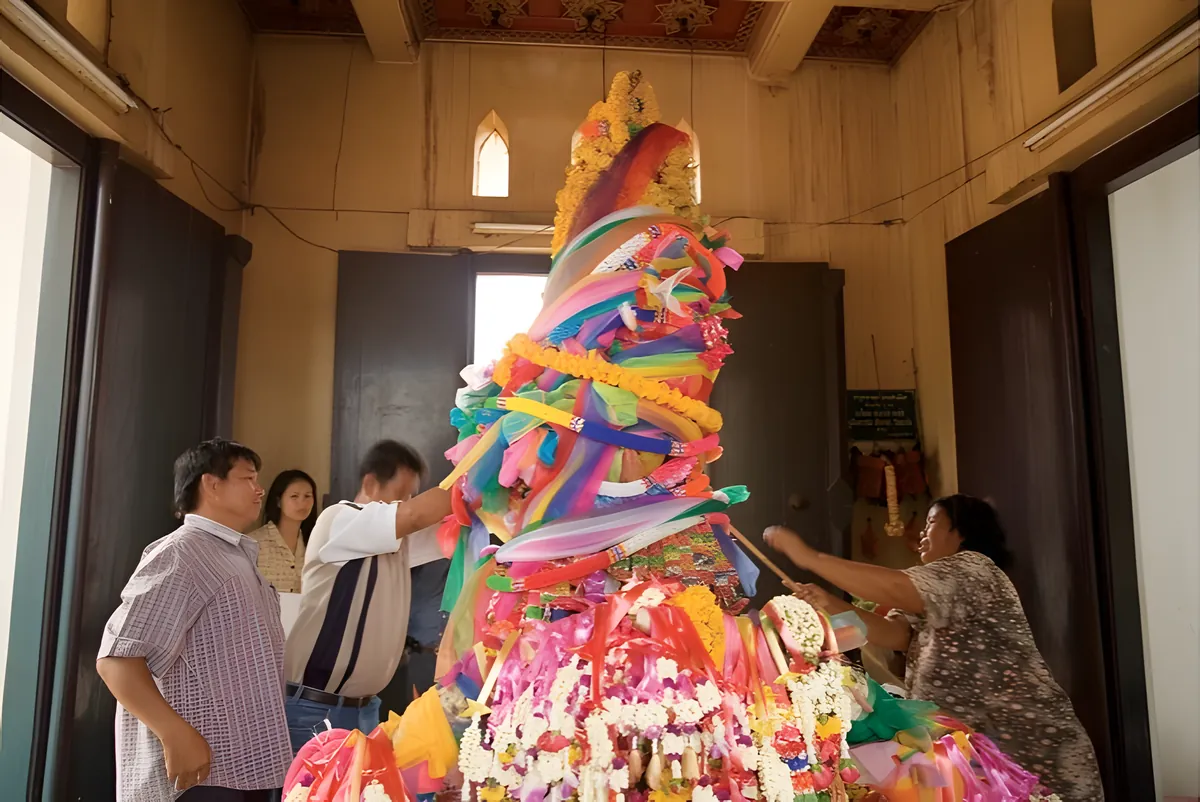
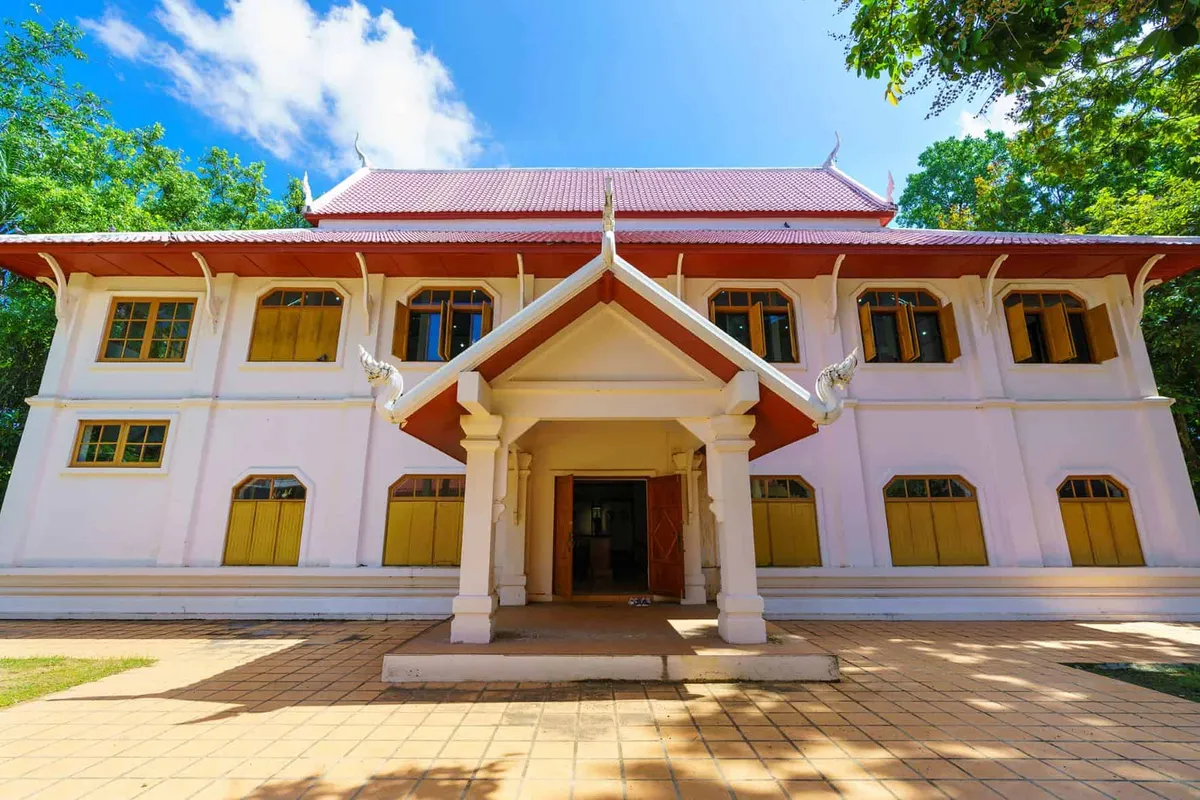
Temples in Maha Sarakham





Waterfalls, peaks, caves & parks
Nature & outdoors around Maha Sarakham





Museums, history & heritage
Museums & culture in Maha Sarakham




Things to do on the map
Tap a pin for details — 20 places in Maha Sarakham plotted.
When to go
Nov–Feb Cool dry season is the best window for sightseeing — comfortable temperatures for temple circuits, weaving village visits, and the long walk around Phrathat Na Dun. January evenings can be genuinely cool by Thai standards.
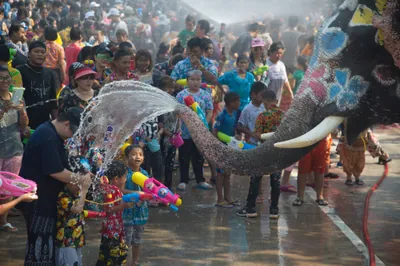
Mar–May Hot season on the Khorat plateau, with April routinely exceeding 37°C. Early morning visits to Ku Mahathat and Phrathat Na Dun are worthwhile before midday heat sets in. Songkran in mid-April draws local crowds.
May–Oct Isan wet season, with September the wettest month (around 250mm). The rice-growing plains turn vivid green and the Chi River valley fills. Sightseeing remains feasible — most attractions are temples and ruins that rain doesn't close — but roads to smaller village sites can flood in August and September.
About Maha Sarakham
Last updated September 2026
Overview
Maha Sarakham sits at the geographic centre of Isan, roughly 470 kilometres northeast of Bangkok on the flat southern Khorat plateau. It is not a place most Thailand itineraries include, and that is worth understanding before you arrive: there are no beaches, no mountain resorts, and no international tourist trail. What the province offers instead is layered history and a genuinely local atmosphere — the kind where the interesting places are almost entirely Thai visitors and students, and the food is priced for university budgets.
The key to Maha Sarakham is its archaeology. In 1979, the Fine Arts Department excavated a rice field in Na Dun district and found a miniature bronze stupa containing Buddhist relics sealed inside nested caskets of gold, silver, and bronze. The discovery identified the site as Nakhon Champa Si — a Dvaravati-period city that was one of the early Buddhist centres of mainland Southeast Asia, predating the Khmer empire that followed. Phrathat Na Dun, the 50-metre white stupa built over the site to house those relics, is now the provincial symbol and one of Isan’s most important Buddhist pilgrimage sites.
Layered over the Dvaravati heritage are Khmer remains from the late 12th and early 13th century — hospital chapels built under Jayavarman VII as part of his empire-wide health and welfare programme. Ku Mahathat (Prang Ku Ban Kwao) is the best preserved of these in the province, with its Bayon-style sandstone prang still standing within intact walls.
Mahasarakham University, with over 40,000 students, gives the provincial capital an energy rare in Isan towns of this size. The Research Institute of Northeastern Art and Culture (RINAC) is based here, and the university’s active commitment to documenting khaen music, traditional textiles, and Isan folk practice means the cultural infrastructure is unusually well maintained.
Top Things to Do
Phrathat Na Dun is the reason to make the journey to Maha Sarakham. The white stupa in Na Dun district, about an hour’s drive south of the city, was built on the site of the 1979 relic discovery. The design is based on the Dvaravati metal stupa found in the excavation. Surrounding the main stupa, a large park houses the Nakhon Champa Si Museum, which documents the Dvaravati civilisation that built the original city here — its trade connections, Buddhist iconography, and the sequence of finds. The site draws Thai Buddhist pilgrims throughout the year; on religious holidays the car park fills before dawn.
Ku Mahathat (Prang Ku Ban Kwao) is a Khmer hospital chapel built under Jayavarman VII in the late 12th or early 13th century, around 20 minutes drive from the city. The main prang in Bayon style stands within well-preserved stone walls, with a Sanskrit inscription still visible on the central tower. Jayavarman VII built approximately 100 such hospital chapels across his empire — this is one of several in Isan, and among the better-preserved examples. Entry is free; you are unlikely to share the site with other foreign visitors.
Ku Santarat is a second Khmer sanctuary in the province, smaller than Ku Mahathat but worth including on a heritage day if your transport is your own.
Wat Mahachai (Wat Nuea) holds one of northeastern Thailand’s most significant collections of palm-leaf manuscripts — hand-inscribed texts in Tham script covering Buddhist teachings, Isan folk literature, and local history. The temple operates a conservation centre with a museum space that opened in 2022. The manuscript collection draws researchers from Mahasarakham University and the Fine Arts Department; a visit gives context that most Isan temple circuits skip entirely.
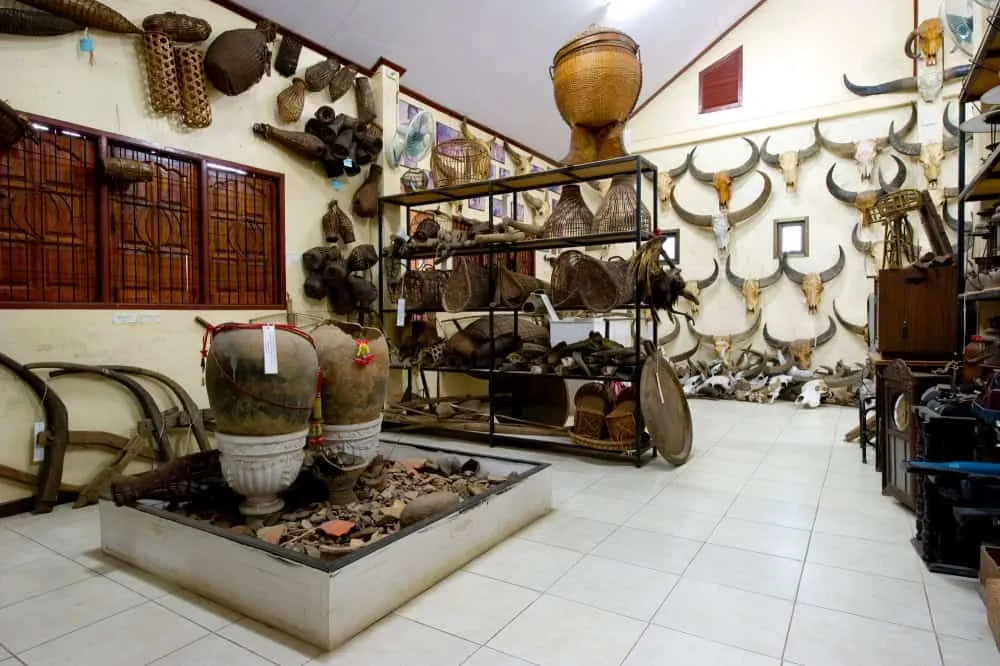
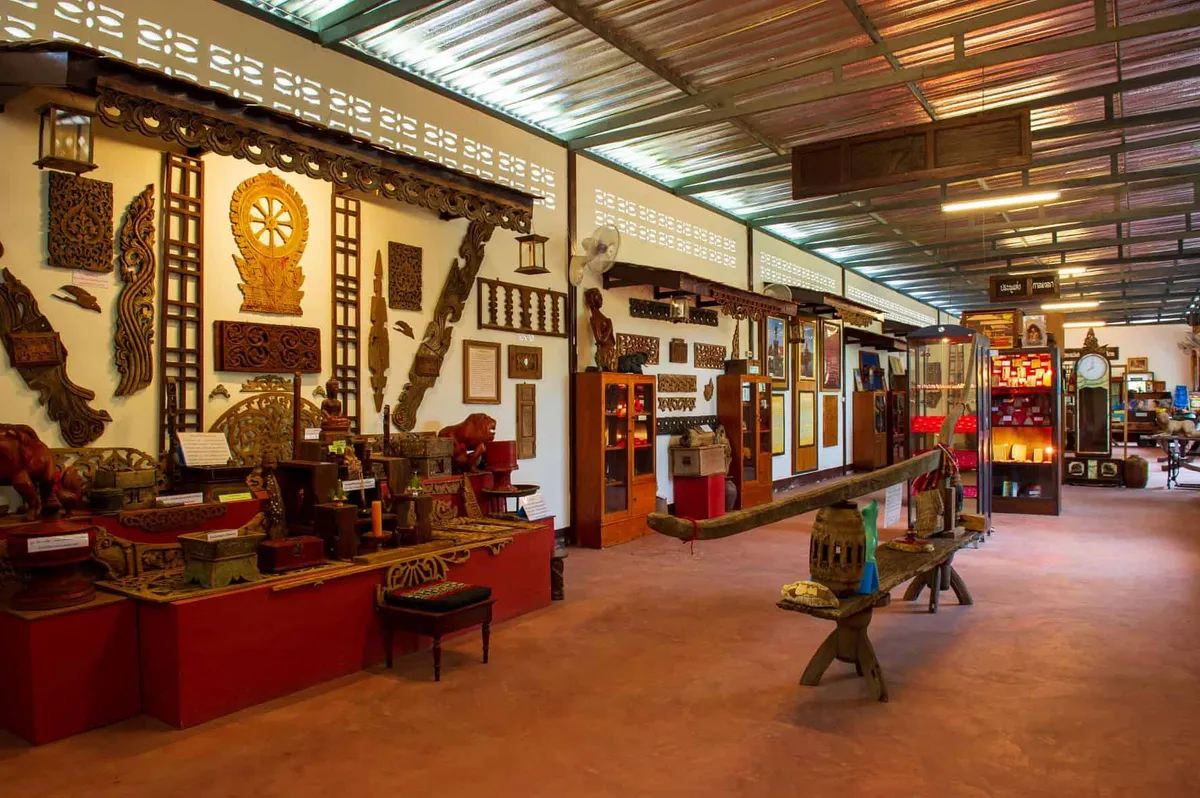
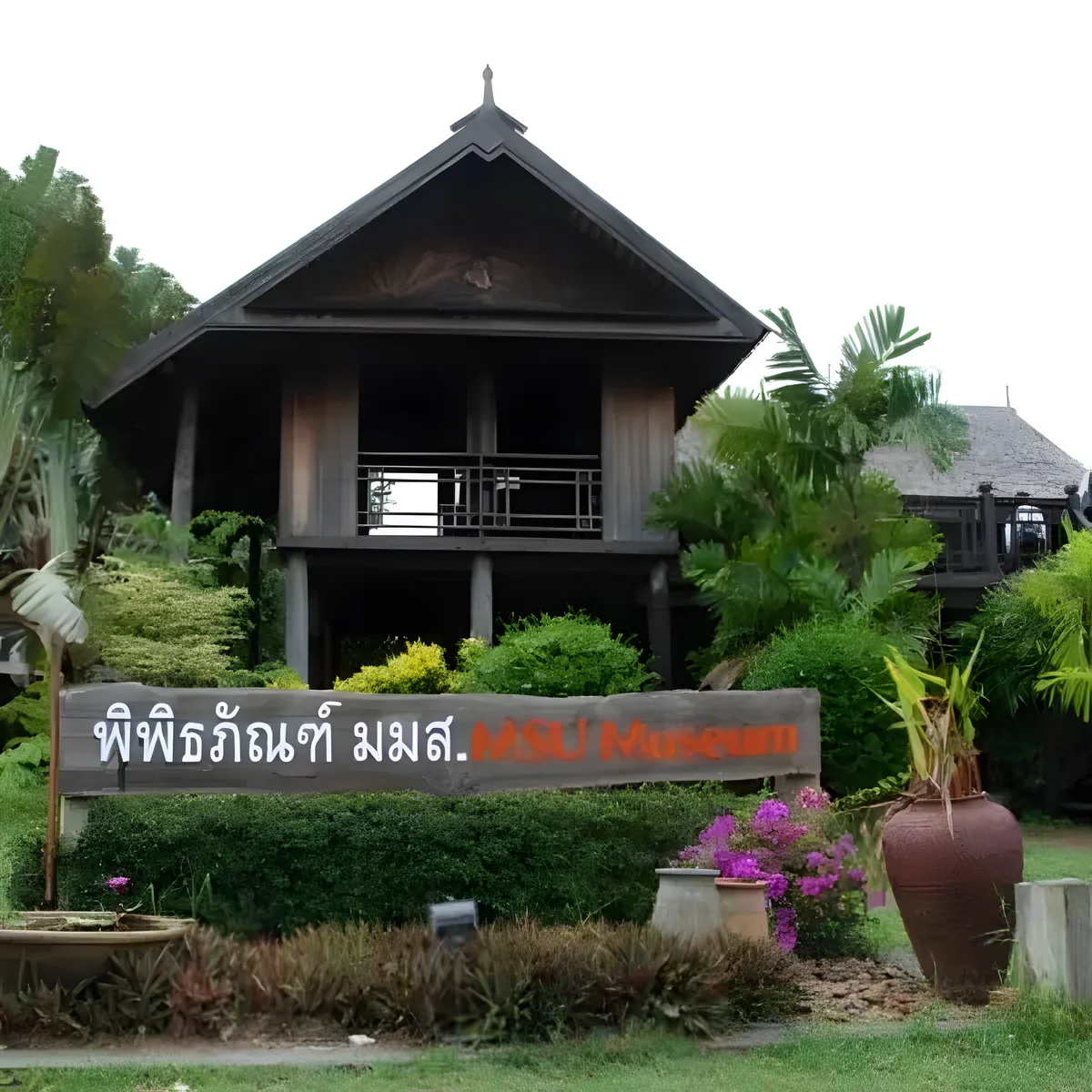
Maha Sarakham University Museum and the adjacent RINAC research institute are worth an hour for anyone interested in Isan culture. The exhibits cover traditional musical instruments — including the khaen, the mouth organ that defines northeastern Thai and Lao music — alongside textiles, ceremonial objects, and documentation of village traditions. The university itself is the cultural anchor of the province.
Nong Khuean Chang Handicraft Village is about 14 kilometres from the city on the route to Kosum Phisai district. The village produces handmade silk and cotton textiles — mudmee tie-dye silk, Isan-style woven cotton, and shoulder cloths — sold directly from workshops at prices well below Bangkok retail. You can watch weaving on floor looms in the open-fronted workshops.
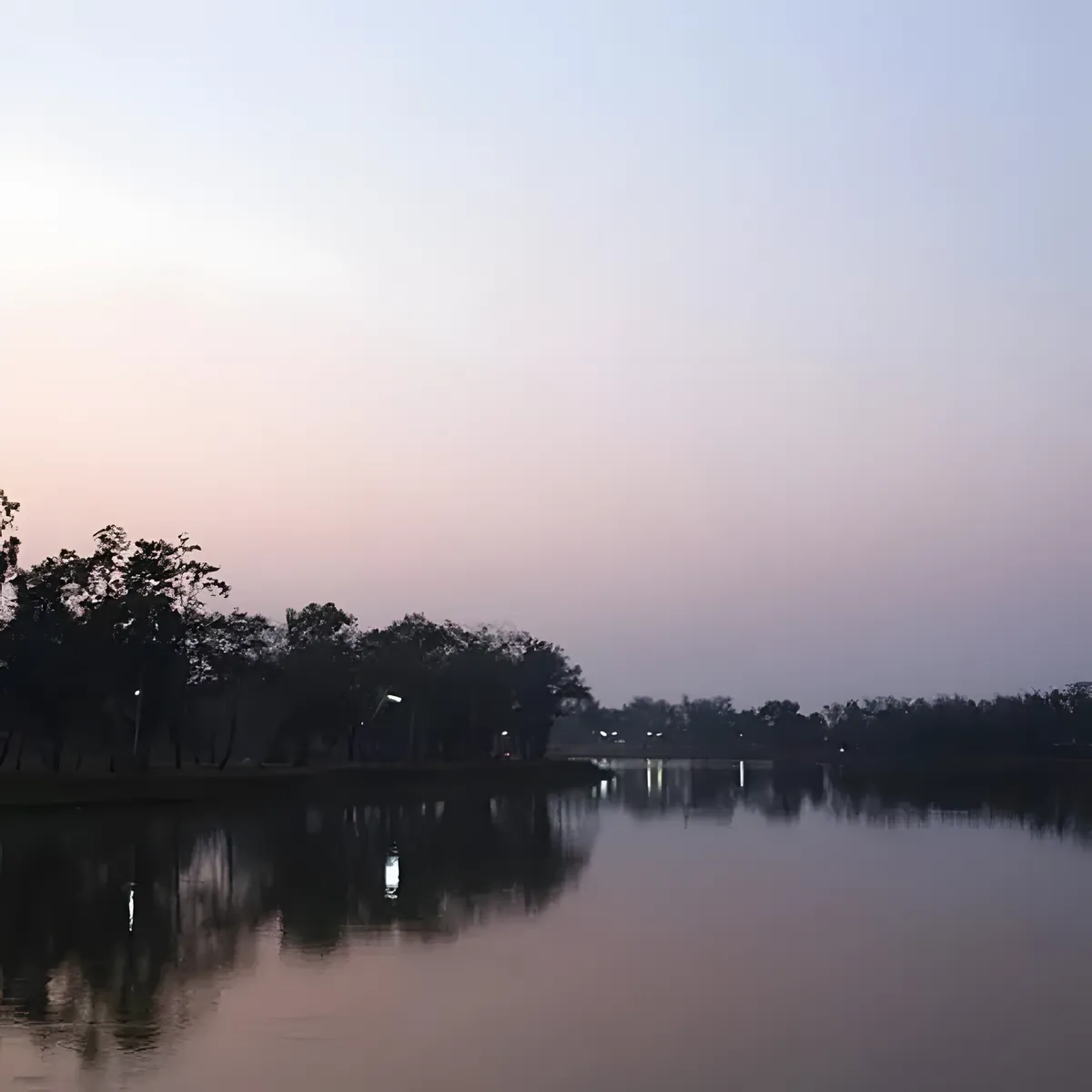
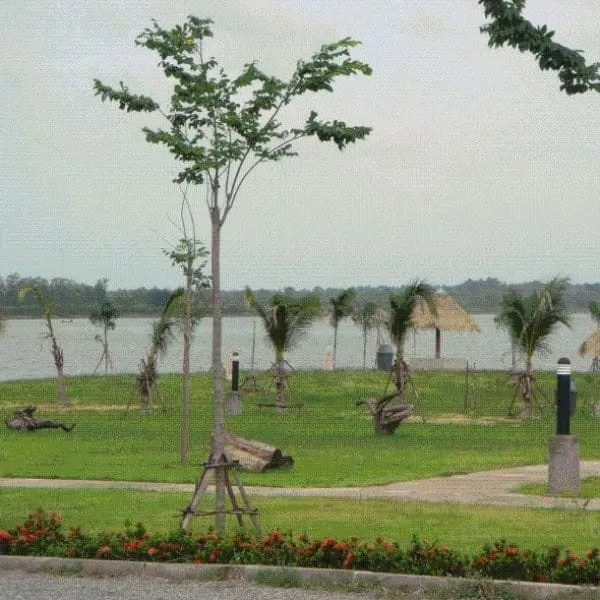
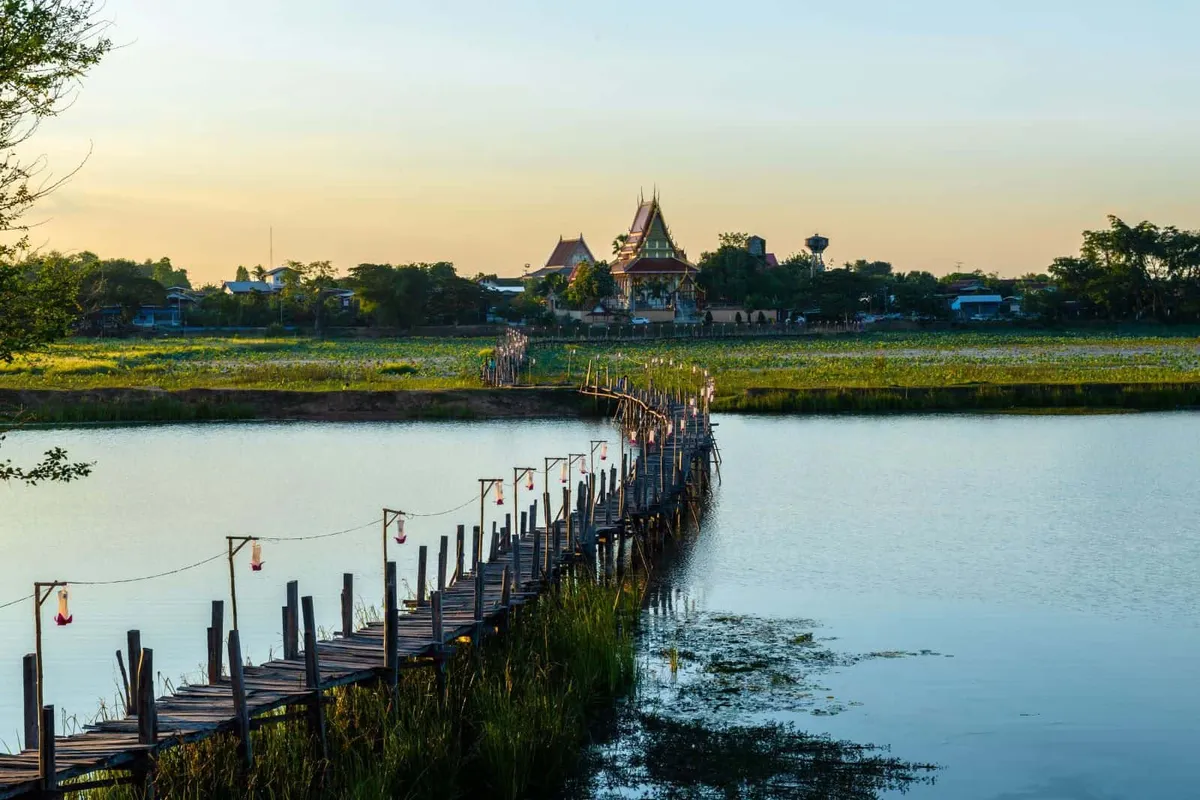
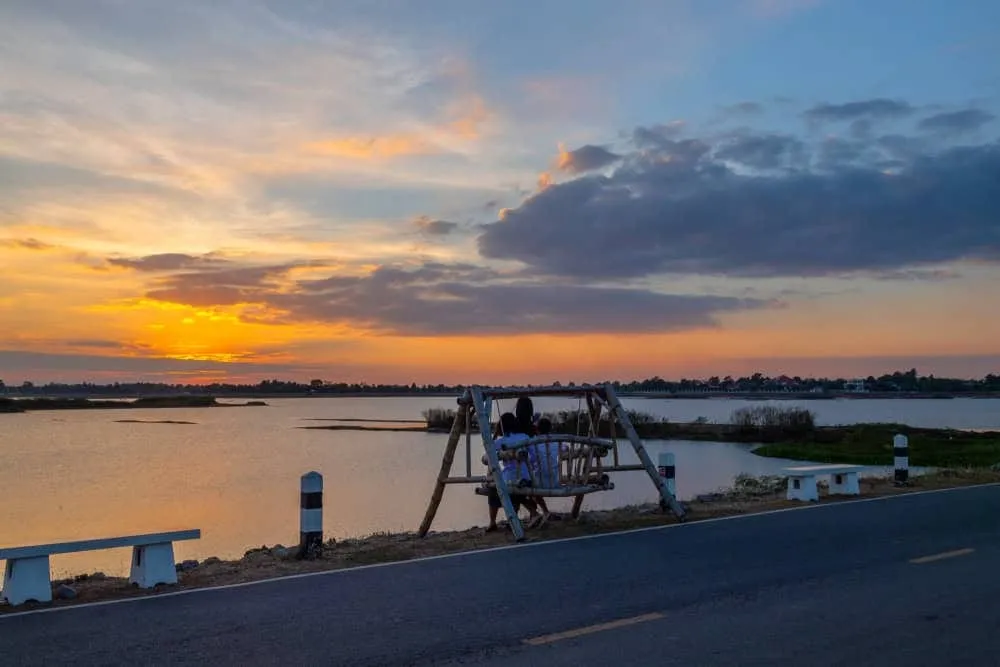
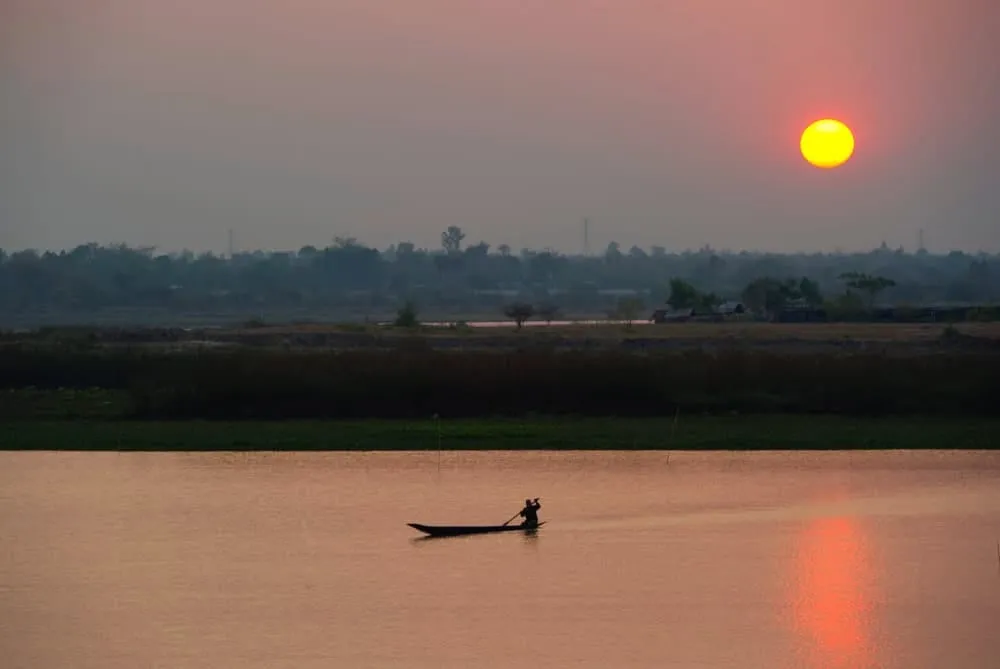
Kaeng Leng Chan is a large reservoir a few kilometres west of Rajabhat Maha Sarakham University, with a landscaped park along its banks, a flower garden, and walking trails. It is a popular morning and evening spot for university students and local families — a useful place to reorient after a day of temple circuits, and somewhere to eat well at the waterfront stalls.
Khong Kut Wai Fish Sanctuary, 10 kilometres from the city, is a stretch of the Chi River where fishing is prohibited and large freshwater fish — including the Mekong giant catfish — have become remarkably bold. Feeding them from the bank is the main activity; the sanctuary has over 100 freshwater species recorded.
Ban Chiang Hian Museum provides context on the prehistoric settlements of the Chi River basin, adjacent to an archaeological site in Mueang district. Together with the Nakhon Champa Si finds, it documents the long inhabitation of this plateau before the historical period.
Where to Stay
The city has a workable selection of hotels ranging from budget guesthouses near the university to mid-range properties with pools. The best-regarded hotels — including Taksila Hotel and KANYA — are the city’s benchmark for comfortable stays. Prices are low relative to any tourist-facing Thai city; ฿800–1,200/night covers a decent air-conditioned room with a pool.
There are no luxury resorts and nothing aimed specifically at foreign tourists. The hotel scene is oriented toward Thai business travellers and parents visiting students at the university — which means reliable standards without resort-margin pricing.
Getting There
The overnight bus from Bangkok’s Mo Chit Northern Bus Terminal (Chatuchak) takes around seven hours and runs daily through Nakhonchai Air and other operators. Buses are the most common way Thai visitors reach the city; air-conditioned coaches depart in the late evening and arrive in the early morning.
By air, the two practical options are Roi Et Airport — around 60 kilometres east, roughly one hour by road — and Khon Kaen Airport, approximately 73 kilometres northwest, around 1.5 hours by road. Both have multiple daily connections from Suvarnabhumi and Don Mueang. Hiring a driver at either airport for the province circuit is straightforward; a day-hire from Khon Kaen covering Maha Sarakham’s main sites is a logical option if you are basing yourself there.
There is no passenger rail to Maha Sarakham city. Within the province, a hired driver or rented motorbike is necessary for anything outside the city centre — the key sites at Na Dun, Ku Mahathat, and Nong Khuean Chang all require road transport.
Best Time to Visit
Maha Sarakham follows the standard Isan pattern: wet from May through October with September the peak month, cool and dry from November through February, hot from March through May. The cool season is the most comfortable for the outdoor circuits — particularly the Phrathat Na Dun park and Ku Mahathat ruins, where you are exposed to direct sun.
Unlike coastal destinations, the main sights here are entirely unaffected by rain. Temples, museums, and weaving villages operate normally through the wet season, and the rice-growing landscape is at its greenest from June through September. The practical constraint is secondary road conditions in August and September for village visits; tar-sealed routes to the main sites remain passable.
April is the hardest month — the Khorat plateau is among the hottest areas of Thailand before the rains break, regularly above 37°C — and Songkran in mid-April draws domestic crowds. Visiting the province on a cool-season overnight, timed around the Na Dun religious calendar, gives you the most favourable conditions for the archaeology and the best chance of the pilgrimage atmosphere that makes Phrathat Na Dun distinctive.
Frequently Asked Questions about Maha Sarakham
How do I get to Maha Sarakham from Bangkok?
What is the best time of year to visit Maha Sarakham?
How long do you need in Maha Sarakham?
How do I get around Maha Sarakham province?
What makes Maha Sarakham different from other Isan provinces?
Spotted something out of date or incorrect? Let us know
Plan your
Maha Sarakham trip