




Ku Santarat
กู่สันตรัตน์
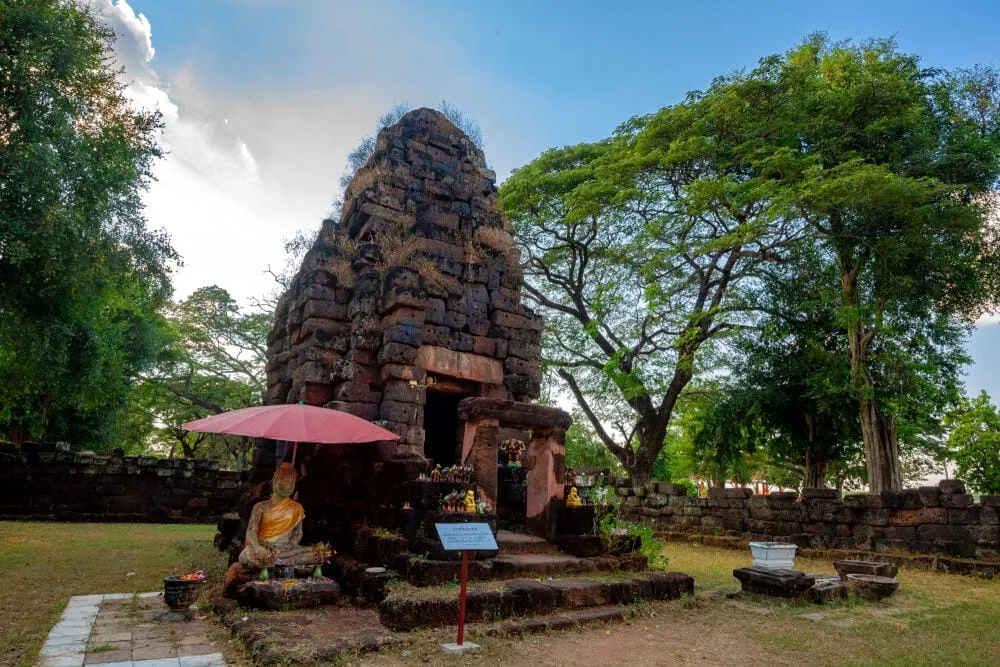
Ku Santarat is a laterite arogyasala — a Buddhist hospital chapel — built under King Jayavarman VII in the late 12th or early 13th century. It’s one of more than a hundred such sites the Angkor-era king commissioned across his empire, pairing medical care with worship of the healing Buddha. The site sits in Na Dun district, a few kilometres from the district office, near the site of the ancient city of Muang Nakhon Champa Si. Entry is free, open daily 08:30-16:30.
The layout follows the standard arogyasala plan: an east-facing central shrine tower, an attached entrance hall, a small subsidiary “library” structure, and an enclosing wall with a gateway on the east side. A small pond sits at the northeast corner, once used for the water associated with the site’s healing function. The laterite and sandstone blocks are heavily weathered, and much of the structure looks unfinished rather than ornately carved — evidence that construction across Jayavarman VII’s hospital-chapel programme stalled at many sites before his death.
Few visitors make the drive out here compared with Phrathat Na Dun a short distance away, so most days you’ll have the ruins to yourself beyond a caretaker and the sound of nearby rice fields. Information boards on site cover the archaeological background and the restoration work carried out on the remaining structure.
Jayavarman VII’s arogyasala network is best known through the far larger examples scattered across Cambodia near Angkor itself; Ku Santarat is a modest, provincial version of the same building programme, built to serve a community around Muang Nakhon Champa Si rather than a royal capital. That makes it a useful stop for understanding how far Khmer influence and infrastructure reached into what’s now northeastern Thailand, without the crowds or scale of the Cambodian sites.
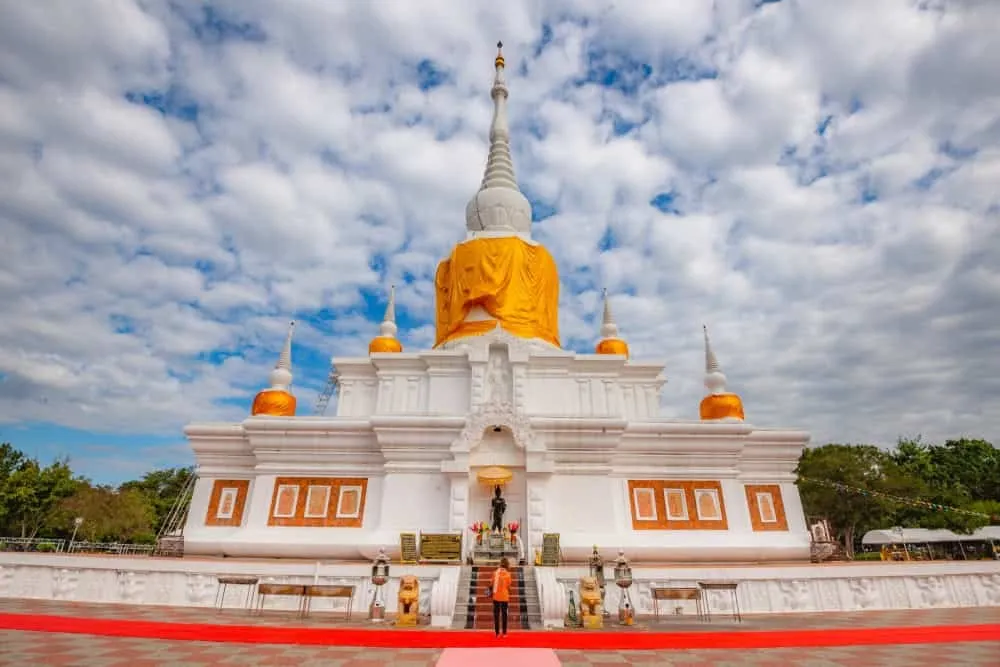
Insider Tip: Combine the visit with Phrathat Na Dun — both sites sit in the same district and mark the same stretch of ancient Khmer settlement, so a single trip out from Maha Sarakham covers both.
Watch out: There’s little shade on site and the ground around the ruins is uneven — wear closed shoes and avoid the midday hours when the stone gets hot underfoot.
The site is reached by car or motorbike; public transport options in this rural stretch of Na Dun district are limited.
- Entry fee: Free
- Hours: Daily 08:30-16:30
- What it is: Laterite arogyasala (Buddhist hospital chapel) built under Jayavarman VII
- Getting there: Car or motorbike from Na Dun district centre
- Nearby: Phrathat Na Dun, in the same district
Location & Directions
Na Dun, Maha Sarakham
Maha Sarakham, Thailand
Show your taxi or Grab driver
กู่สันตรัตน์
Frequently Asked Questions
What is an arogyasala?
Is Ku Santarat free to visit?
How does Ku Santarat connect to Phra That Na Dun?
Is the site fully restored?
What's the best time to visit?
Spotted something out of date or incorrect? Let us know
Stay Near Ku Santarat
Live prices for places closest to Ku Santarat — tap a pin to compare.