





Prang Nang Phom Hom
ปรางค์นางผมหอม
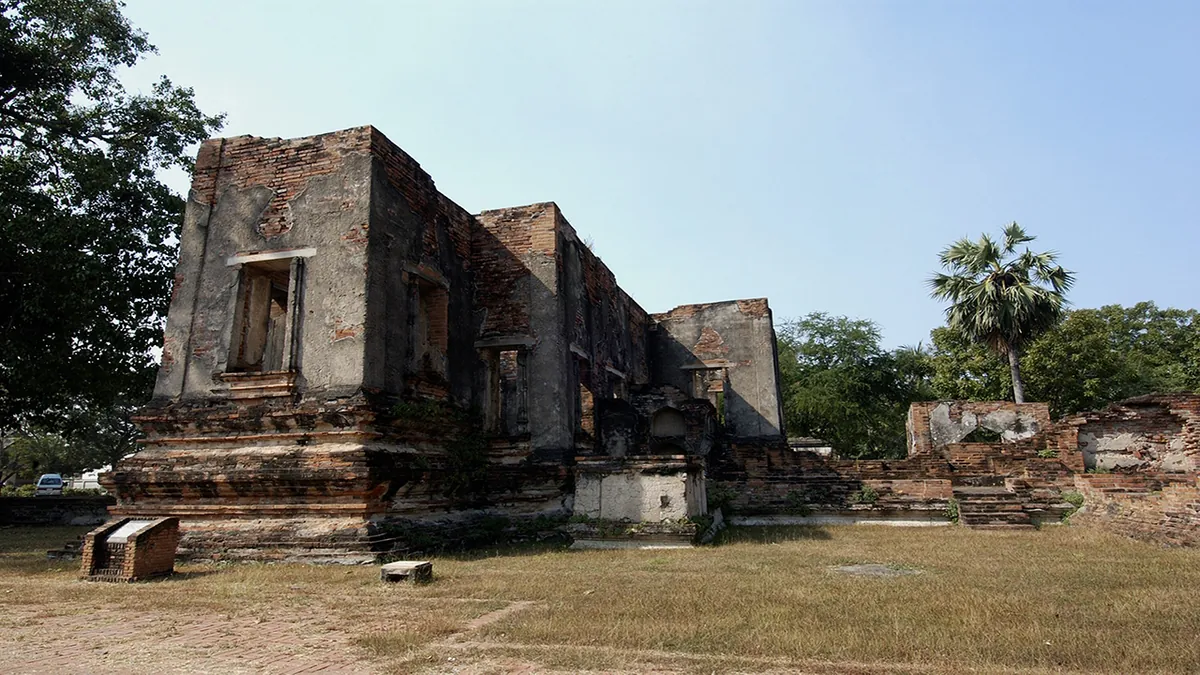
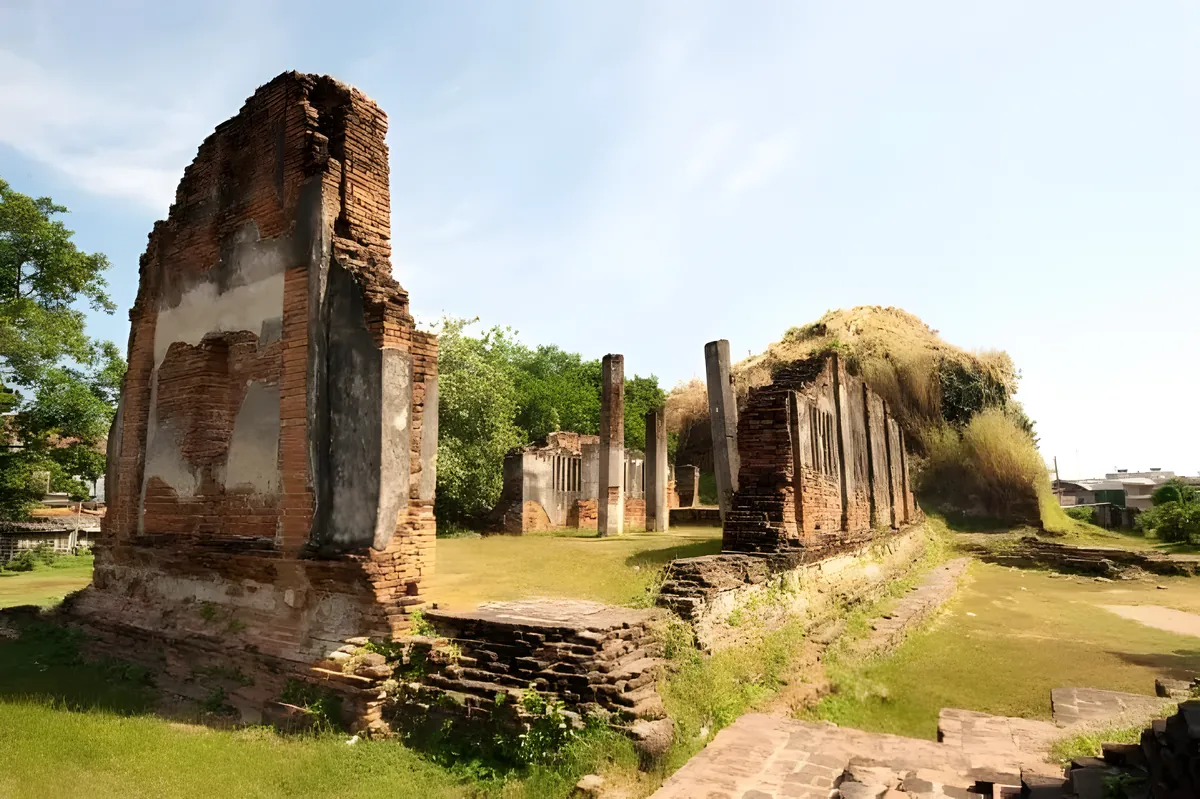
Prang Nang Phom Hom stands alone in a rural corner of Lam Sonthi district, in the northeastern reaches of Lop Buri province — not, despite some published accounts, inside Ayutthaya Historical Park. A single freestanding brick tower rather than a temple complex, it’s built in the Baphuon style of Khmer architecture, dated by archaeologists to roughly the 16th-17th Buddhist century (about the 11th-12th century CE). The bricks are large and laid without mortar, a construction method distinct from the mortared laterite-and-stucco prangs found further south in the old Ayutthaya kingdom.
The site’s significance is as much historical geography as architecture. It sits on what was once an overland route connecting the Khmer-influenced Isan region down through the Khao Phang Hoei pass to Lop Buri, making it a marker of how Angkorian cultural influence spread into central Thailand centuries before Ayutthaya existed. The name comes from local oral legend — no single written text survives — about Nang Phom Hom, a “fragrant-haired lady,” a noblewoman whose beauty and naturally scented hair are woven into a love story that ends unhappily. Villagers in Lam Sonthi still tell versions of the story, and the district has occasionally staged a light-and-sound event retelling the legend at the site itself.
Insider Tip: Because this is a standalone rural monument rather than a managed historical park, there’s no visitor centre or signage in English — bring a translated map or download offline directions before setting out from Lop Buri town.
Watch out: The single tower is genuinely all there is to see; if you’re expecting an Ayutthaya-scale complex of multiple prangs and ruined temples, you’ll be visiting the wrong site. Its value is in the setting and the history of the route it sits on, not architectural scale.
- Entry: Free
- Hours: Daily 08:00-16:30
- Location: Nong Ri subdistrict, Lam Sonthi district, Lop Buri province
- Style: Baphuon Khmer, brick laid without mortar
- Estimated age: 16th-17th Buddhist century (~11th-12th century CE)
The drive out from central Lop Buri takes about an hour through farmland and low hills, and there’s no direct public transport — a car or motorbike is the realistic way to get here. Pair it with Ban Pong Manao Historical Site, a prehistoric archaeological site elsewhere in the province, or the King Narai National Museum in Lop Buri town for context on the wider region’s Khmer and Ayutthaya-era history. Wear comfortable shoes for uneven ground around the base of the prang and bring water — there are no shops or stalls at the site itself.
Location & Directions
Moo 2
Lop Buri, Thailand
Show your taxi or Grab driver
ปรางค์นางผมหอม
Frequently Asked Questions
Where exactly is Prang Nang Phom Hom?
What does the name mean?
How old is the prang?
Is there an entry fee?
How do I get there from Lop Buri town?
Spotted something out of date or incorrect? Let us know
Stay Near Prang Nang Phom Hom
Compare places to stay in Lop Buri, or open the map for options closest to the attraction.